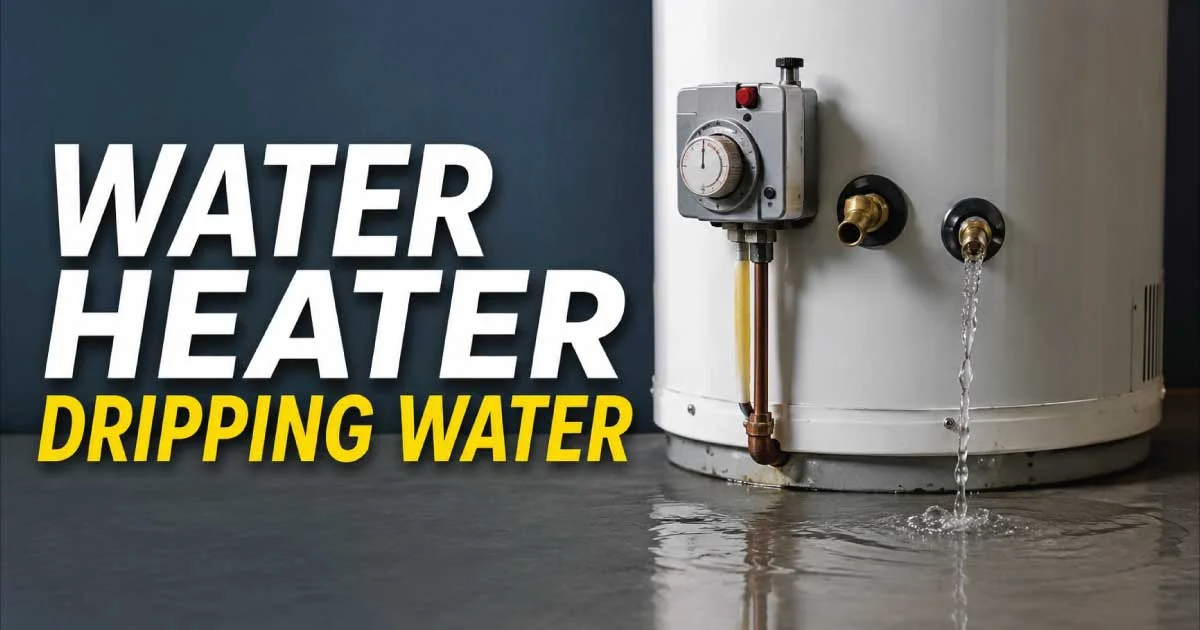
A water heater dripping water may seem like a minor inconvenience at first—just a few drops here and there. However, what starts as a slow drip can quickly turn into a costly plumbing disaster if ignored. From increased energy bills to severe water damage, a leaking water heater is a warning sign that should never be overlooked.
In this comprehensive guide, we’ll explore why your water heater is dripping water, what those drips mean, how serious the problem could be, and the best solutions to stop the leak for good. Whether you’re a homeowner, landlord, or property manager, understanding this issue can save you time, money, and stress.
Why a Water Heater Dripping Water Is a Serious Problem
A water heater should operate as a closed, pressurized system that safely contains heated water. Any dripping or leaking signals stress inside the unit, worn components, or advancing corrosion. What seems minor can quickly escalate, raising costs, damaging property, and creating health risks if ignored.
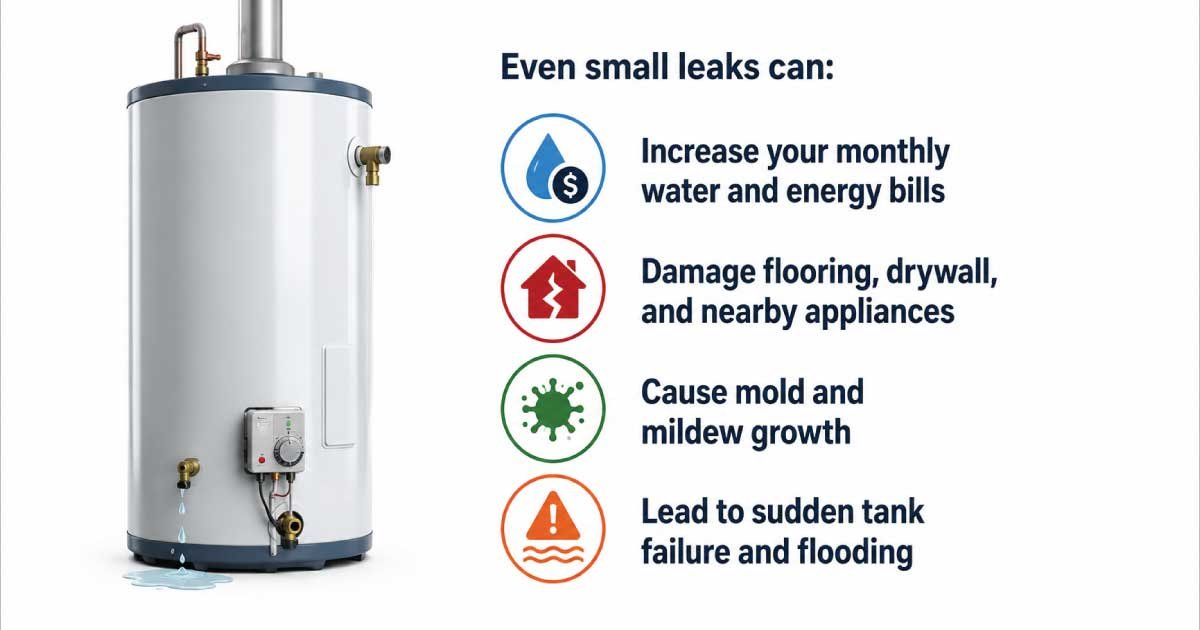
Even small leaks can:
- Increase your monthly water and energy bills
- Damage flooring, drywall, and nearby appliances
- Cause mold and mildew growth
- Lead to sudden tank failure and flooding
A dripping water heater is not something that “fixes itself.” The sooner you identify the cause, the easier—and cheaper—the repair will be.
Common Signs Your Water Heater Is Dripping Water
Spotting a dripping water heater early can prevent major repairs and unexpected shutdowns. Many warning signs appear gradually, often overlooked during daily routines. Knowing what to watch for helps homeowners act promptly, protect their system, and avoid costly damage to surrounding areas.
These may include:
- Pooled water around the base of the tank
- Moisture or rust on fittings and pipes
- Dripping sounds or visible drops
- Reduced hot water supply
- Fluctuating water temperature
If you notice any of these signs, it’s time to inspect your water heater more closely.
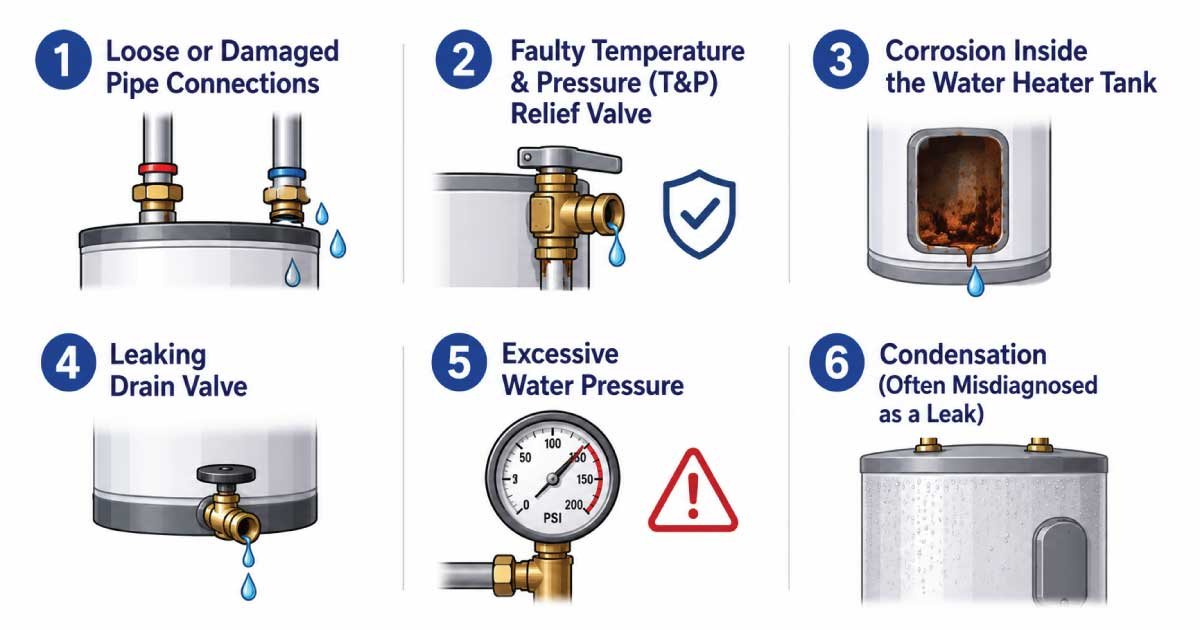
Electric vs. Gas Water Heater Dripping Water
While both electric and gas water heaters are vulnerable to leaks, the underlying causes and risk levels can differ. The internal components, heat sources, and safety systems vary between the two, making it important to understand how dripping water affects each type and why response urgency may differ.
Electric Water Heaters
Electric models rely on internal heating elements and electrical controls, which makes any water exposure more hazardous. Even minor leaks can damage components or create safety concerns if not addressed promptly.
- Leaks often occur near heating elements
- Gaskets around elements can wear out
- Electrical components make leaks especially dangerous
Gas Water Heaters
Gas water heaters involve burners, pilot lights, and gas control valves. Water dripping near these areas increases the risk of shutdowns, corrosion, or unsafe operating conditions that require immediate professional attention.
- Leaks near the burner compartment are more serious
- Water dripping onto gas components can cause shutdowns or hazards
In both cases, professional inspection is strongly advised if the source isn’t obvious.
How Dangerous Is a Dripping Water Heater?
A dripping water heater might appear manageable at first, but it can rapidly evolve into a major safety and property issue. Continuous moisture weakens components, increases internal pressure risks, and exposes your home to sudden failures that often occur without warning.
Potential dangers include:
- Flooding: Sudden tank rupture can release dozens of gallons of water
- Electrical hazards: Especially with electric water heaters
- Gas risks: Moisture can affect burners and gas controls
- Structural damage: Long-term dripping can weaken floors and walls
Ignoring the problem significantly increases the risk of emergency repairs.
Can You Fix a Water Heater Dripping Water Yourself?
Some water heater leaks are minor and manageable, especially when caused by loose fittings or maintenance-related components. Homeowners with basic plumbing knowledge can sometimes resolve these issues safely before they escalate.
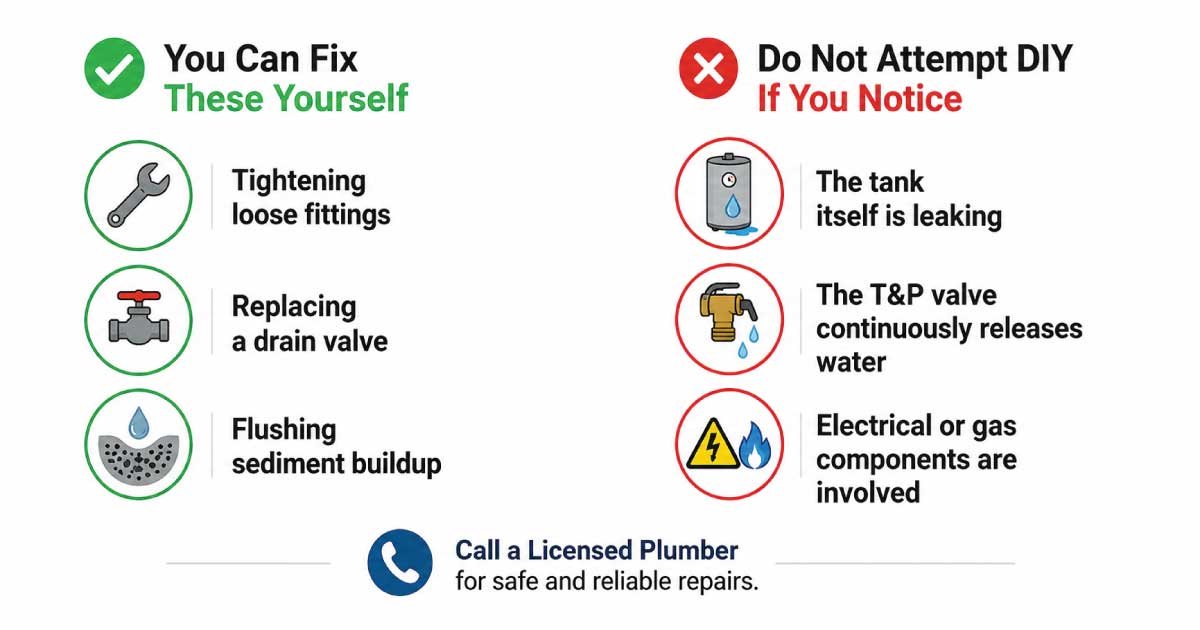
Some minor issues can be addressed safely by homeowners, including:
- Tightening loose fittings
- Replacing a drain valve
- Flushing sediment buildup
However, you should not attempt DIY repairs if:
- The tank itself is leaking
- The T&P valve continuously releases water
- Electrical or gas components are involved
In these cases, calling a licensed plumber is the safest option.
 Also Read
  Electric Water Heater Humming Noise: Is It Normal?
When to Replace Instead of Repair
Deciding between repairing or replacing a water heater depends on age, condition, and overall performance. Older units with recurring issues often cost more to maintain than they are worth, especially when internal corrosion or efficiency loss is already present.
If your water heater is more than 8–12 years old, replacement may be more cost-effective than repair—especially if corrosion is involved.
Consider replacement if:
- The tank is leaking from the body
- Repairs exceed 50% of replacement cost
- You experience frequent breakdowns
- Energy efficiency has declined
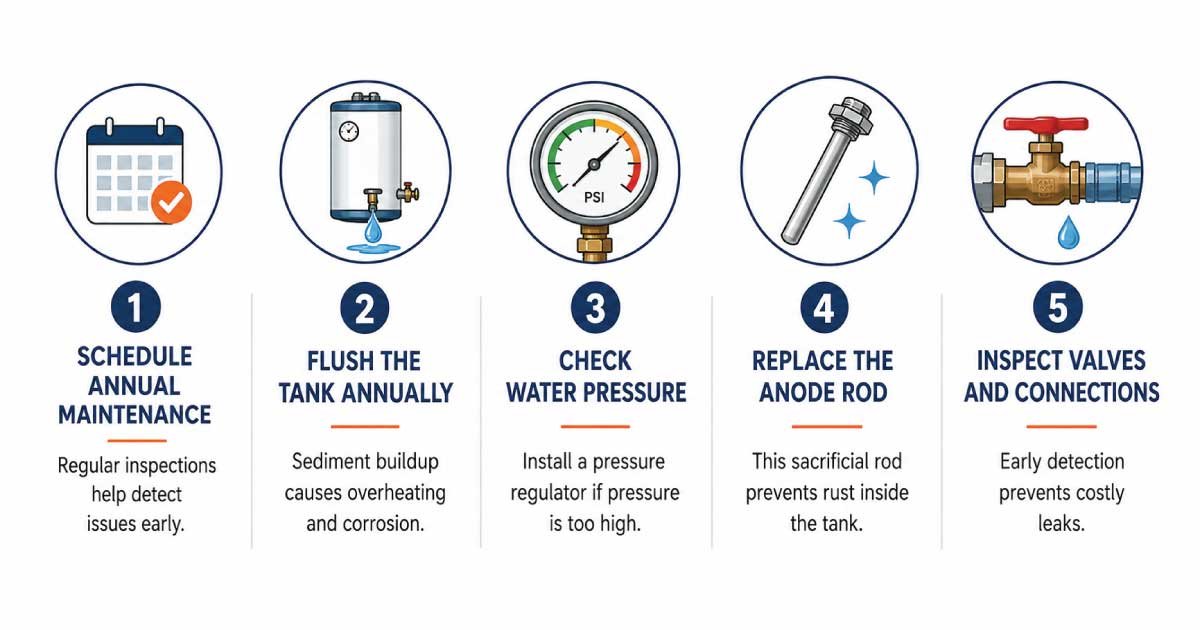
Modern water heaters are more energy-efficient and reliable, often paying for
Cost of Fixing a Water Heater Dripping Water
The cost to fix a dripping water heater depends on the source of the problem, the age of the unit, and the extent of the damage. Addressing minor issues early is typically affordable, while delayed action can quickly turn a small repair into a costly replacement.
Repair costs vary depending on the issue:
- Minor valve replacement: Low cost
- Pipe fitting repairs: Moderate cost
- Tank replacement: Higher upfront cost but long-term savings
Delaying repairs often results in higher overall expenses due to water damage, reduced efficiency, and emergency service fees that could have been avoided with timely maintenance.
Final Thoughts:
A water heater dripping water is never something to ignore. Whether it’s a loose connection or a failing tank, every drip is a sign that something isn’t right. Addressing the problem early protects your home, reduces repair costs, and ensures reliable hot water for years to come.
If you’re unsure about the cause of the leak, or if the dripping persists after basic troubleshooting, contacting a professional plumber is the smartest next step. Your water heater works hard every day—make sure it gets the attention it deserves.