
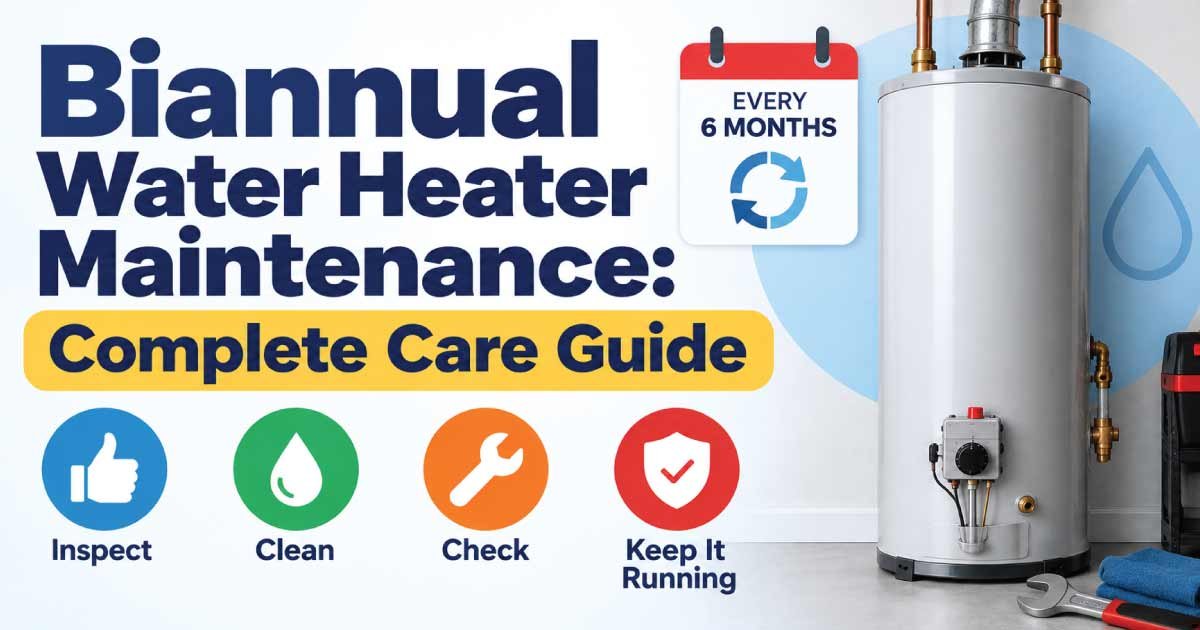
Biannual water heater maintenance means inspecting, cleaning, testing, and servicing your water heater twice each year. A consistent maintenance routine can help improve heating efficiency, reduce sediment buildup, identify leaks early, and keep important safety components working correctly.
Whether you have a tank water heater, electric storage water heater, gas water heater, or conventional storage tank, twice-yearly maintenance gives you an opportunity to catch small problems before they become expensive repairs. It also helps maintain reliable hot-water production and can extend the useful service life of the system.
A good biannual maintenance schedule typically includes checking the tank, connections, temperature settings, pressure relief valve, heating components, anode rod, burner area, insulation, and water quality. Some tasks are simple homeowner inspections, while gas-system servicing and complex repairs are better handled by a qualified professional.
Why Biannual Water Heater Maintenance Matters
Water heaters operate frequently, often every day of the year. Over time, minerals, sediment, corrosion, pressure, heat cycles, and worn components can affect performance.
Regular maintenance helps you identify these issues before they develop into major failures.
The main benefits of biannual water heater maintenance include:
- Reducing sediment and mineral accumulation
- Improving heating efficiency
- Maintaining consistent hot-water performance
- Detecting leaks at an early stage
- Checking safety components
- Protecting the tank from premature corrosion
- Identifying damaged insulation
- Monitoring unusual noises
- Checking water temperature
- Reducing the likelihood of unexpected breakdowns
- Extending equipment service life
- Helping identify components that may need replacement
A water heater does not necessarily need the same service every six months. Some maintenance tasks are appropriate twice a year, while others should be performed less frequently or only when inspection indicates a problem.
The goal is to create a practical water heater maintenance timeline rather than replacing every component on every visit.
Biannual Water Heater Maintenance Schedule
A twice-yearly schedule divides maintenance into two primary service periods. Many homeowners choose spring and fall because these periods are easy to remember.
| Maintenance Task | Every 6 Months | Annually | As Needed |
|---|---|---|---|
| Inspect tank exterior | ✓ | ✓ | ✓ |
| Check for leaks | ✓ | ✓ | ✓ |
| Inspect water connections | ✓ | ✓ | ✓ |
| Check temperature setting | ✓ | ✓ | ✓ |
| Inspect pressure relief area | ✓ | ✓ | ✓ |
| Flush tank | ✓* | ✓* | ✓ |
| Inspect anode rod | ✓ | ✓ | |
| Check heating elements | ✓ | ✓ | ✓ |
| Inspect burner area | ✓ | ✓ | ✓ |
| Check insulation | ✓ | ✓ | ✓ |
| Inspect venting on gas models | ✓ | ✓ | ✓ |
| Professional gas-system inspection | ✓ | ✓ |
*Flushing frequency can vary according to water quality, heater design, manufacturer instructions, and sediment accumulation.
The most important point is consistency. A maintenance calendar is more useful than an occasional inspection performed only after the heater begins showing problems.
What to Check During Biannual Maintenance
A complete twice-yearly inspection should cover the water heater from several angles: physical condition, water connections, heating performance, safety controls, and signs of corrosion or sediment.
Inspect the Water Heater Tank
Start with a visual inspection of the tank and surrounding area.
Look for:
- Rust
- Corrosion
- Moisture
- Water stains
- Cracks or damage
- Bulging or unusual deformation
- Mineral deposits
- Damaged insulation
- Loose covers or panels
Pay particular attention to the bottom of the tank and the areas around fittings. Small amounts of moisture can indicate a developing leak.
If water appears to be coming directly from the tank body rather than a removable connection, professional evaluation is recommended. A leaking storage tank often indicates internal corrosion and may eventually require replacement.
Check for Water Leaks
Leaks should never be ignored.
Inspect:
- Cold-water inlet
- Hot-water outlet
- Drain valve
- Temperature and pressure relief valve area
- Pipe connections
- Flexible connectors
- Heating-element seals on electric models
- Tank bottom
- Nearby floor and wall surfaces
Water around the heater does not always mean the tank itself has failed. A loose fitting, faulty valve, condensation, or leaking pipe can produce similar symptoms.
The important step is identifying the source rather than simply wiping away the water.
Check the Water Heater Temperature
Temperature affects comfort, energy consumption, and safety.
During biannual maintenance, verify that the thermostat is set according to the manufacturer’s recommendations and your household requirements.
A higher temperature does not automatically mean better performance. Excessively high water temperatures can increase energy consumption and create a scalding hazard.
At the same time, a setting that is too low may not provide the desired hot-water performance.
After adjusting a thermostat, allow sufficient time for the water heater to stabilize before judging the final temperature.
Measure Hot-Water Temperature Carefully
If you want to verify the actual water temperature, use a suitable thermometer rather than relying only on the thermostat dial.
Check water from a faucet after the system has had enough time to heat normally.
If the measured temperature is substantially different from the thermostat setting, the thermostat, sensor, mixing valve, or another component may require inspection.
Flush the Water Heater Tank
Tank flushing is one of the most commonly discussed water heater maintenance tasks.
Over time, minerals and sediment can settle at the bottom of a storage tank. This buildup can interfere with heat transfer and may contribute to popping, rumbling, or crackling noises.
Flushing removes some of this accumulated material.
Why Sediment Buildup Is a Problem
Sediment creates a layer between the heat source and the water.
This can cause:
- Reduced heating efficiency
- Longer heating cycles
- Increased operating costs
- Unusual tank noises
- Reduced available capacity
- Greater thermal stress on some components
The amount of sediment depends heavily on local water quality and how the heater is operated.
Basic Tank-Flushing Process
Before flushing a water heater, follow the manufacturer’s instructions and make sure the procedure is appropriate for your model.
A typical process involves:
- Turn off the energy source according to the manufacturer’s instructions.
- Allow the water to cool sufficiently to reduce the risk of burns.
- Connect a suitable hose to the drain valve.
- Route the discharge to a safe drainage location.
- Open the drain valve.
- Allow water and sediment to leave the tank.
- Continue until the discharged water becomes clearer.
- Close the drain valve.
- Refill the tank completely before restoring operation as required by the manufacturer’s procedure.
- Check the system for leaks.
Never direct hot water where it could burn people, damage property, or create a drainage problem.
For complicated installations or heavily sedimented tanks, professional service may be safer.
Inspect the Anode Rod
The anode rod is an important component in many traditional storage water heaters.
It is designed to help protect the steel tank from corrosion by providing a material that corrodes preferentially.
As the anode rod gradually deteriorates, its ability to provide corrosion protection decreases.
When to Inspect the Anode Rod
The anode rod does not necessarily need replacement every six months. However, including it in a broader annual or periodic inspection can be useful, especially where water chemistry is aggressive.
During inspection, look for substantial loss of material or exposed core wire.
A heavily depleted anode rod may need replacement.
Replacing a worn anode rod can sometimes help protect the tank and potentially extend its service life, depending on the heater’s condition and design.
Signs the Anode Rod May Need Attention
Possible warning signs include:
- Significant corrosion of the rod
- Very thin remaining material
- Exposed internal core
- Strong sulfur-like odor associated with hot water
- Repeated water-quality problems
Always confirm the correct replacement specification for your water heater before purchasing a new anode rod.
Check the Temperature and Pressure Relief Valve
The temperature and pressure relief valve, commonly called the T&P valve, is a critical safety component on many storage water heaters.
Its purpose is to help protect the tank if temperature or pressure reaches an unsafe level.
During maintenance, inspect the valve and discharge pipe for visible problems.
Look for:
- Corrosion
- Mineral deposits
- Leakage
- Blockage
- Damage
- Missing or improperly installed discharge piping
Do not permanently cap, plug, or obstruct a relief-valve discharge pipe.
Testing a relief valve can cause hot water to discharge. If the valve is old, corroded, leaking, or difficult to operate, professional evaluation may be preferable to forcing it open.
A faulty relief valve should be replaced with the correct component rather than bypassed.
Biannual Electric Water Heater Maintenance
Electric storage water heaters have different service requirements from gas models because their primary heating components are electrical heating elements.
During twice-yearly maintenance, inspect the exterior, electrical access areas, thermostat controls, heating elements, wiring, and connections where safely accessible.
Inspect Heating Elements
Electric water heaters commonly use one or more heating elements.
Mineral buildup can accumulate on the elements and affect heat transfer.
Potential symptoms of heating-element problems include:
- Water that is not hot enough
- Slow recovery
- Inconsistent water temperature
- Higher electricity consumption
- No hot water
- One heating stage working while another does not
Electrical components can be dangerous. Turn off the correct electrical supply before accessing any electrical compartment, and do not work on wiring if you are not qualified.
Check Electrical Connections
Look for obvious signs of overheating, damaged insulation, loose components, or discoloration.
Do not touch exposed electrical components while the system is energized.
If wiring appears burned, melted, loose, or damaged, shut down the equipment safely and have it evaluated by a qualified professional.
Biannual Gas Water Heater Maintenance
Gas water heaters require additional attention because they use combustion.
A biannual inspection should include the general condition of the appliance, burner area, combustion air, venting, gas connections, and signs of unusual operation.
Inspect the Burner Area
Look for:
- Dirt
- Dust
- Corrosion
- Obstructions
- Unusual flame behavior
- Soot
- Signs of overheating
Do not attempt to modify gas controls or combustion settings without the appropriate qualifications.
If the burner repeatedly fails to ignite, produces unusual flames, or creates soot, professional service is recommended.
Check the Venting System
The venting system is essential because combustion gases need to be safely discharged.
Inspect visible vent components for:
- Corrosion
- Disconnected sections
- Damage
- Improper positioning
- Obstructions
Never block or modify a combustion or exhaust vent to solve a water-heater problem.
If you suspect a combustion or venting issue, stop using the appliance as appropriate and seek qualified professional assistance.
Discover More:
Check Water Heater Pipes and Connections
The plumbing around the water heater deserves attention during every maintenance visit.
Inspect the inlet and outlet pipes for corrosion, leaks, mineral deposits, and damaged insulation.
Inspect the Cold-Water Inlet
The cold-water inlet supplies replacement water to the tank.
Check the connection for moisture and corrosion.
A small leak can gradually damage surrounding flooring or equipment, so early detection is valuable.
Inspect the Hot-Water Outlet
The hot-water outlet should also remain dry and secure.
Look for mineral deposits around the fitting. White, green, or rusty deposits can indicate previous or ongoing leakage depending on the material involved.
Inspect the Drain Valve
The drain valve is particularly important if you perform periodic flushing.
Check that it is not leaking when closed.
A valve that continues dripping after being closed may require replacement.
Discover More:
Inspect Water Heater Insulation
Insulation helps reduce standby heat loss from storage water heaters.
During biannual maintenance, inspect the insulation around the tank and exposed hot-water pipes.
Look for:
- Tears
- Gaps
- Compression
- Water damage
- Missing sections
- Deterioration
Do not cover safety controls, burners, vents, or other components that require ventilation or manufacturer-specified clearance.
For gas water heaters, insulation materials must also be installed according to applicable safety requirements and manufacturer instructions.
Listen for Unusual Water Heater Noises
Noise can provide useful clues about developing problems.
Common sounds include:
- Popping
- Rumbling
- Crackling
- Hissing
- Banging
- Clicking
- Whistling
Some sounds are normal during heating, but a new or increasingly loud sound deserves attention.
What Popping or Rumbling Can Indicate
Popping and rumbling in storage tanks can be associated with sediment accumulation.
As water beneath sediment heats, bubbles can form and escape through the buildup. This can create noise and reduce heating efficiency.
Flushing may help when sediment is the cause, although severe buildup may require professional cleaning or other service.
What Hissing Can Indicate
Hissing can have several possible causes, including water passing through a restriction, leakage, or heating-related conditions.
Do not diagnose a component solely from sound. Use the noise as a reason to inspect the system more carefully.
Discover More:
Check for Corrosion
Corrosion is one of the major long-term threats to metal water-heater components.
Inspect the tank, fittings, valves, pipe connections, and accessible metal components.
Surface discoloration is not always a sign of tank failure, but active corrosion around connections should be investigated.
Common Corrosion Warning Signs
Watch for:
- Rust-colored water
- Rust around fittings
- Flaking metal
- Corroded valves
- Rust stains on the floor
- Damp areas
- Corrosion around the tank base
If corrosion is coming from the tank itself, replacement may eventually be necessary.
Inspect the Area Around the Water Heater
The maintenance area should remain clean, dry, and accessible.
Avoid storing boxes, chemicals, paper products, clothing, or other unnecessary items immediately around the appliance.
A clear area makes leaks easier to detect and gives technicians better access when repairs are required.
For gas appliances, maintaining appropriate clearance and combustion-air conditions is particularly important.
Biannual Water Heater Maintenance Checklist
Use this checklist during your spring and fall maintenance sessions.
- Inspect the tank exterior
- Check the floor for water
- Inspect inlet and outlet connections
- Check the drain valve
- Inspect the T&P relief valve area
- Check the discharge pipe
- Verify the temperature setting
- Look for corrosion
- Listen for unusual noises
- Inspect insulation
- Check exposed plumbing
- Flush the tank when appropriate
- Inspect the anode rod according to service recommendations
- Check electric heating components where safely accessible
- Inspect the burner area on gas models
- Check visible gas-water-heater venting
- Keep the surrounding area clear
- Record unusual symptoms
- Schedule professional service if a safety issue is identified
Keeping a written record makes it easier to recognize gradual changes.
Biannual vs Annual Water Heater Maintenance
Not every maintenance task belongs on the same schedule.
Biannual inspections focus on frequent visual and operational checks, while some deeper inspections can be performed annually or according to the manufacturer’s recommendations.
| Task | Twice Yearly | Yearly | Professional When Needed |
|---|---|---|---|
| Leak inspection | ✓ | ✓ | — |
| Temperature check | ✓ | ✓ | — |
| Exterior inspection | ✓ | ✓ | — |
| Connection inspection | ✓ | ✓ | ✓ |
| Tank flushing | Depends on conditions | Often appropriate | ✓ |
| Anode rod inspection | — | ✓ | ✓ |
| Heating element inspection | ✓ | ✓ | ✓ |
| Burner inspection | ✓ | ✓ | ✓ |
| Vent inspection | ✓ | ✓ | ✓ |
| Gas-control service | — | ✓ | ✓ |
| Major repairs | — | — | ✓ |
The exact frequency should always be adjusted to the water heater manufacturer’s instructions, local water conditions, heater age, usage, and observed condition.
When to Call a Professional
Some water heater maintenance tasks are suitable for homeowners, but others involve gas, electricity, pressure, combustion, or specialized equipment.
Professional service is appropriate when you notice:
- A tank leak
- Gas odor
- Soot around a gas appliance
- Damaged venting
- Electrical burning smell
- Melted wiring
- Repeated breaker trips
- Persistent relief-valve discharge
- Severe corrosion
- No hot water after basic troubleshooting
- Repeated ignition failure
- Major pressure problems
- Structural damage to the tank
If you smell gas, do not treat it as a normal maintenance issue. Follow local gas-safety procedures and contact the appropriate emergency or utility service.
Common Biannual Maintenance Mistakes
Even homeowners who perform regular maintenance can make mistakes that reduce safety or equipment life.
Ignoring Small Leaks
A tiny drip can become a major leak.
Always investigate new moisture around fittings, valves, and the tank.
Skipping Sediment Removal
If your water heater produces increasingly loud popping or rumbling sounds, sediment may be accumulating.
Ignoring the problem can contribute to reduced performance.
Setting the Temperature Too High
Higher temperature settings can increase energy consumption and scalding risk.
Use a temperature appropriate for the household and the manufacturer’s recommendations.
Testing Components Without Preparation
Water heaters contain hot water, electricity, gas, and pressurized components.
Never open electrical compartments or manipulate gas controls without following the correct safety procedure.
Forgetting Manufacturer Instructions
Water heater designs vary significantly.
A procedure that applies to one model may not apply to another. Always consult the owner’s manual before performing model-specific maintenance.
How to Create a Water Heater Maintenance Calendar
A simple calendar makes twice-yearly maintenance easier to remember.
Choose two recurring months separated by approximately six months.
For example:
| Period | Main Focus |
|---|---|
| Spring | Full inspection, leak check, temperature check, flushing when appropriate |
| Fall | Full inspection, safety-component check, connections, insulation and performance review |
Record the date, water-heater condition, maintenance completed, unusual symptoms, and components that may require future attention.
A maintenance log can help you determine whether a problem is getting worse over time.
Water Heater Maintenance Timeline
A practical maintenance timeline can be organized around three levels.
Every 6 months: perform visual inspection, check leaks, examine connections, review temperature, inspect the surrounding area, and evaluate operating performance.
Every 12 months: consider deeper service such as anode rod inspection, more detailed component inspection, and professional servicing where appropriate.
Whenever symptoms appear: investigate immediately rather than waiting for the next scheduled maintenance date.
This approach provides a balance between routine care and condition-based maintenance.
How Biannual Maintenance Improves Efficiency
Efficiency is affected by several factors, including sediment buildup, thermostat settings, insulation, water temperature, heating components, and the overall condition of the system.
Keeping the tank reasonably clean can help maintain effective heat transfer.
Likewise, repairing leaking hot-water connections can prevent unnecessary water and energy waste.
For older equipment, maintenance cannot completely restore the efficiency of a newer model. However, proper care can help the existing system operate more reliably and may delay premature replacement.
Does Every Water Heater Need the Same Maintenance?
No. Maintenance requirements vary by heater type.
A conventional storage tank stores heated water and may accumulate sediment.
An electric storage heater requires attention to heating elements, thermostats, wiring, and electrical connections.
A gas storage heater requires additional consideration of combustion, burners, gas connections, and venting.
Tankless water heaters have different maintenance requirements, particularly concerning scale and heat-exchanger cleaning.
Solar and heat-pump water heaters also have specialized components and manufacturer-specific service procedures.
Therefore, the general biannual checklist should be treated as a framework rather than a universal repair manual.
Tips for Extending Water Heater Life
Consistent maintenance is only one part of long-term water-heater care.
Additional good practices include:
- Follow the manufacturer’s maintenance recommendations.
- Keep the heater accessible.
- Monitor water temperature.
- Investigate leaks immediately.
- Keep the surrounding area clean.
- Avoid unnecessary temperature adjustments.
- Address unusual noises promptly.
- Check water quality when recurring problems occur.
- Replace worn components before they cause secondary damage.
- Use qualified professionals for gas and complex electrical work.
- Keep a record of repairs and maintenance.
A proactive approach is usually easier and less expensive than dealing with an unexpected major failure.
Final Biannual Water Heater Maintenance Checklist
Before considering your twice-yearly maintenance complete, confirm that you have reviewed the main components of the system.
The tank should be dry and free from obvious damage. Connections should be checked for leaks and corrosion. The temperature should be appropriate. The surrounding area should remain clear and accessible.
For storage heaters, sediment management and anode-rod condition are important long-term considerations. Electric models require attention to heating elements and electrical components, while gas models require additional care around burners and venting.
Most importantly, do not attempt repairs that involve significant electrical, gas, combustion, or pressure-related risks unless you have the appropriate qualifications.
A reliable biannual water heater maintenance routine is ultimately about prevention. Inspecting the system every six months gives you two regular opportunities each year to identify leaks, sediment, corrosion, performance changes, and safety concerns before they become larger problems.
By combining a maintenance calendar with manufacturer guidance and professional servicing when necessary, homeowners can keep their water heaters operating safely and efficiently while making unexpected failures less likely.