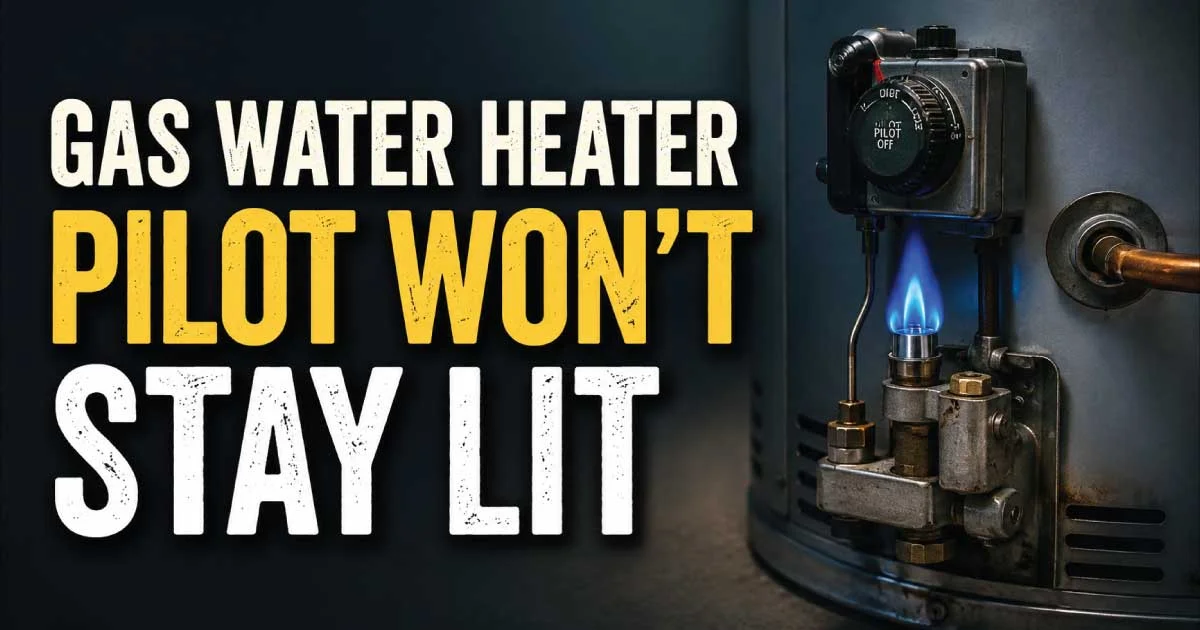
Gas Water Heater Pilot Won’t Stay Lit? Complete Guide

A gas water heater is one of those household appliances you rarely think about—until it stops working. One of the most common and frustrating problems homeowners face is when the pilot light won’t stay lit. You may relight it successfully, only to find it goes out again minutes or hours later. Without a stable pilot light, your water heater can’t heat water, leaving you with cold showers and growing frustration.

This blog post explains why a gas water heater pilot won’t stay lit, how the system works, what you can safely troubleshoot yourself, and when it’s time to call a professional.


Understanding the Pilot Light System 

Before diving into the causes of a pilot light that won’t stay lit, it’s helpful to understand how this important component works. The pilot light plays a vital role in safely igniting the burner and maintaining reliable hot water. Understanding its function makes troubleshooting easier and helps identify potential problems more accurately.

Understanding the Pilot Light System

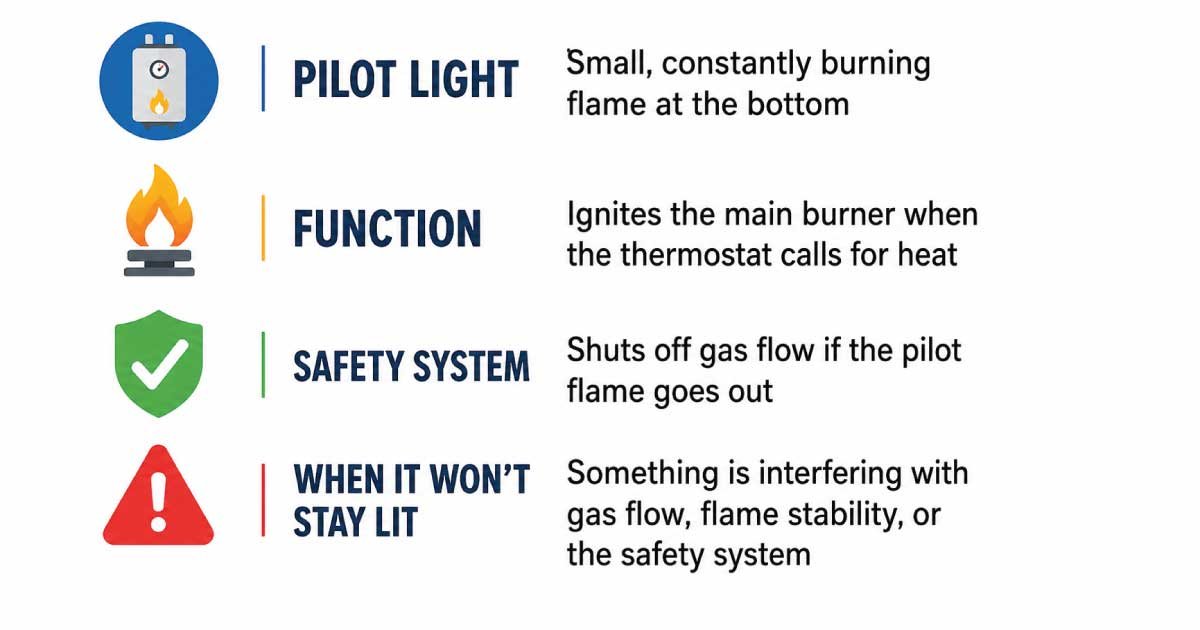
The pilot light is a small, constantly burning flame located at the bottom of your gas water heater. Its job is to ignite the main burner when the thermostat calls for heat. Modern systems include several safety components that shut off gas flow if the pilot flame goes out, preventing dangerous gas leaks.

When the pilot won’t stay lit, it means something is interfering with gas flow, flame stability, or the safety system.


Common Reasons a Gas Water Heater Pilot Won’t Stay Lit 

A pilot light that repeatedly goes out is usually a sign of an underlying mechanical, gas supply, or ventilation problem. Identifying the exact cause is essential for restoring safe operation and preventing repeated shutdowns. Below are the most common reasons a gas water heater pilot light refuses to stay lit.
Common Reasons a Gas Water Heater Pilot Won’t Stay Lit

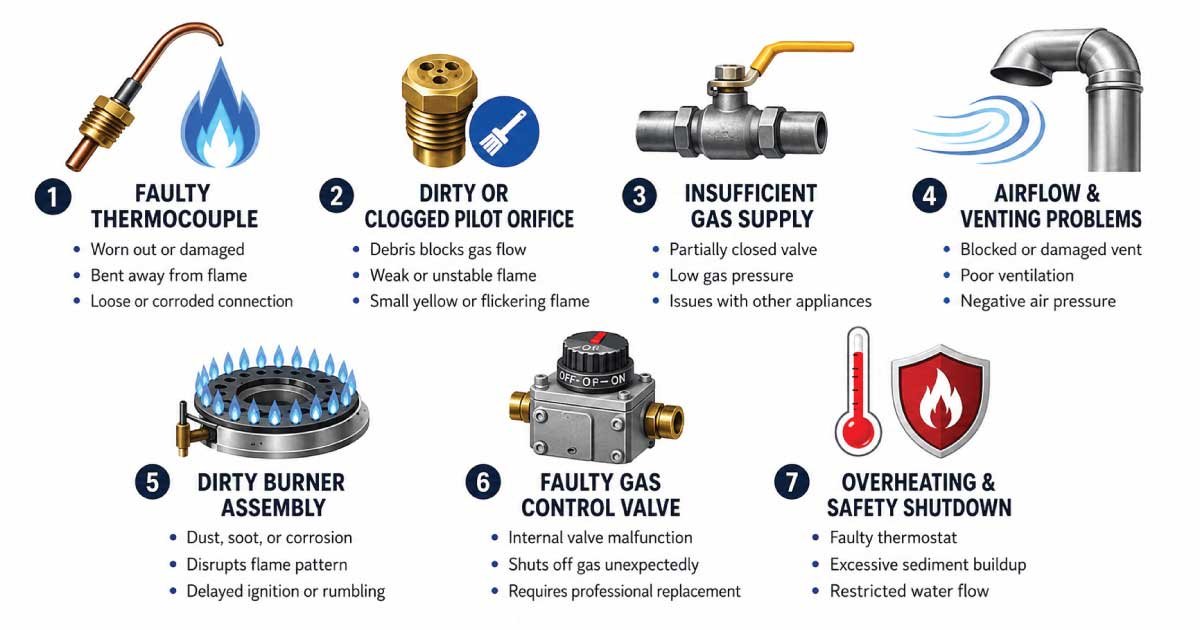
1. Faulty Thermocouple

The thermocouple is one of the most important safety components in a gas water heater. It detects the pilot flame and signals the gas valve to remain open. When it becomes dirty, damaged, or improperly positioned, it can interrupt the gas supply even though the pilot flame has been successfully lit.

The thermocouple is the most common culprit. This safety device senses whether the pilot flame is burning. When heated by the flame, it sends a signal to the gas valve to keep gas flowing.

If the thermocouple:

  • Is worn out
  • Is bent away from the flame
  • Is coated in soot or corrosion
  • Has a loose connection

…it may falsely signal that the flame is out, causing the gas valve to shut off.

Signs of a bad thermocouple:

  • Pilot lights but goes out when you release the control knob
  • Pilot won’t stay lit for more than a few seconds

2. Dirty or Clogged Pilot Orifice

The pilot orifice is a small opening that delivers gas to the pilot flame. Over time, dust, lint, rust, or other debris can partially block this opening, reducing gas flow and producing a weak flame that cannot reliably heat the thermocouple.

Dust, lint, rust flakes, or spider webs can clog the pilot orifice. This restricts gas flow and results in a weak or unstable flame.

A healthy pilot flame should be:

  • Steady
  • Mostly blue
  • Strong enough to fully engulf the thermocouple tip

A dirty pilot assembly often produces a small yellow or flickering flame, which can’t keep the thermocouple hot.

3. Insufficient Gas Supply

A steady supply of gas is necessary to maintain a strong, stable pilot flame. If gas pressure drops or fuel flow becomes restricted, the pilot may ignite briefly before going out. Checking the gas supply can help eliminate one of the most common operational issues.

If your gas supply is inconsistent, the pilot light may not receive enough fuel to stay lit.

Possible causes include:

  • Partially closed gas shutoff valve
  • Low gas pressure from the utility
  • Issues with other gas appliances affecting pressure

If multiple gas appliances are malfunctioning, the issue may be external and require a gas provider or licensed technician.

4. Airflow and Venting Problems

Proper airflow is essential for efficient combustion and safe operation of your gas water heater. If fresh air cannot reach the burner or exhaust gases cannot escape properly, the pilot light may extinguish as a protective safety measure built into the appliance.

Proper airflow is essential for combustion. If your water heater can’t draw in enough air or expel exhaust gases, the pilot may go out.

Common airflow issues include:

  • Blocked or damaged vent pipe
  • Negative air pressure in tightly sealed homes
  • Nearby exhaust fans pulling air away
  • Debris around the combustion chamber

Some newer heaters include safety sensors that shut off the pilot if airflow is unsafe.

5. Dirty Burner Assembly

The burner assembly works together with the pilot system to ensure efficient combustion. When dirt, soot, or corrosion builds up over time, it can interfere with normal flame patterns, resulting in unstable operation, ignition delays, and repeated pilot light failures.

Over time, the burner can accumulate dust, soot, and corrosion. This can disrupt the flame pattern and cause improper combustion, leading to pilot outages.

A dirty burner may also cause:

  • Delayed ignition
  • Rumbling or popping sounds
  • Uneven heating

6. Faulty Gas Control Valve

The gas control valve regulates fuel delivery to both the pilot light and the main burner while coordinating with the water heater’s safety systems. If the valve develops an internal fault, it may stop supplying gas even when the pilot flame is functioning normally.

The gas control valve regulates gas flow to both the pilot and main burner. If it malfunctions internally, it may shut off gas even when the pilot flame is present.

This issue is less common but more serious. Gas valves are not DIY-repairable and usually require replacement by a professional.

7. Overheating and Safety Shutdown

Modern water heaters include built-in safety mechanisms that automatically shut off the pilot light if the unit overheats. While relighting the pilot may temporarily restore operation, the root cause of the overheating must be corrected to prevent recurring shutdowns.

If your water heater overheats, built-in safety mechanisms may shut down the pilot light.

Causes of overheating include:

  • Faulty thermostat
  • Excessive sediment buildup
  • Restricted water flow

Once the unit cools, you may be able to relight the pilot, but the underlying issue will persist.

🛑 Also Read 👉  Why Does My Water Heater Breaker Keep Tripping?


Step-by-Step Troubleshooting You Can Try 

Before replacing parts or scheduling a repair, there are several safe troubleshooting steps you can perform to identify the cause of a pilot light that won’t stay lit. These checks can help you pinpoint common issues involving the pilot assembly, thermocouple, venting, or gas supply while keeping safety as the top priority.

Step-by-Step Troubleshooting You Can Try

Important Safety Note:

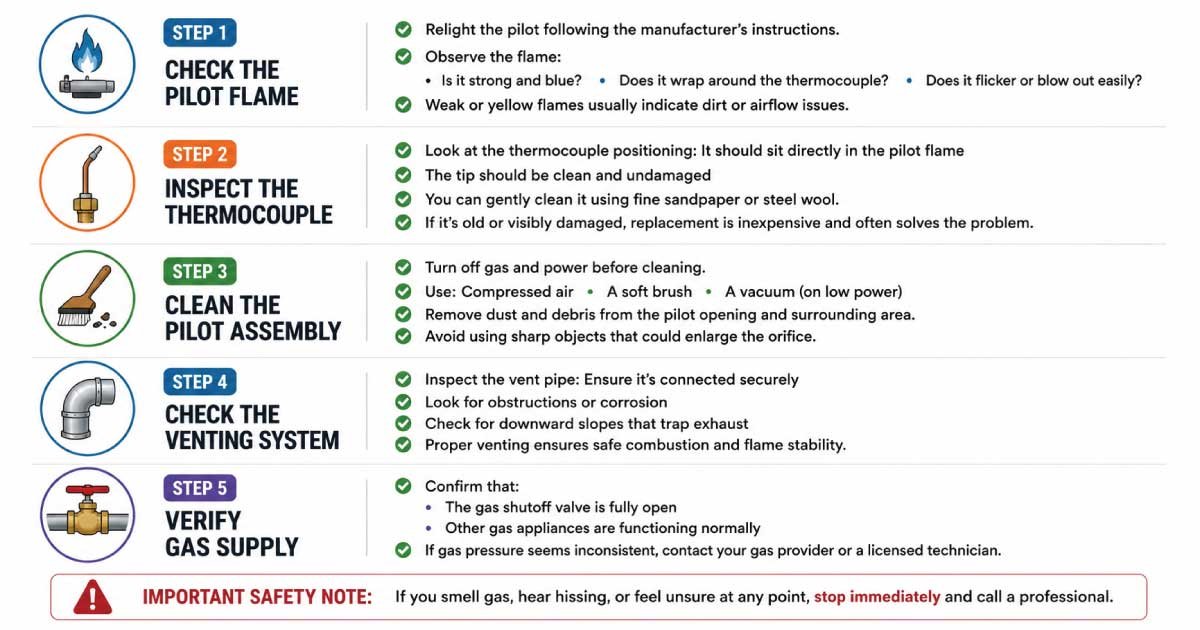
If you smell gas, hear hissing, or feel unsure at any point, stop immediately and call a professional.

Step 1: Check the Pilot Flame

The pilot flame should burn steadily and provide enough heat to keep the thermocouple activated. Carefully observe the flame after relighting the pilot, as its color, size, and stability can reveal whether dirt, airflow restrictions, or gas supply issues are affecting performance.

Relight the pilot following the manufacturer’s instructions.

Observe the flame:

  • Is it strong and blue?
  • Does it wrap around the thermocouple?
  • Does it flicker or blow out easily?

Weak or yellow flames usually indicate dirt or airflow issues.

Step 2: Inspect the Thermocouple

A properly positioned and clean thermocouple is essential for maintaining gas flow to the pilot light. Even slight misalignment, dirt buildup, or wear can prevent it from detecting the flame correctly, causing the gas valve to shut off as a safety precaution.

Look at the thermocouple positioning:

  • It should sit directly in the pilot flame
  • The tip should be clean and undamaged

You can gently clean it using fine sandpaper or steel wool. If it’s old or visibly damaged, replacement is inexpensive and often solves the problem.

Step 3: Clean the Pilot Assembly

Dust, lint, soot, and other debris can collect around the pilot assembly over time, restricting gas flow and weakening the flame. Cleaning this area carefully can improve ignition reliability and restore normal pilot operation without requiring replacement parts.

Turn off gas and power before cleaning.

Use:

  • Compressed air
  • A soft brush
  • A vacuum (on low power)

Remove dust and debris from the pilot opening and surrounding area. Avoid using sharp objects that could enlarge the orifice.

Step 4: Check the Venting System

A properly functioning venting system allows combustion gases to exit safely while supplying adequate airflow for stable burner operation. Inspecting the vent pipe for damage or obstructions can help prevent pilot outages caused by poor ventilation or restricted exhaust flow.

Inspect the vent pipe:

  • Ensure it’s connected securely
  • Look for obstructions or corrosion
  • Check for downward slopes that trap exhaust

Proper venting ensures safe combustion and flame stability.

Step 5: Verify Gas Supply

An uninterrupted gas supply is necessary for maintaining a steady pilot flame and reliable burner performance. Confirm that gas is reaching the appliance properly before assuming a component has failed, especially if other gas-powered appliances are also experiencing issues.

Confirm that:

  • The gas shutoff valve is fully open
  • Other gas appliances are functioning normally

If gas pressure seems inconsistent, contact your gas provider or a licensed technician.

🛑 Also Read 👉  What Causes a Water Heater Thermostat to Fail?


When to Call a Professional

Many pilot light problems can be resolved with basic maintenance, but certain situations require specialized tools and expertise. If troubleshooting does not restore normal operation or you notice signs of a more serious issue, contacting a licensed technician is the safest and most reliable course of action.

Call a professional if:

  • The pilot still won’t stay lit after cleaning and thermocouple replacement
  • You suspect a faulty gas control valve
  • You notice soot buildup or carbon monoxide concerns
  • The unit repeatedly overheats
  • Your water heater is over 10 years old and frequently fails

A licensed technician can safely diagnose gas pressure issues, replace valves, and ensure compliance with safety codes.


Preventing Pilot Light Problems in the Future 

Routine maintenance is the best way to keep your water heater operating safely and minimize unexpected pilot light failures. Regular inspections and cleaning help maintain proper combustion, improve efficiency, extend the appliance’s lifespan, and reduce the likelihood of expensive repairs in the future.

Annual Maintenance Tips:

  • Clean the burner and pilot assembly
  • Inspect the thermocouple and wiring
  • Flush sediment from the tank
  • Check venting for blockages
  • Keep the area around the heater clean and dust-free

Scheduling yearly professional maintenance is especially important for older systems.

🛑 Also Read 👉  What Causes a Water Heater to Heat Too Slowly?


Should You Replace the Water Heater Instead?

If your pilot light continues to go out even after repeated repairs, replacing the entire water heater may be the more practical and cost-effective solution. Newer models offer improved efficiency, enhanced safety features, and greater reliability, making them a worthwhile long-term investment for many homeowners.

Consider replacement if:

  • The unit is more than 12–15 years old
  • Repairs are becoming frequent and costly
  • Efficiency is poor
  • You want to upgrade to a modern system (such as electronic ignition or tankless models)

Newer gas water heaters often eliminate standing pilot lights altogether, reducing both maintenance and gas usage.


Final Thoughts

A gas water heater pilot that won’t stay lit is more than just an inconvenience—it’s a sign that something isn’t working as it should. In many cases, the problem is minor, such as a dirty pilot or failing thermocouple. With careful inspection and basic maintenance, you can often restore reliable operation.

However, gas appliances demand respect and caution. If troubleshooting doesn’t resolve the issue or you’re unsure about any step, calling a professional is the safest choice.

By understanding how your water heater works and addressing problems early, you can enjoy consistent hot water, improved efficiency, and peace of mind.

Leave a Comment