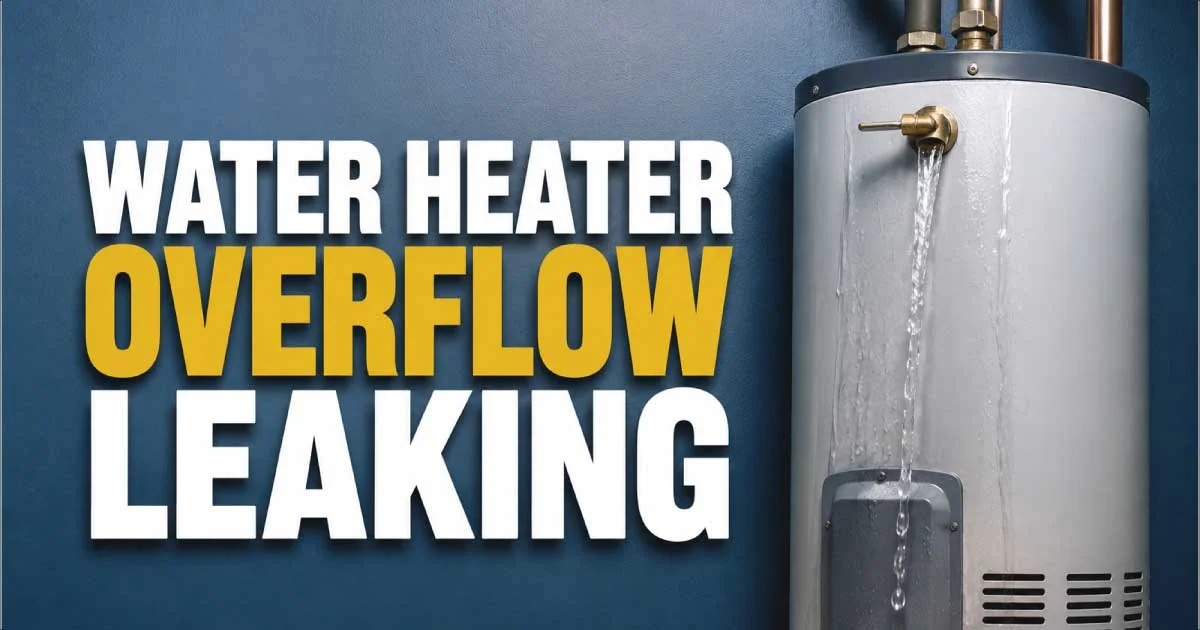
A water heater overflow leaking can be alarming, messy, and potentially expensive if ignored. Whether you’ve noticed water pooling around your heater, dripping from an overflow pipe, or unexplained moisture in your utility room, this issue is a warning sign that something isn’t working correctly. While some causes are minor and easy to fix, others can lead to serious water damage, mold growth, or even system failure.
In this comprehensive guide, we’ll explain what a water heater overflow leak is, why it happens, how dangerous it can be, and what steps you should take to fix or prevent it.
Understanding the Water Heater Overflow System
The overflow system is an important built-in safety feature that protects your water heater from excessive pressure and overheating. Understanding how this system functions can help you identify whether a leak is part of normal safety operation or a warning sign of a more serious problem requiring immediate attention.
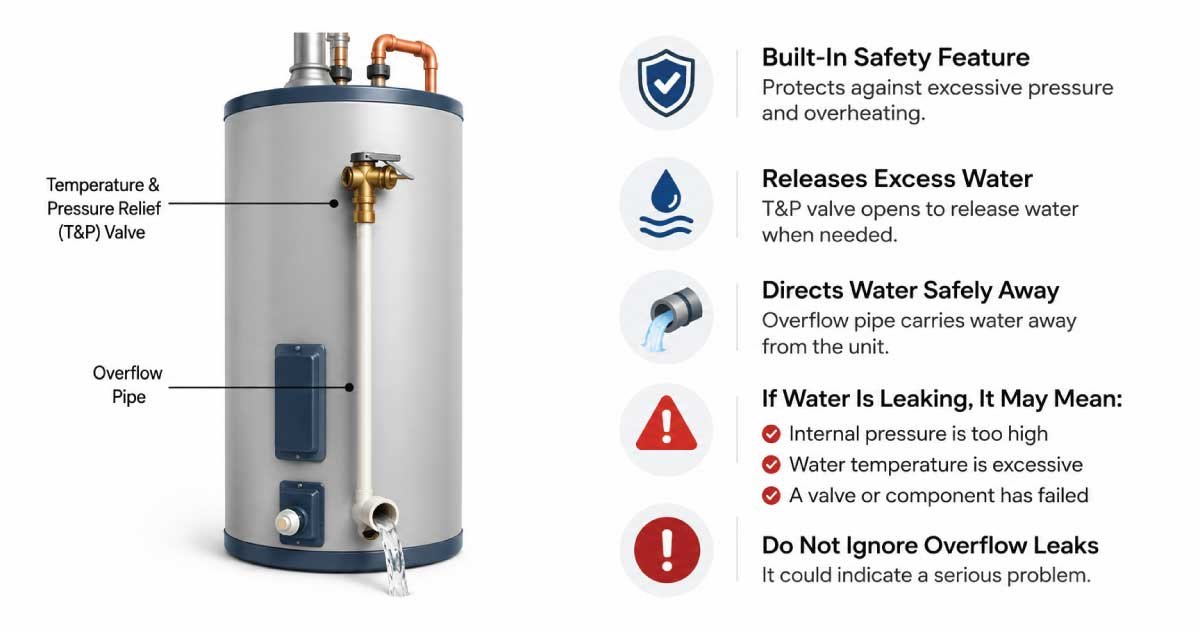
Most water heaters include a temperature and pressure relief valve (T&P valve) or an overflow pipe. This safety feature releases water when pressure or temperature inside the tank becomes dangerously high. The overflow pipe directs excess water safely away from the unit, preventing explosions or tank rupture.
If water is leaking from this overflow system, it usually means:
- Internal pressure is too high
- The water temperature is excessive
- A valve or component has failed
In short, an overflow leak is not something to ignore.
Common Causes of Water Heater Overflow Leaking
An overflowing water heater can result from several mechanical, plumbing, or maintenance-related issues. Identifying the exact cause is essential because the overflow system is designed to protect your home from excessive pressure and overheating, making any persistent leak a warning sign that should not be ignored.
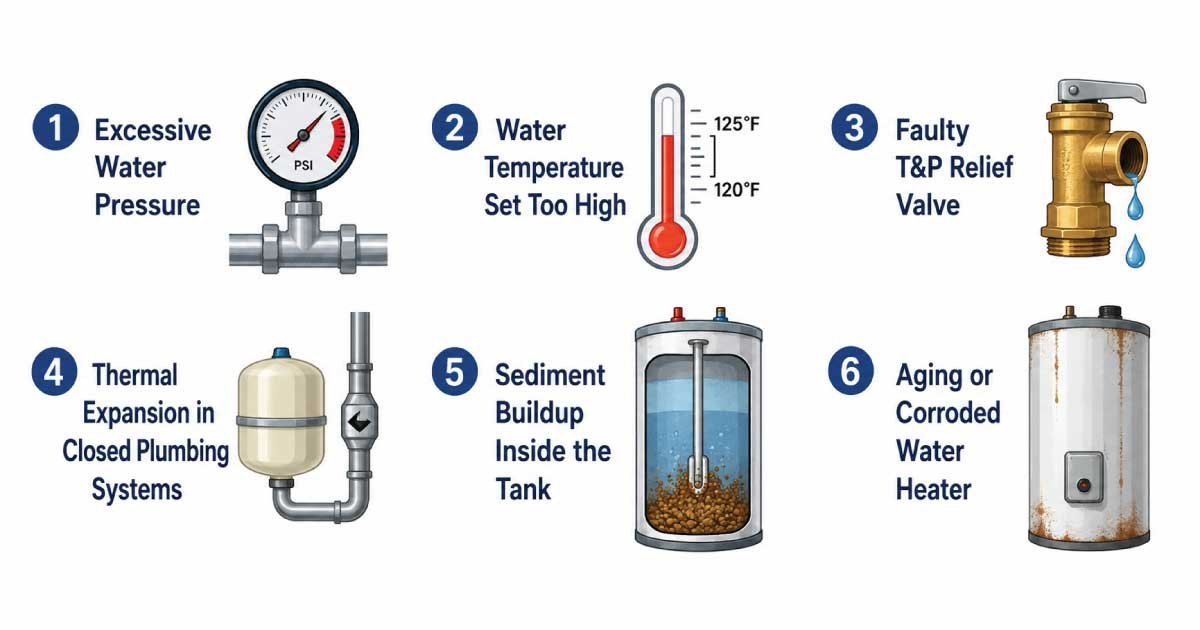
1. Excessive Water Pressure
Excessively high household water pressure places added stress on your plumbing system and water heater. When the pressure inside the tank exceeds safe operating limits, the temperature and pressure relief valve automatically releases water to prevent dangerous pressure buildup.
High water pressure is one of the most common reasons a water heater overflow starts leaking. When incoming pressure exceeds safe limits (usually above 80 PSI), the T&P valve releases water to relieve the pressure.
Signs of high water pressure:
- Frequent dripping from the overflow pipe
- Banging or knocking pipes
- Shortened appliance lifespan
A pressure-reducing valve may be required if household pressure is consistently too high.
2. Water Temperature Set Too High
Setting the water heater thermostat above the recommended temperature causes water to expand more than normal during heating. This increased expansion raises internal pressure and may force the relief valve to discharge water through the overflow pipe.
Most water heaters should be set between 120°F and 125°F. If the thermostat is set too high, the water can overheat, expand, and increase pressure inside the tank—triggering the overflow valve.
Risks of overheating include:
- Scalding injuries
- Increased energy bills
- Constant overflow discharge
Lowering the thermostat often resolves this issue quickly.
3. Faulty Temperature and Pressure Relief Valve
The temperature and pressure (T&P) relief valve is a critical safety device that opens only when necessary. Over time, mineral deposits, corrosion, or normal wear can prevent the valve from sealing properly, resulting in persistent or intermittent leaks.
The T&P valve is a mechanical component that can wear out over time due to mineral buildup, corrosion, or age.
When it fails, it may:
- Leak continuously
- Drip intermittently
- Fail to close completely
A defective valve should be replaced immediately, as it is a critical safety feature.
4. Thermal Expansion in Closed Plumbing Systems
Closed plumbing systems prevent heated water from expanding back into the municipal water supply. Without enough room for expansion, pressure builds inside the water heater until the relief valve opens and releases excess water.
In homes with closed plumbing systems (often due to check valves or backflow preventers), heated water has nowhere to expand. This pressure buildup forces water out through the overflow valve.
Installing a thermal expansion tank provides space for expanding water and prevents repeated overflow leaks.
5. Sediment Buildup Inside the Tank
Mineral deposits naturally accumulate inside water heaters over time, especially in areas with hard water. Excess sediment reduces heating efficiency, creates hot spots, and can contribute to higher internal temperatures and pressure within the tank.
Over time, minerals in hard water settle at the bottom of the tank.
This sediment can:
- Reduce heating efficiency
- Cause overheating
- Damage internal components
- Increase pressure levels
Sediment buildup can indirectly trigger overflow leaks by forcing the heater to work harder than necessary.
6. Aging or Corroded Water Heater
As a water heater ages, its internal components become more susceptible to corrosion, wear, and leaks. Older units are more likely to experience recurring overflow problems that may indicate the system is approaching the end of its service life.
Water heaters typically last 8–12 years. As they age, internal corrosion weakens the tank and valves, increasing the likelihood of leaks.
If your overflow leak occurs alongside rust-colored water, unusual noises, or frequent repairs, replacement may be more cost-effective than continued fixes.
 Also Read
  What Causes a Water Heater Reset Button to Fail?
How a Plumber Diagnoses the Problem
Professional diagnosis helps identify the exact reason your water heater is leaking from the overflow pipe rather than simply treating the symptom. A licensed plumber uses specialized tools and systematic inspections to determine whether the issue involves pressure, temperature, worn components, or overall water heater condition.
A licensed plumber will typically:
- Measure household water pressure
- Test the T&P valve
- Inspect thermostat settings
- Check for thermal expansion issues
- Evaluate sediment levels
- Assess the age and condition of the heater
Based on these findings, they may recommend a repair, component replacement, or full system upgrade.
Preventing Future Water Heater Overflow Leaks 3
Preventive maintenance is the most effective way to avoid recurring overflow leaks and extend the lifespan of your water heater. Regular inspections, proper pressure management, and timely component replacements can reduce the risk of unexpected failures and costly water damage.
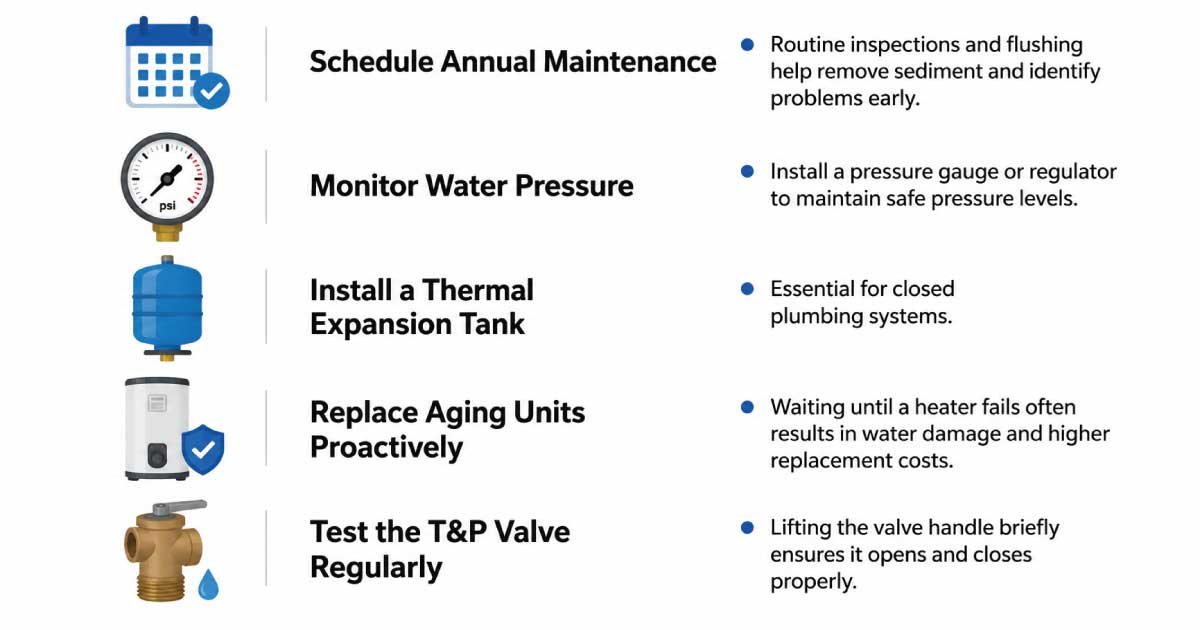
Schedule Annual Maintenance
Routine professional maintenance helps keep your water heater operating safely and efficiently. Annual inspections allow technicians to identify worn components, flush accumulated sediment, and correct minor issues before they develop into expensive repairs.
Routine inspections and flushing help remove sediment and identify problems early.
Monitor Water Pressure
Maintaining safe household water pressure protects your water heater and plumbing system from unnecessary stress. Monitoring pressure regularly helps prevent relief valve discharge, leaks, and premature wear on plumbing fixtures and appliances.
Install a pressure gauge or regulator to maintain safe pressure levels.
Install a Thermal Expansion Tank
A thermal expansion tank provides additional space for heated water to expand inside closed plumbing systems. This reduces excessive pressure buildup and helps prevent repeated overflow valve discharge during normal water heater operation.
Essential for closed plumbing systems.
Replace Aging Units Proactively
Older water heaters are more likely to develop leaks, corrosion, and pressure-related issues. Replacing an aging unit before it fails can prevent costly property damage and improve overall energy efficiency.
Waiting until a heater fails often results in water damage and higher replacement costs.
Test the T&P Valve Regularly
Regularly testing the temperature and pressure relief valve helps confirm that this critical safety device is functioning correctly. Routine checks can identify sticking or faulty valves before they contribute to overflow leaks or pressure-related hazards.
Lifting the valve handle briefly ensures it opens and closes properly.
Also Read What Causes a Water Heater Heating Element to Fail?
When Replacement Is the Best Option
Although many overflow leaks can be repaired, there are situations where replacing the entire water heater is the more practical and cost-effective solution. If your unit is aging, inefficient, or requires frequent repairs, investing in a new system can provide greater reliability, improved safety, and long-term savings.
Modern water heaters offer:
- Better energy efficiency
- Improved safety features
- Lower operating costs
- Reduced risk of leaks
A professional plumber can help you choose the right size and type for your household’s needs.
Final Thoughts
A water heater overflow leaking is more than just a nuisance—it’s a sign that your system is under stress or malfunctioning. While the overflow valve is designed to protect your home, continuous leaking should never be ignored.
By understanding the causes, acting quickly, and investing in proper maintenance, you can avoid costly repairs, water damage, and unexpected system failures. When in doubt, always consult a licensed plumbing professional to ensure your water heater remains safe, efficient, and reliable.