What Causes a Water Heater Thermostat to Fail?

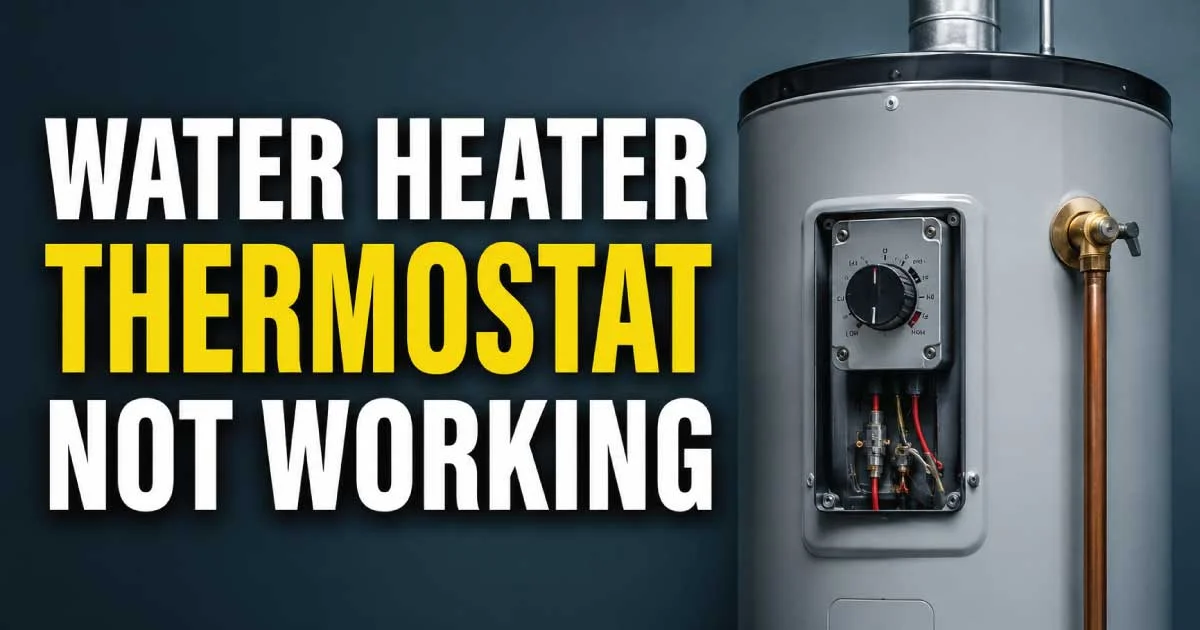
A water heater that fails to deliver hot water can disrupt your entire routine. One of the most common reasons behind this problem is a water heater thermostat not working properly. Since the thermostat controls the temperature of the water inside the tank, even a minor malfunction can lead to cold showers, inconsistent heating, or dangerously hot water.

In this in-depth guide, we’ll explore how water heater thermostats work, the warning signs of failure, common causes, troubleshooting steps, repair options, and when it’s best to call a professional. Whether you have an electric or gas water heater, this article will help you understand the problem and make informed decisions.


Understanding the Role of a Water Heater Thermostat 
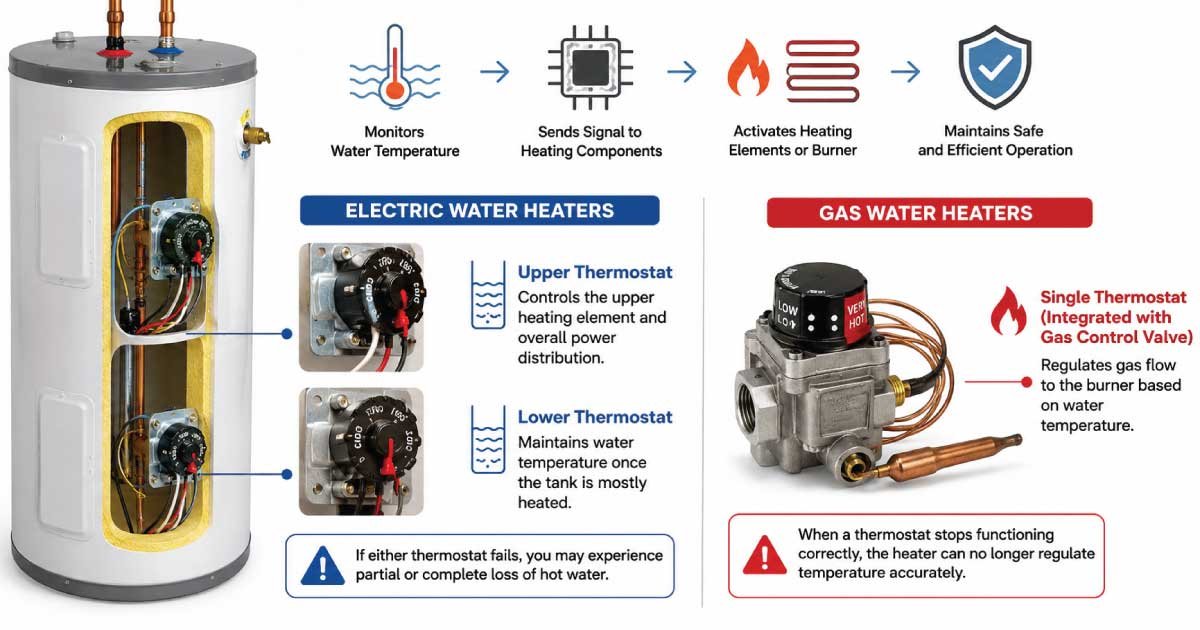
The thermostat acts as the command center of a water heater, constantly monitoring water temperature and deciding when heating should start or stop. By communicating with heating elements or gas components, it ensures consistent comfort, energy efficiency, and protects the system from overheating or insufficient hot water.

Understanding the Role of a Water Heater Thermostat

Electric Water Heaters

Electric water heaters rely on thermostats to manage staged heating inside the tank. These controls coordinate how electricity is delivered to heating elements, helping the unit warm water evenly, respond to demand changes, and avoid excessive power use while maintaining reliable hot water availability.

Most electric water heaters have two thermostats:

  • Upper thermostat – Controls the upper heating element and overall power distribution.
  • Lower thermostat – Maintains water temperature once the tank is mostly heated.

If either thermostat fails, you may experience partial or complete loss of hot water.

Gas Water Heaters

Gas water heaters use a simpler but highly important thermostat system to control burner operation. By sensing water temperature and adjusting gas flow, this mechanism balances safety, fuel efficiency, and consistent performance, ensuring water is heated effectively without unnecessary gas consumption or temperature fluctuations.

Gas water heaters typically use a single thermostat integrated with the gas control valve. It regulates gas flow to the burner based on water temperature.When a thermostat stops functioning correctly, the heater can no longer regulate temperature accurately.


Common Signs Your Water Heater Thermostat Is Not Working

Identifying thermostat problems early helps prevent system strain, unexpected cold showers, and costly repairs. A failing thermostat disrupts temperature regulation, often showing clear warning signs. Understanding these symptoms allows homeowners to take timely action before the water heater experiences further damage.

1. No Hot Water at All

A complete lack of hot water is often one of the most noticeable signs of thermostat failure. When the thermostat cannot detect water temperature accurately, it may never activate the heating elements or gas burner, leaving the tank unable to heat water properly.

If your water heater produces no hot water, a faulty thermostat may not be signaling the heating system to turn on.

2. Water Is Too Hot

Excessively hot water is more than an inconvenience—it poses a serious safety risk. A malfunctioning thermostat may fail to shut off the heating process, allowing temperatures to rise uncontrollably and increasing the risk of scalding, pressure buildup, and damage to internal components.

Overheating water is a serious safety issue. A broken thermostat may fail to shut off the heating element or burner, causing scalding temperatures and excessive pressure buildup.

3. Inconsistent Water Temperature

Fluctuating water temperatures can be frustrating and often indicate poor thermostat regulation. When the thermostat sends irregular signals or electrical connections are compromised, the heater struggles to maintain steady heating, resulting in unpredictable shifts between hot and cold water.

Water that alternates between hot and cold often points to a malfunctioning lower thermostat or loose electrical connections.

4. Short Supply of Hot Water

Running out of hot water faster than usual can signal that part of the heating process is failing. If the lower thermostat does not activate properly, only a portion of the tank heats, reducing available hot water and affecting daily household usage.

If hot water runs out quickly, the lower thermostat may not be activating the lower heating element properly.

5. Tripped Circuit Breaker (Electric Heaters)

Frequent circuit breaker trips are a warning sign that the electrical system is under stress. A faulty thermostat can cause heating elements to operate continuously, drawing excessive power and forcing the breaker to shut down to prevent electrical damage or fire hazards.

A defective thermostat can cause heating elements to run continuously, overloading the circuit and tripping the breaker.


Why a Water Heater Thermostat Stops Working 

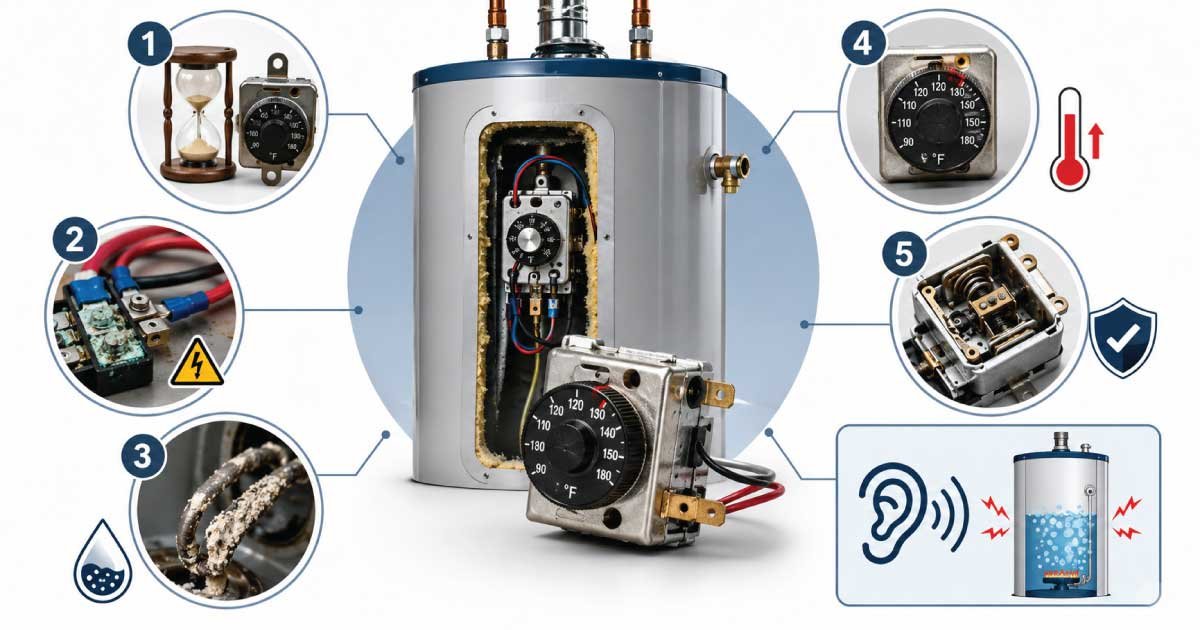
Knowing why a thermostat fails helps homeowners make informed decisions about maintenance, repair, or replacement. Thermostat problems often develop gradually due to environmental, electrical, or usage-related factors. Understanding these root causes can prevent repeat failures and extend the overall lifespan of the water heater.
Why a Water Heater Thermostat Stops Working

1. Normal Wear and Tear

Like most mechanical and electrical components, thermostats naturally degrade over time. Constant heating cycles, temperature fluctuations, and long-term exposure to heat gradually weaken internal parts, making older thermostats more vulnerable to inaccurate readings, delayed responses, or complete failure.

Thermostats degrade over time due to constant heating cycles. Older units are especially prone to failure.

2. Electrical Issues

Electrical problems are a common cause of thermostat malfunction in electric water heaters. Loose connections, damaged wiring, corrosion, or sudden power surges can disrupt communication between the thermostat and heating elements, preventing proper temperature control and potentially creating safety concerns.

Loose wiring, corroded terminals, or power surges can interfere with thermostat operation in electric heaters.

3. Sediment Buildup

Sediment accumulation inside the tank can interfere with how the thermostat senses water temperature. Mineral deposits act as insulation, trapping heat and causing inaccurate readings, which forces the thermostat to work harder than intended and increases the risk of overheating or premature failure.

Mineral deposits inside the tank can cause inaccurate temperature readings, forcing the thermostat to work harder or fail prematurely.

4. Improper Temperature Settings

Incorrect thermostat settings place unnecessary stress on water heater components. When set too high, the system must work longer and harder, increasing internal temperatures beyond normal operating ranges and accelerating wear on the thermostat and heating elements.

Setting the thermostat too high can strain components and cause overheating, leading to early failure.

5. Manufacturing Defects

In rare cases, thermostat failure is not related to usage or maintenance. Internal manufacturing flaws, defective materials, or faulty calibration can cause a thermostat to stop working unexpectedly, even in newer water heaters that have otherwise been properly installed and maintained.

Though less common, some thermostats fail due to internal defects even in relatively new water heaters.
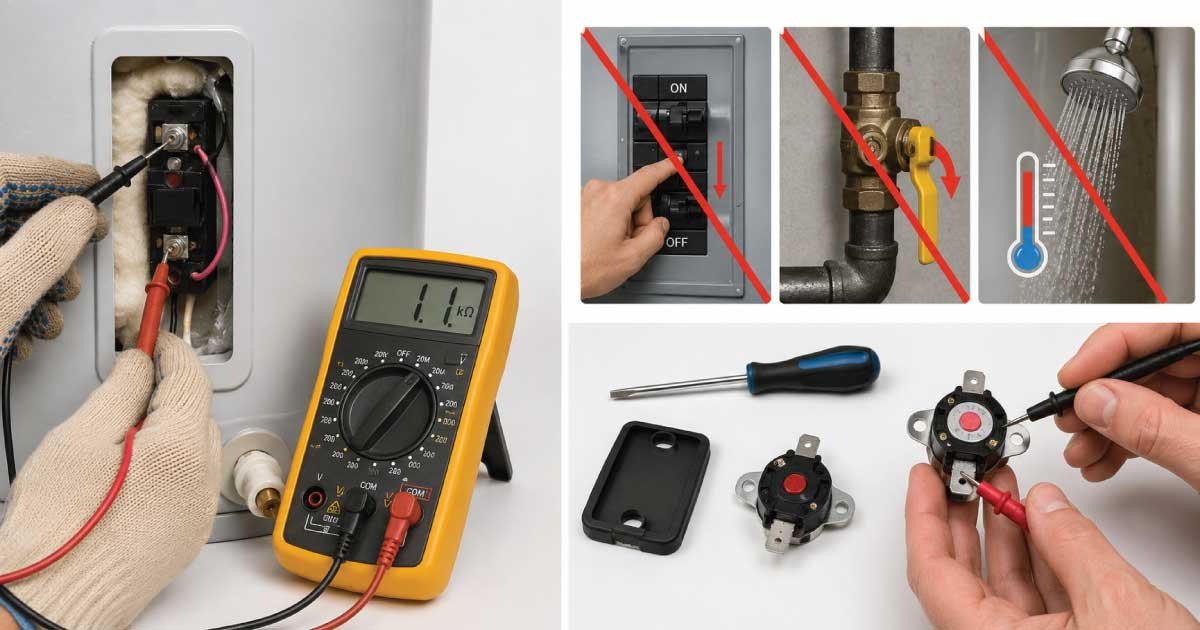

How to Test a Water Heater Thermostat  

Testing a water heater thermostat before replacing it helps avoid unnecessary repairs and expenses. Proper diagnosis ensures the real issue is identified, whether it’s the thermostat, wiring, or heating system. Following correct testing steps also improves safety and prevents accidental damage to the unit.

How-to-Test-a-Water-Heater-Thermostat

Safety First

Before beginning any thermostat testing, safety precautions are essential to protect against electrical shock, gas leaks, or burns. Water heaters operate with high voltage, gas pressure, and hot water, so taking time to properly shut down the system ensures the testing process is performed safely and responsibly.

  • Turn off power at the circuit breaker (electric heaters).
  • Shut off gas supply (gas heaters).
  • Allow the water to cool to avoid burns.

Testing an Electric Water Heater Thermostat

Electric thermostats can be tested accurately using basic tools and careful access to internal components. By checking electrical continuity, you can determine whether the thermostat is properly responding to temperature demands or failing to send power to the heating elements when required.

  • Remove the access panel and insulation.
  • Use a multimeter set to the continuity or resistance setting.
  • Check terminals on the thermostat.
  • A working thermostat should show continuity when calling for heat.
  • No continuity usually means the thermostat is faulty.

Testing a Gas Water Heater Thermostat

Gas water heater thermostats are more difficult to test because they are integrated with the gas control valve. Diagnosis often relies on observing burner behavior rather than direct electrical testing, making symptom-based evaluation an important part of identifying thermostat failure.

Gas thermostats are harder to test directly. If the pilot light stays lit but the burner doesn’t ignite when water is cold, the thermostat may be defective.

💡 Learn More: Discover helpful information. 👉


Can You Fix a Water Heater Thermostat Yourself?

Many homeowners can handle minor thermostat-related repairs, particularly on electric water heaters. The feasibility depends on the type of heater, the nature of the problem, and personal comfort with basic electrical tasks. Understanding when DIY is appropriate helps avoid safety hazards and unnecessary damage.

In many cases, yes, especially with electric water heaters.


DIY-Friendly Situations

Certain thermostat issues are simple and low-risk, making them suitable for do-it-yourself repairs. These tasks usually involve minimal disassembly and do not require advanced tools or specialized training, as long as power is fully shut off and safety precautions are followed carefully.

  • Replacing an electric thermostat with an identical model
  • Tightening loose wiring connections
  • Resetting a tripped high-limit switch

When DIY Is Not Recommended

Some thermostat problems involve serious safety risks that outweigh the benefits of DIY repair. Gas components and complex electrical failures require professional expertise, proper diagnostic equipment, and compliance with safety codes to prevent fire, shock, or gas exposure.

  • Gas water heater thermostat issues
  • Signs of gas leaks
  • Electrical wiring damage
  • Repeated thermostat failures

Gas systems and complex electrical issues pose safety risks and should be handled by licensed professionals.


How to Replace an Electric Water Heater Thermostat

If testing confirms the thermostat is defective, replacement is usually straightforward.

Basic Steps

  1. Turn off power at the breaker.
  2. Remove access panels and insulation.
  3. Take note of wire placement or photograph it.
  4. Disconnect wires from the old thermostat.
  5. Remove the thermostat from its bracket.
  6. Install the new thermostat in the same position.
  7. Reconnect wires securely.
  8. Replace insulation and access panels.
  9. Restore power and test.

Always use a thermostat that matches your water heater’s voltage and rating.


Proper Temperature Settings for Safety and Efficiency

Correct thermostat temperature settings play a critical role in water heater performance, safety, and operating costs. Many common thermostat issues are caused not by mechanical failure, but by settings that place unnecessary stress on the system. Maintaining proper temperatures helps balance comfort, efficiency, and long-term reliability.

Recommended Temperature

  • 120°F (49°C) is widely considered the safest and most energy-efficient setting.

Why This Matters

  • Reduces risk of scalding
  • Lowers energy consumption
  • Minimizes mineral buildup
  • Extends thermostat and heater lifespan

Avoid setting temperatures above 130°F unless absolutely necessary.


How Sediment Affects Thermostat Performance 

Sediment buildup is one of the most overlooked causes of water heater problems, yet it significantly impacts thermostat accuracy and overall system efficiency. Over time, mineral deposits accumulate inside the tank and interfere with normal heating patterns, leading to poor performance, higher energy use, and inconsistent water temperatures.
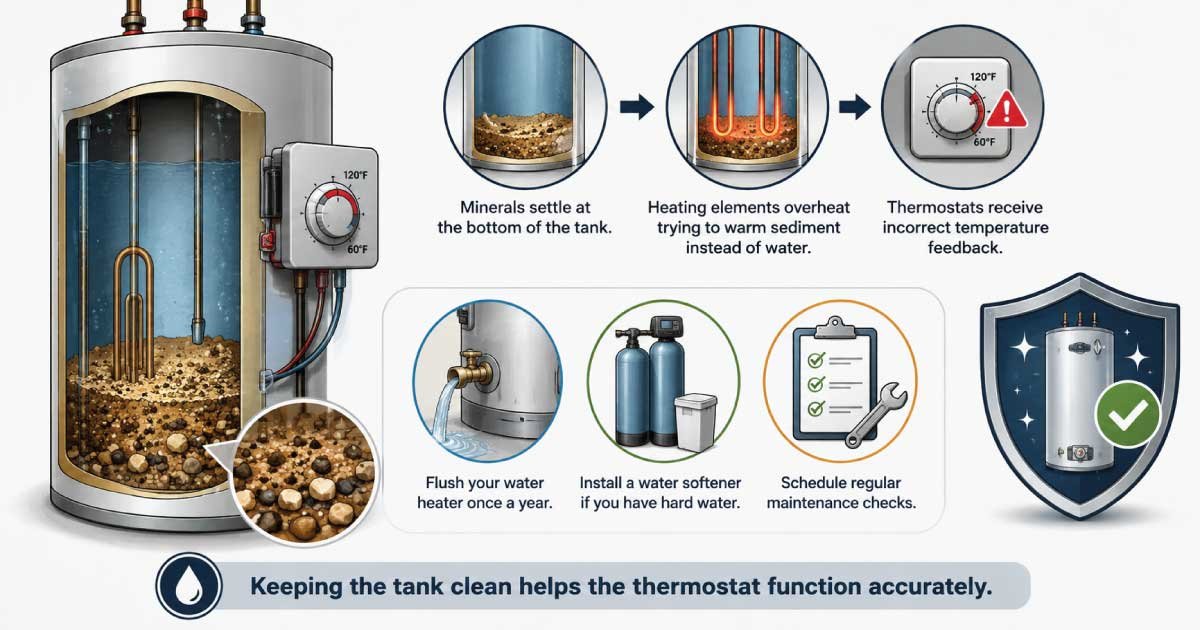
How Sediment Affects Thermostat Performance

Sediment buildup is a silent killer of water heaters.

What Happens

When sediment collects at the bottom of the tank, it creates a barrier between the heating source and the water. This forces components to work harder, causes uneven heating, and confuses thermostat readings, which depend on accurate temperature feedback from the surrounding water.

  • Minerals settle at the bottom of the tank.
  • Heating elements overheat trying to warm sediment instead of water.
  • Thermostats receive incorrect temperature feedback.

Prevention Tips

Preventing sediment buildup is essential for maintaining thermostat accuracy and extending the lifespan of the water heater. Regular maintenance helps ensure efficient heat transfer, reduces strain on components, and minimizes the chances of unexpected breakdowns or fluctuating water temperatures.

  • Flush your water heater once a year.
  • Install a water softener if you have hard water.
  • Schedule regular maintenance checks.

Keeping the tank clean helps the thermostat function accurately.


Repair vs. Replacement: What’s the Better Option?

Deciding whether to repair or replace a faulty thermostat depends on the overall condition of the water heater and how often problems occur. While repairs can solve minor issues, repeated failures or aging equipment may indicate that a full replacement is more cost-effective and reliable in the long run.

Sometimes replacing the thermostat isn’t enough.

Repair Makes Sense When:

Repairing the thermostat is usually practical when the water heater is still in good condition and the issue is isolated. In such cases, fixing or replacing a single faulty component can restore normal operation without the need for a full system upgrade.

  • The heater is under 8–10 years old
  • Only one thermostat is faulty
  • The tank and heating elements are in good condition

Replacement Is Better When:

In some situations, replacing the entire water heater is the more sensible option, especially when multiple problems exist or the unit is approaching the end of its expected lifespan. Frequent issues often signal deeper system deterioration that repairs cannot permanently resolve.

  • The heater is nearing the end of its lifespan
  • Thermostat issues keep recurring
  • The tank shows signs of corrosion or leakage
  • Energy bills are steadily increasing

A new water heater may cost more upfront but save money long-term.


When to Call a Professional

Although some thermostat issues can be handled through basic DIY steps, certain situations require expert attention. Safety risks, complex diagnostics, or recurring failures are strong indicators that a licensed technician should inspect and repair the system properly.

While thermostat replacement can be a DIY project, professional help is recommended if:

  • You have a gas water heater
  • Electrical tests are confusing or unsafe
  • Water is dangerously hot
  • Circuit breakers keep tripping
  • You suspect multiple component failures

A licensed technician can diagnose the issue accurately and ensure safe operation.


Preventing Future Thermostat Problems

Regular maintenance and proper usage habits can significantly reduce thermostat failures and extend the life of your water heater. Simple preventive steps help maintain efficiency, improve safety, and minimize the likelihood of unexpected breakdowns or costly repairs.

A little maintenance goes a long way.

Best Practices

Following consistent maintenance practices helps ensure stable performance and reduces strain on the thermostat and heating system. These habits also improve energy efficiency and help detect early signs of wear before they turn into major problems.

  • Keep temperature set at 120°F
  • Flush the tank annually
  • Inspect wiring and access panels periodically
  • Replace aging components proactively
  • Address small issues before they escalate

Preventive care can extend the life of both the thermostat and the water heater.


Final Thoughts

A water heater thermostat not working is one of the most common yet fixable water heater problems. From inconsistent temperatures to complete loss of hot water, the thermostat plays a crucial role in daily comfort and safety. By understanding the symptoms, causes, and solutions, you can troubleshoot confidently and decide whether a simple fix or professional repair is needed.

Addressing thermostat issues promptly not only restores reliable hot water but also improves energy efficiency and protects your home from potential hazards. With proper maintenance and timely repairs, your water heater can continue serving you efficiently for years to come.

💡 Learn More: Discover helpful information. 👉

Leave a Comment