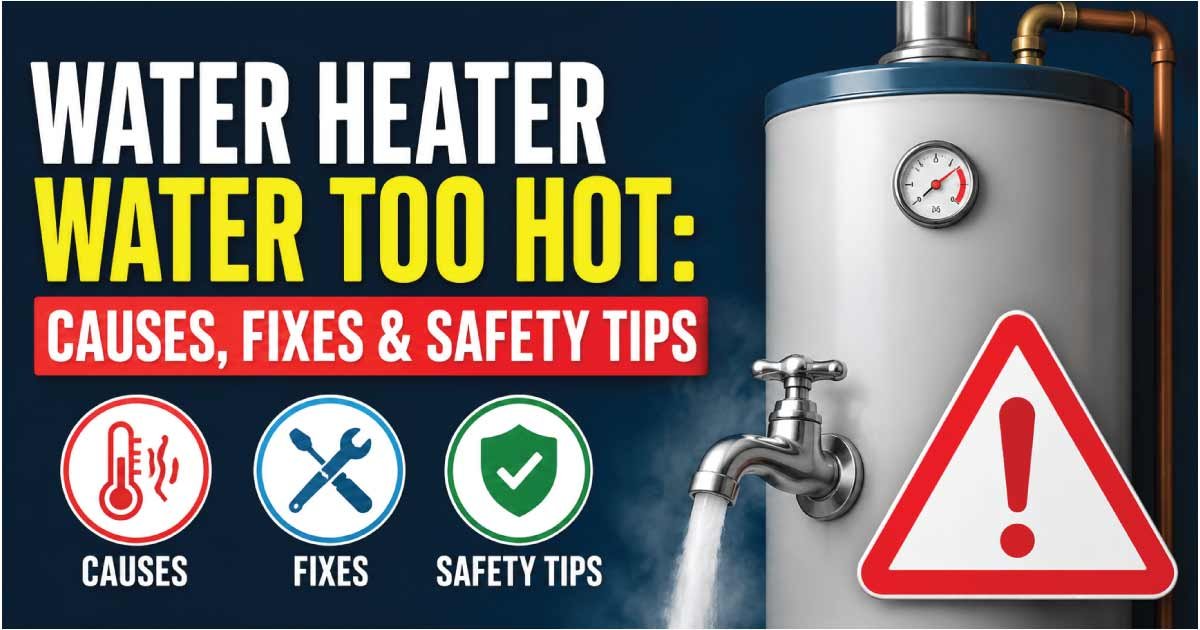
A water heater too hot water problem can make showers uncomfortable and create a serious scalding risk. If the water coming from your faucets is suddenly much hotter than normal, the problem may be caused by an incorrect temperature setting, a faulty thermostat, a malfunctioning heating element, a burner control problem, or another water heater component.
Hot water should be warm enough for normal household use without creating an unnecessary burn risk. When a water heater overheats, it is important to identify the cause instead of simply turning down the faucet temperature.
Both gas and electric water heaters can produce excessively hot water, although the components responsible for controlling temperature are different. Electric models commonly rely on thermostats and heating elements, while gas models use temperature controls, gas valves, and burners.
A water heater that produces too hot water should not be ignored, particularly if the temperature has changed suddenly. Extremely hot water can cause severe burns, while excessive heating can also increase pressure inside a storage tank.
What Causes a Water Heater to Make Water Too Hot?
There are several reasons why a water heater may produce water that is hotter than expected.
The most common causes include:
- Temperature setting that is too high
- Faulty thermostat
- Stuck thermostat
- Damaged heating element
- Gas control valve problem
- Burner control problem
- Temperature sensor failure
- Thermal expansion
- Incorrect installation
- Malfunctioning mixing valve
- Plumbing circulation problems
The first step is determining whether the problem affects all hot-water fixtures or only one faucet or shower.
| Possible Cause | Common Sign | Potential Solution |
|---|---|---|
| Temperature setting too high | All hot water is excessively hot | Adjust setting |
| Faulty thermostat | Temperature changes unexpectedly | Inspect/replace thermostat |
| Heating element problem | Electric heater overheats | Professional inspection |
| Gas control problem | Gas heater overheats | Professional service |
| Mixing valve issue | Outlet temperature is abnormal | Inspect valve |
| Thermal expansion | Pressure and temperature changes | Check plumbing system |
| Sensor problem | Inconsistent temperature | Inspect controls |
Is Water From a Water Heater Supposed to Be Very Hot?
Hot water should be sufficiently warm for bathing, washing dishes, and other household activities, but excessively hot water is not desirable.
The exact recommended temperature depends on the household, equipment, and applicable safety guidance.
A temperature that feels manageable to one person may cause a burn to another person, particularly children, older adults, or anyone who has reduced sensitivity to heat.
Why Excessively Hot Water Is a Problem
Water that is too hot can cause:
- Skin burns
- Scalding
- Accidental injuries
- Increased energy consumption
- Excessive pressure
- Damage to plumbing components
If water temperature suddenly becomes much hotter than normal, investigate the water heater rather than assuming it is simply a setting issue.
Water Heater Temperature Setting Is Too High
One of the simplest explanations for excessively hot water is an incorrectly adjusted temperature setting.
Someone may have increased the setting intentionally or accidentally.
Temperature settings can also be changed during maintenance or installation.
Check the Temperature Setting
Look for the temperature control specified by the manufacturer.
Depending on the model, it may be located:
- On the front control panel
- Behind an access panel
- Near the lower portion of an electric heater
- On the gas control assembly
Do not remove covers or access electrical components unless you understand the required safety procedures.
If the setting appears normal but the water is still extremely hot, another problem may be present.
Faulty Thermostat Causing Water to Get Too Hot
A malfunctioning thermostat is one of the most important causes of overheating in an electric water heater.
The thermostat is designed to monitor water temperature and control when the heating element turns on and off.
If the thermostat fails to shut the heating element off at the correct temperature, the water can continue heating.
Signs of a Bad Thermostat
A faulty thermostat may cause:
- Extremely hot water
- Temperature fluctuations
- Insufficient hot water at other times
- Heating elements running too long
- Circuit breaker problems
- Uneven water temperature
Electric water heaters can contain multiple thermostats, depending on their design.
A qualified technician can test the thermostats and determine whether they are operating correctly.
Electric Water Heater Making Water Too Hot
An electric water heater can produce excessively hot water when its control system fails.
The most common components involved are:
- Thermostat
- Heating element
- Wiring
- Temperature sensor
- Control system
Heating Element Problems
A heating element that does not shut off correctly can continue transferring heat into the water.
This may result in unusually high temperatures.
Mineral scale around an element can also affect normal operation.
If the water is dangerously hot, do not repeatedly reset the heater or continue operating it while trying to diagnose an electrical fault.
Electrical water heater repairs should be performed by a qualified person.
Gas Water Heater Making Water Too Hot
Gas water heaters use a different heating and control system.
A gas water heater may produce excessively hot water because of:
- Faulty gas control valve
- Thermostat problem
- Temperature sensor failure
- Burner control issue
- Incorrect temperature setting
- Control system malfunction
The gas control valve regulates burner operation and helps control water temperature.
If the control system fails, the burner may operate longer than intended.
Gas Water Heater Safety
Gas appliances require special care.
Do not attempt to disassemble or adjust gas valves, gas pressure, or burner components unless you are appropriately qualified.
If you smell gas, leave the area and contact the appropriate gas or emergency service.
Water Heater Too Hot Even on a Low Setting
If the temperature control appears to be set low but the water remains excessively hot, the control system may not be working correctly.
Possible causes include:
- Faulty thermostat
- Stuck thermostat
- Defective temperature sensor
- Faulty gas control valve
- Wiring problem
- Heating element problem
- Mixing valve issue
This situation should not be treated simply as a temperature adjustment problem.
A technician may need to test the components to determine why the heater is ignoring the selected setting.
Water Heater Temperature Keeps Changing
If the water alternates between normal and extremely hot temperatures, the problem may involve temperature regulation.
Possible causes include:
- Faulty thermostat
- Malfunctioning mixing valve
- Mineral buildup
- Heating element problem
- Gas control issue
- Incorrect water flow
- Plumbing circulation problem
A fluctuating temperature is particularly noticeable in showers.
If the temperature suddenly becomes extremely hot, stop using the water until the problem can be safely evaluated.
Thermal Expansion and Excessively Hot Water
Water expands when heated.
In a closed plumbing system, heated water may have limited space to expand. This can temporarily increase pressure.
Thermal expansion does not usually explain all cases of excessively hot water, but it can contribute to pressure-related symptoms.
Possible signs include:
- Dripping relief valve
- Pressure fluctuations
- Ticking pipes
- Knocking sounds
- Temperature changes
An expansion-control solution may be appropriate depending on the plumbing configuration.
Water Heater Too Hot and Pressure Relief Valve Leaking
A temperature and pressure relief valve, often called a T&P valve, is an important safety component on many tank water heaters.
It is designed to release water when temperature or pressure becomes dangerously high.
If the water heater is producing excessively hot water and the T&P valve is discharging water, the situation deserves prompt attention.
Why the T&P Valve Matters
The relief valve helps protect the tank from dangerous temperature or pressure conditions.
Never:
- Block the valve
- Cap the discharge
- Remove the valve
- Permanently stop it from operating
If the valve is releasing water, determine why it is doing so rather than simply trying to stop the discharge.
Can a Bad Thermostat Cause Overheating?
Yes.
A thermostat that is stuck, damaged, incorrectly calibrated, or electrically defective may fail to stop heating at the intended temperature.
This can cause the water heater to continue heating beyond the desired temperature.
Common Thermostat Symptoms
A thermostat problem may produce:
- Very hot water
- Inconsistent temperatures
- Short or long heating cycles
- Insufficient hot water
- Heating that does not shut off normally
Because thermostat testing can involve electricity or gas controls, professional service is recommended when the cause is uncertain.
Can a Bad Heating Element Make Water Too Hot?
A faulty electric heating element can contribute to abnormal water temperatures, particularly when the control system is not switching it off properly.
An element may also become covered with mineral deposits.
Scale can affect heat transfer and contribute to unusual heating behavior.
Signs of an electric heating system problem may include:
- Excessively hot water
- Uneven water temperature
- Reduced heating efficiency
- Strange sounds
- Tripped breakers
- Longer heating cycles
A technician can test the heating elements and thermostats together because either component can affect overall performance.
Water Heater Too Hot After Installation
If the water heater has recently been installed and produces excessively hot water, the temperature controls may not have been configured correctly.
Potential causes include:
- Incorrect thermostat setting
- Incorrect gas control setting
- Wiring error
- Improper sensor installation
- Mixing valve configuration
- Incorrect plumbing connection
Do not assume a newly installed water heater is automatically configured correctly.
Contact the installer if the water temperature is significantly higher than expected.
Water Heater Too Hot After Maintenance
A water heater may behave differently after maintenance if a control was adjusted or a component was replaced.
Possible causes include:
- Thermostat adjustment
- Incorrect wiring
- Incorrect replacement component
- Temperature control setting
- Valve configuration
If overheating begins immediately after maintenance, contact the person who performed the work and explain the change.
Discover More:
How to Check Why Your Water Heater Is Too Hot
Start with simple observations rather than immediately disassembling the heater.
Step 1: Check Multiple Faucets
Run hot water from several fixtures.
Determine whether the problem affects:
- Kitchen faucet
- Bathroom sink
- Shower
- Laundry faucet
If every fixture produces excessively hot water, the water heater or central mixing system is more likely responsible.
Step 2: Check the Temperature Setting
Look at the manufacturer’s temperature control.
If the setting is already appropriate but water remains extremely hot, a component may be malfunctioning.
Step 3: Look for Warning Signs
Check for:
- Leaking relief valve
- Water leaks
- Corrosion
- Unusual noises
- Steam
- Pressure problems
Do not touch hot components.
How to Fix a Water Heater That Is Too Hot
The appropriate solution depends on the cause.
| Problem | Potential Fix | Skill Level |
|---|---|---|
| Incorrect temperature setting | Adjust according to manufacturer guidance | Basic |
| Faulty thermostat | Test and replace | Professional recommended |
| Heating element issue | Test/replace | Professional recommended |
| Gas control problem | Inspect/service | Professional |
| Mixing valve problem | Inspect/replace | Professional recommended |
| High pressure | Diagnose plumbing pressure | Professional recommended |
| Thermal expansion | Evaluate expansion control | Professional recommended |
| Damaged safety valve | Replace correctly | Professional recommended |
The safest approach is to address the underlying fault rather than repeatedly lowering the temperature control.
How to Lower Water Heater Temperature Safely
If the temperature setting is clearly higher than intended, follow the manufacturer’s instructions for adjusting it.
Allow the system time to stabilize before judging the result.
Do not make repeated large adjustments.
If the temperature remains excessively high despite a reasonable setting, stop treating the issue as a simple adjustment problem.
A faulty thermostat, sensor, gas control, or heating component may need service.
Discover More:
Water Heater Too Hot in the Shower
A shower that suddenly becomes dangerously hot can be particularly concerning.
The problem may originate from:
- Water heater temperature
- Thermostatic mixing valve
- Shower mixing valve
- Pressure fluctuations
- Faulty cartridge
If only one shower is affected while other faucets produce normal hot water, the shower valve may be the problem rather than the water heater.
If every hot-water fixture is affected, investigate the central water heating system.
Water Heater Too Hot at One Faucet Only
When only one faucet produces excessively hot water, the water heater may be operating normally.
Possible causes include:
- Faucet cartridge problem
- Mixing valve problem
- Incorrect local valve setting
- Plumbing connection issue
Test multiple fixtures before assuming the water heater is defective.
This simple comparison can prevent unnecessary water heater repairs.
Water Heater Too Hot and Making Noise
Excessive temperature combined with unusual noises deserves additional attention.
Possible causes include:
- Faulty thermostat
- Sediment
- Mineral scale
- Heating element problem
- Burner issue
- Thermal expansion
- High pressure
Common sounds may include:
- Popping
- Rumbling
- Hissing
- Sizzling
- Knocking
- Banging
If excessive heat is accompanied by a loud rumbling or pressure-related noise, professional inspection is recommended.
Discover More:
Water Heater Too Hot and Leaking
A water heater producing excessively hot water while also leaking should be inspected promptly.
Possible leak sources include:
- T&P relief valve
- Drain valve
- Supply connection
- Heating element gasket
- Pipe fitting
- Tank body
A leaking tank may indicate internal corrosion.
If water is leaking from the tank itself, replacement is generally more appropriate than attempting to repair the tank shell.
How to Prevent Water Heater Overheating
Preventive maintenance can help identify temperature-control problems before they become serious.
Useful practices include:
- Follow the manufacturer’s maintenance recommendations.
- Monitor water temperature.
- Inspect visible connections.
- Check for leaks.
- Monitor household water pressure.
- Have older water heaters inspected.
- Address unusual noises promptly.
- Maintain appropriate temperature controls.
- Test or service components when symptoms appear.
Do not ignore a sudden change in water temperature.
Water Heater Temperature Safety Tips
Excessively hot water can cause serious burns.
For safer operation:
- Do not assume hot water is safe because it looks normal.
- Test water carefully before bathing.
- Be especially cautious around children.
- Consider vulnerable household members.
- Investigate sudden temperature changes.
- Do not bypass safety controls.
- Do not block the pressure relief system.
If the water suddenly becomes much hotter than normal, stop using the affected fixture until the cause is identified.
When to Call a Plumber or Water Heater Technician
Professional assistance is recommended when:
- The water remains excessively hot after adjusting the setting.
- A thermostat may be faulty.
- An electric heating element may be malfunctioning.
- A gas control valve may be defective.
- The T&P valve is releasing water.
- The tank is leaking.
- The system is overheating.
- Water temperature fluctuates dramatically.
- The water heater is making unusual noises.
- Electrical components are involved.
- You smell gas.
Gas and electrical water heater repairs require appropriate training and safety procedures.
Is a Water Heater That Is Too Hot Dangerous?
Yes, excessively hot water can create a significant scalding hazard.
The risk is particularly important for:
- Young children
- Older adults
- People with reduced heat sensitivity
- Anyone using the shower without checking temperature
Overheating can also increase pressure within a tank system.
A properly functioning temperature and pressure safety system is therefore important.
If the water is extremely hot and the relief valve is discharging, seek professional assistance promptly.
Should You Replace a Water Heater That Is Too Hot?
Not necessarily.
Overheating can often be caused by a thermostat, temperature control, heating element, valve, or other serviceable component.
Replacement may become more appropriate when the water heater also has:
- A leaking tank
- Severe corrosion
- Frequent component failures
- Significant age
- Poor overall performance
- High repair costs
A professional inspection can determine whether repair or replacement makes more sense.
| Water Heater Condition | Repair Usually Considered? | Replacement More Likely? |
|---|---|---|
| Incorrect temperature setting | ✓ | |
| Faulty thermostat | ✓ | |
| Faulty heating element | ✓ | |
| Faulty valve | ✓ | |
| Minor plumbing issue | ✓ | |
| Leaking tank | ✓ | |
| Severe corrosion | ✓ | |
| Repeated major failures | ✓ |
Water Heater Too Hot: Quick Troubleshooting Checklist
Use this checklist when your water heater is producing excessively hot water:
- Check whether all faucets are affected.
- Check the temperature setting.
- Note whether the problem is constant or intermittent.
- Look for water around the heater.
- Check for relief valve discharge.
- Listen for unusual noises.
- Consider whether the problem began after maintenance.
- Do not bypass safety controls.
- Avoid touching hot or energized components.
- Contact a qualified professional when necessary.
This process can help distinguish a simple setting issue from a more serious control problem.
Frequently Asked Questions
Why is my water heater making the water too hot?
The most common causes include a temperature setting that is too high, a faulty thermostat, a heating element problem, a gas control issue, or a malfunctioning mixing valve.
How do I stop my water heater from getting too hot?
First check the temperature setting according to the manufacturer’s instructions. If the setting is reasonable but the water remains excessively hot, the thermostat, heating element, gas control, or another component may require professional inspection.
Can a bad thermostat make water too hot?
Yes. A faulty thermostat may fail to shut off the heating system at the intended temperature, allowing the water to continue heating.
Why is my electric water heater making water too hot?
A thermostat or heating element problem can cause an electric water heater to overheat. Wiring or control problems may also be involved.
Why is my gas water heater making water too hot?
A gas water heater may overheat because of an incorrect temperature setting, faulty gas control valve, thermostat problem, sensor failure, or burner control issue.
Why is my shower water suddenly extremely hot?
If only the shower is affected, a shower mixing valve or cartridge may be responsible. If every hot-water fixture is too hot, the water heater or central mixing system is more likely the cause.
Can high water pressure make water too hot?
High water pressure does not usually directly cause excessive water temperature, but it can contribute to pressure-related water heater problems and thermal expansion.
Why is my water heater too hot and leaking?
Excessive temperature or pressure can cause a relief valve to discharge water. A leak can also come from a connection, valve, heating element gasket, or a damaged tank.
Should I turn off my water heater if the water is extremely hot?
If the water heater appears to be dangerously overheating or is producing steam, leaking heavily, or showing another serious warning sign, seek professional assistance and follow the manufacturer’s emergency instructions. Do not touch hot components.
Can sediment cause a water heater to overheat?
Heavy sediment can interfere with normal heat transfer and contribute to inefficient or abnormal heating. It can also cause popping and rumbling sounds.
How often should I check my water heater temperature?
Check the temperature whenever you notice a change in hot-water behavior. Regular maintenance should follow the manufacturer’s recommendations and the needs of your plumbing system.
Does a water heater that is too hot need to be replaced?
Not necessarily. A thermostat, heating element, gas control, or mixing valve may be repairable. Replacement is more likely when the tank itself is leaking, badly corroded, old, or repeatedly failing.
Final Thoughts
A water heater too hot water problem should not be ignored because excessively hot water can cause serious scalding and may indicate a malfunction in the heating or temperature-control system.
Start by determining whether every hot-water fixture is affected. If only one shower or faucet is too hot, the local mixing valve or faucet may be responsible. If the entire home has excessively hot water, investigate the water heater’s temperature setting and control system.
A faulty thermostat is a common concern with electric water heaters, while gas models may experience problems involving the gas control valve, burner, or temperature sensor. Thermal expansion, mineral buildup, and mixing valve problems can also contribute to unusual temperature behavior.
If lowering the temperature setting does not solve the problem, do not repeatedly adjust the control or bypass safety devices. A qualified technician should inspect the system.
Most importantly, treat sudden or extreme overheating seriously—especially when it occurs alongside a leaking relief valve, steam, unusual noises, excessive pressure, electrical problems, or a gas odor. Prompt attention can help protect your household from burns and prevent more serious water heater damage.