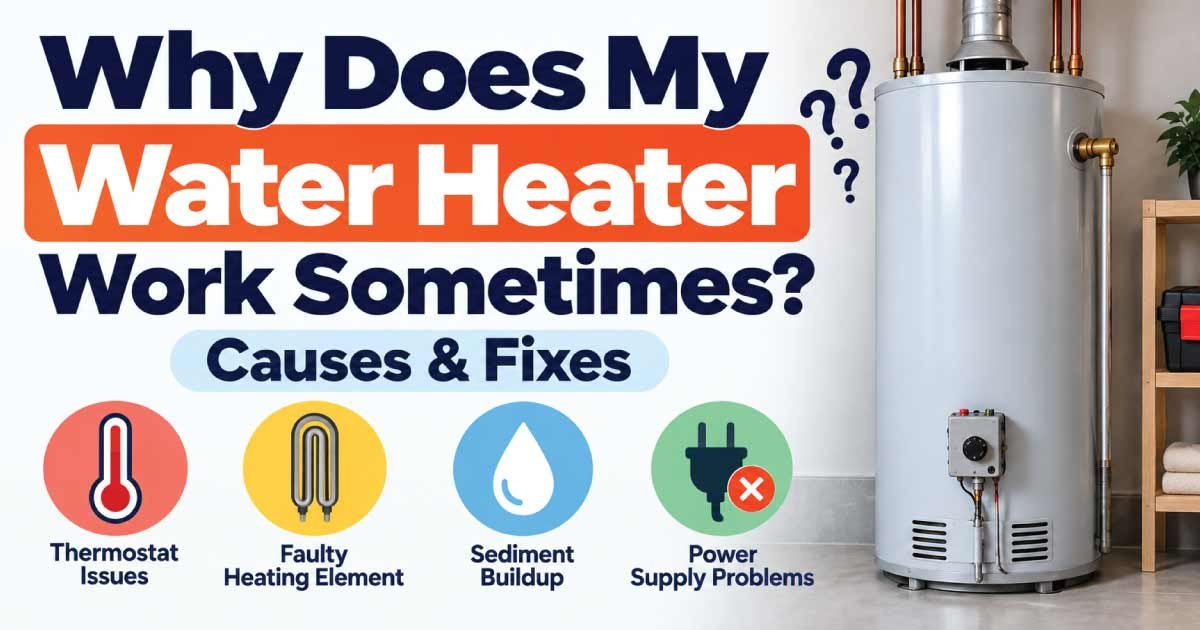
A water heater that works sometimes but stops working at other times can be frustrating, especially when the problem seems to disappear on its own. You may get hot water in the morning but cold water later, or the heater may operate normally for several days before suddenly failing.
Intermittent water heater problems usually indicate an electrical, gas, thermostat, heating element, control, or water-flow issue. In some cases, the problem is caused by a loose connection or failing component that works only under certain conditions.
This guide explains the most common reasons a water heater works intermittently, how to identify the symptoms, what you can safely check, and when professional repair is necessary.
What Does It Mean When a Water Heater Works Sometimes?
When a water heater works intermittently, it means the unit can produce hot water under some conditions but fails to heat water consistently. The exact pattern can provide an important clue about the underlying problem.
For example, an electric water heater that heats water sometimes may have a failing heating element, thermostat, electrical connection, or breaker. A gas water heater may have an intermittent pilot, thermocouple, gas valve, burner, or ignition problem.
Common symptoms include:
- Hot water works in the morning but not later.
- The water heater randomly stops heating.
- Hot water returns after resetting the breaker.
- The pilot light goes out occasionally.
- The burner starts and stops unexpectedly.
- Water becomes lukewarm instead of hot.
- The heater works after several hours but then stops.
- Only a limited amount of hot water is available.
- The water heater makes unusual clicking or humming sounds.
- The unit repeatedly trips the circuit breaker.
An intermittent problem should not be ignored simply because the heater eventually starts working again. A component that is beginning to fail can eventually stop working completely.
Why Does My Water Heater Work Sometimes and Not Others?
Several different components can cause intermittent water heater operation. The most likely cause depends on whether you have an electric, gas, tankless, or hybrid water heater.
| Possible Cause | Electric Heater | Gas Heater | Common Symptom |
|---|---|---|---|
| Faulty thermostat | ✓ | ✓ | Temperature changes |
| Bad heating element | ✓ | — | Lukewarm/cold water |
| Loose electrical connection | ✓ | Sometimes | Random operation |
| Tripped breaker | ✓ | — | Complete loss of heating |
| Weak pilot/thermocouple | — | ✓ | Burner shuts off |
| Gas valve problem | — | ✓ | Intermittent burner |
| Sediment buildup | ✓ | ✓ | Poor heating |
| Faulty control board | ✓ | ✓ | Random operation |
| High-temperature cutoff | ✓ | — | Heater stops unexpectedly |
| Restricted water flow | ✓ | ✓ | Inconsistent hot water |
The key is to match the symptom with the component most likely responsible.
Common Causes of an Intermittent Water Heater
Faulty Thermostat
A thermostat controls when the water heater turns on and off to maintain the desired temperature. If the thermostat becomes worn or defective, it may incorrectly detect water temperature.
This can cause the heater to operate normally at one point and fail to activate at another.
A faulty thermostat may produce:
- Inconsistent water temperature
- Lukewarm water
- Water that suddenly becomes cold
- Heating that starts and stops unexpectedly
- One heating cycle working while another does not
Electric storage water heaters commonly have upper and lower thermostats. If one thermostat fails, the heater may still produce some hot water but not enough.
For safety, electrical testing and thermostat replacement should be performed only after the power has been properly disconnected.
Failing Heating Element
Electric water heaters use heating elements to transfer electrical energy into the water. A damaged or partially failed element can cause inconsistent heating.
A heating element may develop:
- Internal damage
- Mineral deposits
- Electrical resistance problems
- Short circuits
- Burned connections
If an element is failing, the heater may work temporarily and then stop producing enough heat.
A common clue is that the water is warm but never reaches the normal temperature, particularly when the household uses more hot water than usual.
Loose Electrical Connection
A loose wire or terminal can create intermittent electrical contact. When the connection is good, the heater operates. When the connection becomes unstable, heating may stop.
Possible signs include:
- Random heating failure
- Flickering or inconsistent operation
- Burned wiring
- Discolored terminals
- A breaker that occasionally trips
- Electrical odors
Loose electrical connections can create heat and potentially become a fire hazard. Do not operate or inspect exposed electrical components if you are not qualified to do so.
Tripping Circuit Breaker
An electric water heater requires substantial electrical power. If the circuit breaker repeatedly trips, the heater may work until the breaker opens and then remain off.
A breaker may trip because of:
- A shorted heating element
- Damaged wiring
- An electrical overload
- A defective thermostat
- Moisture entering an electrical connection
- A problem with the breaker itself
If the breaker trips repeatedly, repeatedly resetting it is not a proper repair. The underlying electrical problem needs to be diagnosed.
High-Temperature Cutoff Problem
Many electric water heaters include a high-temperature cutoff mechanism. Its purpose is to interrupt power if the water becomes excessively hot.
If the cutoff activates unexpectedly, the heater may stop heating even though other components appear normal.
A faulty thermostat, wiring problem, or control issue can cause repeated cutoff activation.
Sediment Buildup
Minerals and sediment can accumulate inside a storage tank over time. This is particularly common where the incoming water contains significant mineral content.
Sediment can settle around the bottom of the tank and heating elements, reducing heating efficiency.
Symptoms may include:
- Longer heating times
- Lukewarm water
- Reduced hot-water capacity
- Popping or rumbling noises
- Inconsistent heating
Sediment buildup usually develops gradually rather than causing an immediate intermittent failure, but heavy deposits can contribute to poor and inconsistent performance.
Why Does My Electric Water Heater Work Intermittently?
Electric water heaters commonly experience intermittent operation because they depend on several electrical components working together.
The basic heating sequence is:
Power → Thermostat → Heating element → Heat transfer to water
A problem anywhere in this sequence can cause inconsistent heating.
Upper Heating Element Problems
Many electric storage water heaters use two heating elements: an upper element and a lower element.
The upper element generally heats the upper portion of the tank and can have an important role in the heating sequence. If it fails, the heater may produce little or no usable hot water.
Lower Heating Element Problems
The lower heating element is responsible for heating much of the lower portion of the tank.
If the lower element fails, you may initially have hot water but run out much faster than expected.
This creates a common situation where someone thinks the water heater is working because hot water is available for a short time, but the heater cannot properly recover.
Thermostat Problems
A defective thermostat can incorrectly control the heating elements. The element itself may be perfectly functional but may not receive power at the correct time.
If your electric heater alternates between heating normally and not heating at all, the thermostat and its electrical connections should be considered.
Why Does My Gas Water Heater Work Sometimes?
Gas water heaters have different failure points from electric models. Instead of heating elements, they depend on a burner and gas-control system.
A typical gas heating sequence involves:
Thermostat → Gas control → Ignition/pilot → Burner → Heat transfer
A problem in any of these stages can cause intermittent operation.
Pilot Light Problems
A pilot light that repeatedly goes out can cause the burner to stop operating.
Possible causes include:
- Dirty pilot assembly
- Weak pilot flame
- Thermocouple problems
- Gas supply issues
- Drafts around the heater
- Faulty gas control components
If the pilot will not remain lit, avoid repeatedly attempting to operate the appliance without determining why it is going out.
Thermocouple Problems
The thermocouple is a safety device used on many conventional gas water heaters. It helps confirm that the pilot flame is present.
If the thermocouple does not correctly sense the flame, the gas supply can be interrupted.
This can make the water heater appear to work normally for a while and then suddenly stop.
Gas Control Valve Problems
A malfunctioning gas control valve can cause inconsistent burner operation.
The heater may:
- Start normally
- Heat water
- Stop unexpectedly
- Fail to restart correctly
Gas-control components require careful diagnosis because incorrect servicing can create serious safety risks.
Burner or Ignition Problems
A dirty burner or unreliable ignition system can prevent the burner from lighting consistently.
If you hear ignition attempts but the burner does not remain operating, the ignition and gas-delivery system should be inspected.
How to Tell What Is Causing the Problem
The timing and symptoms of the failure can help narrow down the cause.
| Symptom | More Likely Causes |
|---|---|
| No hot water at all | Power, thermostat, element, gas supply, ignition |
| Hot water for a short time | Lower element, insufficient recovery, sediment |
| Heater works after resetting breaker | Electrical fault or high-limit issue |
| Pilot repeatedly goes out | Thermocouple, pilot, gas control, airflow |
| Water is only lukewarm | Element, thermostat, mixing valve, recovery issue |
| Breaker repeatedly trips | Electrical fault, element, wiring |
| Burner starts then stops | Thermocouple, gas control, flame problem |
| Long recovery time | Sediment, failing element, undersized heater |
| Temperature changes suddenly | Thermostat, mixing valve, control problem |
The symptom does not always identify the exact failed component, but it can help determine where troubleshooting should begin.
First Things to Check When a Water Heater Stops Working
Before assuming the entire water heater needs replacement, check the basic conditions that can affect operation.
Check Whether Other Faucets Have Hot Water
Turn on hot water at another faucet.
If one faucet has hot water while another does not, the problem may be localized to the plumbing fixture, faucet cartridge, mixing valve, or supply line rather than the water heater.
If every hot-water fixture is affected, investigate the heater itself.
Check the Water Heater’s Power
For an electric water heater, determine whether the dedicated circuit has power.
Look at the electrical panel for a tripped breaker.
If the breaker is off, you can follow the manufacturer’s normal reset procedure once. However, a breaker that trips again indicates that the underlying problem needs attention.
Check the Temperature Setting
A thermostat setting that is too low can make the water seem insufficiently hot.
However, changing the temperature setting will not repair a failing thermostat, element, burner, or other component.
Check for Leaks
Look around the water heater for visible water.
Pay particular attention to:
- Tank connections
- Temperature and pressure relief valve
- Drain valve
- Inlet and outlet connections
- Bottom of the tank
A leaking tank may require replacement rather than a simple repair.
How to Fix an Intermittent Water Heater
The correct repair depends on the failed component.
Reset the Water Heater
A reset can sometimes restore operation when a safety control has interrupted heating.
However, resetting is a troubleshooting step, not a permanent repair.
If the heater repeatedly needs resetting, investigate why the safety device is activating.
Replace a Faulty Thermostat
If testing confirms that a thermostat is defective, replacing it can restore normal temperature control.
Because electric water heater thermostats operate with high-voltage electrical circuits, power must be completely disconnected before service.
Replace a Failed Heating Element
A failed electric heating element can usually be replaced rather than replacing the entire water heater.
The replacement element must match the heater’s specifications, including:
- Voltage
- Wattage
- Element style
- Mounting type
- Thread or bolt pattern
- Physical dimensions
Common styles include screw-in and bolt-in heating elements.
Clean or Service the Burner
For gas models, burner problems may require cleaning or professional service.
A burner should produce a stable flame appropriate for the appliance. Unusual flame behavior, soot, or repeated ignition failure should be treated as a service issue.
Address Sediment Buildup
Tank flushing can help remove accumulated sediment and improve heating performance when the heater and plumbing system are suitable for the procedure.
Older systems may require additional care because valves, connections, or components can be difficult to operate safely after years of service.
Discover More:
When an Intermittent Water Heater Needs Professional Repair
Some water heater problems should not be treated as DIY projects.
Contact a qualified technician when you notice:
- Repeated breaker trips
- Burned electrical wires
- Electrical burning smells
- Gas odor
- Carbon monoxide concerns
- A pilot that repeatedly goes out
- Water leaking from the tank
- A damaged gas control
- Persistent overheating
- A relief valve repeatedly discharging water
- Severe corrosion
- A tank that appears structurally damaged
Gas and high-voltage electrical systems can cause serious injury if improperly serviced.
Discover More:
Can a Water Heater Work Sometimes Because of a Bad Thermostat?
Yes. A faulty thermostat is one possible explanation for intermittent heating.
A thermostat does not simply turn the heater on permanently. It monitors temperature and controls the heating cycle.
When the thermostat becomes unreliable, it may:
- Turn heating on too late
- Turn heating off too early
- Fail to activate the element
- Activate the safety cutoff
- Provide inconsistent temperature control
If the heater works normally after sitting for several hours but then stops heating, thermostat and control-system problems should be considered alongside heating-element issues.
Can a Bad Heating Element Make Hot Water Come and Go?
Yes, especially in an electric tank water heater with multiple heating elements.
A partially failed heating system can create a misleading pattern:
- The tank initially contains hot water.
- Someone uses hot water.
- The heater needs to recover.
- A defective element fails to provide adequate heat.
- The water gradually becomes lukewarm or cold.
- The heater may appear to work again after another heating cycle or after conditions change.
This is why testing the heating elements and thermostats is more reliable than simply observing whether the heater is currently producing hot water.
Discover More:
Why Does My Water Heater Work After I Reset It?
If a water heater works after being reset, the reset may have restored power or cleared a safety interruption.
However, repeated resets are a warning sign.
Potential causes include:
- High-temperature cutoff activation
- Faulty thermostat
- Shorted heating element
- Wiring problem
- Control malfunction
- Electrical component failure
A properly functioning water heater should not require frequent manual resets.
If resetting temporarily fixes the problem but the same issue returns, focus on diagnosing the reason for the interruption rather than continuing to reset the unit.
Why Does My Water Heater Work in the Morning but Not at Night?
This pattern can have several explanations.
During the night, the heater may have many hours to recover. By morning, the tank is fully heated.
During the day, multiple showers, laundry cycles, dishwashing, and other activities can consume the stored hot water faster than the heater can recover.
However, if the household’s normal hot-water usage has not changed and the heater suddenly cannot keep up, a failing component may be responsible.
Possible causes include:
- Weak heating element
- Faulty thermostat
- Sediment buildup
- Excessive hot-water demand
- Mixing valve problem
- Incorrect temperature setting
Why Does My Water Heater Work for a Few Minutes Then Stop?
If the heater starts normally but stops shortly afterward, the problem may involve a control or safety component.
For electric units, investigate:
- Thermostat
- Heating element
- High-temperature cutoff
- Electrical connections
- Circuit breaker
For gas units, investigate:
- Pilot flame
- Thermocouple
- Burner
- Gas control
- Ignition system
The exact diagnosis depends on the model and symptoms.
Could the Plumbing Cause Inconsistent Hot Water?
Yes. Not every hot-water problem originates inside the water heater.
A defective mixing valve can combine hot and cold water incorrectly, causing the temperature at the faucet to fluctuate.
Other plumbing-related causes include:
- Faulty faucet cartridge
- Cross-connection between hot and cold lines
- Partially closed valve
- Restricted pipe
- Recirculation-system problem
- Incorrectly installed plumbing
If the water heater maintains its temperature but the water at one fixture fluctuates, investigate the plumbing fixture before replacing heater components.
How to Prevent Intermittent Water Heater Problems
Regular maintenance can help identify developing problems before they become complete failures.
Inspect the System Regularly
Look for:
- Leaks
- Corrosion
- Damaged insulation
- Unusual noises
- Loose-looking connections
- Signs of overheating
- Abnormal burner operation
Maintain the Tank
Depending on the heater type and manufacturer’s recommendations, maintenance may include sediment management, checking safety components, and inspecting the anode rod.
Monitor Temperature Changes
Pay attention when hot-water performance changes.
A gradual reduction in hot-water capacity can provide an early warning that an element, thermostat, burner, or other component needs attention.
Do Not Ignore Repeated Resets
If you repeatedly reset the water heater, treat that as a symptom rather than a solution.
A recurring reset usually means a safety control or another component is interrupting normal operation.
Intermittent Water Heater Troubleshooting Checklist
Use this checklist to organize your observations before calling a technician.
- Determine whether the heater is electric or gas.
- Check whether all faucets are affected.
- Note whether the water is cold, lukewarm, or fully hot.
- Check whether the breaker has tripped on an electric model.
- Check whether the pilot remains lit on a gas model.
- Listen for unusual popping, clicking, humming, or rumbling.
- Look for visible leaks.
- Check whether the heater needs repeated resetting.
- Note when the problem occurs.
- Consider whether hot-water demand has recently increased.
- Check the approximate age of the water heater.
- Record any error codes shown by a modern control system.
- Avoid opening electrical or gas components unless you are qualified.
These observations can make professional diagnosis considerably easier.
When Should You Replace the Water Heater Instead of Repairing It?
An intermittent problem does not automatically mean the entire water heater needs replacement.
A repair may make sense when the tank itself is sound and the problem is caused by a replaceable component such as a thermostat, heating element, thermocouple, or other serviceable part.
Replacement becomes more reasonable when the tank has:
- Significant corrosion
- A structural leak
- Repeated major failures
- Severe deterioration
- Poor efficiency compared with newer equipment
- A repair cost that is disproportionate to the remaining service life
The condition of the tank is particularly important for conventional storage water heaters. A failed heating component and a leaking tank are very different situations.
Frequently Asked Questions About Intermittent Water Heaters
Why does my water heater work sometimes?
An intermittent water heater may have a faulty thermostat, heating element, burner, thermocouple, gas control, electrical connection, safety cutoff, or sediment buildup. The exact cause depends on the heater type and symptoms.
Why does my water heater work intermittently?
Intermittent operation usually occurs when a component works under some conditions but fails under others. Electrical connections, thermostats, heating elements, ignition systems, and safety controls are common areas to investigate.
What causes a water heater to stop working?
A water heater can stop working because of electrical power loss, a tripped breaker, failed heating element, defective thermostat, gas-supply problem, pilot failure, thermocouple problem, burner issue, or control-system fault.
What are the signs of water heater failure?
Common warning signs include inconsistent water temperature, insufficient hot water, unusual noises, leaks, repeated breaker trips, pilot problems, slow recovery, and frequent safety resets.
What are the first things to check on a water heater?
Check whether the problem affects all hot-water fixtures, verify the basic power or fuel supply, look for leaks, observe the pilot or burner on gas models, and check for obvious error conditions.
How do I know if my water heater is broken?
If the heater repeatedly fails to produce hot water, requires frequent resets, trips its breaker, has a persistent pilot problem, leaks from the tank, or shows serious electrical or gas symptoms, professional diagnosis is recommended.
Is it safe to keep resetting a water heater?
No. A reset may temporarily restore operation, but repeatedly resetting the unit can conceal an underlying electrical, temperature-control, or safety problem. Repeated trips should be professionally diagnosed.
Can low water pressure make hot water inconsistent?
Low or fluctuating water pressure can affect how water behaves at fixtures, but it does not normally explain an electric or gas heater repeatedly losing its ability to heat. Plumbing and heater problems should be separated during troubleshooting.
Can sediment cause a water heater to stop heating properly?
Yes. Heavy sediment can reduce heat-transfer efficiency, increase heating time, create unusual noises, and reduce usable hot-water capacity. It can contribute to poor or inconsistent performance.
Is an intermittent water heater an emergency?
Not every intermittent failure is an emergency. However, gas odors, suspected carbon monoxide problems, exposed or burning electrical wiring, significant leaks, overheating, or other dangerous conditions require immediate attention.
Final Thoughts
If your water heater works sometimes but not consistently, the problem is usually not random. Intermittent operation is often an early warning that a component is becoming unreliable.
For electric water heaters, thermostats, heating elements, electrical connections, circuit breakers, and high-temperature cutoffs are important areas to investigate. For gas water heaters, the pilot, thermocouple, burner, ignition system, gas control, and fuel supply are common possibilities.
Start by identifying the exact pattern: when the heater works, when it fails, whether the water is cold or lukewarm, and whether the problem affects the entire home. These details can significantly narrow down the possible causes.
Most importantly, do not repeatedly reset a heater that keeps shutting down, and do not attempt unfamiliar gas or high-voltage electrical repairs. A correct diagnosis can often save the cost of replacing an otherwise serviceable water heater.