
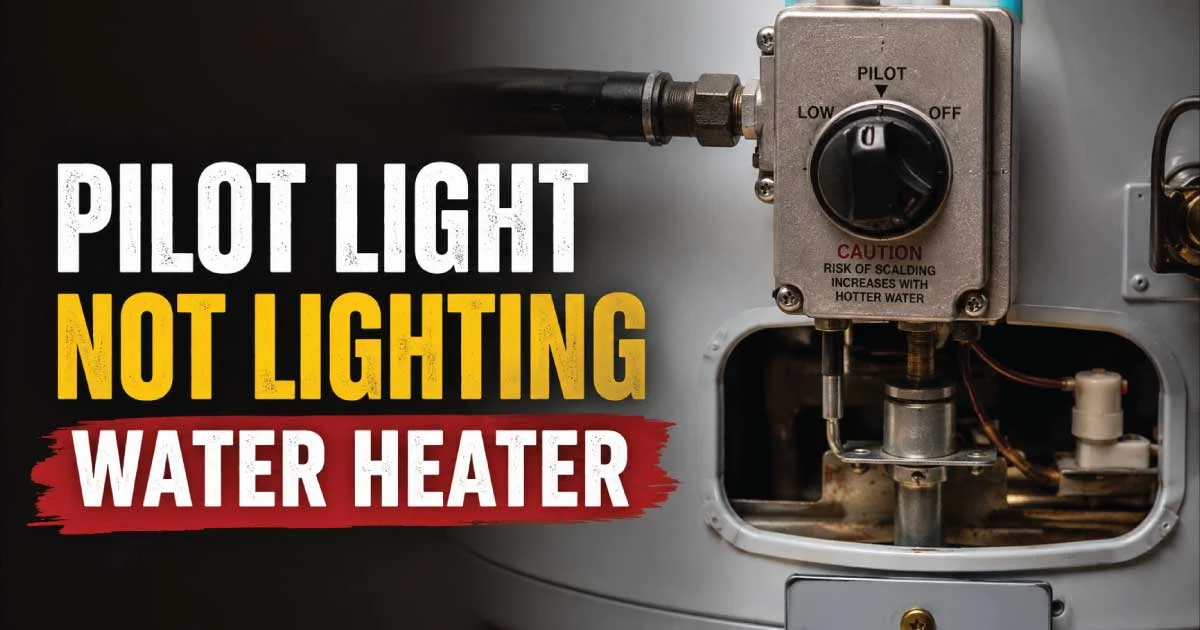
Few household problems are as frustrating as stepping into the shower expecting hot water—only to be blasted with cold. One of the most common causes behind this issue is a pilot light that won’t light on your water heater. While the pilot light is a small component, it plays a critical role in keeping your water heater operational.
This guide will walk you through what a pilot light does, why it may not be lighting, how to troubleshoot safely, and when it’s time to call a professional. Whether you’re a homeowner, renter, or property manager, understanding this issue can save you time, money, and stress.
What Is a Pilot Light and Why Is It Important?
A pilot light is a small but essential flame that plays a critical role in the operation of traditional gas water heaters. Although it burns continuously, its purpose is simple—igniting the main gas burner whenever the thermostat detects that the water temperature has dropped below the desired level.
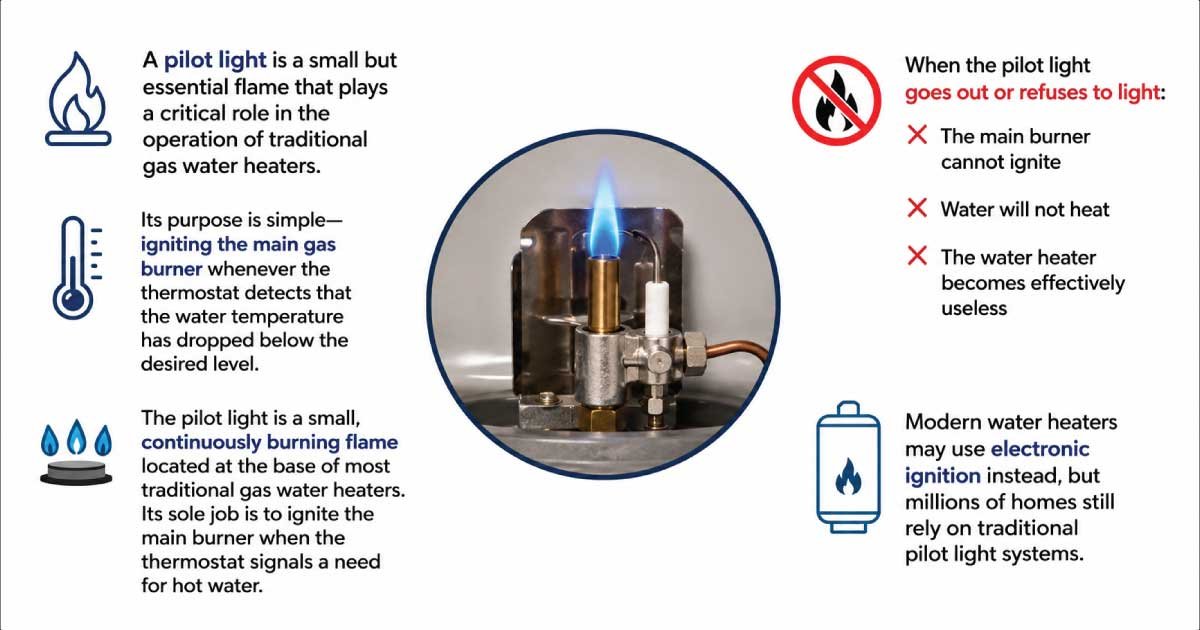
The pilot light is a small, continuously burning flame located at the base of most traditional gas water heaters. Its sole job is to ignite the main burner when the thermostat signals a need for hot water.
When the pilot light goes out or refuses to light:
- The main burner cannot ignite
- Water will not heat
- The water heater becomes effectively useless
Modern water heaters may use electronic ignition instead, but millions of homes still rely on traditional pilot light systems.
Common Signs Your Pilot Light Isn’t Working
Recognizing the warning signs of a faulty pilot light can help you diagnose water heater problems before attempting repairs. Identifying these symptoms early saves time, prevents unnecessary troubleshooting, and helps determine whether the pilot light is the actual cause of your hot water issues.
Before diving into troubleshooting, confirm that the pilot light is actually the issue.
Common symptoms include:
- No hot water at all
- Water heats briefly, then turns cold
- You can’t see the pilot flame through the viewing window
- The pilot light lights temporarily but goes out quickly
- A blinking or error code on newer gas models
If these signs match your situation, the pilot light is likely the root cause.
Most Common Reasons a Pilot Light Won’t Light
A pilot light can fail to ignite for several reasons, ranging from simple maintenance issues to worn-out components. Understanding the underlying cause before attempting repairs helps prevent unnecessary part replacements, improves safety, and increases the chances of restoring your water heater to proper working condition.
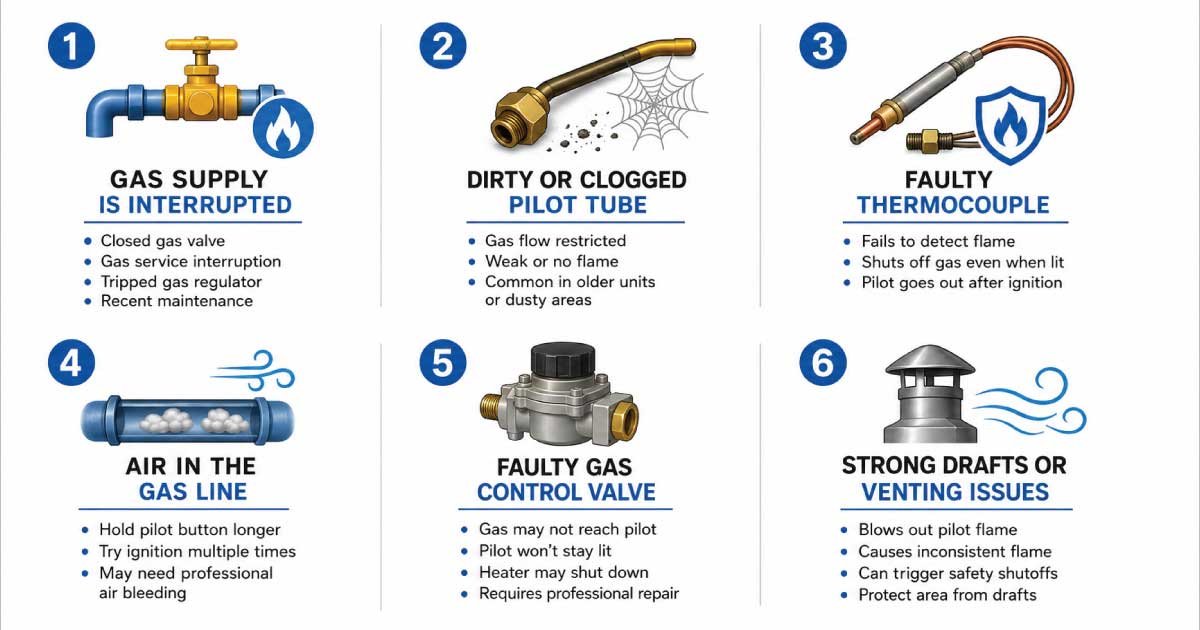
1. Gas Supply Is Interrupted
A steady gas supply is essential for the pilot light to ignite and remain lit. If the gas flow is interrupted for any reason, the pilot will not receive enough fuel to produce a flame. Checking the gas supply should always be your first troubleshooting step.
If gas isn’t reaching the water heater, the pilot light cannot ignite.
This could be due to:
- A closed gas shutoff valve
- Gas service interruption
- A tripped gas regulator
- Recent maintenance work
Always verify that the gas valve near the heater is fully open and that other gas appliances in your home are functioning.
2. Dirty or Clogged Pilot Tube
The pilot tube delivers gas directly to the pilot light, so even a minor blockage can interfere with ignition. Dust, dirt, spider webs, and other debris often accumulate over time, especially in older water heaters or units installed in dusty environments.
Over time, dust, dirt, and debris can block the pilot tube.
When this happens:
- Gas flow becomes restricted
- The flame becomes weak or nonexistent
- The pilot fails to ignite or stay lit
This is especially common in older units or heaters located in basements, garages, or dusty environments.
3. Faulty Thermocouple
The thermocouple is a built-in safety component that monitors the pilot flame and allows gas to continue flowing only when a flame is detected. Once it becomes damaged or worn out, it may incorrectly shut off the gas supply even when the pilot is burning.
The thermocouple is a safety device that detects whether the pilot light is lit. If it senses no flame, it shuts off gas flow to prevent leaks.
A bad thermocouple can:
- Fail to detect the flame
- Shut off gas even when the pilot is lit
- Cause the pilot to go out immediately after ignition
Thermocouples wear out over time and are one of the most frequent causes of pilot light failure.
4. Air in the Gas Line
Air trapped inside the gas line is a common issue after gas service has been interrupted or maintenance has been completed. Until the trapped air is cleared, the pilot may struggle to receive enough gas to ignite properly.
If your gas supply was recently turned off, air may be trapped in the line. This prevents gas from reaching the pilot quickly enough.
You may need to:
- Hold the pilot button longer than usual
- Attempt ignition multiple times
- Bleed air from the line (best done by professionals)
5. Faulty Gas Control Valve
The gas control valve is responsible for regulating the amount of gas delivered to both the pilot light and the main burner. When this critical component fails, it can prevent normal operation and usually requires professional diagnosis or replacement.
The gas control valve regulates gas flow to both the pilot and main burner.
If it malfunctions:
- Gas may not reach the pilot
- The pilot won’t stay lit
- The heater may shut down entirely
This issue usually requires professional repair or replacement.
6. Strong Drafts or Venting Issues
Proper airflow is important for maintaining a stable pilot flame. Strong drafts, damaged venting systems, or poor ventilation can extinguish the flame repeatedly, leading to unreliable operation and triggering built-in safety mechanisms that shut the heater down.
Drafts from open windows, doors, or poor venting can blow out the pilot flame.
Improper ventilation can also cause:
- Inconsistent flame behavior
- Frequent pilot outages
- Safety shutoffs due to backdrafting
Ensure the water heater area is protected from airflow disruptions.
🛑 Check common water heater problems 👉 What Causes a Water Heater to Heat Too Slowly?
Final Thoughts
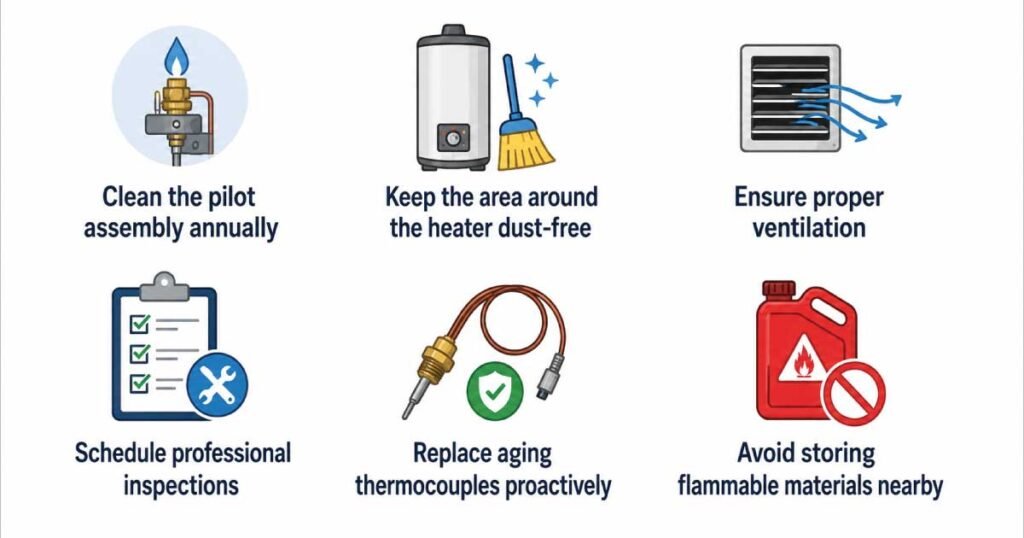
A pilot light that won’t light on your water heater is more than a minor inconvenience—it’s a signal that something isn’t functioning correctly. While issues like a dirty pilot tube or air in the gas line can sometimes be resolved at home, problems involving gas valves, thermocouples, or ventilation should always be handled by professionals.
Understanding how your water heater works empowers you to make smarter decisions, stay safe, and avoid unnecessary downtime. If in doubt, never hesitate to seek expert help—your comfort and safety are worth it.