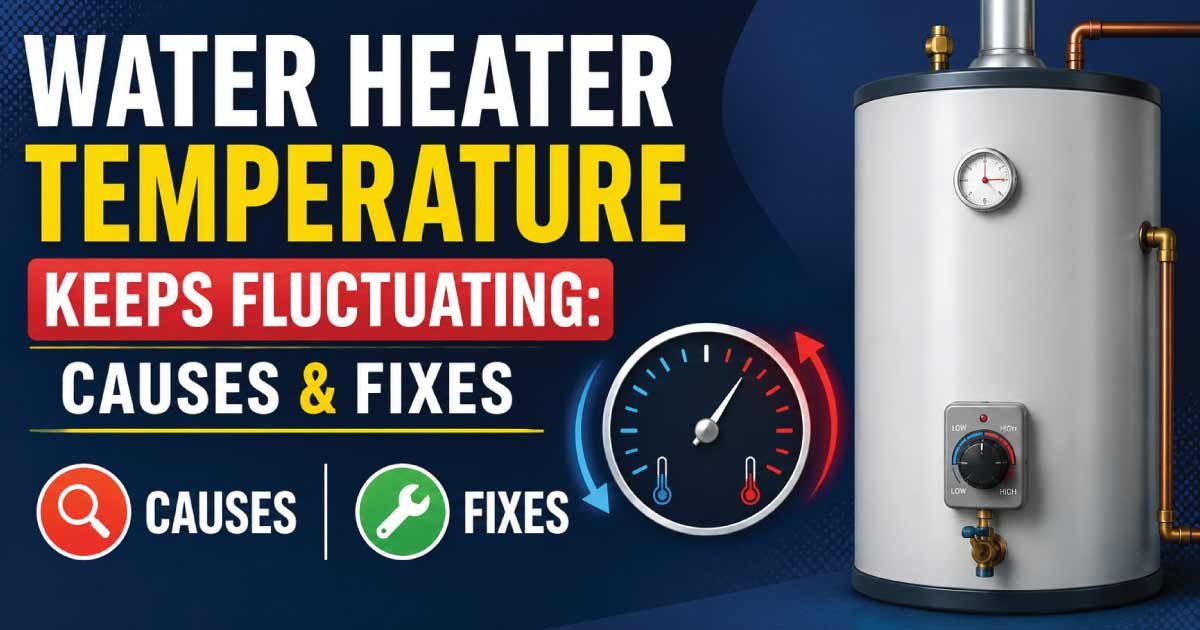
A fluctuating water temperature heater can make everyday tasks frustrating and uncomfortable. One moment the shower may be hot, and a few seconds later the water becomes cold or lukewarm before suddenly becoming hot again. These temperature changes can occur at a single faucet or throughout the entire house.
Fluctuating hot water is not always caused by the water heater itself. The problem may involve a thermostat, heating element, burner, mixing valve, shower cartridge, water pressure, sediment buildup, plumbing crossover, or changes in household water demand.
The first step is determining where the temperature fluctuates and when it happens. If every hot-water fixture changes temperature, the water heater or central plumbing system is more likely to be responsible. If only one shower or faucet is affected, the local mixing valve or cartridge may be the cause.
Understanding the pattern of the temperature changes can help narrow down the problem and determine whether a simple adjustment, maintenance, repair, or professional inspection is needed.
Why Is My Water Heater Temperature Fluctuating?
Several different problems can cause hot-water temperature fluctuations.
Common causes include:
- Faulty thermostat
- Failing heating element
- Gas burner problems
- Sediment buildup
- Mineral scale
- Faulty mixing valve
- Shower cartridge problems
- Water pressure fluctuations
- Plumbing crossover
- Broken dip tube
- Undersized water heater
- Excessive simultaneous water use
- Temperature sensor problems
- Tank recovery issues
The likely cause depends heavily on whether the temperature changes happen at one fixture or throughout the home.
| Possible Cause | Typical Symptom | Likely Area |
|---|---|---|
| Faulty thermostat | Temperature repeatedly rises and falls | Water heater |
| Failed heating element | Hot water becomes lukewarm quickly | Electric heater |
| Burner problem | Inconsistent heating | Gas heater |
| Mixing valve | Hot and cold water blend incorrectly | Plumbing |
| Shower cartridge | Only shower temperature fluctuates | Shower |
| Water pressure change | Temperature changes when fixtures operate | Plumbing |
| Sediment buildup | Slow recovery and inconsistent heating | Tank |
| Broken dip tube | Hot water becomes lukewarm quickly | Tank |
| Excessive demand | Temperature drops during heavy use | System capacity |
Is Fluctuating Hot Water Normal?
Minor temperature changes can occur when water demand changes, particularly when several fixtures are operating simultaneously.
However, significant temperature swings are not something you should simply accept as normal.
A properly functioning system should generally provide reasonably consistent hot-water temperatures under normal operating conditions.
Temperature fluctuations become more concerning when:
- The water suddenly becomes extremely hot.
- The water suddenly becomes cold.
- The problem is getting worse.
- The heater recently worked normally.
- Multiple fixtures are affected.
- The temperature changes without any change in water use.
A sudden change may indicate a component failure or plumbing problem.
Fluctuating Water Temperature in the Shower
A shower is often where temperature fluctuations are noticed first.
You may experience:
- Hot water followed by cold water
- Cold water followed by very hot water
- Temperature changes when another faucet opens
- Temperature changes when a toilet flushes
- Temperature changes when a washing machine operates
If only the shower has this problem, the water heater may be functioning normally.
Shower Mixing Valve Problems
A shower mixing valve blends hot and cold water.
If the valve or cartridge becomes worn, clogged, or damaged, it may not maintain a consistent mixture.
This can cause rapid temperature changes.
A faulty shower cartridge is especially worth considering when:
- Sink faucets have stable temperatures.
- Only one shower is affected.
- The problem occurs regardless of water heater operation.
- The shower valve is old.
Water Temperature Changes When Another Faucet Opens
If your shower becomes colder when someone turns on a faucet, the plumbing system may be experiencing pressure changes.
For example, when another fixture starts using cold water, the available pressure balance can change.
This may affect older shower valves or poorly functioning mixing valves.
Possible causes include:
- Pressure imbalance
- Faulty shower cartridge
- Plumbing design
- Water pressure problem
- Partially restricted supply line
Modern pressure-balancing or thermostatic shower valves are designed to help reduce these fluctuations.
Water Heater Temperature Fluctuating Throughout the House
If the kitchen sink, bathroom faucets, shower, and other hot-water fixtures all experience temperature changes, the water heater becomes a more likely source.
Potential causes include:
- Faulty thermostat
- Heating element failure
- Gas burner problem
- Temperature sensor issue
- Sediment buildup
- Mixing valve problem
- Dip tube failure
- Plumbing crossover
Testing multiple fixtures is one of the easiest ways to distinguish a water heater problem from an individual fixture problem.
Faulty Thermostat Causing Temperature Fluctuations
The thermostat controls when the heating system turns on and off.
A malfunctioning thermostat may not correctly sense or regulate water temperature.
This can cause:
- Water that becomes too hot
- Water that becomes too cold
- Frequent temperature changes
- Long heating cycles
- Short heating cycles
- Inconsistent hot-water availability
Signs of a Thermostat Problem
A thermostat is more suspicious when:
- Temperature changes occur throughout the house.
- The heater does not appear to cycle normally.
- Water temperature is inconsistent even when demand is steady.
- The problem is present without other fixtures operating.
Electric water heater thermostat testing involves electrical hazards, so professional service is recommended if you are not qualified.
Failed Heating Element and Fluctuating Hot Water
Electric water heaters commonly use heating elements to warm the water.
If one element fails, the heater may still produce some hot water while struggling to maintain the expected temperature.
This can create a pattern where:
- Hot water is initially available.
- The temperature drops as hot water is used.
- Recovery takes longer than normal.
- Hot water eventually returns.
Signs of a Heating Element Problem
Look for:
- Lukewarm water
- Reduced hot-water capacity
- Long recovery time
- Temperature fluctuations
- Unusual electrical behavior
- Circuit breaker trips
A technician can test the heating elements and thermostats to determine which component is malfunctioning.
Gas Water Heater Temperature Fluctuations
Gas water heaters rely on a burner and gas control system.
If the burner does not operate correctly, the tank may not maintain a consistent temperature.
Potential causes include:
- Burner problems
- Ignition issues
- Gas control problems
- Temperature sensor failure
- Sediment buildup
- Combustion problems
Signs of a Gas Heater Problem
A gas water heater may need professional inspection if:
- The burner repeatedly shuts off.
- Heating takes longer than usual.
- Water temperature fluctuates throughout the house.
- The pilot or ignition system has problems.
- The heater makes unusual burner sounds.
Never attempt to modify gas pressure or gas-control components without appropriate training.
Mixing Valve Causing Fluctuating Water Temperature
A thermostatic mixing valve may be installed to blend hot and cold water before the water reaches fixtures.
Its purpose is to provide a controlled outlet temperature.
If the valve becomes clogged, worn, incorrectly adjusted, or defective, water temperature may fluctuate.
Signs of a Mixing Valve Problem
Consider the mixing valve if:
- The water heater itself appears to work normally.
- Multiple fixtures have similar temperature problems.
- The problem occurs near a central mixing point.
- The temperature is consistently lower than expected.
- Hot water at the tank is significantly hotter than water at the faucets.
A professional can test the temperature before and after the mixing valve.
Sediment Buildup and Temperature Fluctuations
Sediment is a common problem in tank-style water heaters.
Minerals can settle at the bottom of the tank and interfere with efficient heat transfer.
Heavy sediment can cause:
- Popping
- Rumbling
- Slow heating
- Reduced capacity
- Longer recovery
- Inconsistent hot water
If temperature fluctuations occur together with popping or rumbling, sediment should be considered.
Hard Water and Temperature Problems
Hard water contains dissolved minerals that can form scale inside a water heater.
Over time, mineral deposits can accumulate around heating components or inside the tank.
This may contribute to:
- Reduced heating efficiency
- Slow recovery
- Noisy operation
- Temperature inconsistencies
- Heating element problems
Homes with hard water may require more frequent maintenance.
Broken Dip Tube and Fluctuating Water Temperature
A dip tube directs incoming cold water toward the bottom of a tank.
If the tube becomes damaged or breaks, cold incoming water may enter the tank incorrectly and mix closer to the hot-water outlet.
This can cause hot water to become lukewarm unexpectedly.
Possible Signs of a Broken Dip Tube
You may notice:
- Hot water turns lukewarm quickly.
- The problem affects several fixtures.
- Temperature drops soon after water use begins.
- Small plastic pieces appear in faucet aerators.
- The heater otherwise appears to operate normally.
A damaged dip tube usually requires inspection and replacement.
Discover More:
Water Pressure and Fluctuating Hot Water
Water pressure can have a major effect on temperature stability, particularly at showers.
When water pressure changes, the balance between hot and cold water can change.
This can be especially noticeable with older mixing valves.
Potential triggers include:
- Toilet flushing
- Washing machine filling
- Dishwasher operation
- Another shower running
- Multiple faucets operating
- Pressure-regulating equipment
If temperature changes happen whenever another fixture is used, investigate the plumbing system rather than automatically replacing the water heater.
Plumbing Crossover and Temperature Fluctuations
A plumbing crossover occurs when cold water enters the hot-water line somewhere in the plumbing system.
A defective mixing valve or cartridge can sometimes create this condition.
The result may be:
- Lukewarm water
- Slow hot-water delivery
- Temperature fluctuations
- Poor hot-water performance
If a crossover is suspected, a plumber can isolate fixtures and test the hot and cold lines.
Water Heater Too Small for Household Demand
Sometimes the heater is functioning normally but cannot keep up with demand.
This can happen when:
- Several people shower close together.
- Multiple appliances use hot water.
- Household size has increased.
- Shower times have become longer.
- Hot-water demand has increased.
The temperature may remain stable during low demand but fluctuate when several fixtures operate.
How to Recognize a Capacity Problem
A capacity problem is more likely if:
- The water is consistently hot during light usage.
- Temperature drops during peak usage.
- The heater recovers after waiting.
- The problem is predictable.
- The water heater is relatively small for the household.
In this situation, repair may not solve the problem because the heater may simply be undersized.
Discover More:
Why Does Hot Water Go Cold Then Hot Again?
Hot-to-cold-to-hot cycling can result from several issues.
Possible causes include:
- Heating element problem
- Burner problem
- Thermostat failure
- Mixing valve issue
- Plumbing crossover
- Shower cartridge problem
- Excessive water demand
- Broken dip tube
The location of the problem provides an important clue.
If the entire house experiences the cycle, investigate the water heater or central plumbing.
If only one shower does it, inspect the shower valve first.
Why Does My Shower Go From Hot to Cold?
A shower that changes from hot to cold may be responding to changes in water pressure.
For example, someone flushing a toilet may temporarily alter cold-water pressure.
A worn pressure-balancing cartridge may fail to compensate properly.
Other possibilities include:
- Shower cartridge failure
- Thermostatic valve problem
- Water heater capacity issue
- Mixing valve problem
- Plumbing pressure fluctuation
If other faucets remain stable, the shower valve is a strong candidate.
Discover More:
How to Troubleshoot Fluctuating Water Temperature
A systematic approach can help narrow down the cause.
Step 1: Test Multiple Fixtures
Check:
- Kitchen faucet
- Bathroom sink
- Shower
- Laundry faucet
Determine whether the problem is isolated or widespread.
Step 2: Monitor When It Happens
Record whether temperature changes occur:
- During showers
- When another faucet opens
- During appliance use
- After flushing a toilet
- During heavy household use
- Randomly
Step 3: Check the Water Heater Setting
Verify the temperature control according to the manufacturer’s instructions.
Step 4: Look for Other Symptoms
Watch for:
- Leaks
- Corrosion
- Unusual noises
- Burner problems
- Circuit breaker trips
- Relief valve discharge
Step 5: Consider Recent Changes
Ask whether the problem began after:
- Plumbing work
- Water heater installation
- Heater maintenance
- A new appliance installation
- Changes in household water usage
These details can help identify the source.
How to Fix a Fluctuating Water Heater Temperature
The appropriate solution depends on the underlying cause.
| Cause | Potential Solution | Professional Help |
|---|---|---|
| Low temperature setting | Adjust according to manufacturer instructions | Usually not |
| Faulty thermostat | Test and replace | Recommended |
| Failed heating element | Test and replace | Recommended |
| Burner problem | Inspect/service | Yes |
| Sediment buildup | Flush tank | Sometimes |
| Mixing valve | Inspect/replace | Recommended |
| Shower cartridge | Replace cartridge | Often |
| Water pressure issue | Diagnose pressure | Recommended |
| Plumbing crossover | Locate and repair | Recommended |
| Undersized heater | Increase capacity | Consultation recommended |
Avoid replacing the water heater until the actual source of the temperature fluctuation has been identified.
How to Prevent Fluctuating Hot Water
Regular maintenance can help keep water temperatures more consistent.
Useful steps include:
- Follow the manufacturer’s maintenance schedule.
- Flush tank-style heaters when appropriate.
- Monitor water pressure.
- Address hard-water buildup.
- Inspect mixing valves.
- Replace worn shower cartridges.
- Avoid excessive simultaneous hot-water use.
- Have older heaters inspected.
- Address unusual noises promptly.
Preventive maintenance is especially important when temperature fluctuations become more frequent.
When to Call a Plumber
Professional service is recommended when:
- Temperature fluctuations affect the entire house.
- The water suddenly becomes dangerously hot.
- The heater does not maintain temperature.
- A thermostat may have failed.
- An electric heating element may be defective.
- A gas burner has problems.
- The T&P relief valve is discharging.
- The tank is leaking.
- A mixing valve may be defective.
- You suspect a plumbing crossover.
- Water pressure is unstable.
Gas and electrical components should be serviced by qualified professionals.
Is Fluctuating Water Temperature Dangerous?
Temperature fluctuations can create a safety concern when the water suddenly becomes much hotter than expected.
Unexpectedly hot water can cause burns, especially during showers.
The risk is greater for:
- Children
- Older adults
- People with reduced sensitivity to heat
- Anyone who cannot quickly move away from hot water
Do not ignore sudden temperature spikes.
If the water heater is overheating or showing signs of excessive pressure, seek professional assistance.
Fluctuating Water Temperature and a Leaking Water Heater
If temperature problems occur together with a leak, the water heater should be inspected.
Potential leak sources include:
- Supply connections
- Drain valve
- T&P relief valve
- Heating element gasket
- Pipe fittings
- Tank body
A leak from the tank itself may indicate corrosion or structural deterioration.
If the tank is damaged, replacement may be more appropriate than repair.
Should You Replace a Water Heater With Fluctuating Temperature?
Not necessarily.
Many causes of fluctuating temperature can be repaired.
A thermostat, heating element, mixing valve, shower cartridge, or dip tube may be replaceable without replacing the entire heater.
Replacement may make more sense if the heater has:
- A leaking tank
- Severe corrosion
- Frequent major failures
- Poor overall performance
- Significant age
- High repair costs
| Condition | Repair May Be Suitable | Replacement May Be Better |
|---|---|---|
| Faulty thermostat | ✓ | |
| Failed heating element | ✓ | |
| Sediment buildup | ✓ | |
| Mixing valve problem | ✓ | |
| Broken dip tube | ✓ | |
| Shower cartridge | ✓ | |
| Leaking tank | ✓ | |
| Severe corrosion | ✓ | |
| Repeated major failures | ✓ | |
| Aging inefficient unit | ✓ |
A professional evaluation can help determine the most cost-effective option.
Fluctuating Water Temperature Quick Checklist
Before calling for service, note the following:
- Does every faucet have the problem?
- Is only one shower affected?
- Does the temperature change when another fixture operates?
- Does the water start hot and then become cold?
- Does it eventually become hot again?
- Is the water heater making unusual noises?
- Is there visible sediment or corrosion?
- Is the tank leaking?
- Has household water demand increased?
- Was plumbing or water heater work recently completed?
Providing these details can make troubleshooting much easier.
Frequently Asked Questions
Why does my water heater temperature keep fluctuating?
Temperature fluctuations can be caused by a faulty thermostat, heating element, burner problem, mixing valve, sediment buildup, water pressure changes, plumbing crossover, broken dip tube, or excessive hot-water demand.
Why does my shower go from hot to cold?
A faulty shower cartridge or mixing valve is a common possibility, particularly when the rest of the house has stable hot water. Water pressure changes can also cause temperature fluctuations.
Why does my hot water go cold when someone flushes the toilet?
Flushing a toilet can change water pressure. An older or malfunctioning shower mixing valve may not compensate properly for the pressure change, causing the shower temperature to fluctuate.
Can a bad thermostat cause fluctuating water temperature?
Yes. A defective thermostat may not correctly control the heating cycle, resulting in inconsistent water temperatures.
Can a heating element cause fluctuating hot water?
Yes. A failing heating element can reduce heating capacity and cause water to become lukewarm or fluctuate as hot water is consumed.
Can sediment cause fluctuating water temperature?
Heavy sediment can reduce heating efficiency and increase recovery time. It may also cause popping or rumbling sounds.
Why is only one faucet experiencing temperature fluctuations?
If only one fixture is affected, the problem is more likely to involve that fixture’s cartridge, mixing valve, supply line, or local plumbing rather than the central water heater.
Why does hot water become lukewarm quickly?
Possible causes include a failed heating component, broken dip tube, sediment buildup, mixing valve problem, excessive demand, or an undersized water heater.
Can high water pressure cause hot-water temperature fluctuations?
Changes in water pressure can affect the hot-to-cold balance at mixing valves and showers. If temperature changes correspond with other fixtures operating, plumbing pressure should be investigated.
How can I make my hot water temperature more consistent?
First identify whether the problem is at one fixture or throughout the house. Depending on the cause, the solution may involve repairing a thermostat, heating element, mixing valve, shower cartridge, plumbing pressure problem, or other component.
Should I replace my water heater if the temperature fluctuates?
Not automatically. Many temperature problems are caused by repairable components. Replacement becomes more reasonable when the tank is leaking, severely corroded, aging, or experiencing repeated major failures.
When should I call a professional for fluctuating hot water?
Call a qualified professional when temperature fluctuations are severe, affect the entire home, involve gas or electrical components, occur with leaks or pressure problems, or cause unexpectedly hot water.
Final Thoughts
A fluctuating water temperature heater problem can come from the water heater itself or from another part of the plumbing system.
If every faucet and shower experiences temperature changes, investigate the heater, mixing valve, thermostat, heating elements, burner, sediment buildup, dip tube, and overall plumbing system. If only one shower or faucet is affected, the local cartridge or mixing valve is often a more likely source.
Temperature changes that occur when another fixture is used may point toward water pressure or mixing valve problems. Hot water that starts normally but becomes lukewarm quickly may indicate a heating element, burner, sediment, dip tube, or capacity issue.
Do not immediately replace the entire water heater. Identifying the pattern of the temperature fluctuation can often reveal whether a relatively simple repair is possible.
If the water becomes dangerously hot, the heater leaks, the relief valve discharges, or gas or electrical components appear faulty, professional inspection is the safest choice.
Consistent maintenance, proper water pressure, adequate heater capacity, and prompt attention to unusual temperature changes can help keep your hot-water system reliable and safe.