
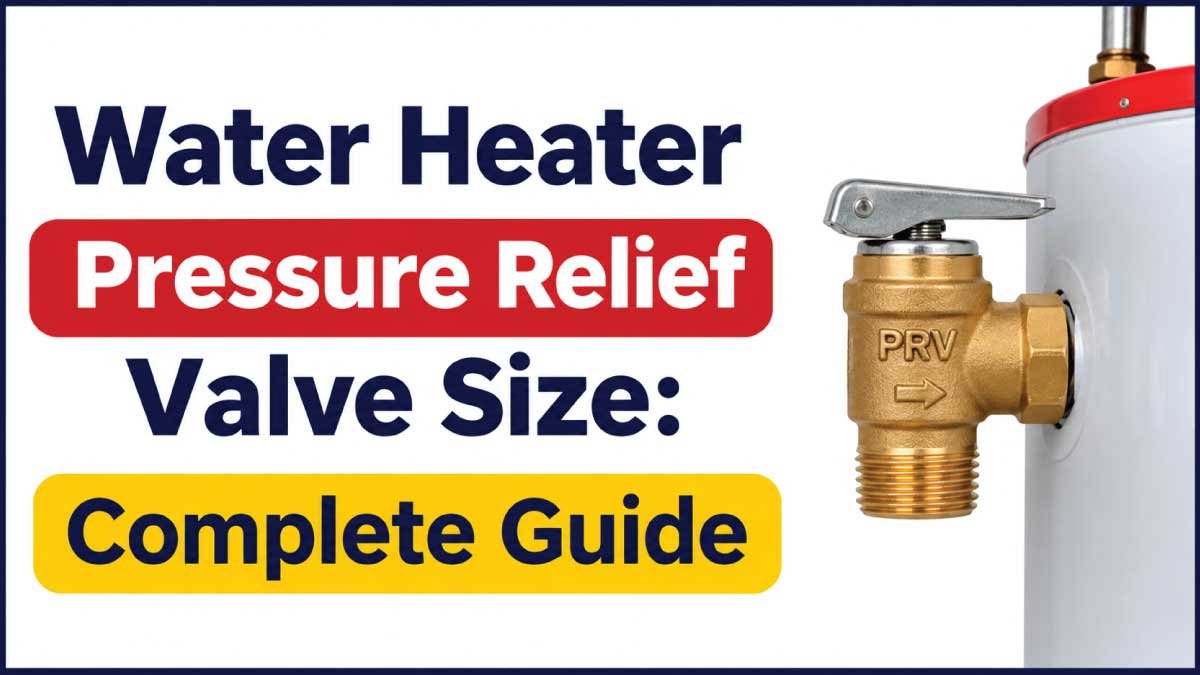
Choosing the correct water heater pressure relief valve size is essential for protecting a hot water system against excessive pressure and temperature. A properly selected valve provides an important safety function by releasing water when the system exceeds its permitted operating limits. Without a suitable relief valve, excessive pressure or temperature can damage plumbing components and create dangerous operating conditions.
A Water Heater Pressure Relief Valve Size depends on several technical factors, including water heater capacity, heat input, pressure rating, temperature rating, connection size, and manufacturer specifications. Simply selecting a valve based on pipe diameter or tank capacity is not enough to guarantee compatibility.
This guide explains standard pressure relief valve sizes, common connection types, pressure and temperature ratings, selection requirements, installation considerations, common mistakes, and maintenance practices. It is designed to help homeowners, plumbers, and plumbing professionals understand how to select an appropriate temperature and pressure relief valve for residential and commercial water heaters.
What Is a Water Heater Pressure Relief Valve?
A water heater pressure relief valve is a safety device designed to protect a water heating system from excessive internal pressure, temperature, or both.
In most conventional storage water heaters, the installed safety device is called a Temperature and Pressure Relief Valve (T&P Valve). It automatically opens when the water temperature or pressure reaches its specified activation limit.
The valve is typically installed directly into the water heater tank or into a manufacturer-approved connection.
Its primary purpose is to discharge hot water when operating conditions become unsafe.
How Does a Pressure Relief Valve Work?
A temperature and pressure relief valve contains mechanical components that respond to changes in system conditions.
Its operation generally involves two separate mechanisms:
Pressure protection:
- A spring-loaded mechanism monitors internal water pressure.
- When pressure reaches the valve’s specified setting, the valve opens.
- Water is discharged through the outlet connection.
- When pressure returns to an acceptable level, the valve can close again, provided it is functioning correctly.
Temperature protection:
- A temperature-sensing element responds to excessive water temperature.
- When the temperature reaches its specified activation point, the valve opens.
- Hot water is discharged to help prevent further temperature increases.
These mechanisms provide an additional layer of protection against dangerous water heater operating conditions.
Why Is the Correct Valve Size Important?
The correct valve must match the water heater’s technical requirements.
An incorrectly selected valve may have an unsuitable connection, insufficient rated capacity, or an incompatible pressure setting.
Proper selection helps:
- Protect the water heater against excessive pressure.
- Provide temperature-related safety protection.
- Maintain compatibility with the manufacturer’s design.
- Support appropriate emergency discharge capacity.
- Reduce the risk of unsuitable replacement components.
- Meet applicable plumbing and safety requirements.
A pressure relief valve must never be blocked, capped, modified, or replaced with an ordinary plumbing fitting.
Water Heater Pressure Relief Valve Size Chart
Pressure relief valve sizing involves more than choosing a connection diameter. The valve must also have the correct pressure setting, temperature rating, and certified discharge capacity.
The following table summarizes common connection sizes and their typical applications.
Common Pressure Relief Valve Connection Sizes
| Nominal Connection Size | Approximate Diameter | Common Application |
|---|---|---|
| 1/2 Inch | 12.7 mm | Smaller equipment and specific manufacturer-approved applications |
| 3/4 Inch | 19.05 mm | Many residential storage water heaters |
| 1 Inch | 25.4 mm | Selected larger or commercial water heating equipment |
| 1-1/4 Inch | 31.75 mm | Specialized commercial and industrial systems |
Important: These are common nominal connection sizes, not a universal selection chart. A 3/4-inch connection is widely used on residential storage water heaters, but the correct replacement must match the original equipment requirements and applicable certification.
Standard Residential Water Heater Valve Size
Many conventional residential storage water heaters use a 3/4-inch temperature and pressure relief valve.
This does not mean every 3/4-inch valve is interchangeable.
Before purchasing a replacement, verify:
- Original valve connection size.
- Required pressure setting.
- Temperature activation rating.
- Certified discharge capacity.
- Manufacturer compatibility.
- Applicable plumbing code requirements.
Pressure Relief Valve Size vs. Connection Size
These two terms describe different characteristics.
Connection size refers to the nominal diameter of the threaded inlet or outlet.
Discharge capacity describes how much energy or fluid the valve is rated to release under specified conditions.
A larger connection does not automatically mean that a valve has the correct certified capacity for a particular water heater.
Both characteristics must be checked independently.
Important Specifications for Water Heater Pressure Relief Valves
Understanding valve specifications makes it easier to identify a compatible replacement.
1. Pressure Rating
The pressure setting indicates the pressure at which the pressure-operated mechanism is designed to open.
Many conventional residential water heaters use T&P valves with a pressure setting of 150 psi.
However, this is not a universal rating for every water heater.
The replacement valve must match the water heater’s manufacturer-approved pressure setting and applicable safety requirements.
A valve with an unsuitable pressure setting can compromise the intended protection.
2. Temperature Rating
A temperature and pressure relief valve also responds to excessive water temperature.
A commonly used temperature activation rating for conventional residential T&P valves is 210°F.
This is a safety activation setting, not a recommended normal operating temperature for household water.
Actual valve requirements should always be verified against the water heater documentation and applicable standards.
3. Discharge Capacity
Discharge capacity describes the valve’s ability to release sufficient water or steam under specified operating conditions.
The required capacity is related to the water heater’s heat input and manufacturer design.
A replacement valve must have a certified capacity that meets or exceeds the water heater’s specified requirement.
Connection diameter alone cannot establish adequate discharge capacity.
4. Inlet Connection Type
Most residential valves use threaded connections.
Common connection considerations include:
- Nominal pipe size.
- Thread type.
- Thread compatibility.
- Tank opening configuration.
- Required sealing method.
The replacement valve should fit the original connection without forcing, modifying, or damaging the tank opening.
5. Material and Construction
Pressure relief valves are commonly manufactured using corrosion-resistant metal components and temperature-resistant internal materials.
Important construction features include:
- Corrosion-resistant valve body.
- Reliable spring mechanism.
- Temperature-sensing element.
- Suitable sealing components.
- Approved pressure and temperature ratings.
Product certification and manufacturer documentation should take priority over appearance or price.
How to Choose the Correct Water Heater Pressure Relief Valve Size
Selecting the correct valve requires checking several characteristics of the water heater.
Step 1: Identify the Water Heater Type
Start by identifying the equipment.
Common types include:
- Electric storage water heaters.
- Gas storage water heaters.
- Indirect water heaters.
- Commercial storage water heaters.
- Specialized high-capacity systems.
Different water heaters can have different safety valve requirements.
The manufacturer’s installation manual is the best starting point.
Step 2: Check the Original Valve Specifications
Inspect the existing valve label and water heater documentation.
Record the following information:
- Nominal inlet connection.
- Pressure setting.
- Temperature rating.
- Manufacturer or approved model.
- Certified discharge capacity, where specified.
Do not assume that the existing valve is correct simply because it is installed. If its compatibility is uncertain, verify the required specification with the water heater manufacturer.
Step 3: Verify the Water Heater Pressure Rating
Check the tank’s maximum allowable working pressure.
The pressure relief valve must have the correct setting for the equipment.
For example, a conventional residential water heater may specify a 150 psi pressure setting.
However, the exact rating must come from the equipment documentation.
Step 4: Verify Temperature Requirements
Check the required temperature activation rating.
For many conventional residential T&P valves, the commonly specified setting is 210°F.
Specialized equipment may have different requirements.
The replacement must be compatible with the water heater’s approved safety configuration.
Step 5: Confirm Discharge Capacity
Review the water heater’s rated heat input and the valve’s certified discharge capacity.
The valve must be capable of providing the required safety discharge.
This is especially important for gas-fired water heaters and larger commercial systems.
Step 6: Confirm Manufacturer Approval
Before purchasing, verify that the selected valve is approved for the specific water heater.
A valve with matching threads and similar dimensions may still be unsuitable if its ratings or capacity differ.
Pressure Relief Valve Size for Different Water Heater Capacities
Water heater storage capacity can help identify the type of equipment being evaluated, but it does not independently determine the correct relief valve.
The following table provides general equipment categories and selection guidance.
Water Heater Capacity and Valve Selection Guide
| Water Heater Capacity | Approximate Volume | Valve Selection Consideration |
|---|---|---|
| 20 Gallons | 76 L | Follow the equipment manufacturer’s valve specification |
| 30 Gallons | 114 L | Verify connection, pressure, temperature, and capacity |
| 40 Gallons | 151 L | Use the approved valve specified for the model |
| 50 Gallons | 189 L | Check certified discharge capacity and pressure setting |
| 60 Gallons | 227 L | Confirm manufacturer-approved valve specifications |
| 75 Gallons | 284 L | Verify the required relief capacity |
| 80 Gallons | 303 L | Review equipment documentation before replacement |
| 100 Gallons | 379 L | Check commercial or high-capacity equipment requirements |
A 40-gallon and a 50-gallon water heater may use the same nominal connection size but have different heat inputs and capacity requirements.
For this reason, storage capacity should not be used as the only sizing criterion.
Residential vs. Commercial Water Heater Valves
Residential water heaters commonly use standardized safety valve configurations.
Commercial systems may require more detailed evaluation because they can have:
- Higher heat input.
- Larger storage capacity.
- Different operating conditions.
- Multiple heating sources.
- Specialized safety arrangements.
Commercial installations should be sized according to the manufacturer’s engineering documentation and applicable safety standards.
Also Read:
Difference Between Pressure Relief Valves and Temperature and Pressure Relief Valves
Not every relief valve performs the same function.
Understanding the difference is important when selecting a replacement.
Pressure Relief Valve
A pressure-only relief valve responds to excessive pressure.
Its primary purpose is to prevent pressure from exceeding a specified limit.
It does not necessarily provide temperature protection.
Temperature and Pressure Relief Valve
A T&P valve provides both pressure and temperature protection.
It contains mechanisms designed to respond to excessive pressure and excessive water temperature.
Conventional residential storage water heaters generally use T&P protection according to the equipment manufacturer’s design and applicable requirements.
Which Type Should a Water Heater Use?
The correct valve depends on the water heater’s original safety design.
A pressure-only valve should never be substituted for a required temperature and pressure relief valve.
Always follow the manufacturer’s approved configuration.
Also Read:
Water Heater Pressure Relief Valve Installation Requirements
Correct installation is essential for the valve to perform its safety function.
Even a properly rated valve can become ineffective if the discharge arrangement is incorrect.
Correct Valve Installation Location
On conventional storage water heaters, the T&P valve is generally installed in a designated opening near the upper portion of the tank or another manufacturer-specified location.
Some models use a dedicated connection that allows the temperature-sensing element to respond to the tank water temperature.
The installation location must not be changed without manufacturer approval.
Discharge Pipe Requirements
The discharge pipe provides a safe route for water released by the valve.
Important requirements commonly include:
- Use an approved material suitable for hot water discharge.
- Match the required discharge pipe diameter.
- Avoid reducing the outlet size.
- Do not install a shutoff valve in the discharge line.
- Avoid threaded caps or plugs.
- Route the pipe to an approved discharge location.
- Maintain the required drainage arrangement.
- Follow local plumbing code requirements.
The discharge pipe must not create conditions that prevent the valve from operating correctly.
Common Installation Mistakes
Avoid the following problems:
- Installing a valve with an incorrect pressure rating.
- Using an unsuitable temperature rating.
- Reducing the discharge pipe diameter.
- Blocking the discharge outlet.
- Installing an unauthorized shutoff valve.
- Using incompatible thread connections.
- Failing to follow manufacturer instructions.
- Reusing damaged or corroded fittings.
Because the valve is a critical safety component, replacement should be performed by a qualified professional when necessary.
Also Read:
Signs of a Faulty Water Heater Pressure Relief Valve
A relief valve may develop problems due to age, mineral deposits, corrosion, excessive pressure, or mechanical wear.
Recognizing warning signs can help prevent more serious equipment problems.
Water Leaking From the Valve
A small amount of water discharged during an actual overpressure or overtemperature event may be part of the valve’s safety operation.
However, continuous dripping should be investigated.
Possible causes include:
- Excessive system pressure.
- Thermal expansion.
- A defective pressure regulator.
- Mineral deposits on the valve seat.
- A damaged valve.
- Excessive water temperature.
Replacing the valve without identifying the underlying cause may not solve the problem.
Valve Fails to Close Properly
If water continues to flow after the triggering condition has ended, the valve may have debris or damage preventing proper closure.
A qualified technician should inspect the equipment.
Corrosion Around the Valve
Visible corrosion, rust, or mineral buildup can indicate leakage or deterioration.
A heavily corroded valve should be evaluated and replaced when necessary.
Unusual Water Heater Pressure
Repeated pressure fluctuations may indicate a problem with the expansion tank, pressure regulator, or other system components.
The relief valve should not be treated as the solution to an underlying pressure-control problem.
Maintenance and Inspection of Pressure Relief Valves
Regular inspection helps maintain the safety and reliability of a water heating system.
Maintenance should follow the manufacturer’s recommendations and applicable plumbing regulations.
Important inspection points include:
- Check for visible corrosion.
- Inspect the valve body for leakage.
- Examine the discharge pipe.
- Confirm that the outlet is unobstructed.
- Check for signs of excessive pressure.
- Review water heater operating temperatures.
- Inspect related expansion control equipment.
Some manufacturers provide specific instructions for testing the valve’s manual lever. Such testing can release very hot water and may cause scalding or expose an older valve to leakage after operation.
Do not operate the lever casually or without following the manufacturer’s safety procedure. If the valve’s condition is uncertain, have a qualified technician inspect it.
A defective or damaged safety valve should be replaced with an approved component.
Common Mistakes When Buying a Water Heater Pressure Relief Valve
Choosing a replacement based only on price or appearance can result in an unsuitable product.
Buying Only by Connection Size
A 3/4-inch valve is not automatically compatible with every water heater.
Pressure setting, temperature rating, and certified discharge capacity are equally important.
Ignoring Manufacturer Specifications
Different water heater models can have different safety requirements.
Always check the equipment documentation before selecting a replacement.
Using a Pressure-Only Valve Instead of a T&P Valve
This mistake can remove an important temperature protection function.
The replacement must provide the same required safety functions as the original approved component.
Choosing an Uncertified Product
A valve should meet the relevant certification and performance requirements for its intended application.
Avoid products without clear technical documentation.
Ignoring Discharge Pipe Requirements
Even a correctly selected valve may not provide adequate protection if the discharge pipe is restricted, undersized, or improperly terminated.
The entire discharge arrangement must comply with applicable requirements.
Frequently Asked Questions About Water Heater Pressure Relief Valve Sizes
1. What size pressure relief valve does a water heater need?
Many conventional residential storage water heaters use a 3/4-inch temperature and pressure relief valve. However, the correct size must match the manufacturer’s specified connection, pressure setting, temperature rating, and discharge capacity.
2. Are all water heater pressure relief valves 3/4 inch?
No. Although 3/4-inch connections are common in residential applications, other sizes are used in specialized and commercial equipment. Always check the original equipment specifications.
3. What pressure should a water heater relief valve be rated for?
Many conventional residential water heaters use a 150 psi pressure setting. However, the correct setting depends on the equipment manufacturer’s requirements and applicable safety standards.
4. What temperature does a water heater T&P valve open at?
A commonly used temperature activation rating for conventional residential T&P valves is 210°F. The actual specification should be confirmed from the approved valve documentation.
5. Can I replace a 3/4-inch relief valve with a 1-inch valve?
Not automatically. A larger connection does not guarantee compatibility or correct operation. The replacement must meet the water heater’s approved pressure, temperature, capacity, and connection requirements.
6. Why does my water heater pressure relief valve keep leaking?
Possible causes include excessive pressure, thermal expansion, high water temperature, mineral deposits, or a damaged valve. A qualified technician should identify the cause before replacement.
7. Does a water heater need both a pressure relief valve and an expansion tank?
A pressure relief valve and an expansion tank perform different functions. The relief valve provides safety protection, while the expansion tank accommodates thermal expansion in a closed system. An expansion tank does not replace the required relief valve.
8. Can I cap a leaking pressure relief valve?
No. Never cap, plug, or block a pressure relief valve. Doing so can disable an essential safety device and create dangerous operating conditions.
9. How often should a water heater relief valve be replaced?
There is no single replacement interval suitable for every valve. Follow manufacturer recommendations and applicable inspection requirements. Replace a valve that is damaged, defective, corroded, or no longer meets the required specifications.
10. Can a pressure relief valve be installed without a discharge pipe?
The discharge arrangement must comply with the applicable plumbing code and manufacturer instructions. Conventional water heater T&P valves generally require an appropriately sized and safely routed discharge pipe.
Conclusion: Choosing the Correct Water Heater Pressure Relief Valve Size
Selecting the correct water heater pressure relief valve size is essential for maintaining safe water heater operation. Although 3/4-inch connections are common in residential storage water heaters, connection diameter alone does not determine whether a valve is suitable.
The correct selection must account for pressure settings, temperature activation ratings, certified discharge capacity, connection compatibility, and manufacturer requirements.
Always choose an approved temperature and pressure relief valve that matches the water heater’s specifications. Proper installation, an unobstructed discharge pipe, and regular inspection help maintain the effectiveness of this important safety component.
When in doubt, consult the water heater manufacturer or a qualified plumbing professional rather than selecting a replacement based on dimensions alone.