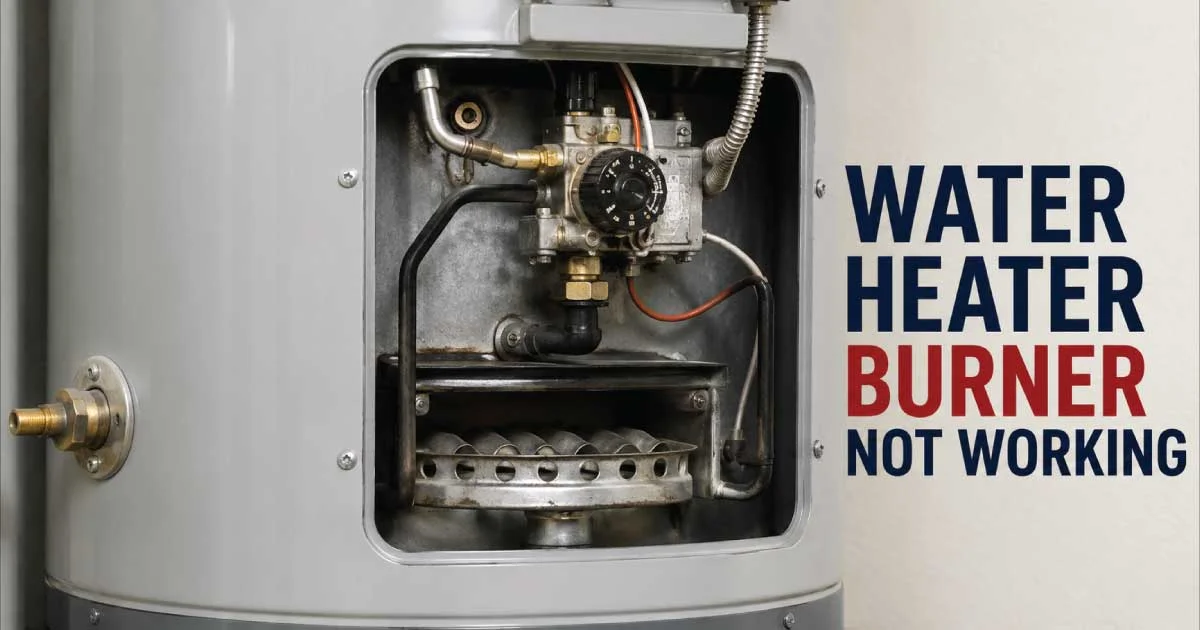
Water Heater Burner Not Working? Causes With Fixes

A water heater is one of the most essential appliances in any home. From hot showers to dishwashing and laundry, we rely on it daily—often without a second thought. That is, until something goes wrong. One of the most common and frustrating issues homeowners face is a water heater burner not working. When the burner fails, the water doesn’t heat properly, leaving you with cold water and a major inconvenience.

In this detailed guide, we’ll explore how a water heater burner works, common reasons it stops functioning, step-by-step troubleshooting tips, and when it’s time to call a professional. Whether you’re a homeowner, landlord, or DIY enthusiast, this article will help you understand the problem and make informed decisions.


How a Water Heater Burner Works 

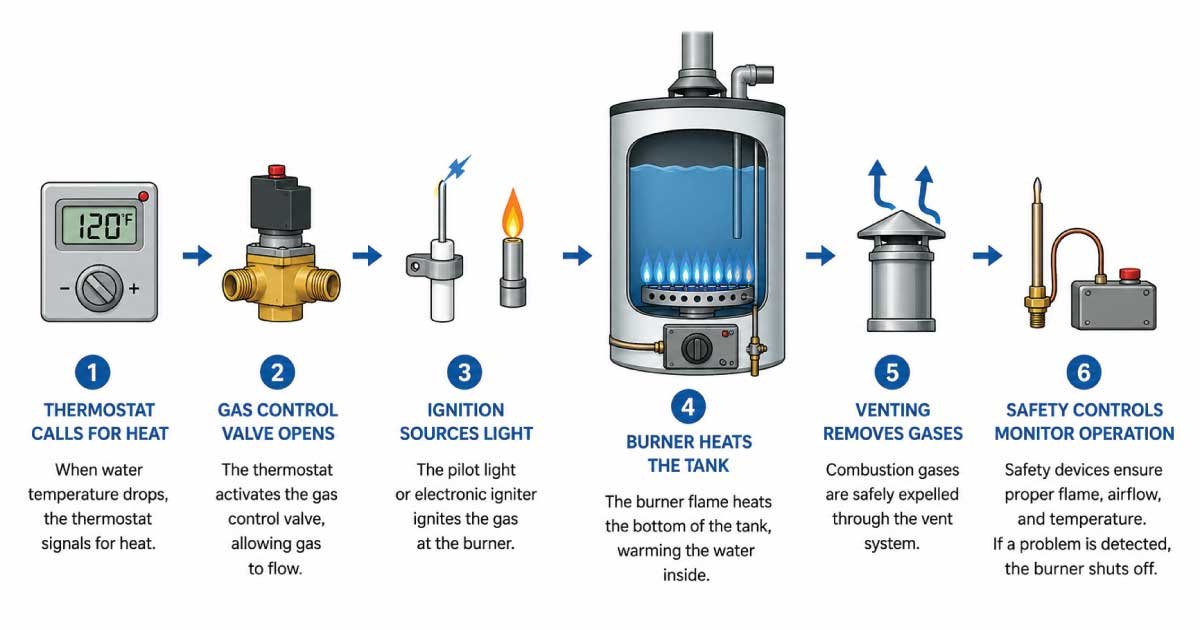
Before diagnosing why your water heater burner is not working, it helps to understand the basic operating process. Knowing how each component works together makes it easier to identify where the problem may be occurring. A gas water heater relies on proper gas flow, ignition, ventilation, and safety controls to heat water efficiently and safely.
How a Water Heater Burner Works

In a gas water heater, the burner sits beneath the tank. When hot water is needed, the thermostat signals the gas control valve to open. Gas flows to the burner, which is ignited by a pilot light or electronic igniter. The flame heats the bottom of the tank, warming the water inside.

If any part of this process fails—gas supply, ignition, airflow, or safety controls—the burner will not ignite or will shut off prematurely.


Common Signs Your Water Heater Burner Is Not Working 

Recognizing the early warning signs of a faulty water heater burner can help you address the issue before it becomes more serious. These symptoms often point to problems with the burner itself or other connected components, allowing you to troubleshoot the system more effectively and restore reliable hot water.

  • No hot water or lukewarm water
  • Water takes much longer than usual to heat
  • Pilot light keeps going out
  • Clicking sounds without ignition
  • Gas smell near the heater
  • Error codes on newer models

If you notice any of these symptoms, it’s likely the burner or a related component is the problem.
Most Common Reasons a Water Heater Burner Stops Working 

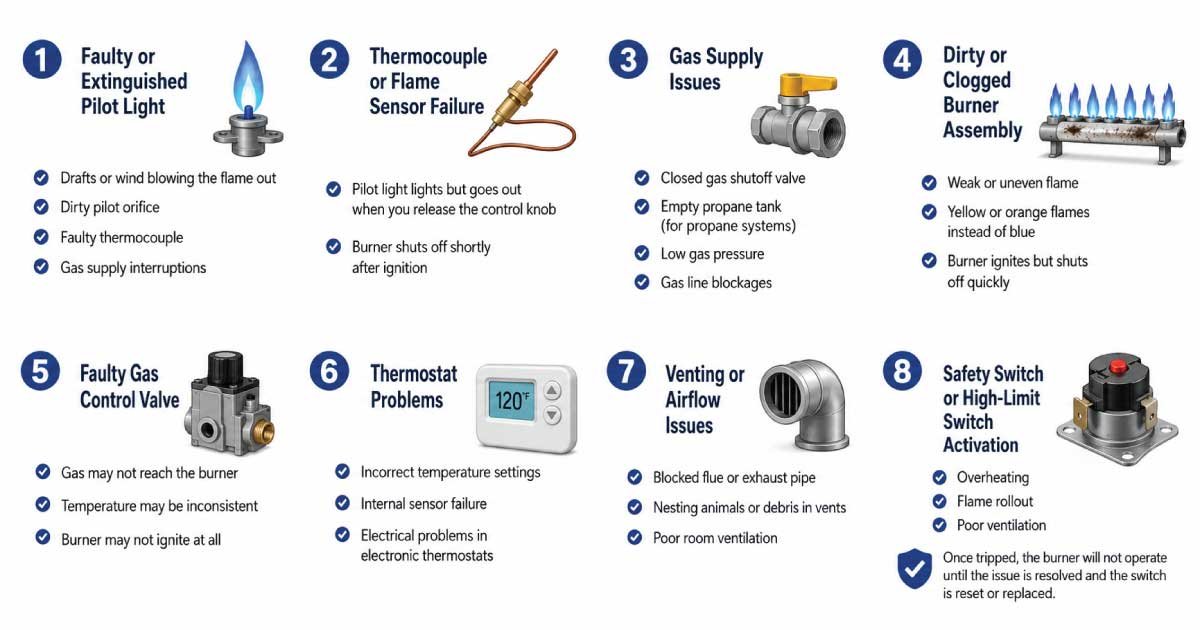
A water heater burner can stop working for several different reasons, ranging from simple maintenance issues to failed components. Identifying the exact cause is the first step toward restoring reliable hot water. Below are the most common problems that prevent a gas water heater burner from igniting or staying lit.

Most Common Reasons a Water Heater Burner Stops Working

1. Faulty or Extinguished Pilot Light

The pilot light is responsible for igniting the main burner whenever your water heater needs to heat water. If this small flame goes out or fails to remain lit, the burner cannot receive the ignition it needs. Several common issues can cause pilot light problems, making it one of the first components to inspect.

The pilot light is a small flame that ignites the burner. If it goes out, the burner cannot turn on.

Common causes include:

  • Drafts or wind blowing the flame out
  • Dirty pilot orifice
  • Faulty thermocouple
  • Gas supply interruptions

If the pilot light won’t stay lit, the burner will never activate.

2. Thermocouple or Flame Sensor Failure

The thermocouple or flame sensor serves as an essential safety device that verifies the pilot flame is burning correctly. When it becomes dirty, damaged, or worn out, it can mistakenly shut off the gas supply, preventing the burner from operating even when everything else appears to function normally.

The thermocouple is a safety device that detects whether the pilot flame is lit. If it doesn’t sense heat, it shuts off the gas supply to prevent leaks.

Signs of thermocouple problems:

  • Pilot light lights but goes out when you release the control knob
  • Burner shuts off shortly after ignition

A worn or dirty thermocouple is one of the most common reasons a burner won’t stay on.

3. Gas Supply Issues

A steady gas supply is necessary for the burner to ignite and maintain a consistent flame. If gas flow is interrupted, restricted, or completely unavailable, the burner cannot operate. Checking the gas supply is a simple but important troubleshooting step before investigating more complex mechanical problems.

If the gas supply is interrupted, restricted, or turned off, the burner will not ignite.

Possible gas-related problems:

  • Closed gas shutoff valve
  • Empty propane tank (for propane systems)
  • Low gas pressure
  • Gas line blockages

Always check the gas valve position and confirm other gas appliances in your home are working.

4. Dirty or Clogged Burner Assembly

Over time, dirt, dust, rust, soot, and debris can accumulate inside the burner assembly, reducing its efficiency and preventing proper ignition. Regular cleaning helps maintain strong, even flames and reduces the likelihood of burner shutdowns caused by restricted gas flow or poor combustion.

Over time, dust, rust, soot, and debris can build up on the burner. This buildup can block gas flow or disrupt proper flame formation.

Symptoms include:

  • Weak or uneven flame
  • Yellow or orange flames instead of blue
  • Burner ignites but shuts off quickly

Regular cleaning can prevent this issue.

5. Faulty Gas Control Valve

The gas control valve manages the amount of gas delivered to the burner while responding to thermostat settings and built-in safety systems. If this component fails, the burner may receive insufficient gas or none at all, making professional diagnosis and replacement necessary in most situations.

The gas control valve regulates gas flow to the burner based on thermostat settings and safety signals.

If it fails:

  • Gas may not reach the burner
  • Temperature may be inconsistent
  • Burner may not ignite at all

This component is critical and often requires professional replacement.

6. Thermostat Problems

The thermostat controls when the water heater should begin heating by signaling the burner to ignite. If the thermostat malfunctions or provides inaccurate temperature readings, the burner may never receive the command to start, even though the rest of the system is functioning correctly.

If the thermostat isn’t working correctly, it may not send the signal to activate the burner.

Common thermostat issues include:

  • Incorrect temperature settings
  • Internal sensor failure
  • Electrical problems in electronic thermostats

A faulty thermostat can make it seem like the burner isn’t working when it’s actually never being told to turn on.

7. Venting or Airflow Issues

Proper airflow is essential for safe and efficient burner operation. When vents become blocked or the surrounding area lacks adequate ventilation, modern water heaters may automatically shut down the burner to prevent dangerous combustion conditions and protect your household from potential hazards.

Gas burners need proper airflow and ventilation. Blocked vents or inadequate air supply can cause safety shutdowns.

Potential causes:

  • Blocked flue or exhaust pipe
  • Nesting animals or debris in vents
  • Poor room ventilation

Modern water heaters may shut down automatically if airflow is restricted.

8. Safety Switch or High-Limit Switch Activation

Water heaters include several built-in safety devices designed to protect the appliance and your home from unsafe operating conditions. When one of these switches is triggered, the burner is automatically disabled until the underlying issue is corrected and the safety device is reset or replaced.

Water heaters include safety mechanisms that shut off the burner if unsafe conditions are detected.

These can trigger due to:

  • Overheating
  • Flame rollout
  • Poor ventilation

Once tripped, the burner will not operate until the issue is resolved and the switch is reset or replaced.

🛑 Also Read 👉  What Causes Hot Water to Run Out Fast? Easy Guide


Step-by-Step Troubleshooting Guide 

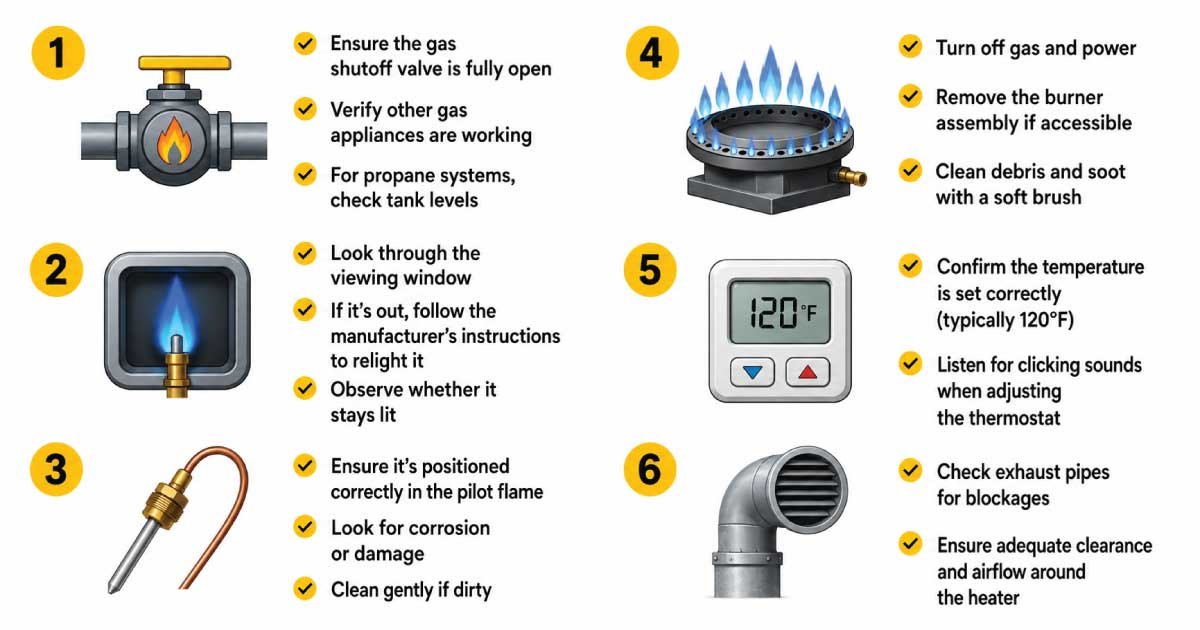
Before replacing expensive components or scheduling a service appointment, it’s worth performing a few basic troubleshooting steps. Many common water heater burner problems can be identified or even resolved with a careful inspection. Always prioritize safety, follow your manufacturer’s instructions, and stop immediately if you detect any signs of a gas leak.

Step-by-Step Troubleshooting Guide

Safety First: If you smell gas or suspect a gas leak, leave the area immediately and contact your gas provider or a professional technician.

Step 1: Check the Gas Supply

A consistent gas supply is essential for the burner to ignite and operate properly. Before inspecting internal components, verify that gas is reaching the water heater. This quick inspection can eliminate one of the most common causes of burner failure and help narrow down the source of the problem.

  • Ensure the gas shutoff valve is fully open
  • Verify other gas appliances are working
  • For propane systems, check tank levels

Step 2: Inspect the Pilot Light

The pilot light provides the flame needed to ignite the main burner. If it has gone out or refuses to stay lit, the burner will not function. Carefully inspect the pilot flame and follow the manufacturer’s relighting procedure if necessary before continuing with additional troubleshooting.

  • Look through the viewing window
  • If it’s out, follow the manufacturer’s instructions to relight it
  • Observe whether it stays lit

Step 3: Examine the Thermocouple

The thermocouple is a critical safety component that confirms the pilot flame is present before allowing gas to reach the burner. If it becomes dirty, damaged, or misaligned, it may interrupt normal burner operation and require cleaning, adjustment, or replacement.

  • Ensure it’s positioned correctly in the pilot flame
  • Look for corrosion or damage
  • Clean gently if dirty

Step 4: Inspect the Burner

A burner covered with dust, soot, or debris may struggle to ignite or produce an uneven flame. Inspecting and cleaning the burner assembly helps restore proper combustion, improves efficiency, and prevents common ignition problems caused by restricted gas flow.

  • Turn off gas and power
  • Remove the burner assembly if accessible
  • Clean debris and soot with a soft brush

Step 5: Check Thermostat Settings

Incorrect thermostat settings or a malfunctioning thermostat can prevent the burner from receiving the signal to heat water. Confirm that the temperature setting is appropriate and observe whether the thermostat responds normally when adjustments are made during testing.

  • Confirm the temperature is set correctly (typically 120°F)
  • Listen for clicking sounds when adjusting the thermostat

Step 6: Inspect Venting

Proper ventilation is necessary for safe burner operation and efficient combustion. Blocked exhaust vents or poor airflow can trigger built-in safety features that shut the burner down. Carefully inspect the venting system to ensure there are no obstructions or ventilation issues.

  • Check exhaust pipes for blockages
  • Ensure adequate clearance and airflow around the heater

🛑 Also Read 👉  What Causes a Water Heater Pipe Connection to Leak?


When to Call a Professional

Although many water heater burner issues can be resolved through basic troubleshooting and routine maintenance, certain problems require professional diagnosis and repair. Working with gas appliances involves safety risks, so it’s important to recognize when expert assistance is the safest and most effective solution.

You should contact a licensed technician if:

  • The gas control valve is faulty
  • The burner continues to shut off after cleaning
  • You see error codes you can’t diagnose
  • There is persistent gas odor
  • Safety switches keep tripping
  • The unit is old and unreliable

Gas appliances can be dangerous if repaired incorrectly, so professional help is always the safest option for complex issues.


Preventing Burner Problems in the Future

Preventive maintenance is one of the best ways to keep your water heater burner operating efficiently and reduce the risk of unexpected breakdowns. Performing routine inspections and cleaning can improve performance, extend the unit’s lifespan, and help identify minor issues before they become costly repairs.

Maintenance Tips:

  • Inspect and clean the burner annually
  • Flush the tank to remove sediment
  • Check pilot light and thermocouple condition
  • Keep the area around the heater clean and ventilated
  • Schedule professional inspections once a year

Preventive care not only improves performance but also reduces energy costs and safety risks.

🛑 Also Read 👉  Why Is My Water Heater Pressure Relief Valve Leaking?

Repair vs. Replacement: What’s the Better Choice? 

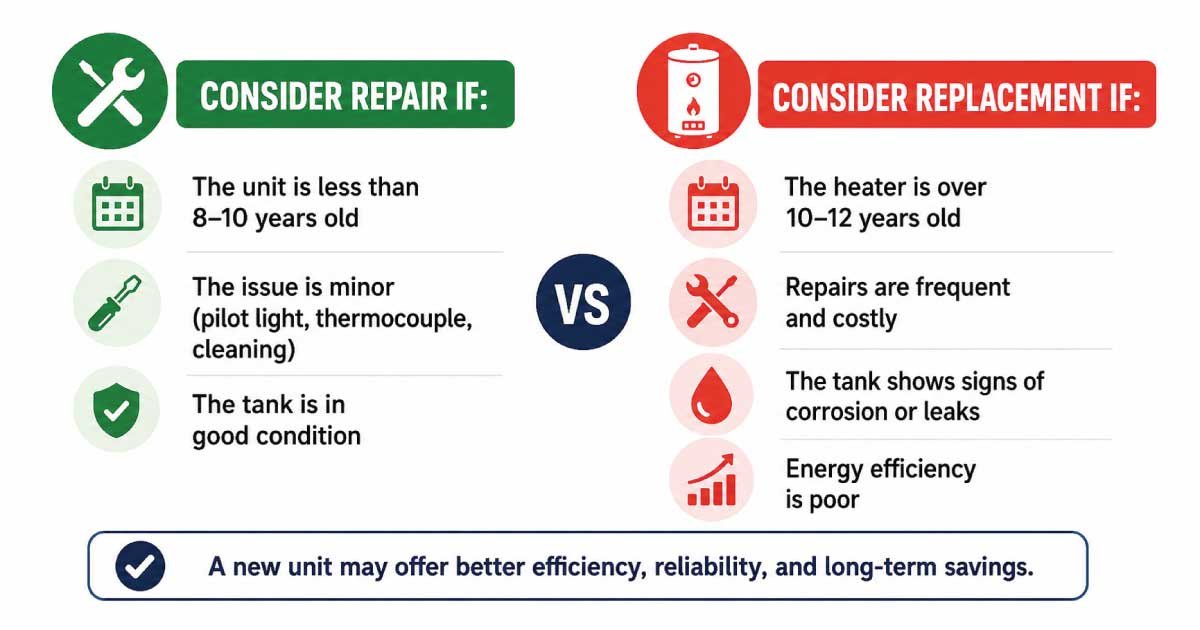
When your water heater burner stops working, deciding between repairing the existing unit and replacing it can save both time and money. The right choice depends on the heater’s age, overall condition, repair costs, and long-term efficiency. Evaluating these factors will help you make a practical and cost-effective decision.

Repair vs. Replacement: What’s the Better Choice

Consider Repair If:

Repairing your water heater is often the most economical option when the appliance is relatively new and the problem is isolated to a replaceable component. Minor burner-related issues can usually be fixed quickly, restoring reliable performance without the expense of purchasing a new unit.

  • The unit is less than 8–10 years old
  • The issue is minor (pilot light, thermocouple, cleaning)
  • The tank is in good condition

Consider Replacement If:

Replacing the water heater is generally the better investment when the unit has reached the end of its expected lifespan or is experiencing repeated mechanical failures. A newer model can provide greater reliability, improved energy efficiency, and lower maintenance costs over time.

  • The heater is over 10–12 years old
  • Repairs are frequent and costly
  • The tank shows signs of corrosion or leaks
  • Energy efficiency is poor

A new unit may offer better efficiency, reliability, and long-term savings.


Final Thoughts

A water heater burner not working can disrupt daily life, but the issue is often traceable to common and fixable causes. From pilot light problems and dirty burners to faulty thermostats and gas control valves, understanding how the system works empowers you to troubleshoot effectively.

While basic checks and cleaning can resolve many issues, never hesitate to involve a professional when safety or complex components are involved. With proper maintenance and timely repairs, your water heater can continue delivering reliable hot water for years to come.

If you’re dealing with a stubborn burner problem, take action early—your comfort, safety, and energy bills will thank you.