Few household frustrations are as universal as stepping into a warm shower only to be blasted by icy water minutes later. If your hot water runs out fast, you’re not alone and the problem is often more fixable than you might think. Whether you live in a busy family home, a small apartment, or an older house, several mechanical, usage, and efficiency issues could be draining your hot water supply quicker than expected.
This in-depth guide explains why hot water runs out fast, how to diagnose the root cause, and what short-term and long-term solutions can restore reliable hot water to your home.
Understanding How Your Hot Water System Works
Before troubleshooting hot water problems, it’s important to understand how your home’s system operates. Knowing the basic design and limitations of your water heater helps you identify why hot water runs out quickly and which fixes are realistic, cost-effective, and appropriate for your setup.
Most homes rely on one of two systems:
- Tank (storage) water heaters – These store a fixed amount of hot water (typically 30–80 gallons). Once the tank empties, you must wait for it to reheat.
- Tankless (on-demand) water heaters – These heat water as you use it, offering unlimited supply but limited flow rate.
If your hot water runs out fast, the cause and the solution depends heavily on which system you have.
Common Reasons Hot Water Runs Out Fast
Several everyday issues can cause your hot water supply to disappear sooner than expected. These problems range from system design limitations to internal wear and maintenance issues. Understanding each cause helps you pinpoint whether the solution involves changing usage habits, performing maintenance, or scheduling a professional repair or upgrade.
1. Your Water Heater Tank Is Too Small
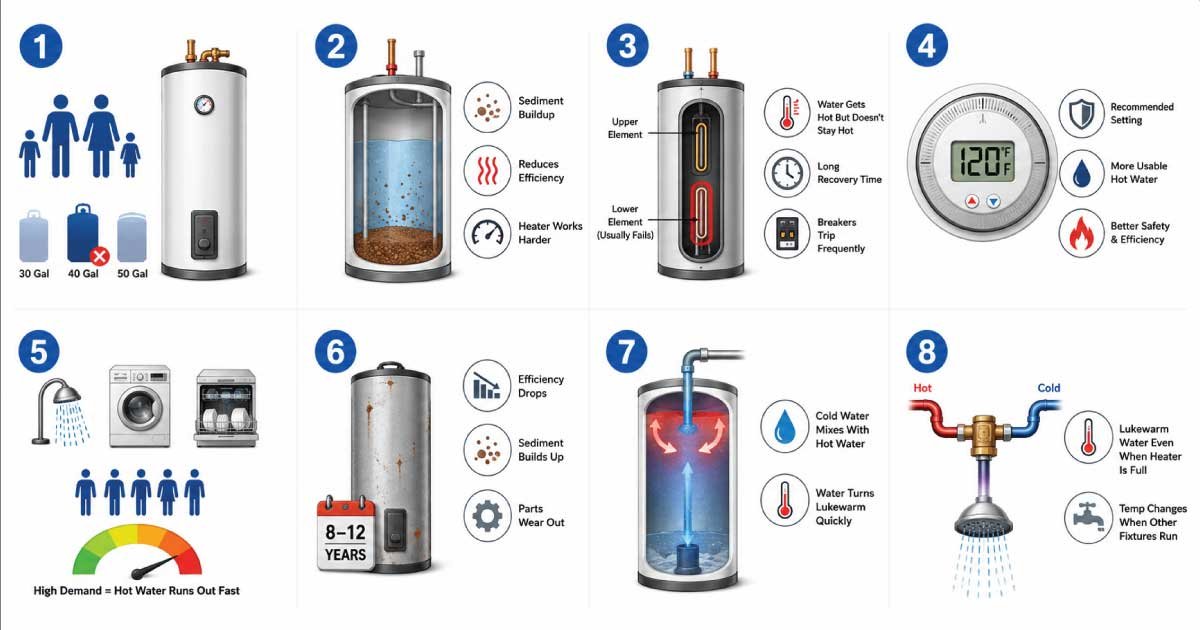
One of the most common reasons hot water disappears quickly is an insufficient tank size for your household’s daily demand. When usage exceeds the heater’s storage capacity, hot water is depleted faster than it can be reheated, especially during peak times like mornings or evenings.
A household with:
- Multiple showers back-to-back
- Dishwashers and washing machines running simultaneously
- High-flow showerheads
can easily overwhelm a small tank.
Example:
A 40-gallon tank may work fine for one or two people but struggle with a family of four.
Signs this is the problem:
- Hot water runs out during morning routines
- Hot water is fine when used alone, but not with multiple fixtures
- Issue has existed since moving in
2. Sediment Buildup Inside the Tank
Over time, minerals from hard water settle at the bottom of the tank, gradually forming a thick sediment layer. This buildup reduces efficiency and limits how much water can be properly heated, causing hot water to run out faster than expected even with normal usage.
This buildup:
- Reduces usable hot water capacity
- Insulates heating elements
- Forces the heater to work harder and slower
Result: You get less hot water, and it cools faster.
Warning signs include:
- Rumbling or popping sounds
- Cloudy or rusty water
- Hot water that doesn’t last as long as it used to
3. Broken or Failing Heating Elements
Electric water heaters rely on two heating elements to maintain consistent hot water. When one element fails—most often the lower one—the system can no longer heat the full tank effectively, leading to rapid hot water loss and slow recovery times.
Electric water heaters use two heating elements (upper and lower). If one fails—especially the lower element—hot water will run out fast.
Gas heaters can also suffer from burner or thermocouple issues.
Clues:
- Water gets hot but doesn’t stay hot
- Recovery time is unusually long
- Electrical breakers trip frequently
This is one of the most common repairable causes.
4. Thermostat Set Too Low
Sometimes the cause of short hot water supply isn’t a mechanical failure but a simple settings issue. When the thermostat is adjusted below recommended levels, the water heater doesn’t heat water to a high enough temperature, reducing the usable hot water available during normal daily use.
Sometimes the solution is surprisingly simple. If your thermostat is set below recommended levels, the heater produces less hot water overall.
Recommended setting:
Around 120°F (49°C) for safety and efficiency.
Anything lower:
- Reduces effective hot water volume
- Makes mixing with cold water less efficient
5. High Hot Water Demand
Even when a water heater is functioning properly, sudden increases in usage can make it seem inadequate. If multiple hot water activities happen at the same time, demand may temporarily exceed the system’s capacity, causing hot water to run out faster without any actual equipment failure. Even a properly working water heater can feel inadequate if demand suddenly increases.
Common demand culprits:
- Long showers
- Multiple laundry loads
- Running dishwasher and shower together
- Guests staying over
If hot water only runs out during peak use, demand not failure may be the issue.
6. Aging Water Heater
Water heaters lose efficiency as they get older, even if they still appear to be working. Internal wear, mineral buildup, and declining component performance all contribute to reduced hot water output, making shortages more frequent and noticeable as the system approaches the end of its service life.
Water heaters typically last:
- 8–12 years (tank models)
- 15–20 years (tankless models)
As heaters age:
- Efficiency drops
- Sediment accumulates
- Heating components degrade
If your heater is near the end of its lifespan, frequent hot water shortages may signal impending failure.
7. Faulty Dip Tube
The dip tube plays a critical role in maintaining consistent hot water delivery. When it breaks or deteriorates, cold water enters the tank improperly, mixing with hot water at the top and causing the temperature at faucets to drop much sooner than expected.
- Cold water mixes with hot water at the top
- Delivered water turns lukewarm quickly
This problem was especially common in older units and can dramatically shorten hot water duration.
8. Plumbing Cross-Connections
In some cases, hot water problems originate within the plumbing system rather than the water heater itself. Faulty mixing valves, worn shower cartridges, or improper cross-connections can allow cold water to blend with hot water prematurely, reducing temperature at the tap despite normal heater operation.
A faulty mixing valve, shower cartridge, or plumbing cross-connection can allow cold water to mix with hot before it reaches the tap.
Signs include:
- Lukewarm water even when heater is full
- Temperature changes when other fixtures run
Tankless Water Heater Issues That Cause Fast Hot Water Loss
With tankless systems, running out of hot water usually isn’t about storage but about performance limits. These systems heat water instantly, but only up to a certain flow rate. When demand exceeds capacity or efficiency drops, water temperature falls quickly, creating the impression that hot water has run out.
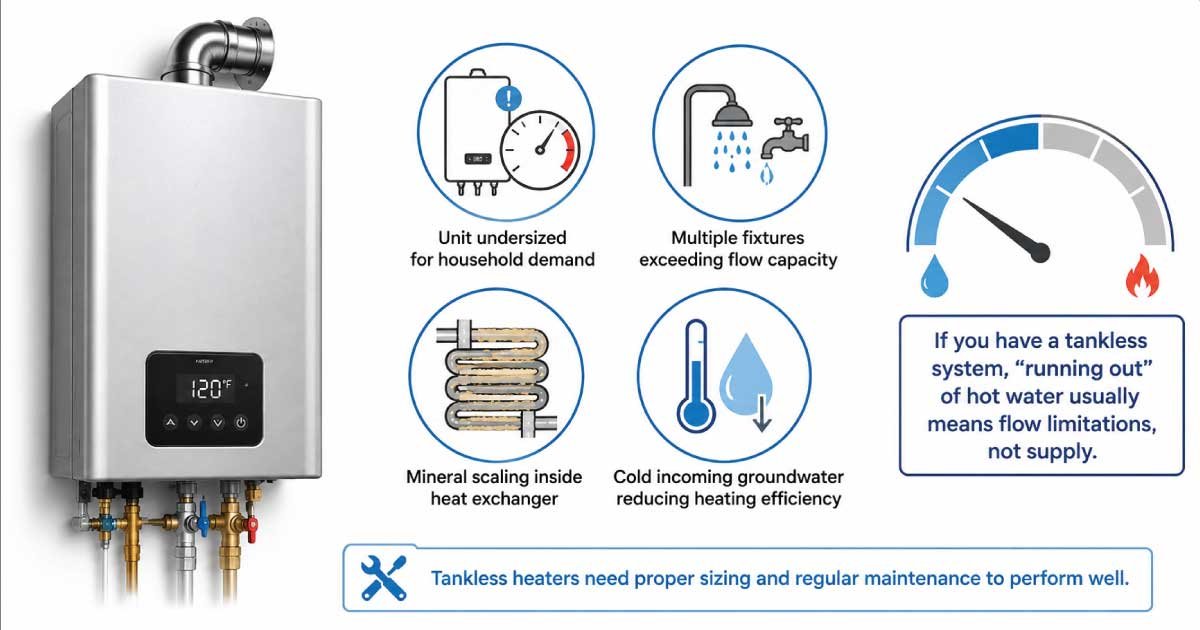
If you have a tankless system, “running out” of hot water usually means flow limitations, not supply.
Common tankless causes:
- Unit undersized for household demand
- Multiple fixtures exceeding flow capacity
- Mineral scaling inside heat exchanger
- Cold incoming groundwater reducing heating efficiency
Tankless heaters need proper sizing and regular maintenance to perform well.
🚀 Complete Guide: Everything you need to know. 👉
Quick Fixes You Can Try Today
Before calling a professional, there are several practical steps you can take right away to improve hot water availability. These quick fixes focus on reducing demand, improving efficiency, and correcting common issues that frequently cause hot water to run out faster than expected.
Lower Hot Water Usage
- Install low-flow showerheads
- Space out showers and laundry
- Take shorter showers
Check the Thermostat
- Confirm it’s set to ~120°F
- Adjust carefully to avoid scalding
Flush the Water Heater
- Removes sediment buildup
- Improves efficiency and capacity
- Should be done annually
Inspect Shower Valves
- Replace worn mixing cartridges
- Fix cross-connections
When to Repair vs Replace
Deciding whether to repair or replace a water heater depends on its age, condition, and performance. Minor component failures are often cost-effective to fix, while ongoing issues, declining efficiency, or age-related wear usually make replacement the more reliable and economical long-term solution.
Repair Makes Sense If:
- Heater is under 8 years old
- Only one heating element is bad
- Thermostat or dip tube failure
- Sediment buildup is manageable
Replacement Is Smarter If:
- Heater is over 10–12 years old
- Repairs are frequent or expensive
- Hot water demand has increased
- Efficiency is noticeably poor
🚀 Complete Guide: Everything you need to know. 👉
Long-Term Solutions for Reliable Hot Water
When recurring hot water shortages become a regular frustration, long-term upgrades may be the most effective solution. These options focus on increasing capacity, improving efficiency, and better matching your system to household demand, helping ensure consistent hot water availability even during peak usage times.
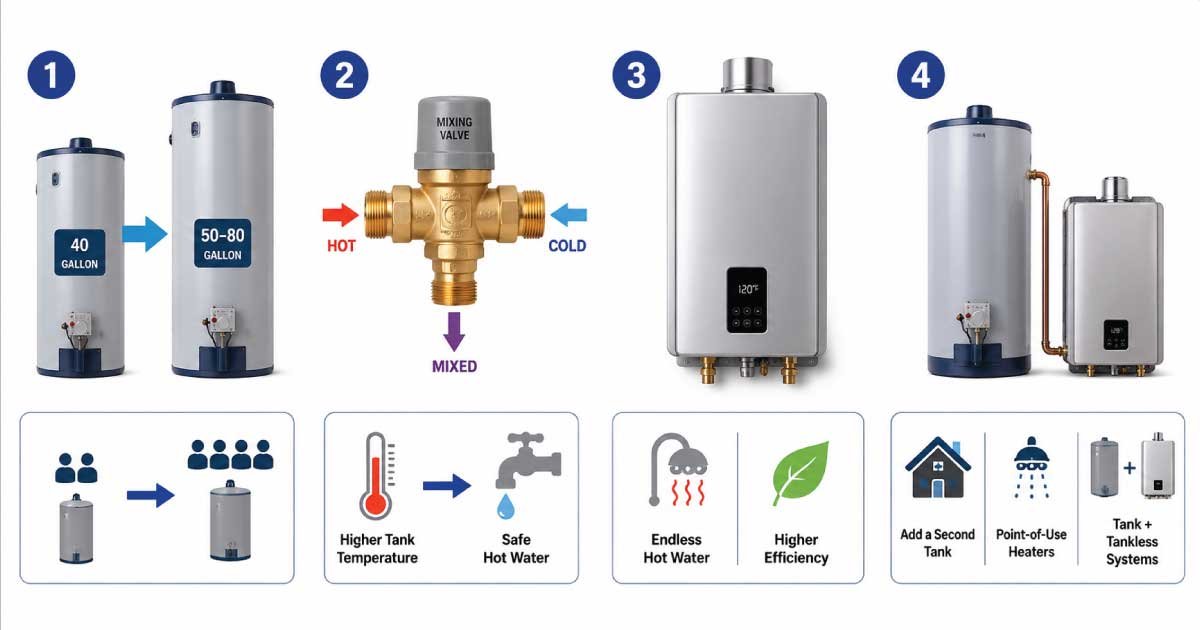
1. Upgrade to a Larger Tank
If your household size or hot water usage has increased over time, your current tank may no longer meet demand. Upgrading to a larger-capacity water heater allows more hot water to be stored and used before reheating is required, significantly reducing the likelihood of running out.
If your household has grown, upgrading from a 40-gallon to a 50- or 80-gallon tank can dramatically improve performance.
2. Add a Mixing Valve
A mixing valve enhances hot water efficiency without replacing the entire system. By blending hot and cold water at the outlet, it allows the tank to store hotter water safely, effectively increasing usable hot water volume while maintaining safe temperatures at faucets and fixtures.
A thermostatic mixing valve allows higher tank temperatures while delivering safe water to taps—effectively increasing hot water capacity.
3. Install a Tankless Water Heater
Tankless water heaters eliminate storage limits by heating water on demand. They are ideal for households with staggered hot water usage and offer improved energy efficiency. However, proper sizing is essential to ensure the system can handle simultaneous fixtures without temperature drops.
Tankless systems provide continuous hot water and higher efficiency, especially for homes with staggered usage. However, proper sizing is critical.
4. Install a Secondary Water Heater
In large or multi-bathroom homes, a single water heater may not be sufficient. Adding a secondary system reduces strain on the primary heater, shortens wait times, and improves temperature consistency by serving high-demand areas independently.
For large homes:
- Add a second tank
- Use point-of-use heaters for bathrooms
- Combine tank + tankless systems
🚀 Complete Guide: Everything you need to know. 👉
Maintenance Tips to Prevent Hot Water Shortages
Consistent maintenance is one of the most effective ways to prevent unexpected hot water shortages and costly repairs. Simple, routine checks help your system operate efficiently, maintain proper heating capacity, and catch small problems before they reduce performance or shorten the lifespan of your water heater.
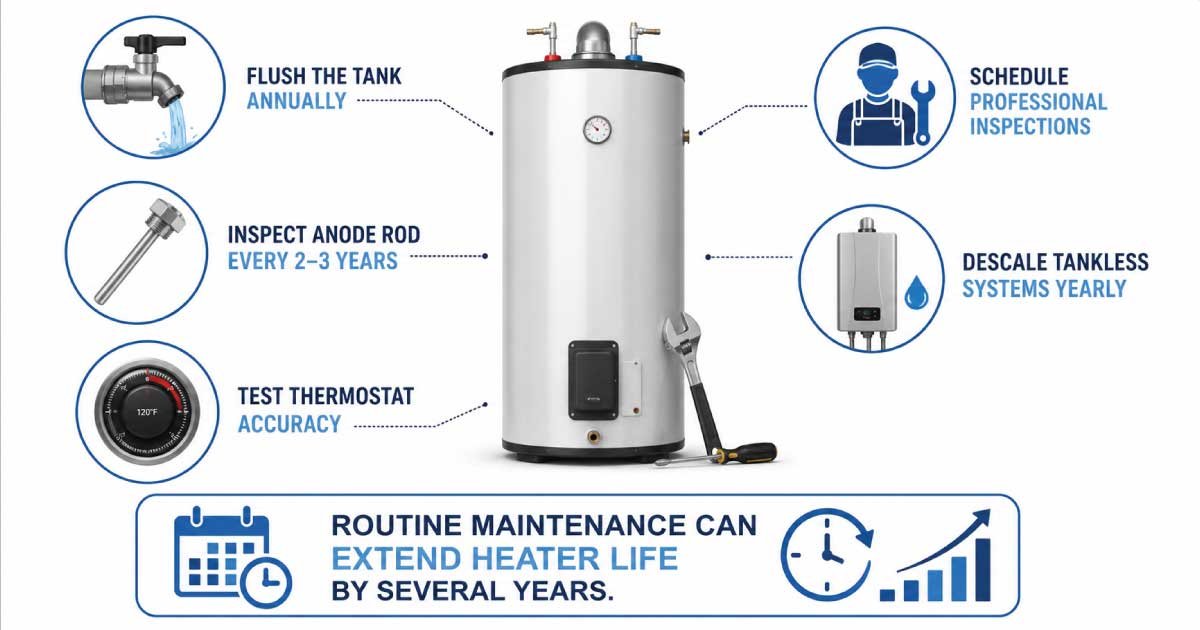
Prevent future problems by following these best practices:
- Flush the tank annually
- Inspect anode rod every 2–3 years
- Test thermostat accuracy
- Schedule professional inspections
- Descale tankless systems yearly
Routine maintenance can extend heater life by several years.
Safety Considerations
Improving hot water availability should never come at the expense of household safety. Water heaters involve high temperatures, gas, electricity, and pressure, so incorrect adjustments or repairs can pose serious risks. Following basic safety guidelines protects both occupants and the water heating system itself.
While increasing hot water capacity, always prioritize safety:
- Never exceed recommended temperature settings
- Use anti-scald valves in bathrooms
- Shut off power or gas before servicing
- Call a professional for gas or electrical repairs
Final Thoughts: Don’t Settle for Cold Showers
If your hot water runs out fast, it’s not just an inconvenience it’s a sign your system isn’t meeting your household’s needs. The cause may be as simple as a thermostat adjustment or as complex as an undersized or aging heater.
The good news? With the right diagnosis and solution, consistent hot water is absolutely achievable. Whether you choose repairs, upgrades, or replacement, addressing the problem now will save you frustration, energy, and money in the long run.
No more racing through showers. No more cold surprises. Just reliable hot water when you need it.