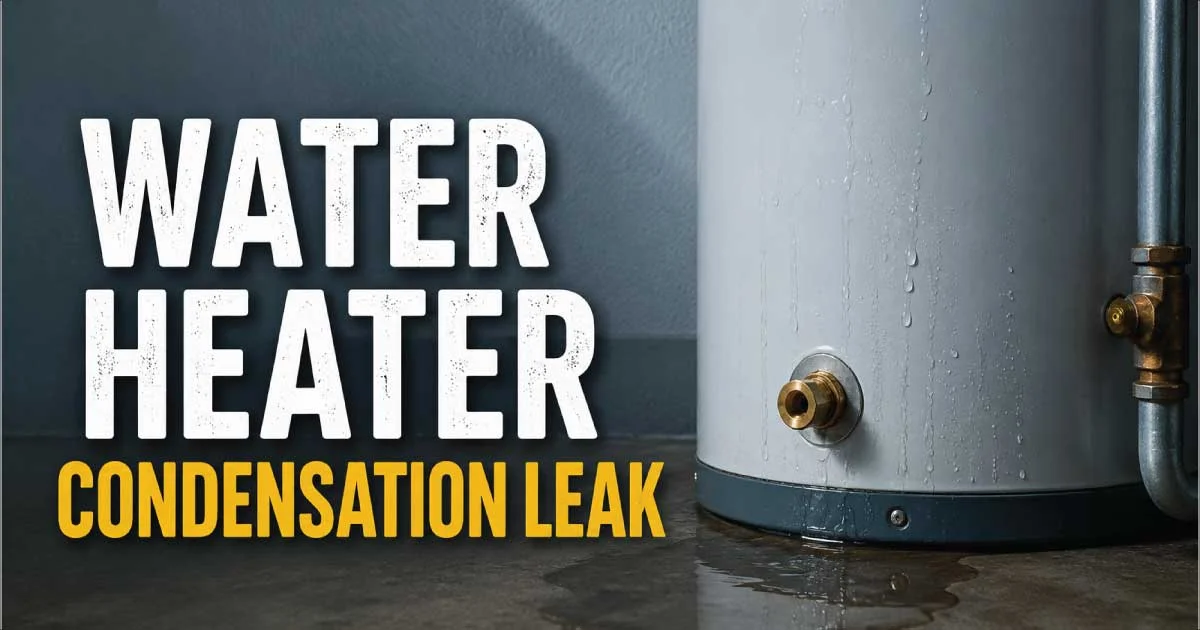
Few household issues cause as much confusion as discovering water around your water heater. Homeowners often assume the worst—cracked tanks, failing valves, or expensive replacements. However, one of the most common and misunderstood reasons for water heater leaks is condensation.
A water heater condensation leak is not always a sign of failure. In many cases, it’s a normal physical process that occurs under specific conditions. In other situations, excessive condensation may indicate ventilation problems, improper installation, or environmental factors that need attention.
In this in-depth guide, we’ll explain what water heater condensation is, why it happens, how to tell the difference between condensation and a real leak, and what you can do to prevent long-term damage.
What Is Water Heater Condensation?
Before determining whether moisture around your water heater is a cause for concern, it’s important to understand what condensation is and why it occurs. In many cases, condensation is a normal part of the heating process, although excessive or persistent moisture can sometimes indicate an underlying issue that requires attention.
Condensation occurs when warm, moist air comes into contact with a cooler surface. The moisture in the air cools rapidly and turns into liquid water droplets. This is the same process you see when water beads form on the outside of a cold glass on a hot day.
In water heaters, condensation typically forms on the outside of the tank, flue pipe, or cold-water inlet, especially when cold water enters the heater and lowers the tank’s surface temperature.
A small amount of condensation is normal. Problems arise when condensation becomes excessive, persistent, or is mistaken for a mechanical leak.
Why Water Heater Condensation Happens
Water heater condensation can develop for several reasons, many of which are related to normal operating conditions rather than equipment failure. Understanding the most common causes helps you determine whether the moisture is harmless or a sign of a problem that requires further inspection or professional attention.
1. Cold Water Entering a Warm Tank
One of the most common causes of condensation occurs when cold water enters a warm water heater tank. The sudden temperature difference cools the tank’s outer surface, allowing moisture from the surrounding air to collect as water droplets, particularly in warm and humid environments.
When cold water flows into the tank—especially after heavy use like showers or laundry—it cools the metal surfaces. If the surrounding air is warm and humid, moisture quickly condenses on the outside of the heater.
This is most common:
- In the morning or evening
- After long periods of hot water use
- In humid climates
2. High Humidity in the Installation Area
The environment surrounding your water heater plays a major role in condensation levels. Areas with high humidity and limited airflow naturally encourage moisture to form on cool metal surfaces, making condensation much more noticeable during normal water heater operation.
Water heaters located in basements, crawl spaces, garages, or laundry rooms are especially prone to condensation. These spaces often have poor ventilation and elevated moisture levels.
High indoor humidity dramatically increases the amount of condensation that can form on any cool surface, including your water heater.
3. Poor Ventilation or Draft Issues
Proper ventilation allows combustion gases to exit the home safely while maintaining efficient heater performance. When the venting system is blocked, damaged, or incorrectly installed, moisture can accumulate inside the flue and eventually appear as water around the top of the heater.
Gas water heaters rely on proper venting to carry combustion gases out of the home. If the flue is blocked, improperly sized, or poorly installed, warm exhaust gases may linger and cool too quickly—leading to moisture buildup.
In some cases, condensation forms inside the vent pipe and drips back down onto the top of the water heater, giving the appearance of a leak.
4. Newly Installed Water Heaters
It is normal for a newly installed water heater to produce more condensation during its initial period of operation. As the tank and insulation adjust to regular heating cycles, temporary moisture may form before gradually decreasing as the system reaches stable operating conditions.
New water heaters often produce more condensation during the first few weeks of operation. The internal insulation and metal surfaces are still adjusting to regular heating cycles, which can increase surface cooling and moisture formation.
This usually resolves on its own once the system stabilizes.
5. Oversized Water Heaters
A water heater that is larger than your household actually requires may experience longer idle periods between heating cycles. These cooler tank surfaces create ideal conditions for condensation, making proper water heater sizing an important factor in both efficiency and moisture control.
A water heater that is too large for the household may heat water less frequently, allowing the tank to remain cooler for longer periods. When warm air contacts the cooler tank surface, condensation becomes more likely.
Proper sizing is essential not just for efficiency, but also for moisture control.
 Also Read
  Pilot Light Not Lighting Water Heater: How to Fix It
Common Areas Where Condensation Appears
Condensation does not always collect in the same place on every water heater. Identifying where moisture is forming can help you determine whether it is normal condensation or a sign of a plumbing problem. Inspecting these common locations makes it easier to diagnose the issue accurately and take the appropriate corrective action.
Tank Surface
The outer tank surface is the most common place for condensation because it cools when cold water enters the heater. Moisture usually appears as evenly distributed water droplets rather than isolated drips, making it easier to distinguish from an actual leak.
The most common location. Water beads form on the sides of the heater, especially near the bottom where cold water enters.
Cold Water Inlet Pipe
The cold water inlet pipe often develops condensation because it carries cold water through warm, humid air. This temperature difference causes the pipe to sweat, allowing moisture to collect and sometimes drip onto the top or sides of the water heater.
This pipe often “sweats” due to the temperature difference between cold water and warm air.
Vent Pipe or Draft Hood
Condensation can also develop inside the vent pipe or draft hood when warm combustion gases cool too quickly. The resulting moisture may drip onto the top of the water heater, creating the appearance of a plumbing leak even when the unit is functioning properly.
Condensation inside the flue can drip downward, mimicking a leak from the top of the heater.
Base of the Unit
Water formed by condensation often travels down the outside of the tank before collecting beneath the unit. This pooling can easily be mistaken for a leaking tank, making it important to trace the moisture back to its actual source.
Condensation can run down the tank and collect underneath, creating the illusion of a bottom leak.
Is Water Heater Condensation Dangerous?
In most situations, water heater condensation is harmless and occurs naturally during normal operation. However, persistent or excessive moisture should not be ignored because it can gradually damage the water heater, nearby building materials, and reduce overall system efficiency if left unaddressed for extended periods.
Potential risks include:
- Rust and corrosion of the tank exterior
- Premature failure of components
- Mold or mildew growth nearby
- Damage to flooring, drywall, or framing
- Reduced efficiency due to heat loss
Ignoring chronic condensation can shorten the lifespan of your water heater, even if the tank itself is structurally sound.
Also Read Why Your Water Heater Pilot Light Keeps Going Out: Complete Guide
How to Fix and Prevent Water Heater Condensation
Fortunately, most water heater condensation issues can be reduced or eliminated with a few simple maintenance and moisture-control measures. Improving airflow, controlling indoor humidity, and keeping your water heater in good condition will help minimize excess condensation, protect surrounding areas, and improve the appliance’s long-term performance.
1. Improve Ventilation
Increasing airflow around your water heater helps remove warm, humid air before it can condense on cooler surfaces. Better ventilation not only reduces moisture buildup but also supports safer and more efficient operation, particularly for gas water heaters installed in enclosed spaces.
Adding airflow to the room can significantly reduce condensation.
Options include:
- Installing a vent fan
- Opening louvers or vents
- Ensuring proper flue installation for gas heaters
Proper airflow helps humid air escape before it can condense.
2. Reduce Indoor Humidity
Excess indoor humidity is one of the leading contributors to water heater condensation. Lowering moisture levels throughout your home helps prevent condensation from forming while also protecting against mold growth, mildew, and other moisture-related problems.
Consider:
- Using a dehumidifier
- Fixing nearby plumbing leaks
- Venting bathrooms and laundry areas properly
- Sealing foundation cracks or crawl spaces
Aim for indoor humidity levels between 30% and 50%.
3. Insulate Cold Water Pipes
Cold water pipes often develop condensation because of the temperature difference between the water inside and the surrounding air. Installing pipe insulation is an inexpensive solution that reduces sweating, prevents dripping, and keeps moisture away from your water heater.
Foam pipe insulation is inexpensive and easy to install. It prevents warm air from contacting cold surfaces, reducing sweating and dripping.
This is especially helpful for the cold-water inlet above the heater.
4. Check Venting and Draft
A properly functioning venting system is essential for both moisture control and safe water heater operation. Inspecting the vent pipe and draft components regularly helps prevent condensation caused by poor exhaust flow while reducing the risk of combustion-related safety issues.
For gas water heaters:
- Ensure the vent pipe slopes upward
- Confirm the draft hood is properly seated
- Look for blockages or corrosion
Improper venting not only causes condensation but can also be a safety hazard.
5. Adjust Water Temperature
Your thermostat setting can influence how much condensation forms on the water heater. Maintaining a moderate temperature helps reduce excessive moisture while balancing energy efficiency, household safety, and consistent hot water availability throughout the home.
Setting the thermostat too low can increase condensation by keeping the tank cooler. Setting it too high can increase humidity and energy use.
A setting of 120°F (49°C) is usually ideal for balancing efficiency, safety, and moisture control.
6. Install a Drip Pan (If Missing)
Although a drip pan will not prevent condensation from forming, it provides valuable protection by collecting moisture before it damages flooring or nearby materials. It also makes it easier to monitor water accumulation and identify developing problems early.
A drain pan won’t stop condensation, but it will protect your flooring and make moisture issues easier to detect and manage.
Also Read Water Heater Thermocouple Problems: Causes & Fixes
Final Thoughts
A water heater condensation leak is one of the most commonly misdiagnosed household plumbing issues. In many cases, it’s a normal reaction to temperature differences and humidity—not a sign of failure.
However, persistent condensation should never be ignored. Over time, moisture can cause corrosion, efficiency loss, and structural damage to your home. By understanding the causes, recognizing the warning signs, and applying practical solutions, homeowners can protect both their water heater and their property.
If you’re ever unsure whether moisture is harmless condensation or a real leak, err on the side of caution and seek professional advice. A small inspection today can save thousands in repairs tomorrow.