
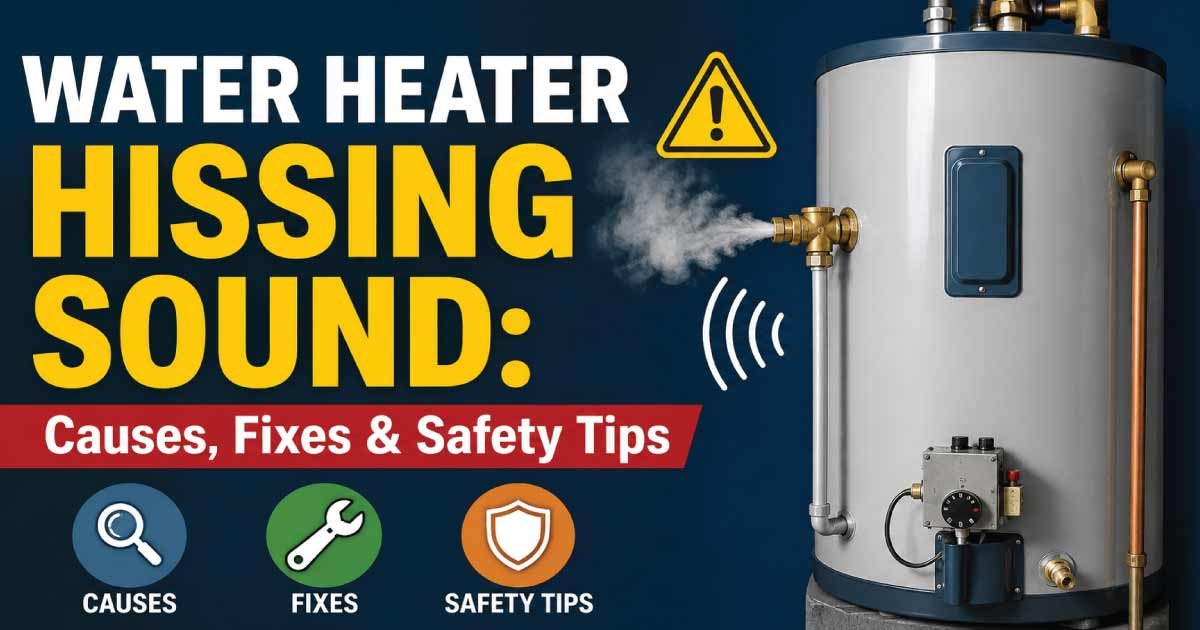
A water heater hissing sound can be caused by several different problems, ranging from normal water movement to leaks, high water pressure, sediment buildup, or heating component issues. Some mild hissing sounds are harmless, but a loud or continuous hiss should be investigated, especially if it is accompanied by leaking water, unusually hot water, strange odors, or pressure problems.
The location and timing of the sound are important clues. A hissing noise that occurs while the water heater is heating may be related to the heating elements, burner, or water contacting a hot surface. A hiss near a valve or pipe connection may indicate escaping water or pressure. On an electric water heater, hissing around the heating element can point to scale buildup or a leaking element gasket.
The good news is that many causes of a noisy water heater can be addressed through routine maintenance. However, water heaters contain very hot water, pressurized plumbing, electricity, or gas, so repairs involving electrical and gas components should be handled carefully.
What Causes a Water Heater Hissing Sound?
The cause of a water heater hissing sound depends on where the noise comes from and when it happens.
Common causes include:
- Normal heating and water movement
- Water leaking onto a hot surface
- High water pressure
- A leaking temperature and pressure relief valve
- A faulty heating element
- Mineral deposits
- Sediment buildup
- Thermal expansion
- A partially closed valve
- Loose plumbing connections
- Burner-related problems
A useful first step is to identify whether the sound comes from the tank, pipes, valves, burner area, or electrical compartment.
| Possible Cause | Typical Sound | When It Happens | Recommended Action |
|---|---|---|---|
| Heating cycle | Mild hiss | During heating | Monitor |
| Leaking water | Continuous hiss | During or after heating | Inspect for leaks |
| High pressure | Hiss or whistle | During water flow/heating | Check pressure |
| T&P valve | Hissing near valve | During heating | Inspect valve |
| Heating element scale | Hissing/crackling | Electric heating cycle | Service element |
| Sediment | Hiss, pop, or rumble | During heating | Flush tank |
| Thermal expansion | Hiss/tick | Heating cycle | Check expansion control |
| Restricted valve | Hiss or whistle | Water flow | Inspect valve |
Is a Hissing Water Heater Normal?
Not every hissing sound indicates a serious problem.
Water heaters naturally heat water, and some systems can make mild sounds as water moves through valves or as components expand and contract.
A brief, quiet hiss that occurs occasionally may not require immediate action if the heater is otherwise operating normally.
However, a loud, persistent, or suddenly new hissing sound deserves attention.
Be especially cautious if the noise occurs together with:
- Visible water
- Steam
- Excessive heat
- A pressure relief valve discharge
- Rust or corrosion
- Gas odor
- Burning electrical smell
- Reduced hot-water performance
The difference between a normal operating sound and a warning sign is often determined by the sound’s location and accompanying symptoms.
Water Heater Hissing During Heating
If your water heater hisses only while it is heating, the heating process itself may be involved.
As water temperature increases, water expands. The heating components also become extremely hot.
A hissing sound may occur if water comes into contact with a hot surface or if pressure changes inside the system.
Sediment and Mineral Deposits
Sediment can accumulate at the bottom of tank-style water heaters. Mineral scale can also form around electric heating elements.
These deposits can create localized hot spots.
When water interacts with extremely hot areas, it can produce steam bubbles that sound like:
- Hissing
- Sizzling
- Crackling
- Popping
If the sound is becoming louder over time, sediment or mineral scale may need attention.
Water Heater Hissing and Leaking Water
A hissing sound combined with a water leak is more concerning than a quiet hiss with no other symptoms.
Water escaping through a small opening can create a hissing sound, especially when the water is under pressure.
Look carefully around:
- Water supply connections
- Drain valves
- Temperature and pressure relief valves
- Heating element connections
- Pipe fittings
- The top of the tank
- The bottom of the tank
Why Location Matters
If water is leaking from a replaceable valve or connection, the problem may be repairable.
If water is leaking directly through the tank itself, internal corrosion may have caused a failure.
A leaking tank generally requires replacement rather than a simple repair.
Water Heater Hissing From the Pressure Relief Valve
The temperature and pressure relief valve, commonly called the T&P valve, is an important safety component on many tank water heaters.
It is designed to release water when temperature or pressure reaches an unsafe level.
If you hear hissing near this valve, there may be a pressure or temperature problem.
Possible causes include:
- Excessive water pressure
- Overheating
- Thermal expansion
- A faulty relief valve
- A valve that is not closing properly
Should You Ignore a Hissing T&P Valve?
No.
The T&P valve is a safety device, so persistent hissing, dripping, or discharge should be investigated.
Do not permanently cap, block, or disable the relief valve to stop the noise. Doing so can remove an important safety function from the water heater.
A qualified professional can determine whether the valve itself is defective or whether excessive pressure or temperature is causing it to operate.
Water Heater Hissing Due to High Water Pressure
High water pressure can cause unusual sounds throughout a plumbing system.
Excessive pressure may produce:
- Hissing valves
- Whistling
- Pipe vibration
- Water hammer
- Leaking connections
- Relief valve discharge
If the hissing appears during heating or when fixtures are being used, water pressure may be worth checking.
How to Check Water Pressure
A suitable pressure gauge can be used to measure household water pressure.
If pressure appears unusually high, have the plumbing system evaluated.
Do not simply adjust a pressure-reducing valve without understanding how the home’s plumbing system is configured.
Water Heater Hissing Because of Thermal Expansion
Water expands as it is heated.
In a plumbing system where water cannot easily expand back toward the supply, pressure can temporarily increase.
This is known as thermal expansion.
Thermal expansion can produce sounds such as:
- Hissing
- Ticking
- Popping
- Knocking
- Pipe movement
It can also place additional stress on plumbing components.
What Helps With Thermal Expansion?
Depending on the plumbing configuration, an expansion tank may be used to absorb thermal expansion.
Whether an expansion tank is appropriate depends on the home’s plumbing system and local requirements.
A plumber can determine whether thermal expansion is contributing to the hissing sound.
Electric Water Heater Hissing Sound
Electric water heaters commonly use heating elements installed inside the tank.
Over time, minerals can build up around these elements.
When the element heats water through a layer of scale, localized overheating can occur. This may produce a hissing or sizzling noise.
Signs of a Heating Element Problem
A heating element issue may also cause:
- Less hot water
- Longer heating times
- Temperature fluctuations
- Higher energy consumption
- Circuit breaker problems
- Crackling or sizzling sounds
Electrical water heater components can be hazardous to work on.
If you are not qualified to test or replace heating elements, have the unit inspected by a professional.
Gas Water Heater Hissing Sound
Gas water heaters can produce hissing sounds for several reasons.
Some sounds may be related to normal operation, while others may indicate burner, gas supply, pressure, or water-related problems.
Possible causes include:
- Burner operation
- Gas flow
- Water contacting a hot surface
- Sediment buildup
- Pressure problems
- Burner contamination
Gas Safety Comes First
If the hissing is accompanied by a gas smell, treat the situation differently from a normal water heater noise.
Do not attempt to locate the gas leak yourself.
Avoid creating sparks or operating electrical switches near the suspected leak. Leave the area and contact the appropriate gas or emergency service.
Water Heater Hissing and Sizzling
Hissing and sizzling sounds are sometimes confused with one another.
A sizzling sound can indicate that water is contacting a very hot component.
This can occur with:
- Electric heating elements
- Gas burner areas
- Leaking connections
- Water dripping onto heated surfaces
If you see water or moisture near a hot or electrical component, do not touch the area.
Turn off the relevant energy source if it can be done safely and arrange professional inspection.
How to Find the Source of a Hissing Water Heater
Before attempting any repair, determine where the sound originates.
Check the Top of the Heater
Inspect the upper connections for:
- Moisture
- Corrosion
- Mineral deposits
- Hissing valves
- Loose connections
Check the Bottom
For gas water heaters, inspect the area around the burner without disturbing the equipment.
Look for:
- Water
- Rust
- Debris
- Unusual combustion behavior
Do not disassemble gas components.
Check the Pipes
Listen near the water supply and outlet pipes.
A hissing sound may actually come from a valve or pipe rather than the tank.
How to Fix a Water Heater Hissing Sound
The correct fix depends on the underlying problem.
| Cause | Potential Fix |
|---|---|
| Sediment buildup | Flush the tank |
| Mineral scale | Service heating components |
| Leaking connection | Repair or replace connection |
| Faulty T&P valve | Professional valve inspection/replacement |
| High water pressure | Diagnose and correct pressure |
| Thermal expansion | Evaluate expansion control |
| Heating element problem | Inspect or replace element |
| Burner problem | Professional gas service |
| Leaking tank | Replace water heater |
A hissing sound should not be fixed by simply silencing the noise. The underlying cause needs to be addressed.
Discover More:
How to Flush a Water Heater
If sediment is suspected, flushing the tank may help.
Always follow the manufacturer’s instructions for your specific model.
General Flushing Process
A typical tank flushing procedure includes:
- Turn off the heater.
- Shut off gas or electrical power as appropriate.
- Allow the water to cool.
- Close the cold-water supply.
- Connect a suitable hose to the drain valve.
- Place the hose in an appropriate drainage location.
- Open the drain valve.
- Allow the tank to drain.
- Flush the tank according to manufacturer instructions.
- Continue until the water is relatively clear.
- Close the drain valve.
- Refill the tank completely.
- Restore operation according to the manufacturer’s instructions.
Important Safety Precautions
Water inside a recently operating water heater can be extremely hot.
Never assume the water is safe to handle simply because the heater has been turned off.
Electric heaters also require the tank to be completely full before power is restored.
If you are unsure about flushing the tank, professional maintenance is recommended.
Water Heater Hissing After Flushing
If the water heater continues to hiss after flushing, sediment may not be the only problem.
Possible causes include:
- Remaining mineral deposits
- Heating element scale
- Thermal expansion
- High water pressure
- A leaking valve
- A faulty pressure relief valve
- Loose connections
- Tank deterioration
A standard flush does not necessarily correct pressure or valve problems.
If the noise continues, further diagnosis may be needed.
Can Hard Water Cause a Hissing Water Heater?
Yes. Hard water can contribute to mineral scale inside the water heater.
Calcium and magnesium can form deposits on tank surfaces and heating elements.
These deposits can cause:
- Hissing
- Sizzling
- Popping
- Rumbling
- Reduced heating efficiency
- Longer heating cycles
Homes with hard water may require more frequent maintenance.
Signs Your Home May Have Hard Water
Common signs include:
- White deposits around faucets
- Scale on showerheads
- Spots on glassware
- Reduced flow through fixtures
- Mineral buildup
- Frequent water heater sediment
Water quality testing can help determine whether hard water is contributing to the problem.
Discover More:
Water Heater Hissing at Night
A water heater may seem louder at night because the house is quieter.
Automatic heating cycles may occur when household water usage decreases.
A mild heating-related hiss may therefore become more noticeable.
However, a new or persistent nighttime hissing sound should still be investigated if it is unusually loud or accompanied by:
- Water leaks
- Steam
- Overheating
- Pressure relief valve discharge
- Gas odor
- Electrical smells
The time of day alone does not determine whether the sound is normal.
Water Heater Hissing and No Hot Water
A hissing water heater that also stops producing sufficient hot water may have a heating problem.
Potential causes include:
- Failed electric heating element
- Faulty thermostat
- Burner problem
- Heavy sediment
- Mineral scale
- Gas supply problem
If the unit is not heating properly, avoid repeatedly resetting electrical breakers or gas controls without identifying the cause.
Professional diagnosis may be necessary.
Water Heater Hissing and Overheating
Hissing combined with unusually hot water can be a warning sign.
Possible causes include:
- Faulty thermostat
- High temperature setting
- Heating control failure
- Pressure problems
- Thermal expansion
Excessive temperature can increase the risk of scalding and place additional stress on the system.
If the water is unexpectedly much hotter than normal, have the water heater inspected.
Discover More:
How to Prevent Water Heater Hissing
Regular maintenance can reduce the likelihood of developing noise-related problems.
Useful preventive steps include:
- Follow the manufacturer’s maintenance schedule.
- Flush the tank when appropriate.
- Monitor water pressure.
- Address hard-water problems.
- Inspect visible connections.
- Watch for leaks.
- Keep the area around the water heater accessible.
- Have older systems inspected.
- Address unusual sounds early.
Preventive maintenance can help identify small problems before they become major failures.
How Often Should a Water Heater Be Maintained?
Maintenance requirements vary based on water quality, heater type, usage, age, and manufacturer recommendations.
Homes with hard water may develop mineral deposits faster.
| Condition | Risk of Mineral Buildup | Maintenance Approach |
|---|---|---|
| Soft water | Low | Follow manufacturer’s recommendations |
| Moderate hardness | Moderate | Monitor and inspect |
| Hard water | High | Consider more frequent maintenance |
| Very hard water | Very high | Consider water treatment |
| Older neglected heater | Potentially high | Professional inspection |
There is no single maintenance schedule that is ideal for every water heater.
When Should You Call a Plumber?
Professional help is recommended when the source of the hissing cannot be safely identified or when the problem involves pressure, gas, electricity, or a leaking tank.
Call a qualified professional if:
- The hissing is loud or continuous.
- Water is leaking.
- The T&P valve is hissing or dripping.
- The tank is severely corroded.
- The water is excessively hot.
- The heater is not producing enough hot water.
- There is a gas odor.
- There is a burning electrical smell.
- The noise continues after maintenance.
- The water heater repeatedly shuts down.
Do not attempt to bypass safety devices to stop a noise.
When Is a Hissing Water Heater an Emergency?
A hissing sound requires urgent attention when it is accompanied by signs of a potentially dangerous condition.
Examples include:
- Strong gas odor
- Smoke
- Burning electrical smell
- Water contacting electrical components
- Severe tank leakage
- Steam escaping from the system
- Extremely high water temperature
- A damaged pressure relief system
If you suspect a gas leak, leave the area and contact the appropriate emergency or gas service.
If electrical components are exposed to water, avoid touching the equipment and have it professionally inspected.
Should You Replace a Hissing Water Heater?
A hissing sound alone does not mean the water heater needs to be replaced.
Many causes are related to maintenance or individual components.
Replacement becomes more likely when the heater has multiple problems, especially:
- Tank leakage
- Severe corrosion
- Repeated failures
- Poor hot-water production
- Increasing operating costs
- Significant age
- Expensive component repairs
A professional inspection can help determine whether repairing the existing unit or replacing it is the better long-term choice.
Water Heater Hissing Sound vs. Other Noises
Different sounds can point toward different issues.
| Sound | Possible Cause | What to Check |
|---|---|---|
| Hissing | Pressure, leak, heating | Valves, connections, tank |
| Popping | Sediment | Tank buildup |
| Rumbling | Heavy sediment | Tank condition |
| Banging | Water hammer | Pipes and pressure |
| Sizzling | Water contacting hot component | Heating area |
| Clicking | Ignition or normal operation | Burner/electrical system |
| Ticking | Thermal expansion | Pipes and expansion control |
| Whining | Restricted flow or valve | Plumbing |
Sound identification is helpful, but it should always be combined with an inspection of the heater’s symptoms.
Frequently Asked Questions
Why is my water heater making a hissing sound?
A hissing water heater can be caused by normal heating, water pressure, a leaking valve, thermal expansion, sediment, mineral deposits, a heating element problem, or water contacting a hot component.
Is a hissing water heater dangerous?
Not always. A mild heating-related hiss may be normal, but continuous hissing accompanied by leaks, overheating, gas odor, steam, or electrical problems should be investigated promptly.
Why does my water heater hiss when heating?
Hissing during heating can occur when water interacts with very hot surfaces or when mineral deposits surround heating components. Thermal expansion and pressure changes can also contribute.
Why is my water heater hissing and leaking?
A pressurized water leak can produce a hissing sound. Check valves, connections, fittings, and the tank. If the tank itself is leaking, replacement may be necessary.
Why is my water heater pressure relief valve hissing?
The temperature and pressure relief valve may be responding to excessive temperature or pressure, or the valve itself may be faulty. Persistent hissing or dripping should be professionally inspected.
Can hard water cause water heater hissing?
Yes. Hard water can leave calcium and magnesium deposits on heating components and inside the tank. These deposits can contribute to hissing, sizzling, popping, and rumbling.
Will flushing a water heater stop hissing?
Flushing can help when sediment is causing the noise. If the problem is related to pressure, a valve, thermal expansion, a heating element, or another component, flushing may not solve it.
Why does my electric water heater hiss?
Mineral deposits around an electric heating element can cause localized overheating and hissing or sizzling sounds. A faulty element or leaking gasket can also be responsible.
Why does my gas water heater hiss?
A gas water heater may hiss because of normal operation, water contacting a hot surface, sediment, burner issues, or gas-related problems. If you smell gas, leave the area and contact the appropriate gas or emergency service.
Should I replace a water heater that is hissing?
Not necessarily. The cause may be a valve, sediment, pressure issue, or heating component that can be serviced. Replacement is more likely when the tank is leaking, badly corroded, old, or repeatedly failing.
Final Thoughts
A water heater hissing sound can have several causes, and the sound itself does not always indicate a serious failure. Mild hissing during normal heating may be harmless, but loud or continuous hissing deserves investigation.
Sediment and mineral buildup, high water pressure, thermal expansion, leaking valves, heating elements, and burner problems can all contribute to unusual sounds.
Pay close attention to where the hissing comes from and when it happens. A hiss near a valve may point toward pressure or leakage, while hissing from an electric heating element may indicate mineral deposits or another component problem.
If the hissing is accompanied by water leakage, steam, excessive temperature, severe corrosion, a gas odor, or an electrical burning smell, do not ignore it.
Regular maintenance, appropriate water pressure, sediment management, and early professional inspection can help keep a water heater operating safely and efficiently.