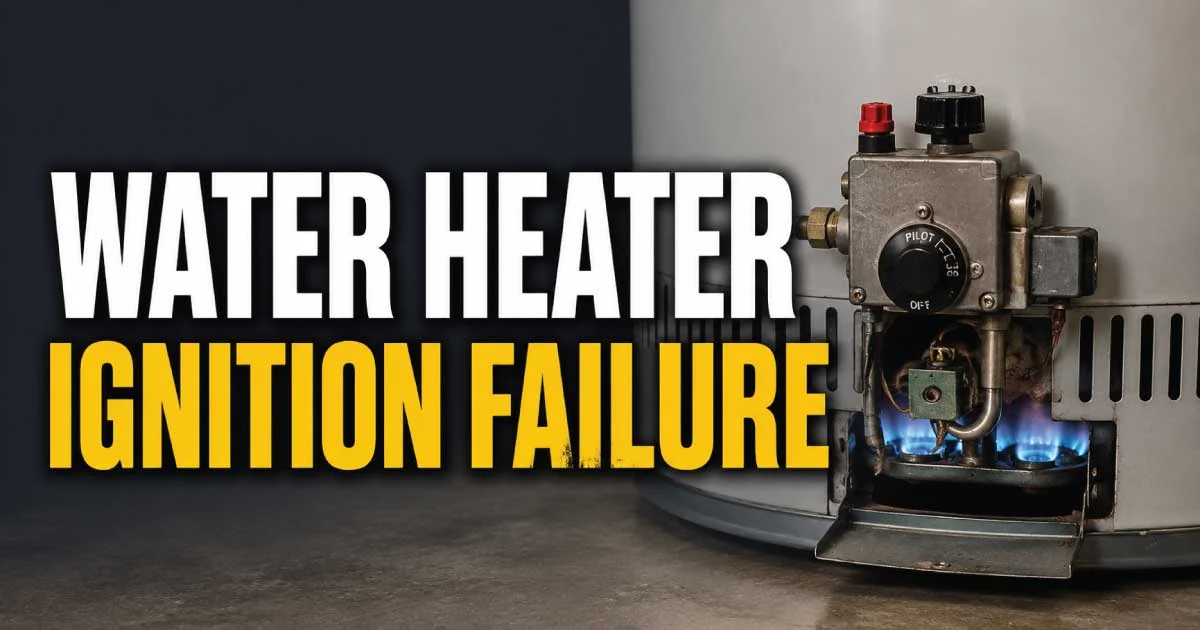
A water heater is one of the most essential appliances in any home. From hot showers to clean dishes and laundry, we rely on it daily, often without giving it much thought. That is, until something goes wrong. One of the most common and frustrating issues homeowners face is water heater ignition failure. When the ignition system fails, the heater cannot light the burner, which means no hot water at all.
This blog post explores what water heater ignition failure is, why it happens, how to recognize the symptoms, and what steps you can take to troubleshoot or prevent the problem. Whether you own a gas water heater or are simply trying to understand what your technician is talking about, this guide will give you a solid foundation.
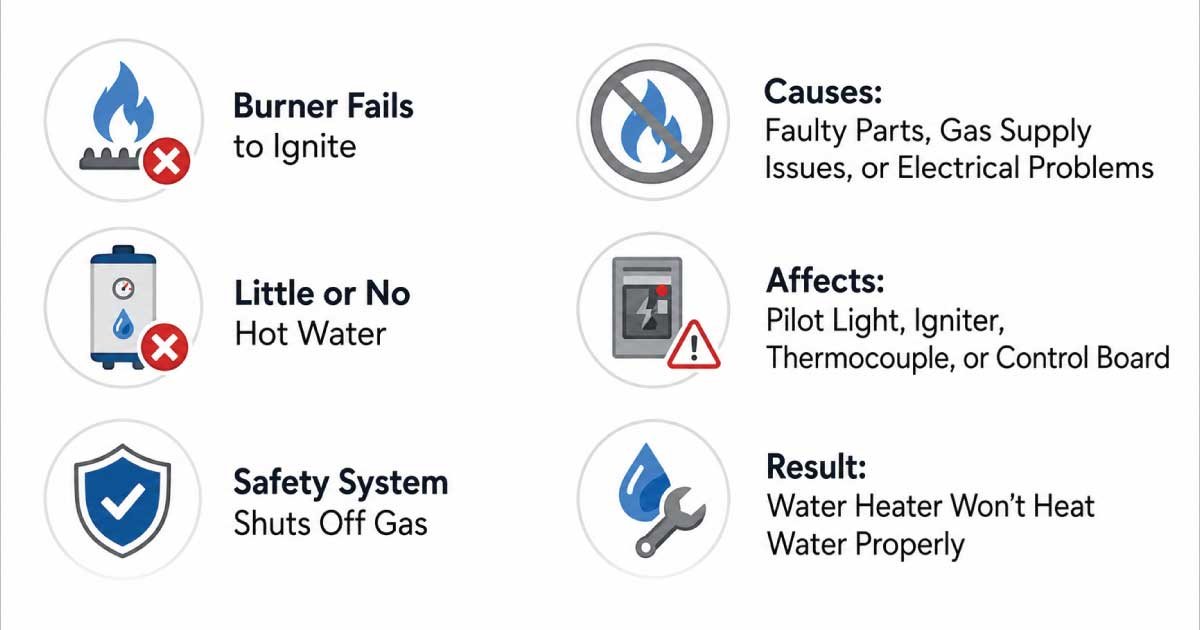
Common Causes of Water Heater Ignition Failure
Water heater ignition failure can occur for several different reasons, ranging from routine maintenance issues to failing mechanical or electronic components. Identifying the underlying cause is essential for selecting the correct repair, preventing recurring problems, and restoring reliable hot water safely and efficiently.
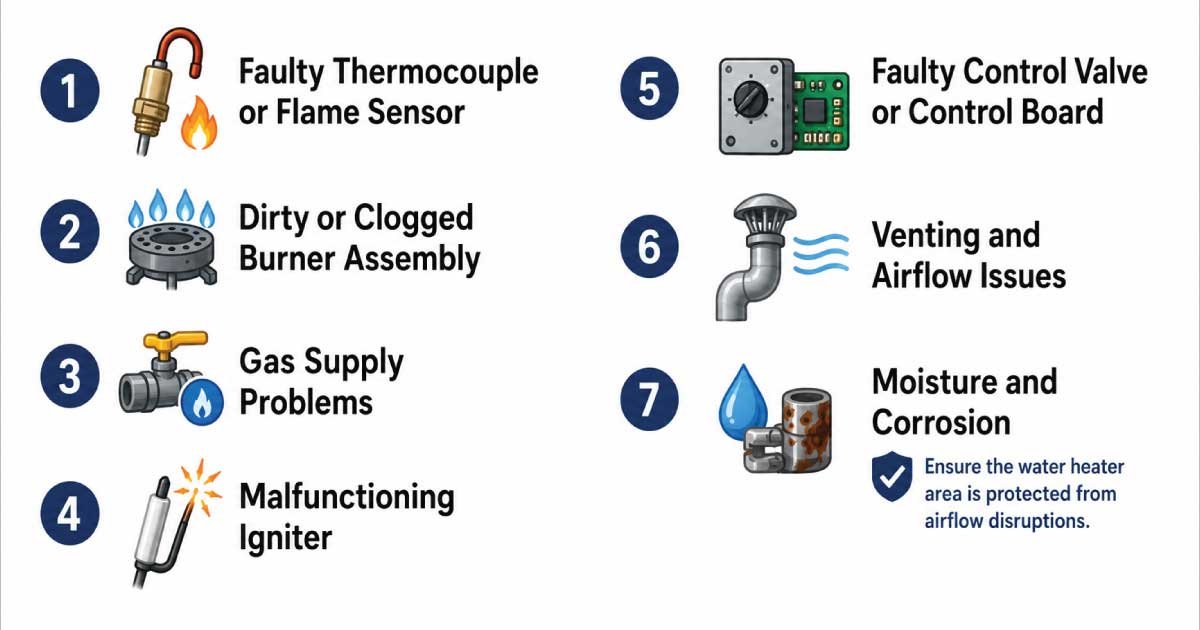
1. Faulty Thermocouple or Flame Sensor
The thermocouple in pilot light systems and the flame sensor in electronic ignition systems both verify that a flame is present. When these safety components become dirty or fail, they can shut off the gas supply even if ignition initially occurs.
The thermocouple (in pilot systems) or flame sensor (in electronic systems) detects whether a flame is present. If it fails or becomes dirty, the system may shut off the gas supply even if the burner ignites. This is one of the most common causes of ignition failure.
2. Dirty or Clogged Burner Assembly
A clean burner assembly is essential for proper combustion and reliable ignition. Dirt, lint, rust, and debris can restrict airflow or block gas flow, resulting in delayed ignition, weak flames, or repeated burner shutdowns.
Dust, lint, rust, or debris can accumulate around the burner over time. When airflow is restricted, the burner may not ignite properly or may produce a weak, unstable flame that shuts off quickly.
3. Gas Supply Problems
A consistent gas supply is necessary for the ignition system to operate correctly. Any interruption in gas flow, whether caused by a closed valve, low pressure, or utility issues, can prevent the burner from lighting altogether.
If the gas valve is closed, partially closed, or if there is low gas pressure, the burner will not ignite. Gas supply issues may also stem from utility interruptions or faulty gas regulators.
4. Malfunctioning Igniter
Electronic ignition systems rely on an igniter to create the spark or heat needed to ignite the gas. As this component ages, it may become damaged or lose functionality, preventing successful ignition during the heating cycle.
In electronic ignition systems, the igniter is responsible for lighting the gas. Over time, igniters can crack, wear out, or fail electrically, preventing ignition altogether.
5. Faulty Control Valve or Control Board
The gas control valve and electronic control board coordinate the ignition process and regulate fuel delivery. A failure in either component can interrupt the ignition sequence or stop the water heater from operating correctly.
The control valve regulates gas flow, while the control board manages the ignition sequence. If either component fails, the water heater may not attempt ignition at all or may shut down immediately after trying.
6. Venting and Airflow Issues
Proper ventilation allows the water heater to burn gas safely and efficiently. Blocked vents, restricted airflow, or damaged exhaust components can trigger built-in safety features that prevent ignition and protect against hazardous combustion conditions.
Improper venting can cause combustion gases to back up, triggering safety shutoffs. Blocked vents, damaged flue pipes, or insufficient combustion air can all lead to ignition failure.
7. Moisture and Corrosion
Moisture exposure can gradually damage important water heater components, especially in damp installation areas. Corrosion on electrical connections, sensors, or gas-related parts may interfere with communication between components and lead to repeated ignition problems.
Water heaters are often installed in basements, garages, or utility closets where moisture is present. Corrosion on electrical connections, sensors, or gas components can interfere with proper ignition.
🛑 Learn water heater troubleshooting tips 👉 Water Heater Not Heating Water: Causes and Fixes
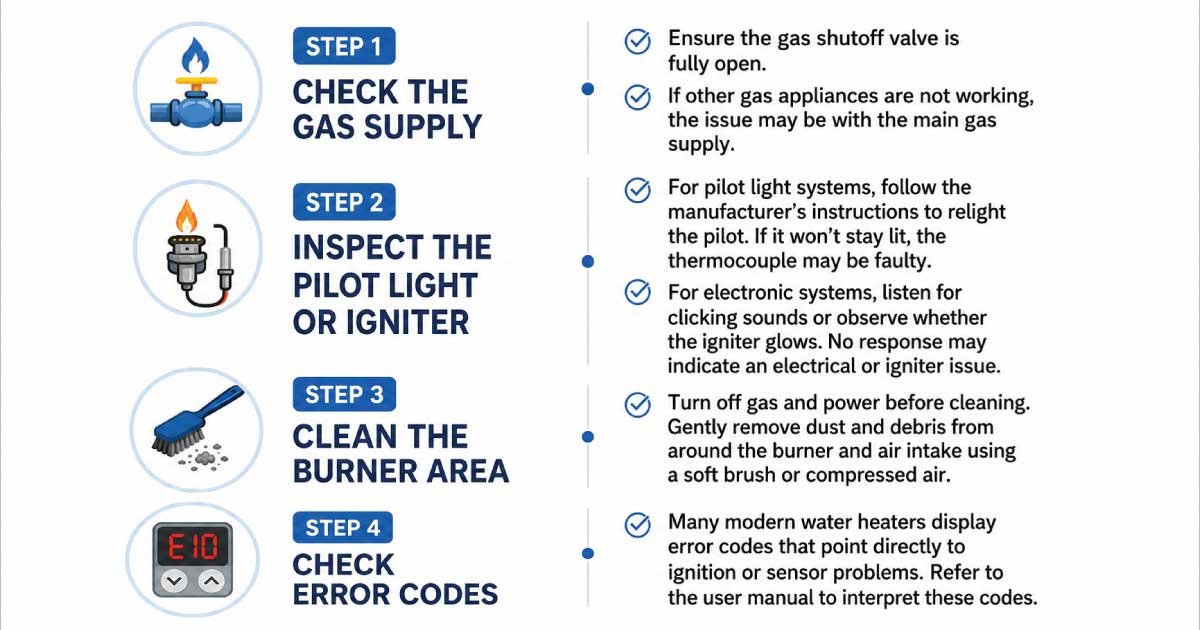
When to Call a Professional
While homeowners can safely perform basic inspections and maintenance, some ignition problems require specialized tools, technical knowledge, and experience. Knowing when to stop troubleshooting and contact a licensed technician helps prevent safety hazards, protects your equipment, and ensures repairs are completed correctly.
A licensed technician should handle the following situations:
- Repeated ignition failure after basic troubleshooting
- Gas valve or control board replacement
- Electrical testing of ignition components
- Venting or combustion air modifications
- Persistent gas odors or unusual noises
Attempting complex repairs without proper training can be dangerous and may void warranties.
Preventing Water Heater Ignition Failure
Routine maintenance and early attention to minor performance changes can significantly reduce the risk of ignition failure. Preventive care improves reliability, enhances energy efficiency, extends the lifespan of your water heater, and helps avoid unexpected repair costs or complete system breakdowns.
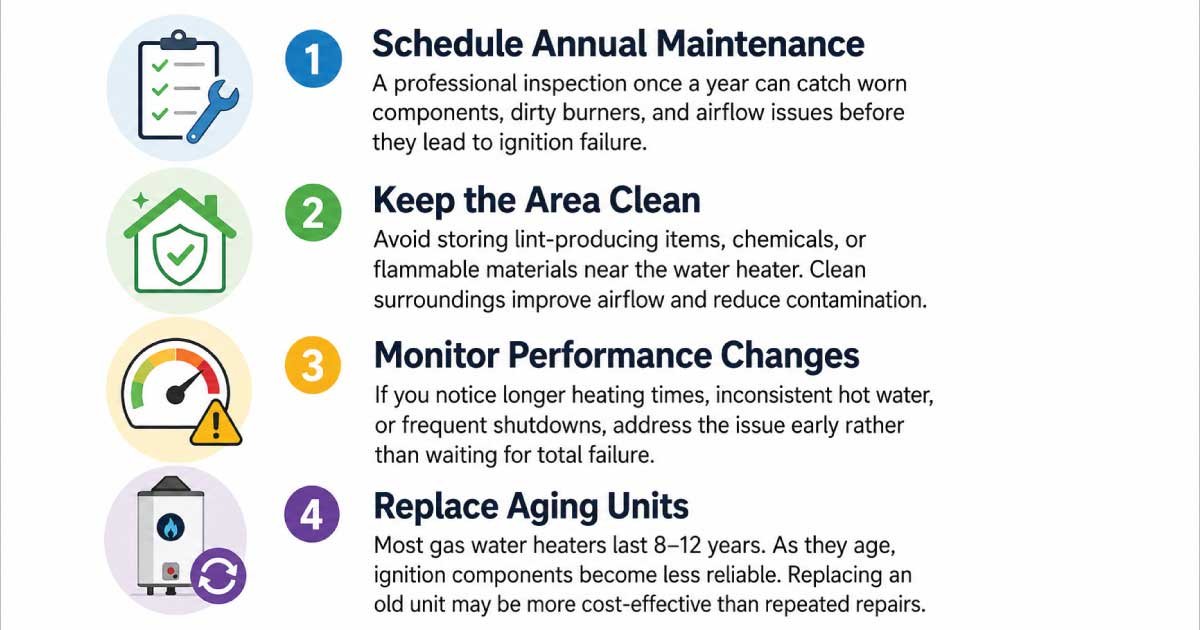
1. Schedule Annual Maintenance
An annual inspection by a qualified technician helps identify worn parts, burner contamination, and airflow problems before they develop into major ignition failures. Regular servicing also keeps your water heater operating safely and efficiently throughout the year.
A professional inspection once a year can catch worn components, dirty burners, and airflow issues before they lead to ignition failure.
2. Keep the Area Clean
Maintaining a clean space around your water heater improves airflow and reduces the buildup of dust, lint, and other contaminants. It also minimizes fire hazards by keeping combustible materials away from the appliance.
Avoid storing lint-producing items, chemicals, or flammable materials near the water heater. Clean surroundings improve airflow and reduce contamination.
3. Monitor Performance Changes
Small changes in your water heater’s performance often indicate developing ignition problems. Addressing these warning signs early can prevent more extensive damage and reduce the likelihood of costly emergency repairs.
If you notice longer heating times, inconsistent hot water, or frequent shutdowns, address the issue early rather than waiting for total failure.
4. Replace Aging Units
As gas water heaters age, ignition components naturally wear out and become less dependable. Replacing an older unit at the right time can improve efficiency, reliability, and overall operating costs.
Most gas water heaters last 8–12 years. As they age, ignition components become less reliable. Replacing an old unit may be more cost-effective than repeated repairs.
🛑 Learn water heater troubleshooting tips 👉 Complete Water Heater Problems Guide (Fix All Issues)
Cost Implications of Ignition Failure
The cost of repairing ignition failure depends largely on the specific component causing the problem. Understanding potential repair expenses can help you make informed decisions about whether repairing or replacing the water heater offers the best long-term value.
The cost of fixing ignition failure depends on the cause:
- Thermocouple replacement: relatively inexpensive
- Igniter replacement: moderate cost
- Control valve or board replacement: higher cost
- Venting repairs: varies widely
Ignoring ignition issues can lead to higher gas bills, increased wear on components, or complete system failure, all of which increase long-term costs.
Final Thoughts
Water heater ignition failure is a common but manageable problem. While it can be inconvenient—especially when it leaves you without hot water—it often starts with small, fixable issues such as dirty burners, worn sensors, or minor gas supply problems. Understanding how the ignition system works and recognizing early warning signs can help you respond quickly and avoid more serious damage.
Whether you choose to troubleshoot basic issues yourself or call in a professional, staying informed empowers you to make better decisions about maintenance, repairs, and replacement. With proper care and timely attention, most water heaters can provide reliable hot water for many years without major ignition problems.