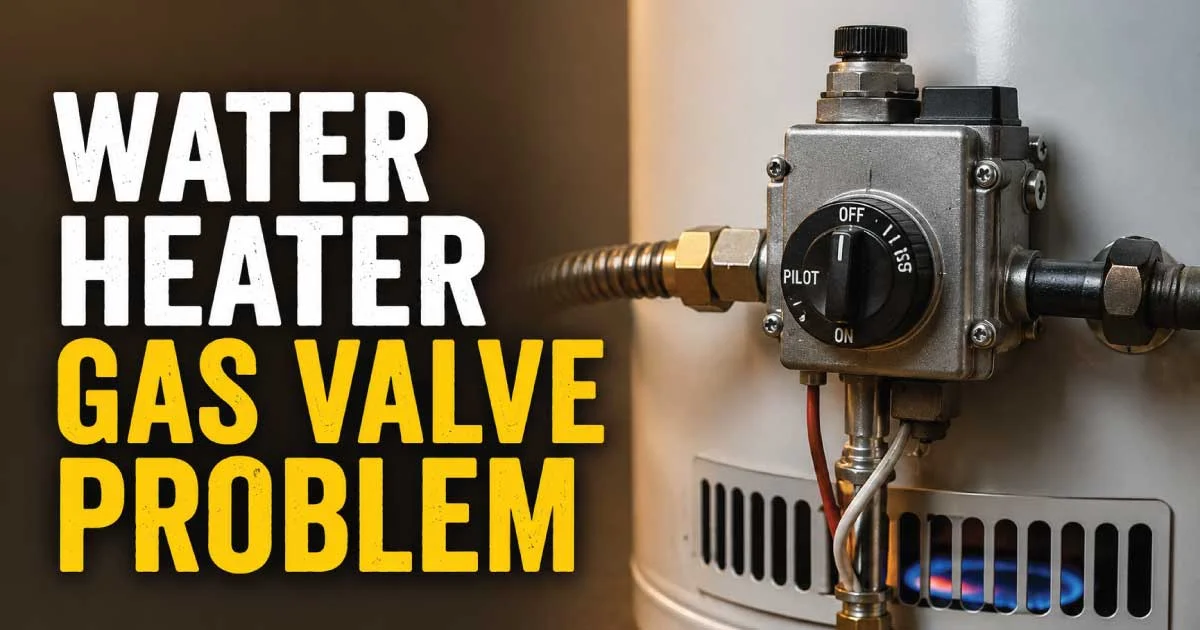
A water heater is one of those household appliances you rarely think about—until something goes wrong. When your water suddenly turns cold or the heater refuses to fire up, the issue often traces back to a critical component: the gas valve. Water heater gas valve problems are common, potentially dangerous if ignored, and sometimes misunderstood by homeowners.
In this comprehensive guide, we’ll explore what a gas valve does, common gas valve problems, warning signs, troubleshooting steps, repair vs. replacement decisions, safety concerns, and how to prevent future issues. Whether you’re a homeowner trying to understand a sudden failure or a property manager dealing with recurring complaints, this guide will help you make informed decisions.
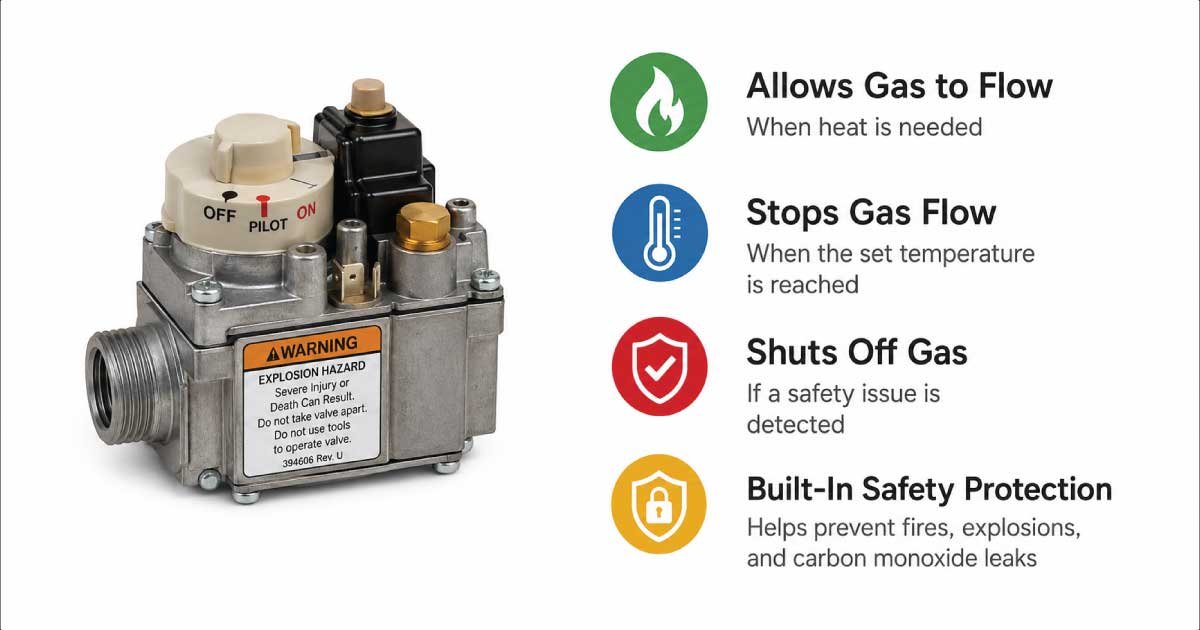
Common Water Heater Gas Valve Problems
Water heater gas valve issues can develop gradually or appear suddenly, affecting both performance and safety. Because the gas valve controls fuel flow and responds to safety signals, even small malfunctions can disrupt heating or create hazards. Recognizing common problems early helps prevent breakdowns, costly damage, or dangerous operating conditions.
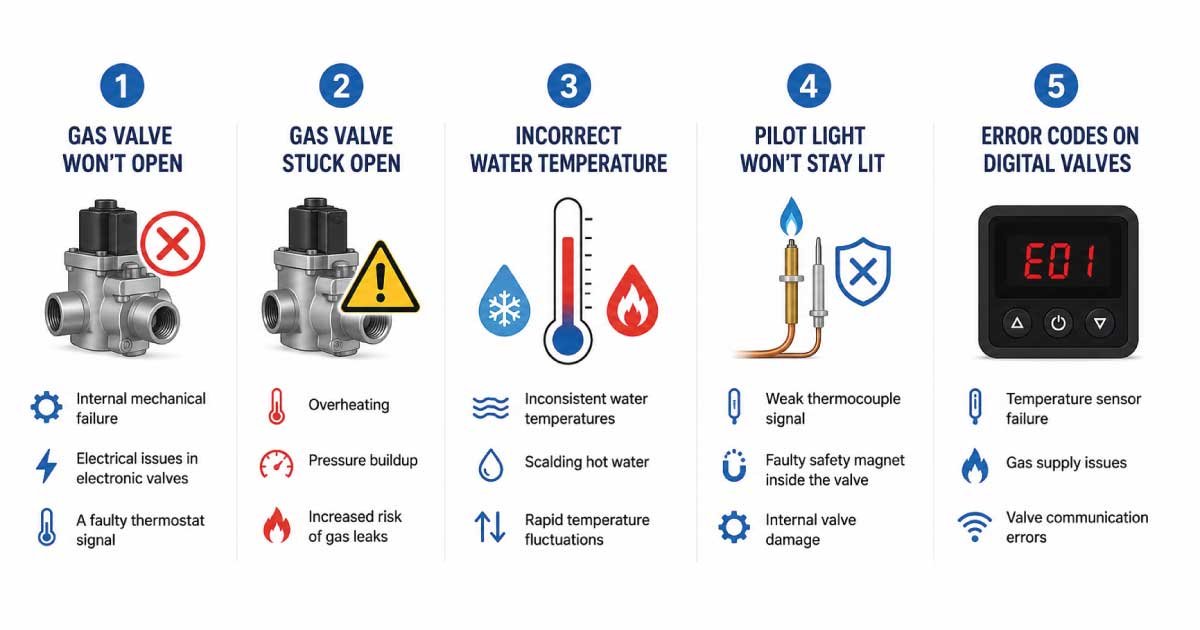
1. Gas Valve Won’t Open
When a gas valve fails to open, gas cannot reach the burner, preventing ignition and leaving you without hot water. This issue often points to internal valve failure, electrical problems, or communication breakdowns between the thermostat and valve assembly.
When a gas valve fails to open, the burner won’t ignite. This results in no hot water at all.
Causes may include:
- Internal mechanical failure
- Electrical issues in electronic valves
- A faulty thermostat signal
In many cases, this problem requires professional replacement rather than repair.
2. Gas Valve Stuck Open
A gas valve that does not close properly is a serious safety concern. Although most modern valves are designed to fail safely, corrosion or debris in older units can cause sticking, increasing risks related to pressure and uncontrolled gas flow.
A gas valve that fails to close is extremely dangerous. While modern valves are designed to fail closed, older or damaged valves may stick open due to corrosion or debris.
This can lead to:
- Overheating
- Pressure buildup
- Increased risk of gas leaks
If you suspect this issue, shut off the gas supply immediately and contact a licensed technician.
3. Incorrect Water Temperature
Gas valves work closely with thermostats to regulate water temperature. When this coordination fails, water temperature may fluctuate unexpectedly. This not only affects comfort but also increases the risk of scalding or inefficient energy usage.
If your water is suddenly too hot or not hot enough, the gas valve’s thermostat may be malfunctioning.
This can cause:
- Inconsistent water temperatures
- Scalding hot water
- Rapid temperature fluctuations
Sometimes recalibration works, but often the valve must be replaced.
4. Pilot Light Won’t Stay Lit
Repeated pilot light failure is often linked to gas valve problems rather than the flame itself. Internal valve components may stop recognizing safety signals, causing gas flow to shut off even when conditions appear normal.
A gas valve problem often presents itself as a pilot light that won’t remain lit.
Possible reasons include:
- Weak thermocouple signal
- Faulty safety magnet inside the valve
- Internal valve damage
While pilot lights can fail for several reasons, repeated failure usually points to the gas valve.
5. Error Codes on Digital Valves
Modern water heaters use electronic gas valves with built-in diagnostics. When these systems detect faults, they display error codes to prevent unsafe operation. Certain codes indicate issues severe enough that repair is no longer recommended.
Newer water heaters use electronic gas valves that display error codes.
These codes may indicate:
- Temperature sensor failure
- Gas supply issues
- Valve communication errors
Once a gas valve throws certain codes, manufacturers often recommend full replacement.
Warning Signs of a Gas Valve Problem
Catching gas valve problems early can prevent sudden loss of hot water, expensive repairs, and serious safety risks. Because the gas valve controls fuel delivery and safety shutoff functions, even subtle symptoms should be taken seriously and evaluated promptly.
Common symptoms include:
- No hot water or limited hot water
- Clicking sounds without ignition
- Pilot light going out frequently
- Burning smells near the heater
- Unusual temperature changes
- Error codes or flashing lights
If you notice any smell of gas, leave the area immediately and contact your gas provider or emergency services.
Is a Water Heater Gas Valve Dangerous?
Gas valve problems should never be underestimated. Since the valve directly controls combustible fuel, any malfunction can escalate quickly if not handled correctly. Improper adjustments or delayed repairs significantly increase the risk of household hazards.
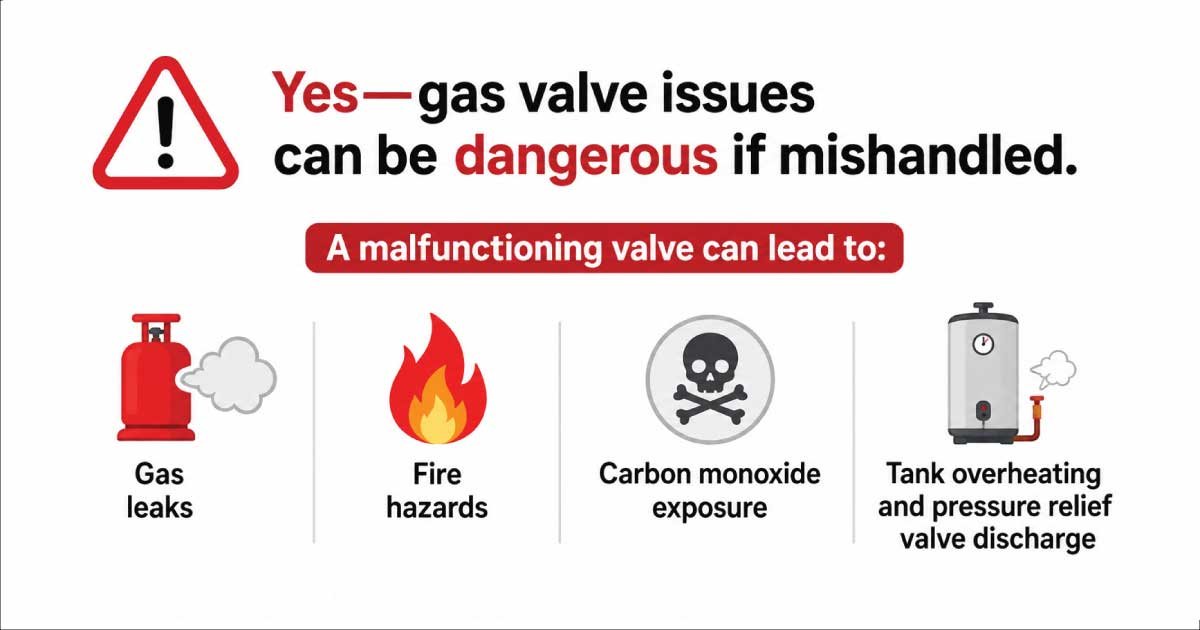
Yes—gas valve issues can be dangerous if mishandled.
A malfunctioning valve can lead to:
- Gas leaks
- Fire hazards
- Carbon monoxide exposure
- Tank overheating and pressure relief valve discharge
This is why gas valve repairs are often restricted to licensed professionals. Even experienced DIYers should approach gas valve issues with extreme caution.
🛑 Learn water heater troubleshooting tips 👉 Why Is My Water Heater Thermostat Not Working?
Can You Fix a Gas Valve Yourself?
In most situations, fixing a water heater gas valve yourself is unsafe and strongly discouraged. Gas valves are precision safety devices, and improper handling can cause leaks, fire hazards, or carbon monoxide exposure. Knowing what is safe—and unsafe—to do helps protect your home and health.
In most cases, no—and you shouldn’t try.
What homeowners can safely do:
- Check the thermostat setting
- Relight the pilot light (following manufacturer instructions)
- Ensure gas supply valves are fully open
- Reset electronic valves if permitted
What homeowners should not do:
- Disassemble the gas valve
- Attempt internal repairs
- Bypass safety mechanisms
- Modify gas connections
Gas valves are factory-sealed components. Once they fail, replacement is usually the only safe solution.
Repair vs. Replacement: What’s the Better Option?
Deciding whether to repair or replace a water heater gas valve depends on safety, cost, and the overall condition of the unit. While minor related issues can sometimes be addressed, gas valves themselves are critical safety components that often require replacement rather than repair.
When Repair Might Be Possible
In a small number of situations, the gas valve may not be the direct cause of the problem. A qualified technician can sometimes restore normal operation by fixing supporting components without replacing the valve, as long as the valve body itself is functioning correctly.
In limited cases, a technician may repair related components rather than the valve itself, such as:
- Replacing a thermocouple
- Cleaning sensor connections
- Resetting electronic controls
However, the gas valve body itself is rarely repairable.
When Replacement Is Necessary
Gas valve replacement becomes unavoidable when internal failures affect safety, reliability, or temperature control. Because these components manage combustible gas, manufacturers and technicians typically recommend full replacement rather than attempting risky internal repairs.
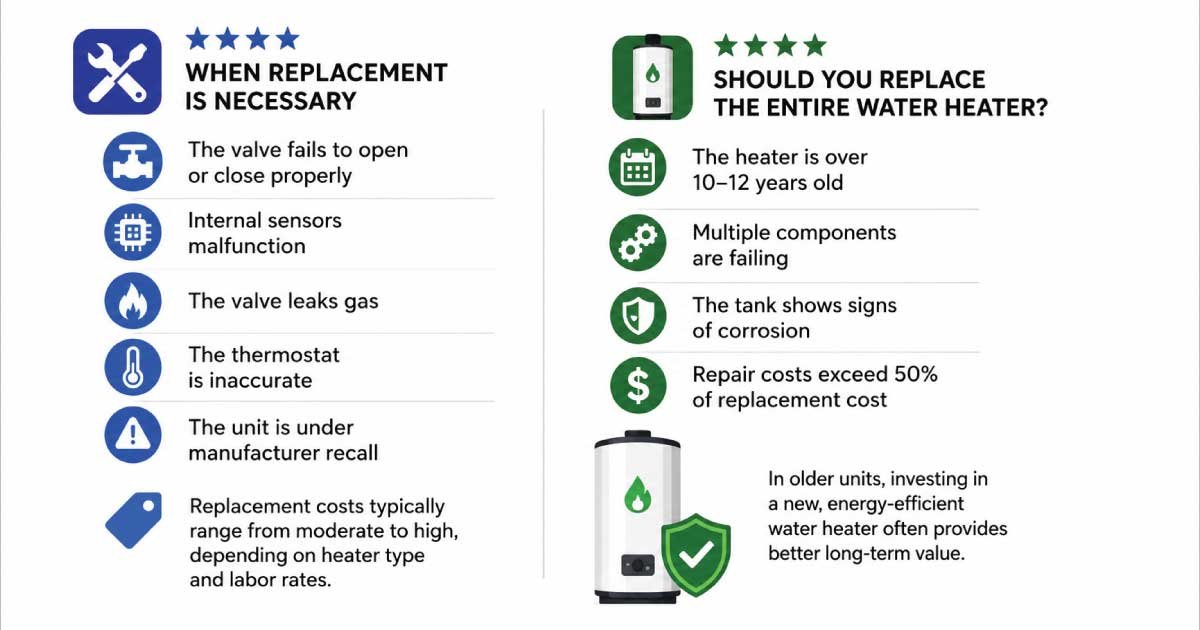
You’ll likely need a full gas valve replacement if:
- The valve fails to open or close properly
- Internal sensors malfunction
- The valve leaks gas
- The thermostat is inaccurate
- The unit is under manufacturer recall
Replacement costs typically range from moderate to high, depending on heater type and labor rates.
Should You Replace the Entire Water Heater?
In some cases, replacing only the gas valve may not be the most cost-effective long-term solution. Older systems with multiple issues often benefit more from full replacement, improving safety, efficiency, and reliability all at once.
Consider full water heater replacement if:
- The heater is over 10–12 years old
- Multiple components are failing
- The tank shows signs of corrosion
- Repair costs exceed 50% of replacement cost
In older units, investing in a new, energy-efficient water heater often provides better long-term value.
🛑 Learn water heater troubleshooting tips 👉 Electric Water Heater Not Heating: Causes and Easy Fixes
Final Thoughts
Water heater gas valve problems are not just inconvenient—they can be serious safety concerns. Understanding how the gas valve works, recognizing early warning signs, and knowing when to call a professional can protect your home and family.
If your water heater shows signs of gas valve failure, don’t delay. Quick action can prevent costly damage, restore reliable hot water, and ensure your system operates safely for years to come.
When it comes to gas appliances, safety should always come first.