
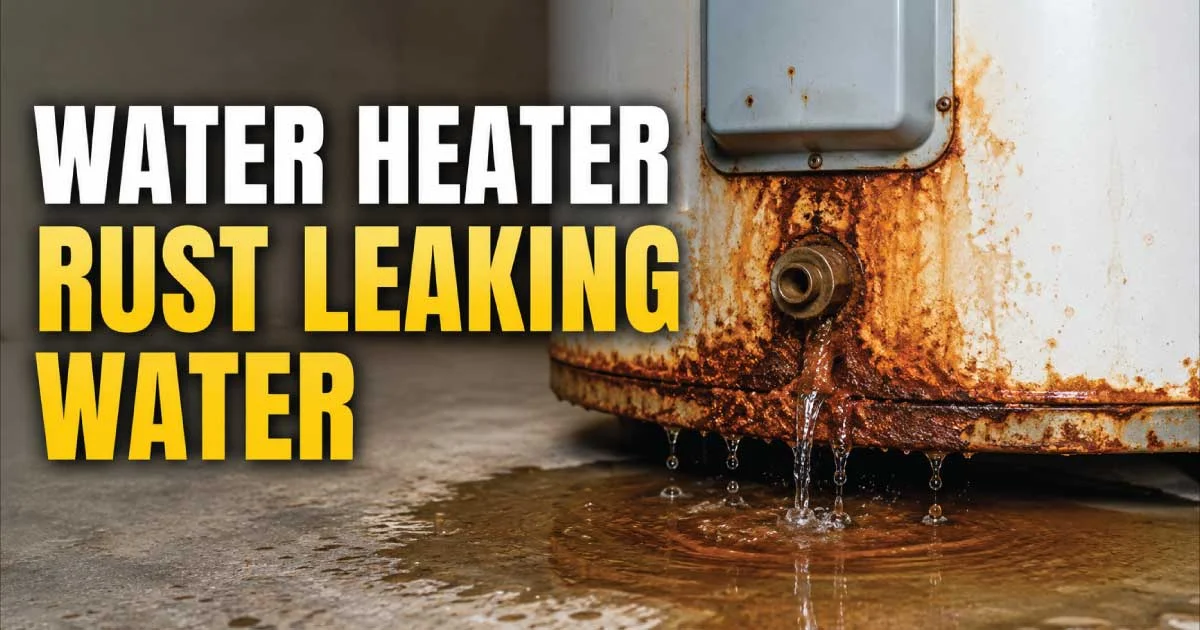
A water heater is one of the most essential appliances in your home. It quietly works behind the scenes to provide hot water for showers, laundry, dishwashing, and daily comfort. Because it operates out of sight, many homeowners don’t notice a problem until something goes wrong—often in the form of rust and leaking water.
If you’ve noticed rusty water, corrosion around the tank, or water pooling near your heater, it’s important to act quickly. A rusting water heater that’s leaking is not just a minor inconvenience; it can signal serious internal damage and the potential for costly water damage.
In this comprehensive guide, we’ll explain why water heaters rust, what causes leaks, how to identify early warning signs, and what steps you should take to protect your home.
Understanding Why Water Heaters Rust
Rust develops through a natural chemical reaction between metal, water, and oxygen. Because traditional tank-style water heaters are made of steel and constantly hold water, they are especially vulnerable over time. Even with protective measures, corrosion slowly progresses, making rust an eventual concern for nearly every aging water heater.
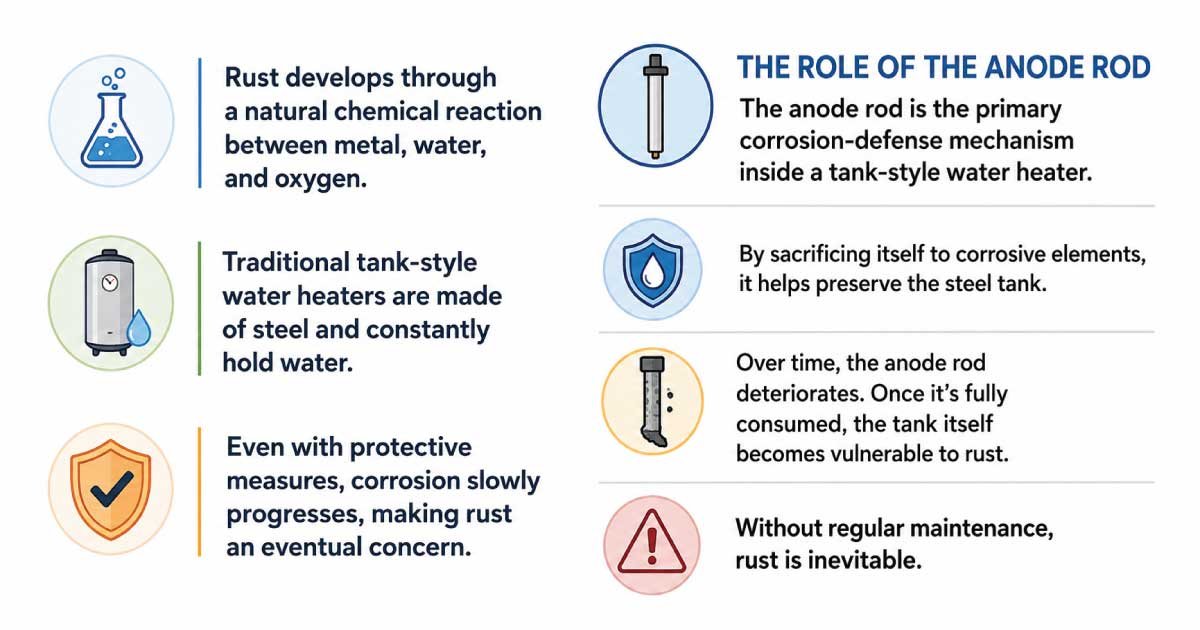
Rust is the result of a chemical reaction between metal, water, and oxygen. Since traditional water heaters are made of steel and constantly filled with water, rust is a natural threat over time.
The Role of the Anode Rod
The anode rod is the primary corrosion-defense mechanism inside a tank-style water heater. By sacrificing itself to corrosive elements, it helps preserve the steel tank. However, once depleted, the tank becomes exposed and rust begins forming internally.
Most tank-style water heaters are designed with a built-in defense against corrosion: the sacrificial anode rod. This rod is made of magnesium, aluminum, or zinc and is designed to corrode first, protecting the steel tank.
Over time, the anode rod deteriorates. Once it’s fully consumed, the tank itself becomes vulnerable to rust.
Without regular maintenance, rust is inevitable.
Common Causes of Rust and Water Heater Leaks
Rust-related leaks don’t happen randomly—they develop due to specific conditions and wear patterns. Understanding these causes helps homeowners decide whether a repair is possible or if replacement is the safest and most cost-effective option.
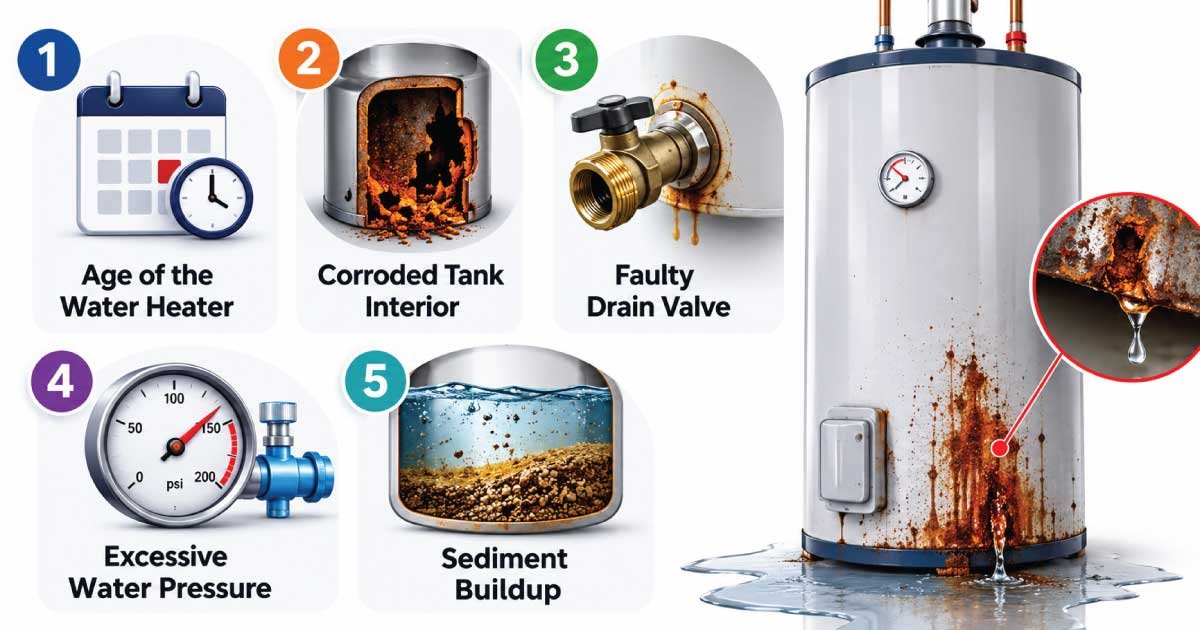
1. Age of the Water Heater
As water heaters age, their internal protective systems weaken. Linings degrade, anode rods wear out, and metal surfaces become increasingly exposed to corrosion, making rust and leaks more likely with each passing year.
The average lifespan of a tank water heater is 8–12 years. As the unit ages, protective components wear out, internal linings degrade, and rust becomes more likely.
If your water heater is approaching or past this age range, rust and leaks are strong indicators that replacement is near.
2. Corroded Tank Interior
Internal corrosion is one of the most serious and irreversible problems a water heater can face. Once rust compromises the tank walls, the structural integrity weakens, eventually allowing water to escape through small cracks or pinholes.
Once rust forms inside the tank, it weakens the metal. Over time, this leads to cracks or pinhole leaks that allow water to escape.
Unfortunately, internal tank corrosion cannot be repaired.
3. Faulty Drain Valve
Not all rust originates from the tank itself. In some cases, corrosion around the drain valve can cause leaks that appear severe but are actually isolated to a single, replaceable component.
Sometimes rust appears around the bottom of the heater due to a corroded drain valve. This may look alarming but can be a relatively simple fix if caught early.
4. Excessive Water Pressure
Consistently high water pressure places additional strain on the tank and its connections. Over time, this stress accelerates wear, worsens corrosion, and increases the likelihood of leaks forming at weakened points.
High water pressure stresses the tank and plumbing connections. Over time, this pressure can worsen existing corrosion and cause leaks at weak points.
5. Sediment Buildup
Sediment accumulation at the bottom of the tank traps heat and creates hot spots that damage the tank’s interior lining. This overheating speeds up corrosion and often produces rumbling or popping noises during operation.
Minerals in hard water settle at the bottom of the tank. This sediment traps heat, causes overheating, and accelerates internal rusting. Sediment also creates popping or rumbling noises when the heater runs.
 Also Read
  What Causes a Water Heater to Leak From the Top?
Warning Signs Your Water Heater Is Rusting and Leaking
Catching rust and leaks early can prevent expensive repairs, water damage, and sudden system failure. Below are the most common warning signs homeowners should never ignore.
Rust-Colored Water
If your hot water looks brown, reddish, or yellow, rust may be forming inside the water heater tank or along the hot water pipes. This discoloration is often one of the earliest and most noticeable indicators of internal corrosion.
Water Pooling Around the Heater
Moisture, dampness, or standing water near the base of the unit usually signals a leak. Even a slow drip can indicate internal tank damage or failing components and should be investigated immediately.
Visible Corrosion on the Tank
Flaking metal, rust streaks, bubbling paint, or discoloration on the exterior of the tank suggest corrosion has spread beyond internal components. External rust often means internal damage has already begun.
Metallic Smell or Taste
A metallic odor or taste in your hot water can occur when rust particles enter the water supply. This is especially noticeable when using hot water for drinking, cooking, or bathing.
Reduced Hot Water Supply
Corrosion and sediment buildup reduce heating efficiency. If you notice less hot water than usual, longer recovery times, or inconsistent temperatures, internal deterioration may be the cause.
Is a Rusting Water Heater Dangerous?
Yes, a rusting water heater can become a serious safety and property concern if the problem is ignored. Rust and leaking water often indicate internal corrosion or component failure that may worsen over time, increasing the risk of water damage, reduced efficiency, and unexpected tank failure.
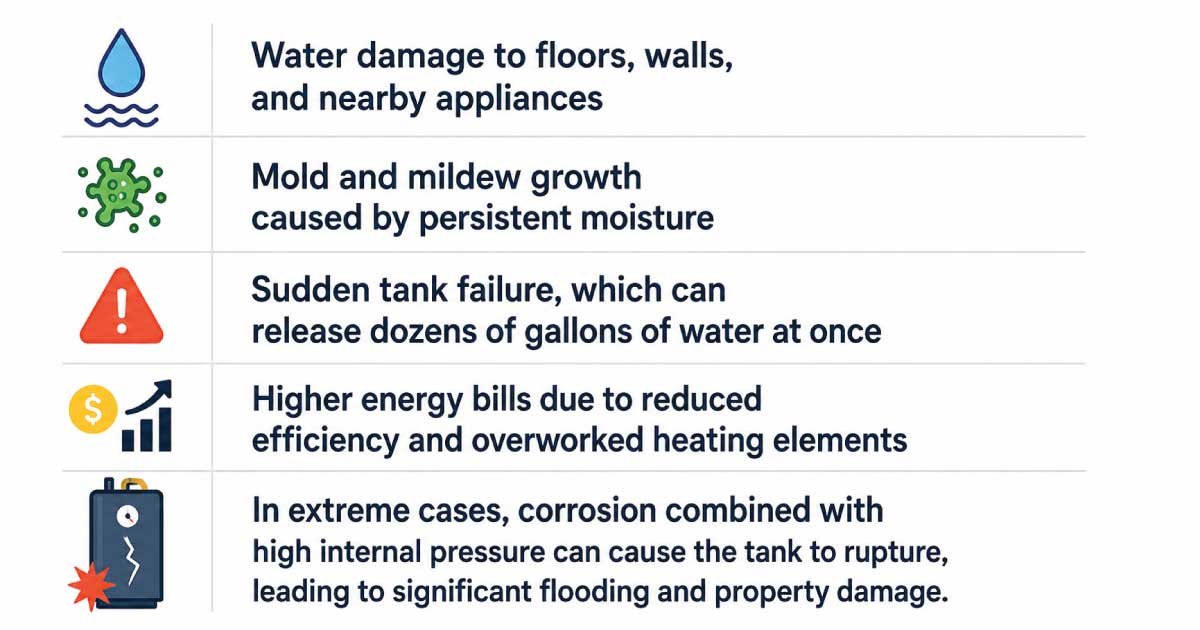
A rusting and leaking water heater presents several serious risks if left unaddressed:
- Water damage to floors, walls, and nearby appliances
- Mold and mildew growth caused by persistent moisture
- Sudden tank failure, which can release dozens of gallons of water at once
- Higher energy bills due to reduced efficiency and overworked heating elements
In extreme cases, corrosion combined with high internal pressure can cause the tank to rupture, leading to significant flooding and property damage.
If you notice any of these warning signs, it’s best to have the unit inspected promptly. Early action can mean the difference between a manageable repair and a full water heater replacement.
Also Read Why Is My Water Heater Tank Leaking? Easy Guide
What to Do When You See Rust or Leaking Water
Responding quickly to rust or water leaks can help minimize property damage and prevent a small problem from becoming a major repair. Following the proper safety steps also protects you while determining whether the issue can be repaired or requires complete water heater replacement.
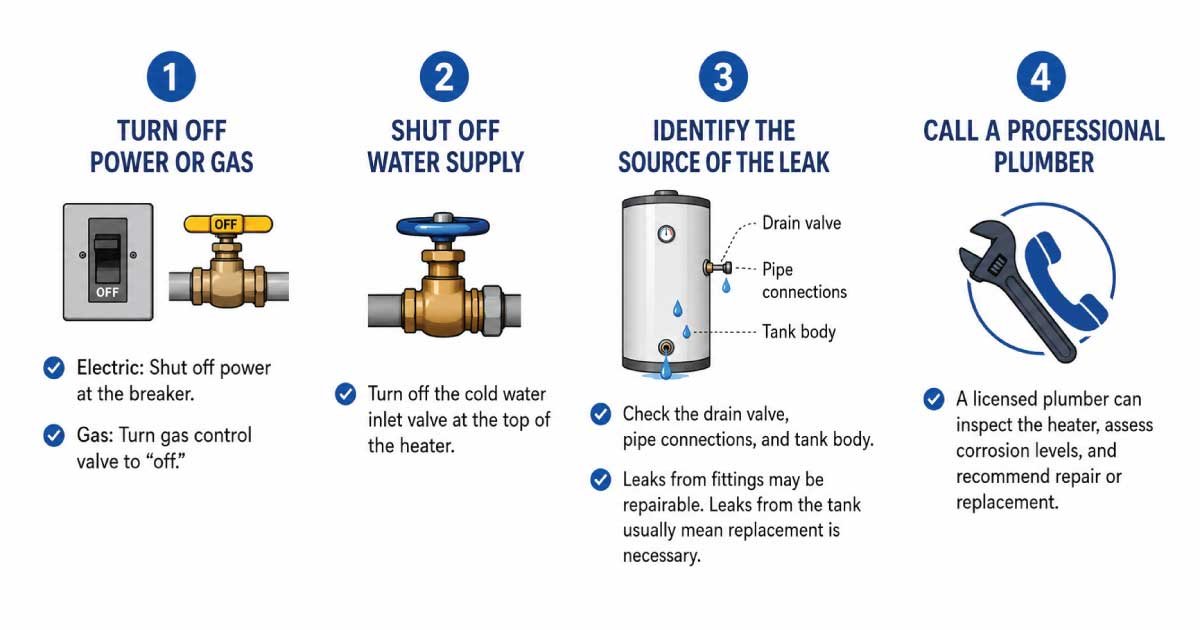
Step 1: Turn Off the Power or Gas
The first priority is to safely shut down the water heater to prevent additional damage and reduce potential safety hazards. The shutdown procedure depends on whether your unit operates with electricity or natural gas.
For electric heaters, shut off power at the breaker. For gas heaters, turn the gas control valve to “off.” This prevents further damage or safety hazards.
Step 2: Shut Off the Water Supply
Stopping the flow of incoming water helps prevent additional leaking and reduces pressure inside the tank. This simple step can limit water damage while you inspect the heater or wait for professional assistance.
Turn off the cold water inlet valve at the top of the heater to stop additional water from entering the tank.
Step 3: Identify the Source of the Leak
Determining where the water is coming from is essential because not all leaks require the same solution. Some leaks originate from replaceable components, while others indicate that the tank itself has failed.
Check whether the leak is coming from:
- The drain valve
- Pipe connections
- The tank body itself
Leaks from fittings may be repairable. Leaks from the tank usually mean replacement is necessary.
Step 4: Call a Professional Plumber
If the source of the leak is unclear or the water heater shows signs of significant corrosion, professional inspection is the safest option. A licensed plumber can accurately diagnose the problem and recommend the most cost-effective solution.
A licensed plumber can inspect the heater, assess corrosion levels, and recommend repair or replacement.
Also Read Why Is My Water Heater Leaking From the Bottom?
Final Thoughts
A water heater rust leaking water is a serious issue that should never be ignored. Rust signals internal deterioration, and leaks often mean the unit is nearing the end of its life. Acting early can prevent costly water damage, protect your home, and ensure your family always has safe, reliable hot water.
If you notice rusty water, corrosion, or moisture around your heater, take action immediately. Whether it’s a simple repair or a full replacement, addressing the problem now is always better than dealing with an emergency later.