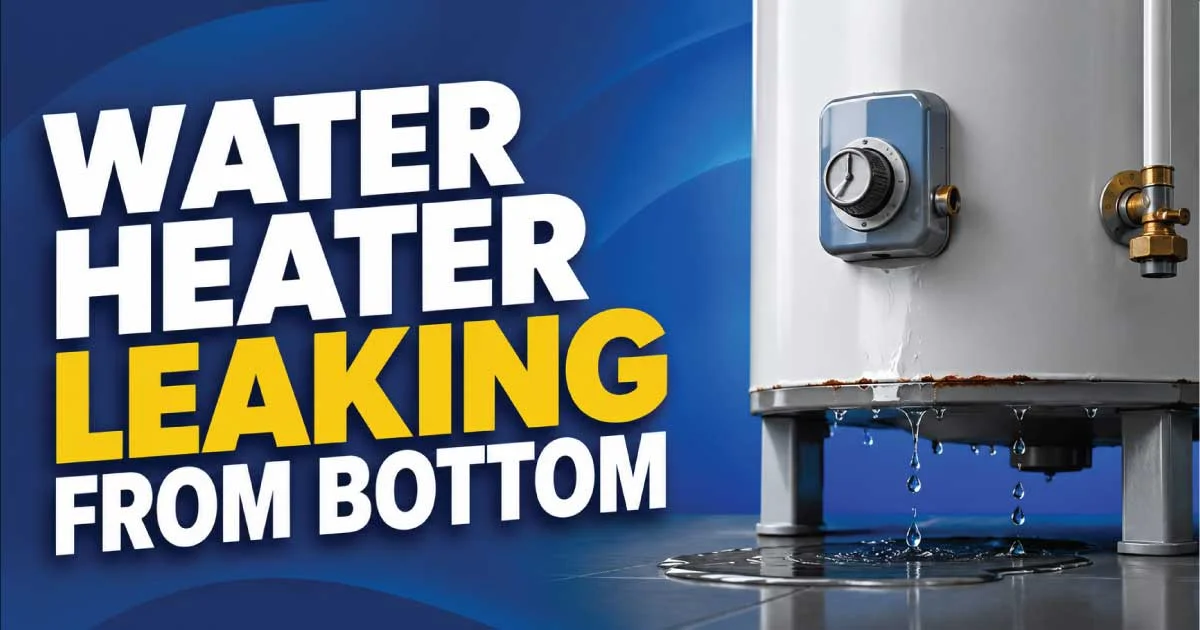
A water heater leaking from the bottom is one of the most alarming plumbing problems a homeowner can face. Unlike minor drips from valves or fittings, water pooling under your heater often signals a serious issue that can quickly worsen if ignored. From internal tank failure to pressure-related problems, a bottom leak is rarely harmless and frequently requires immediate attention.
In this in-depth guide, we’ll explain why a water heater leaks from the bottom, how to identify the exact source, what temporary steps you can take, and when it’s time to repair or replace the unit altogether.
Why a Water Heater Leaking from the Bottom Is Serious
When water appears at the base of your heater, many homeowners assume the tank itself has cracked. While that is sometimes true, the reality is more complex. Water can travel along pipes, fittings, or insulation and appear to leak from the bottom even when the actual problem is higher up.
However, leaks that truly originate from the bottom of the tank are among the most serious water heater failures. In many cases, they indicate internal corrosion or structural damage that cannot be repaired.
Ignoring a bottom leak can lead to:
- Flooding and water damage
- Mold growth
- Increased utility bills
- Sudden tank rupture
- Complete loss of hot water
Understanding the root cause is critical before deciding on the next step.
Common Causes of a Water Heater Leaking from the Bottom
A water heater leaking from the bottom can be alarming and may signal anything from a minor maintenance issue to complete tank failure. Understanding the most common causes helps you quickly identify the problem, avoid unnecessary panic, and determine whether repair or replacement is the best solution.
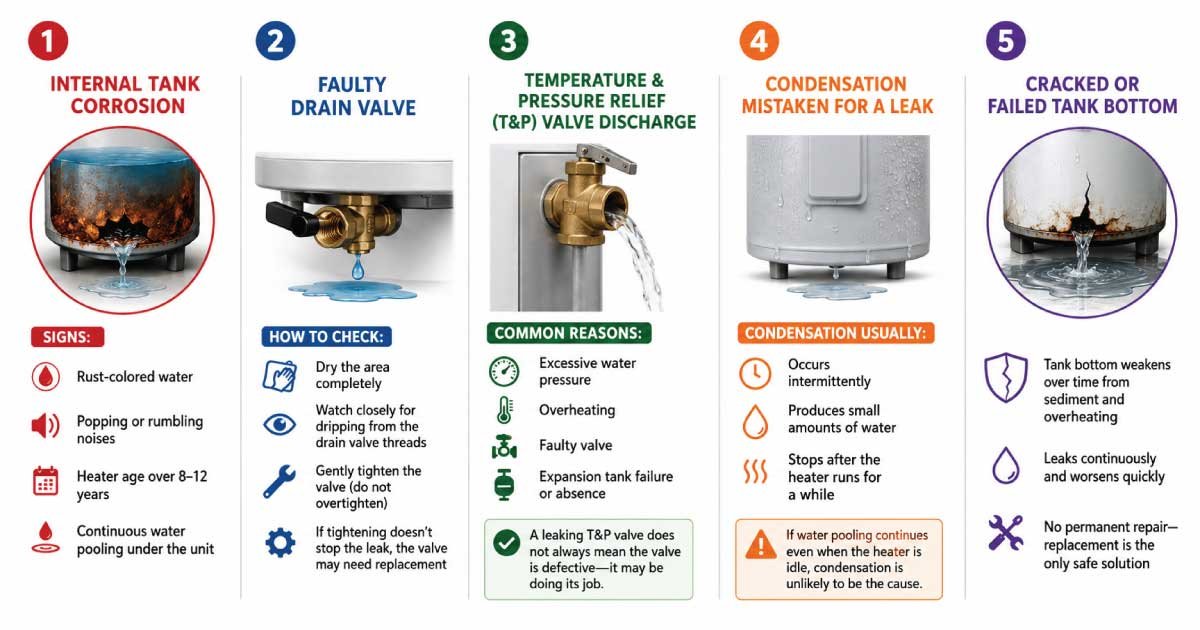
1. Internal Tank Corrosion
Internal tank corrosion is the most common—and most serious—reason a water heater leaks from the bottom. Over years of use, minerals naturally present in water settle at the base of the tank. This buildup traps heat, damages the protective lining, and gradually eats away at the steel until leaks form.
Once the tank itself begins leaking, replacement is usually the only solution
Signs of internal corrosion include:
- Rust-colored water
- Popping or rumbling noises
- Heater age over 8–12 years
- Continuous water pooling under the unit
2. Faulty Drain Valve
Every water heater includes a drain valve near the bottom that allows sediment to be flushed during maintenance. Because of its location, even a minor failure can look like a serious tank leak. Wear, cracking, or loose fittings can all cause steady dripping that’s often misdiagnosed as tank failure.
How to check:
- Dry the area completely
- Watch closely for dripping from the drain valve threads
- Gently tighten the valve (do not overtighten)
If tightening doesn’t stop the leak, the valve may need replacement—a relatively inexpensive fix.
3. Temperature and Pressure Relief (T&P) Valve Discharge
The T&P valve is a vital safety component that protects your water heater from dangerous pressure or temperature buildup. Although the valve itself is usually mounted on the side, released water commonly travels downward and pools at the base, creating the impression of a bottom leak.
Common reasons the T&P valve releases water:
- Excessive water pressure
- Overheating
- Faulty valve
- Expansion tank failure or absence
A leaking T&P valve does not always mean the valve is defective—it may be doing its job.
4. Condensation Mistaken for a Leak
Not all water at the base of a heater is caused by a failure. In humid conditions or during cold weather, condensation can form when cold water enters a hot tank. Moisture then drips downward and collects underneath, often alarming homeowners unnecessarily.
Condensation usually:
- Occurs intermittently
- Produces small amounts of water
- Stops after the heater runs for a while
If water pooling continues even when the heater is idle, condensation is unlikely to be the cause.
5. Cracked or Failed Tank Bottom
A cracked or failed tank bottom is one of the most serious water heater problems. Years of sediment accumulation and repeated overheating cycles weaken the steel at the base. Once the bottom fails, water leaks continuously and worsens quickly, often without warning.
Unfortunately, there is no permanent repair for a cracked tank. Welding or sealing is unsafe and unreliable due to pressure and heat.
⭐ Don’t Miss: Read this related post. 👉
How to Identify the Exact Source of the Leak
Before assuming the tank has failed, it’s important to carefully trace where the water is coming from. Leaks often travel along pipes or fittings and collect at the base, creating confusion. A systematic inspection helps distinguish between minor component issues and serious internal tank failure.
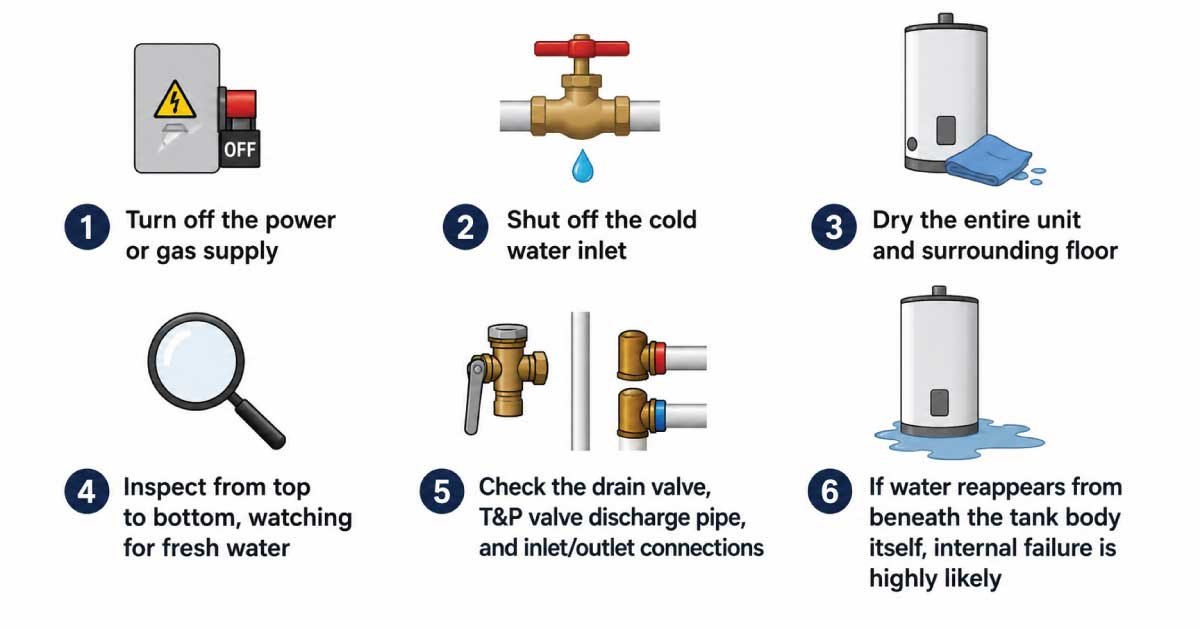
Before assuming the worst, follow these steps:
- Turn off the power or gas supply to the heater.
- Shut off the cold water inlet to prevent further leakage.
- Dry the entire unit and surrounding floor.
- Inspect from top to bottom, watching for fresh water.
- Check the drain valve, T&P valve discharge pipe, and inlet/outlet connections.
If water reappears from beneath the tank body itself, internal failure is highly likely.
Is It Safe to Keep Using a Leaking Water Heater?
In most cases, continuing to use a leaking water heater is not safe. A bottom leak often indicates structural weakness or failing components that can deteriorate rapidly. What begins as a slow drip can quickly turn into a major failure with little warning.
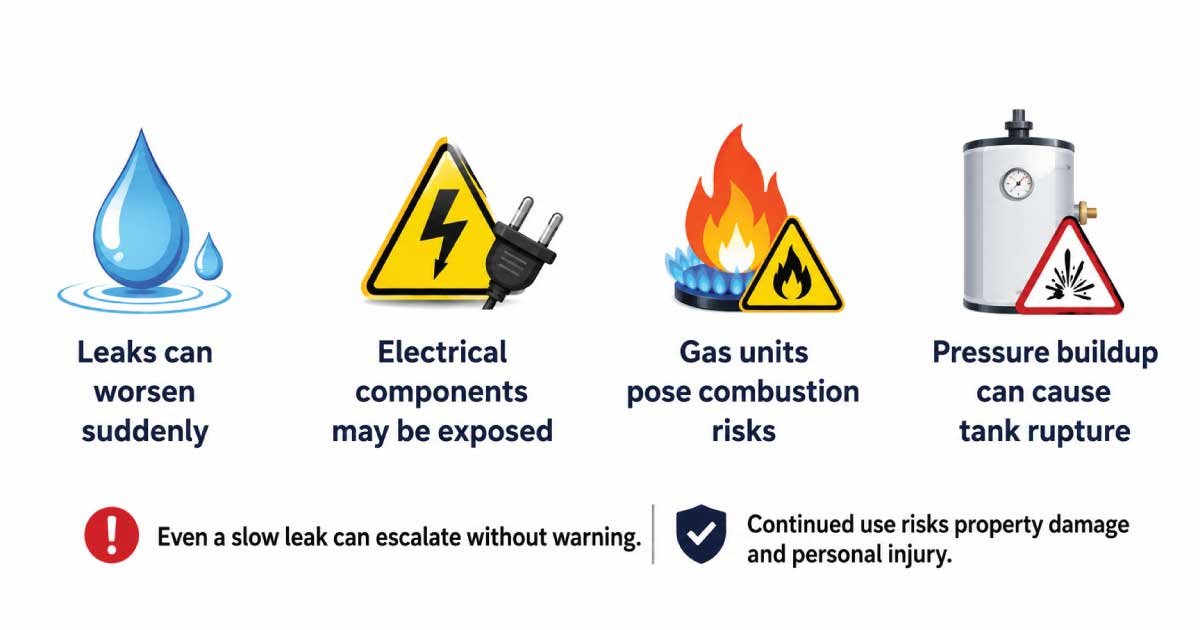
A water heater leaking from the bottom is unsafe to operate because:
- Leaks can worsen suddenly
- Electrical components may be exposed
- Gas units pose combustion risks
- Pressure buildup can cause tank rupture
Even a slow leak can escalate without warning. Continued use risks property damage and personal injury.
⭐ Don’t Miss: Read this related post. 👉
Temporary Steps You Can Take Right Away
When a water heater begins leaking, quick action can minimize damage while you wait for professional service or plan a replacement. These temporary measures help reduce safety risks, protect nearby materials, and prevent further water spread, but they are not long-term solutions to the underlying problem.
While waiting for professional help or a replacement unit, take the following precautions:
- Turn off the water supply to the heater
- Shut off electricity or gas
- Drain the tank if leaking heavily
- Mop up standing water to prevent damage
- Place a bucket under minor valve leaks
These steps reduce immediate risk but do not replace proper repair or replacement.
Repair vs. Replacement: What Makes Sense?
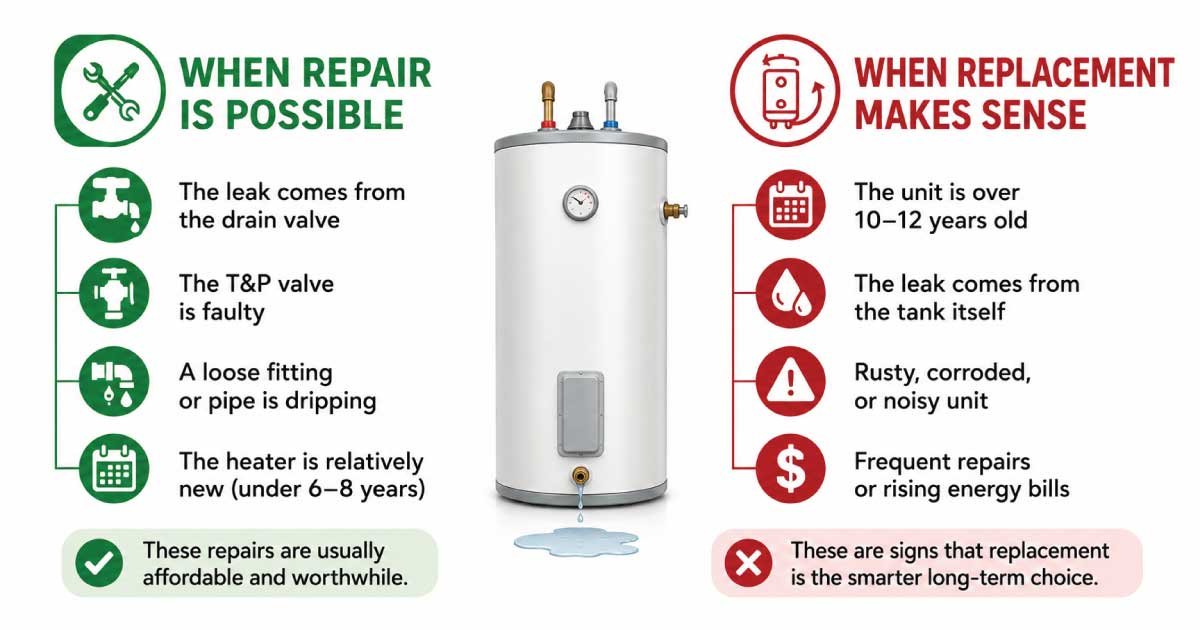
Deciding whether to repair or replace a leaking water heater depends on the source of the leak, the unit’s age, and overall condition. Some issues are minor and inexpensive to fix, while others signal the end of the heater’s safe service life.
When Repair Is Possible
In certain situations, repairing the water heater is practical and cost-effective. Minor component failures or connection issues can often be resolved without replacing the entire unit, especially if the system is still relatively new.
You may be able to repair the problem if:
- The leak comes from the drain valve
- The T&P valve is faulty
- A loose fitting or pipe is dripping
- The heater is relatively new (under 6–8 years)
These repairs are usually affordable and worthwhile.
When Replacement Is the Better Choice
In many cases, replacement is the safest and most cost-effective decision. Bottom leaks caused by internal tank damage cannot be reliably repaired and often worsen quickly. Continuing to invest in an aging or deteriorating unit usually delays the inevitable while increasing the risk of sudden failure.
Replacement is usually necessary if:
- The tank itself is leaking
- The unit is over 10–12 years old
- Rust is visible
- Repairs approach half the cost of a new unit
- Hot water performance has declined
Once a tank begins leaking internally, failure is inevitable.
⭐ Don’t Miss: Read this related post. 👉
How Long Does a Water Heater Typically Last?
A water heater’s lifespan varies based on design, water quality, and maintenance habits. While routine care can slow deterioration, internal components and tank linings eventually wear out. Understanding typical life expectancy helps homeowners plan replacements before emergency failures occur.
Average lifespan depends on type and maintenance:
- Tank water heaters: 8–12 years
- Tankless water heaters: 15–20 years
Regular flushing, pressure control, and anode rod replacement can extend lifespan—but no unit lasts forever.
Preventing Bottom Leaks in the Future
Preventive maintenance plays a major role in avoiding bottom leaks and premature tank failure. Most leaks develop gradually due to sediment buildup, corrosion, or excess pressure. Addressing these issues early can significantly extend the life of your water heater and reduce unexpected breakdowns.
You can reduce the risk of future leaks by:
- Flushing sediment annually
- Checking the anode rod every 3–5 years
- Installing an expansion tank
- Monitoring water pressure
- Scheduling annual inspections
Preventive maintenance is far cheaper than emergency replacement.
Final Thoughts
A water heater leaking from the bottom is not a problem to ignore or postpone. While some leaks are caused by valves or pressure issues, many originate from irreversible internal damage. The key is acting quickly, identifying the true source, and choosing the safest long-term solution.
If the leak is minor and external, a repair may restore your system. But if the tank itself is compromised, replacement is the only responsible option. Paying attention to early warning signs and maintaining your water heater properly can save you from costly damage and unexpected cold showers.