
A water heater tank leaking is one of the most serious plumbing issues a homeowner can face. Unlike small pipe or valve leaks, a leaking tank often signals internal failure that cannot be permanently repaired. While the leak may start as a slow drip, it can quickly worsen, leading to flooding, water damage, mold growth, and complete loss of hot water.
Understanding why a water heater tank leaks, how to recognize early warning signs, and what actions to take can help you minimize damage and make informed decisions about repair or replacement. This guide covers everything homeowners need to know about water heater tank leaks.
Why a Water Heater Tank Leaks
A water heater tank is built to store and heat water under constant pressure and daily temperature changes. Over years of operation, heat stress, internal pressure, mineral buildup, and natural aging slowly weaken the steel lining and protective coatings inside the tank. Once this internal structure deteriorates, leaks begin to form in non-repairable areas.
Unlike pipe connections or valves, a leaking tank usually means the unit is at the end of its lifespan.
Common Causes of Water Heater Tank Leaks
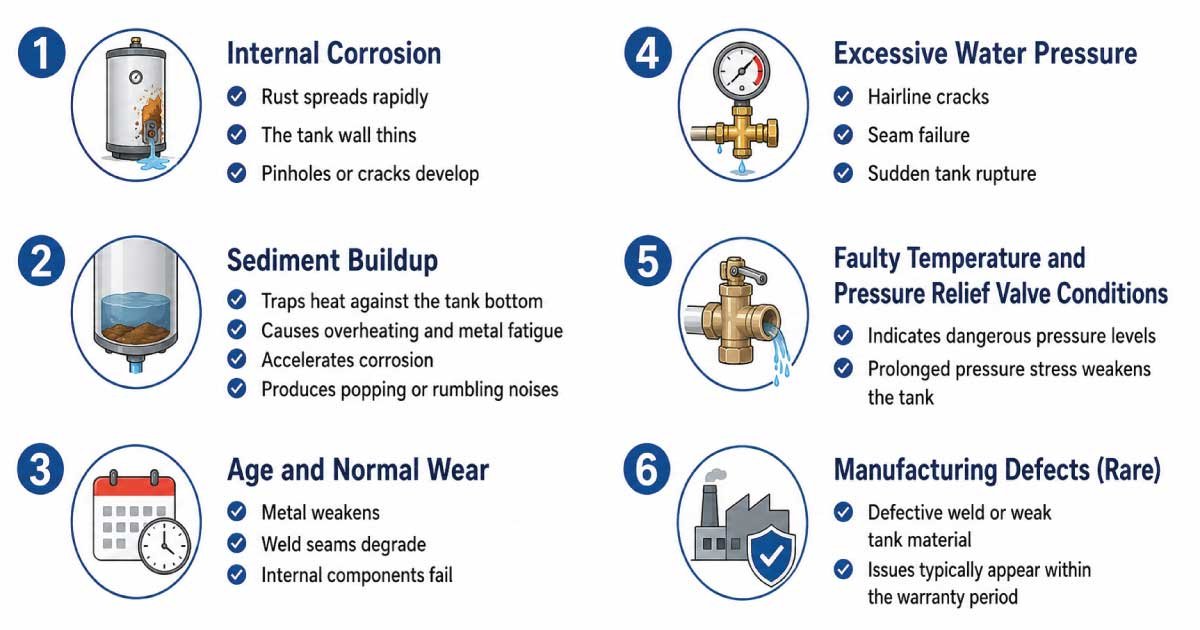
1. Internal Corrosion
Internal corrosion is the leading reason water heater tanks begin leaking over time. Although tanks are manufactured with protective glass linings, constant heating and cooling eventually cause cracks. Once water contacts bare steel, rust forms, spreads quickly, and weakens the tank’s internal structure beyond repair.
Once corrosion begins inside the tank:
- Rust spreads rapidly
- The tank wall thins
- Pinholes or cracks develop
When corrosion breaches the tank wall, water leaks out and cannot be sealed effectively.
2. Sediment Buildup
Sediment buildup occurs gradually as minerals naturally present in water settle inside the tank. Without regular flushing, these deposits harden and interfere with efficient heat transfer. Over time, sediment creates excessive heat stress, weakens metal surfaces, and accelerates internal damage that eventually leads to leaking.
Sediment from minerals in the water supply settles at the bottom of the tank over time. This buildup creates several problems:
- Traps heat against the tank bottom
- Causes overheating and metal fatigue
- Accelerates corrosion
- Produces popping or rumbling noises
Eventually, sediment causes weak spots that crack or rupture, leading to tank leaks.
3. Age and Normal Wear
Every water heater tank has a finite lifespan, even with proper care. Years of heating cycles, pressure changes, and chemical reactions inside the tank slowly degrade materials. As components weaken and seams deteriorate, older tanks lose structural integrity and become far more susceptible to leaks.
Most traditional tank water heaters last 8 to 12 years, depending on maintenance and water quality. As the unit ages:
- Metal weakens
- Weld seams degrade
- Internal components fail
A tank leaking in an older unit is often a sign that the water heater has simply reached the end of its service life.
4. Excessive Water Pressure
Excessive water pressure creates ongoing strain on the tank’s walls and welded seams. While tanks are designed for normal pressure ranges, repeated pressure spikes or constant high pressure gradually fatigue the metal. Over time, this stress can cause structural failure and sudden leakage.
High water pressure places constant stress on the tank walls. Over time, this stress can cause:
- Hairline cracks
- Seam failure
- Sudden tank rupture
If your home lacks a pressure-reducing valve or expansion tank, pressure fluctuations can significantly shorten the life of the water heater.
5. Faulty Temperature and Pressure Relief Valve Conditions
A temperature and pressure relief valve protects the tank from dangerous pressure buildup. When this valve malfunctions or discharges frequently, it signals ongoing internal stress. Prolonged exposure to unsafe pressure levels weakens the tank shell, increasing the likelihood of cracks, leaks, or catastrophic failure.
While the relief valve itself is not part of the tank, a malfunctioning or constantly discharging valve indicates dangerous pressure levels inside the tank. Prolonged pressure stress can weaken the tank and lead to leaks or bursts.
6. Manufacturing Defects (Rare)
Although uncommon, manufacturing defects can occasionally cause a water heater tank to fail prematurely. Issues such as weak welds, flawed steel, or improper lining application may not withstand normal operating conditions. These defects typically reveal themselves early and are often covered under warranty.
In rare cases, a defective weld or weak tank material may cause premature leaking. These issues typically appear within the warranty period.
Warning Signs of a Leaking Water Heater Tank
Recognizing the early warning signs of a leaking water heater tank can help limit water damage and prevent sudden failure. Small changes in performance, appearance, or sound often indicate internal deterioration. Paying attention to these symptoms allows homeowners to act quickly before a minor issue becomes a costly emergency.Catching tank failure early can reduce damage.
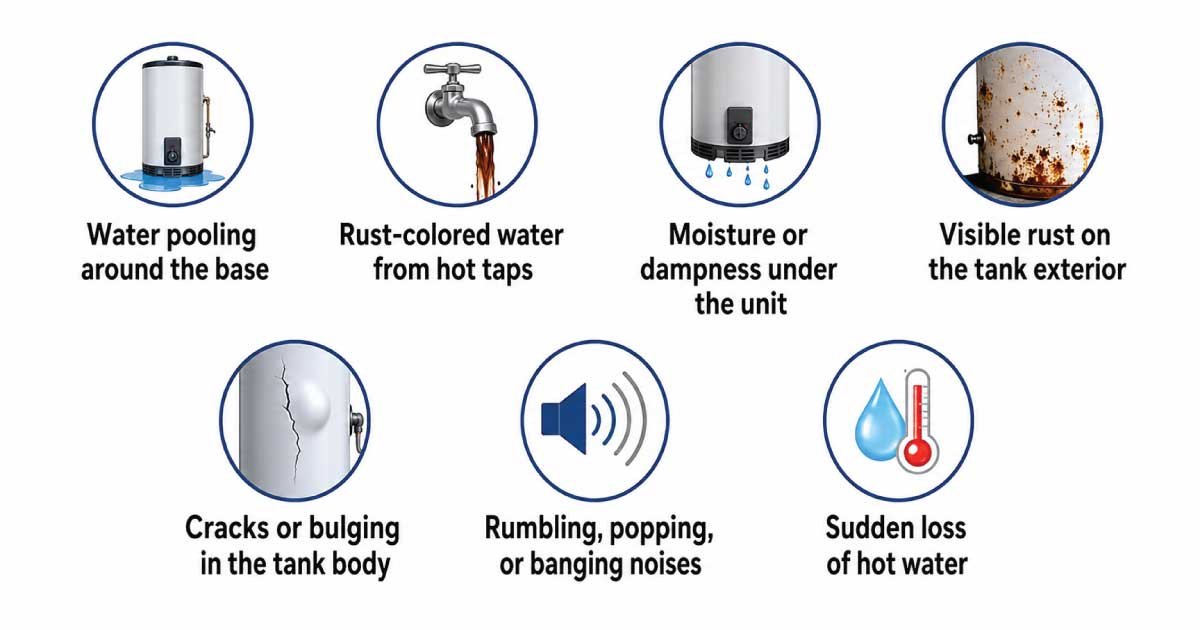
Common warning signs include:
- Water pooling around the base of the heater
- Rust-colored water from hot taps
- Moisture or dampness under the unit
- Visible rust on the tank exterior
- Cracks or bulging in the tank body
- Rumbling, popping, or banging noises
- Sudden loss of hot water
If you notice any of these signs, immediate action is critical.
⭐ Don’t Miss: Read this related post. 👉
How to Confirm the Tank Is Leaking
Not every water heater leak means the tank itself has failed. Water can escape from fittings, valves, or connections and mimic a tank leak. Carefully inspecting the unit methodically helps determine whether the issue is repairable or if the tank structure has already been compromised. Not all water heater leaks come from the tank itself.
To confirm a tank leak:
- Turn off the power or gas supply
- Dry the exterior of the unit completely
- Check all pipe connections and valves
- Observe where water reappears
If water seeps directly from the tank body, bottom seam, or welds, the tank has failed.
Leaks coming from:
- Drain valves
- Pipe fittings
- Relief valves
may be repairable, but leaks from the tank shell are not.
Can a Leaking Water Heater Tank Be Repaired?
Homeowners often hope a leaking tank can be patched or sealed to extend its life. Unfortunately, once the tank wall is compromised, the damage is internal and progressive. Repairs only mask symptoms briefly and do not restore structural integrity or ensure safe operation. In almost all cases, a leaking tank cannot be permanently repaired.
Temporary fixes such as epoxy, sealants, or patches may slow the leak briefly, but they are unsafe and unreliable.
A compromised tank can:
- Fail suddenly
- Release large volumes of hot water
- Cause severe property damage
- Pose burn or electrical hazards
For safety reasons, tank replacement is the recommended solution.
What to Do Immediately When a Tank Is Leaking
A leaking water heater tank should always be treated as an urgent situation. Acting quickly helps reduce water damage, lowers safety risks, and prevents further stress on the system. Following the correct steps ensures protection for both the property and the occupants.
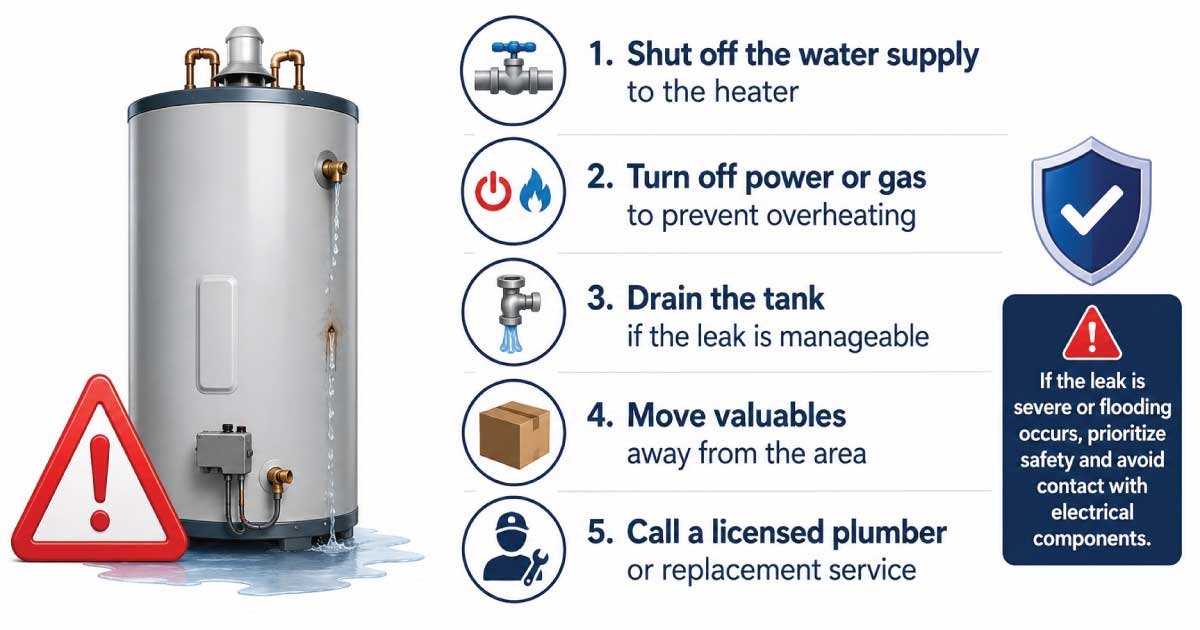
If your water heater tank is leaking, take these steps right away:
- Shut off the water supply to the heater
- Turn off power or gas to prevent overheating
- Drain the tank if the leak is manageable
- Move valuables away from the area
- Call a licensed plumber or replacement service
If the leak is severe or flooding occurs, prioritize safety and avoid contact with electrical components.
⭐ Don’t Miss: Read this related post. 👉
Risks of Ignoring a Leaking Water Heater Tank
Ignoring a leaking water heater tank can quickly turn a minor issue into a major household emergency. Even a slow drip often indicates internal tank failure that worsens over time. As pressure, heat, and corrosion continue working inside the unit, the risk of sudden breakdown and extensive property damage increases significantly.
Delaying action can lead to serious consequences, including:
- Flooded basements or utility rooms
- Structural damage to floors and walls
- Mold and mildew growth
- Damage to nearby appliances
- Increased insurance claims
- Sudden tank rupture
- Higher replacement costs due to emergency service
A small tank leak rarely stays small for long.
Replacement Options After a Tank Leak
When a water heater tank begins leaking, replacement becomes the most practical and safe solution. Choosing the right system depends on budget, daily hot water demand, and long-term efficiency goals. Modern water heating systems offer a range of options that balance cost, performance, and energy savings for different household needs.
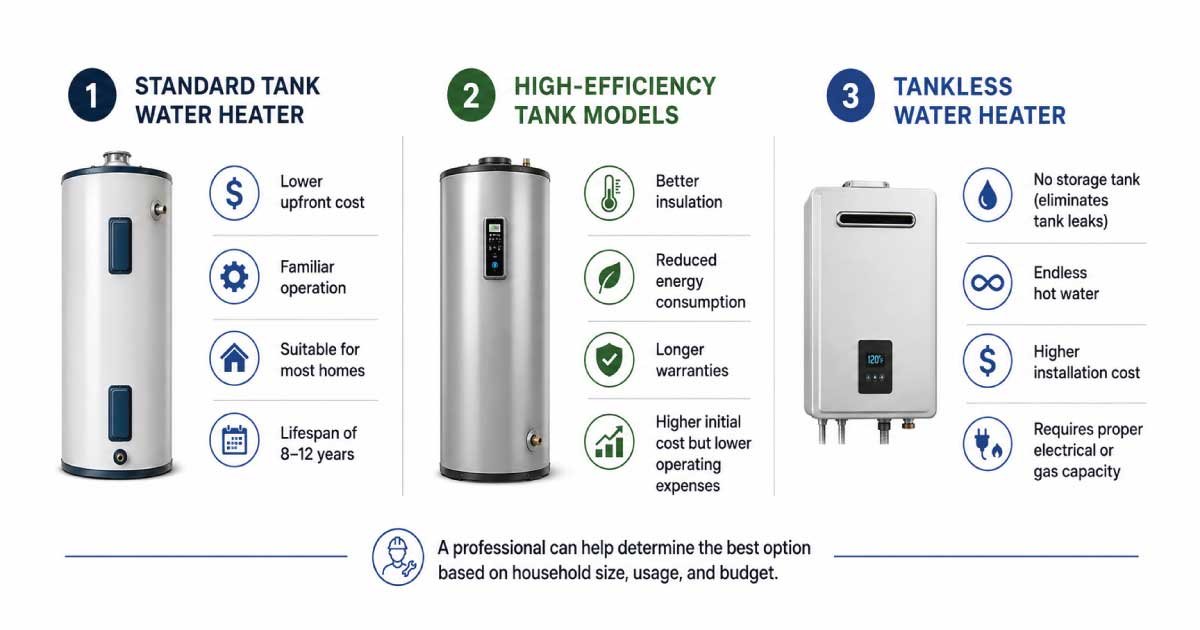
1. Standard Tank Water Heater
Traditional storage tank water heaters remain the most common replacement choice. They are widely available, easy to install, and provide a reliable hot water supply for everyday household use. While not the most energy-efficient, they offer affordability and simplicity that suits many homes.
- Lower upfront cost
- Familiar operation
- Suitable for most homes
- Lifespan of 8–12 years
2. High-Efficiency Tank Models
High-efficiency tank water heaters are designed to reduce heat loss through improved insulation and advanced heating technology. These models help lower energy bills over time while maintaining consistent hot water performance, making them a good long-term investment despite higher initial pricing.
- Better insulation
- Reduced energy consumption
- Longer warranties
- Higher initial cost but lower operating expenses
3. Tankless Water Heater
Tankless water heaters heat water on demand instead of storing it, which eliminates the risk of tank-related leaks entirely. They provide continuous hot water and save space, but require higher upfront investment and may need electrical or gas system upgrades for proper installation.
- No storage tank (eliminates tank leaks)
- Endless hot water
- Higher installation cost
- Requires proper electrical or gas capacity
A professional can help determine the best option based on household size, usage, and budget.
⭐ Don’t Miss: Read this related post. 👉
How to Prevent Future Water Heater Tank Leaks
Although every water heater tank eventually reaches the end of its lifespan, proper care and routine maintenance can greatly delay failure. Most leaks develop slowly due to neglect, sediment buildup, or unmanaged pressure. Regular attention to the system helps maintain efficiency and reduces the likelihood of unexpected breakdowns.
Flush the Tank Annually
Flushing the tank once a year helps remove accumulated sediment and mineral deposits that settle at the bottom. This prevents overheating, reduces strain on the tank’s metal lining, and improves heating efficiency, ultimately lowering the risk of corrosion and internal damage. Removing sediment reduces overheating and corrosion risk.
Inspect the Anode Rod
The anode rod is a critical component that protects the tank from rust by attracting corrosive elements. Over time, it deteriorates and becomes less effective. Replacing it every few years can significantly slow internal corrosion and extend the overall life of the water heater. The anode rod protects the tank from corrosion. Replacing it every few years can add years to the tank’s lifespan.
Monitor Water Pressure
Excessively high water pressure places continuous stress on the tank walls and joints. Keeping pressure within a safe range helps prevent cracks, leaks, and premature wear. Installing a pressure gauge ensures the system remains within recommended limits. Keep household water pressure between 40–60 PSI to reduce stress on the tank.
Install an Expansion Tank
An expansion tank absorbs excess pressure created when water heats and expands inside the system. This reduces strain on the main water heater tank and helps prevent damage caused by repeated pressure fluctuations. Expansion tanks absorb pressure changes caused by heating water, protecting the tank structure.
Schedule Regular Inspections
Routine professional inspections allow early detection of corrosion, weak points, or component failure. Identifying issues before they worsen helps prevent sudden leaks and ensures the system continues operating safely and efficiently.
Is a Leaking Tank Covered by Warranty?
Whether a leaking water heater tank is covered under warranty depends on the manufacturer’s terms and the specific conditions of the installation and usage. Most warranties do include protection against tank failure, but coverage is often limited and comes with strict requirements regarding maintenance, installation standards, and the age of the unit.
- Age of the unit
- Maintenance history
- Installation compliance
Labor costs are often not included. Check the warranty documentation and serial number before replacement.
When Replacement Is the Only Smart Choice
A leaking water heater tank is a clear indication of internal structural failure, not a minor repair issue. Once the tank shell is compromised, the damage is irreversible and tends to worsen rapidly. Continuing to use a leaking unit increases the risk of water damage, safety hazards, and sudden catastrophic failure.
A water heater tank leaking is not a minor inconvenience—it’s a sign of structural failure. Continuing to operate a leaking tank puts your home and safety at risk. Replacement is almost always the safest and most cost-effective solution.
Final Thoughts
A water heater tank leaking is one of the clearest signs that your unit has reached the end of its usable life. While small plumbing leaks can often be repaired, a compromised tank cannot be restored safely. Acting quickly can prevent extensive water damage, reduce stress, and restore reliable hot water to your home.
If you notice water around your heater, rust on the tank, or sudden performance issues, don’t wait. Shut the system down, confirm the source, and plan for replacement. With proper maintenance and timely upgrades, you can avoid unexpected tank failures in the future.