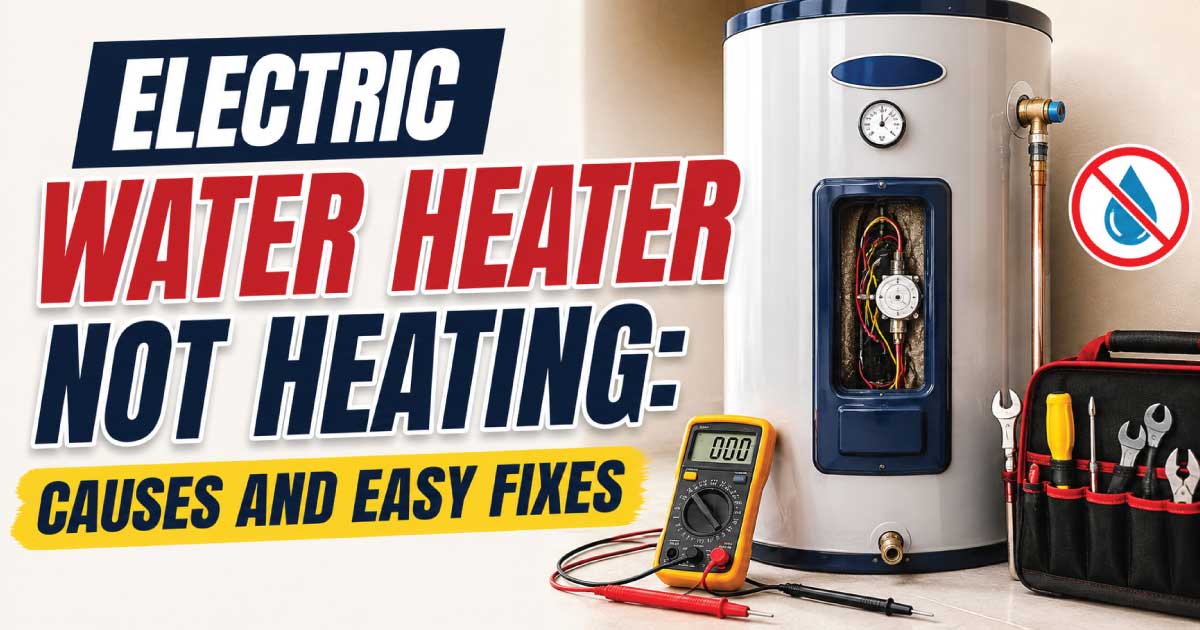
Few household problems are as frustrating as stepping into the shower expecting hot water only to be hit with an icy surprise. If your electric water heater is not heating, do not panic. This is a common issue, and in many cases, it can be diagnosed and even fixed without replacing the entire unit.
In this in-depth guide, we will walk through how electric water heaters work, the most common reasons they stop heating, step-by-step troubleshooting, and easy fixes plus when it’s time to call a professional. By the end, you’ll have a clear plan of action to restore your hot water.
How an Electric Water Heater Works (Quick Overview)
Understanding how an electric water heater operates helps you quickly identify the source of common problems like no hot water or inconsistent temperatures. Knowing the basic components and their roles makes troubleshooting more straightforward and reduces the risk of misdiagnosing electrical or heating issues.
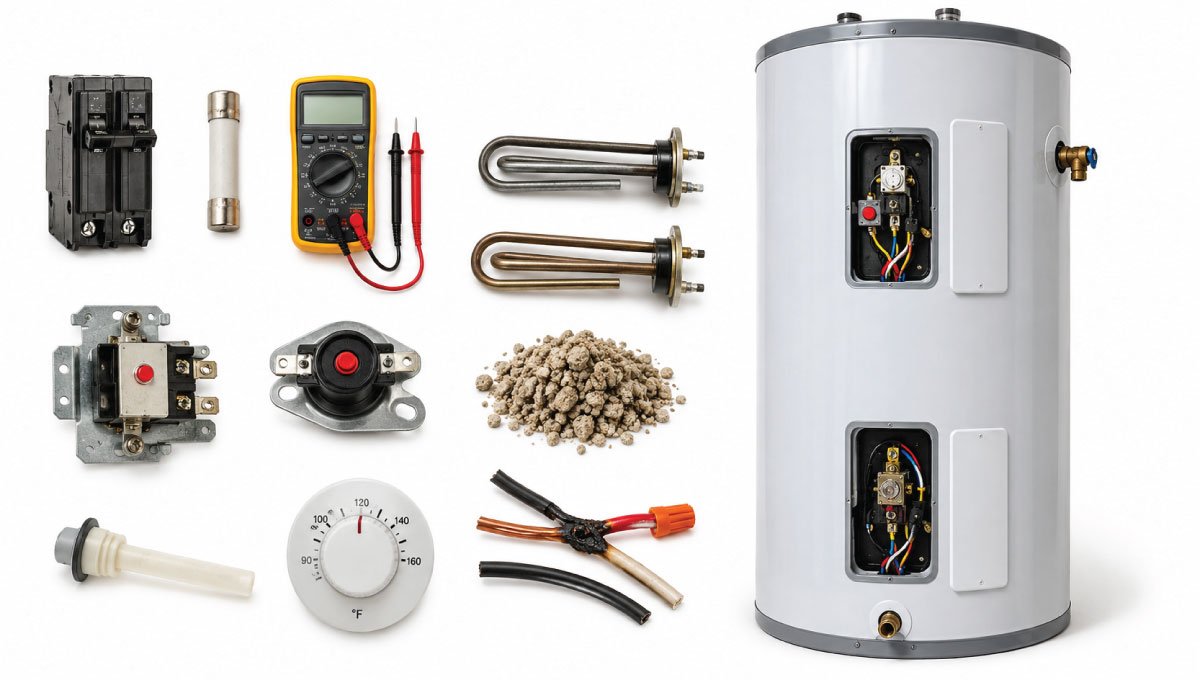
A typical electric water heater consists of:
- One or two heating elements
- Thermostats (upper and lower)
- A dip tube that brings cold water into the tank
- An electrical power supply (usually 240 volts)
- A tank insulated to keep water hot
When you turn on a hot water tap, cold water enters the tank through the dip tube. The thermostats sense the temperature and signal the heating elements to warm the water. If any part of this system fails, the heater may stop producing hot water or only produce lukewarm water.
Common Signs Your Electric Water Heater Is not Heating Properly
Recognizing early warning signs of heating issues can save time and prevent further damage to your electric water heater. Confirming the exact symptom helps narrow down whether the problem is electrical, mechanical, or related to heating elements or controls.
Before diving into causes, confirm the symptoms:
- No hot water at all
- Water is lukewarm but never hot
- Hot water runs out very quickly
- Breaker trips frequently
- Unusual noises from the tank
Each symptom points to different potential problems.
Most Common Causes of an Electric Water Heater Not Heating
Electric water heaters rely on several electrical and mechanical components working together. When hot water stops or becomes inconsistent, the cause is usually traceable to one of the issues below. Identifying the correct cause helps you decide whether a simple reset, a repair, or professional service is needed.
1. Tripped Circuit Breaker or Blown Fuse
Because electric water heaters draw high current, they are sensitive to electrical interruptions. A tripped breaker or blown fuse completely cuts power to the unit, preventing heating altogether. This is often the first thing to check when the heater suddenly stops working.
Why it happens:
Electric water heaters draw a lot of power. A power surge, faulty wiring, or a failing heating element can trip the breaker.
Symptoms:
- No hot water at all
- Water heater appears “dead”
Fix:
Check your home’s electrical panel and reset the breaker. If it trips again, do not keep resetting—it indicates a deeper electrical issue that needs professional attention.
2. Faulty Heating Element
Heating elements are responsible for warming the water inside the tank, and they naturally degrade over time. When one fails, the heater may still run but won’t produce enough hot water, making this one of the most common causes of heating problems.
Why it happens:
Heating elements wear out over time due to mineral buildup and normal use.
Symptoms:
- No hot water (if upper element fails)
- Limited or lukewarm hot water (if lower element fails)
Fix:
Test the elements with a multimeter for continuity. If defective, replace the element. This is one of the most common—and affordable—repairs.
3. Thermostat Malfunction
Thermostats regulate when heating elements turn on and off. If they fail or become inaccurate, the heater may not reach the desired temperature or may behave unpredictably. This issue often causes inconsistent or inadequate hot water rather than a total loss.
Why it happens:
Thermostats can lose calibration or fail entirely.
Symptoms:
- Water temperature fluctuates
- Water never gets hot enough
- Overly hot water (in rare cases)
Fix:
Turn off power, remove the access panel, and test the thermostat. Replacement thermostats are inexpensive and relatively easy to install.
4. High-Temperature Cutoff Switch Tripped
The high-temperature cutoff switch is a built-in safety feature designed to prevent overheating. When activated, it shuts off power to the heating elements entirely. While resetting it restores operation, repeated trips signal an underlying control problem.
Why it happens:
This safety feature shuts off power if water overheats, often due to a faulty thermostat.
Symptoms:
- Sudden loss of hot water
- No power to heating elements
Fix:
Reset the red “reset” button on the upper thermostat. If it trips repeatedly, replace the thermostat.
5. Sediment Buildup in the Tank
Over time, minerals from hard water settle at the bottom of the tank. This sediment acts as insulation between the heating element and the water, reducing efficiency and increasing wear, which can eventually lead to heating failure or higher operating costs.
Why it happens:
Minerals in hard water settle at the bottom of the tank, insulating the heating element.
Symptoms:
- Reduced hot water output
- Popping or rumbling noises
- Higher energy bills
Fix:
Flush the tank to remove sediment. Annual flushing greatly extends heater life.
6. Broken Dip Tube
The dip tube directs incoming cold water to the bottom of the tank. When it breaks, cold water mixes near the top, cooling hot water prematurely. This issue often mimics a heating problem even though the elements are functioning correctly.
Why it happens:
Older plastic dip tubes can crack or disintegrate.
Symptoms:
- Hot water runs out quickly
- Water is warm but not hot
Fix:
Replace the dip tube. This is a simple repair but requires draining the tank partially.
7. Incorrect Thermostat Settings
Sometimes the problem isn’t a failure at all but an incorrect setting. Thermostats may be adjusted accidentally or left at a low factory default, resulting in warm water that never reaches a comfortable temperature.
Why it happens:
Settings may be too low due to accidental adjustment or factory default.
Symptoms:
- Water is warm, not hot
Fix:
Set thermostats to 120°F (49°C)—the recommended balance of comfort, safety, and efficiency.
8. Loose or Burnt Wiring
Electrical connections inside the heater are exposed to heat and vibration over time. Loose or damaged wiring can interrupt power flow, create safety hazards, and cause intermittent heating problems that worsen if left unaddressed.
Why it happens:
Heat, age, or poor installation can damage wiring.
Symptoms:
- Intermittent heating
- Burning smell
- Breaker trips
Fix:
Turn off power and inspect wiring. Tighten loose connections or call an electrician if wires are damaged.
Step-by-Step Electric Water Heater Troubleshooting Guide
Systematic troubleshooting helps pinpoint the exact cause of electric water heater heating problems while minimizing risk. Following a clear, step-by-step process ensures safety, prevents unnecessary part replacement, and helps restore reliable hot water as efficiently as possible.
Safety First: Always turn off the breaker before opening your water heater.
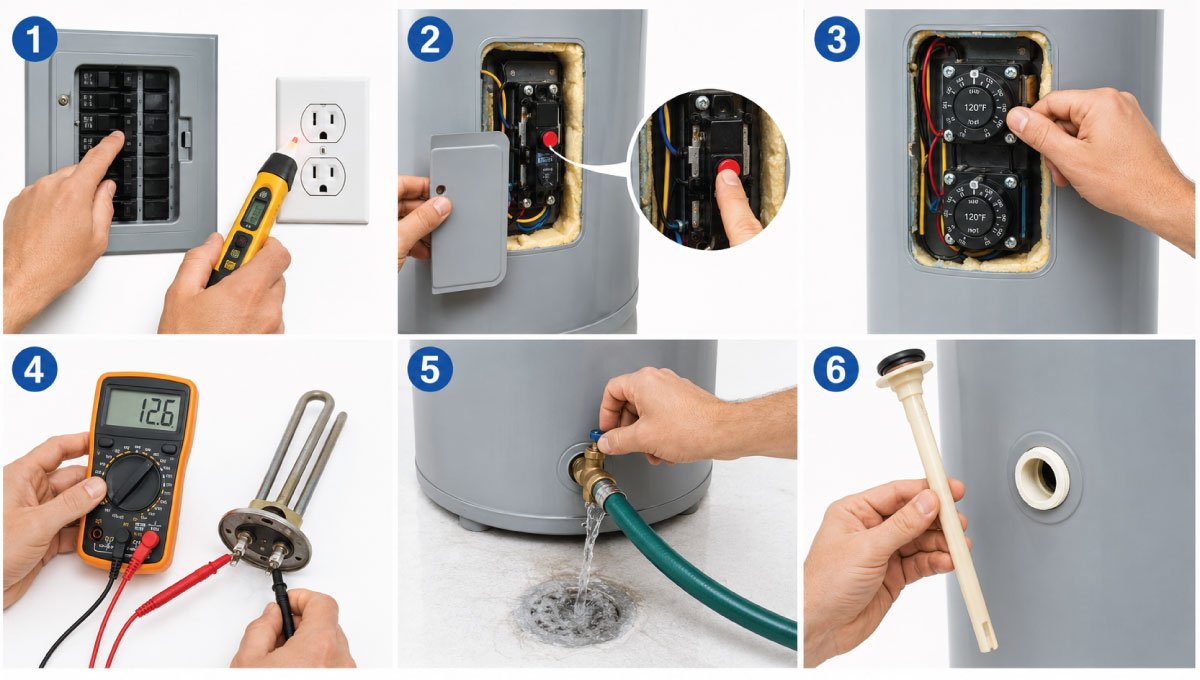
Step 1: Check Power Supply
Before troubleshooting internal components, confirm the unit is receiving electrical power. Power interruptions are a common cause of malfunction and can originate from tripped breakers, blown fuses, or wiring issues. Verifying power first prevents unnecessary disassembly and ensures safe, systematic diagnostics.
- Verify breaker is on
- Use a voltage tester to confirm power
Step 2: Reset High-Limit Switch
The high-limit switch is a safety device that shuts off power if water temperature becomes excessive. If triggered, the heater will stop producing hot water. Resetting this switch can quickly restore operation, but repeated tripping may indicate an underlying electrical or thermostat problem.
- Remove upper access panel
- Press the red reset button
Step 3: Inspect Thermostat Settings
Incorrect thermostat settings can cause insufficient or inconsistent hot water. Both thermostats must be properly aligned to work together. Verifying temperature settings ensures balanced heating and prevents one element from overworking while the other remains inactive.
- Confirm both thermostats are set to 120°F
Step 4: Test Heating Elements
Heating elements are responsible for warming the water and are prone to failure over time. Testing them helps determine whether they are functioning correctly. A faulty element will prevent proper heating and must be replaced to restore normal operation.
- Use a multimeter to check resistance
- Replace if no continuity
Step 5: Flush the Tank
Sediment buildup inside the tank reduces heating efficiency and available hot water. Flushing removes mineral deposits that insulate the heating elements and clog the tank. Regular flushing extends the heater’s lifespan and improves overall performance.
- Attach hose to drain valve
- Drain until water runs clear
Step 6: Examine Dip Tube
The dip tube directs incoming cold water to the bottom of the tank. A damaged or broken dip tube causes cold water to mix with hot water prematurely. Inspecting it is essential if hot water depletes unusually fast.
- If hot water runs out quickly, inspect and replace
Also Read:
Easy Fixes You Can Do Yourself
Many electric water heater issues are simple enough for homeowners to handle without professional help. Performing basic fixes safely can restore hot water quickly and significantly reduce repair costs, as long as proper precautions are followed and electrical power is turned off before servicing.
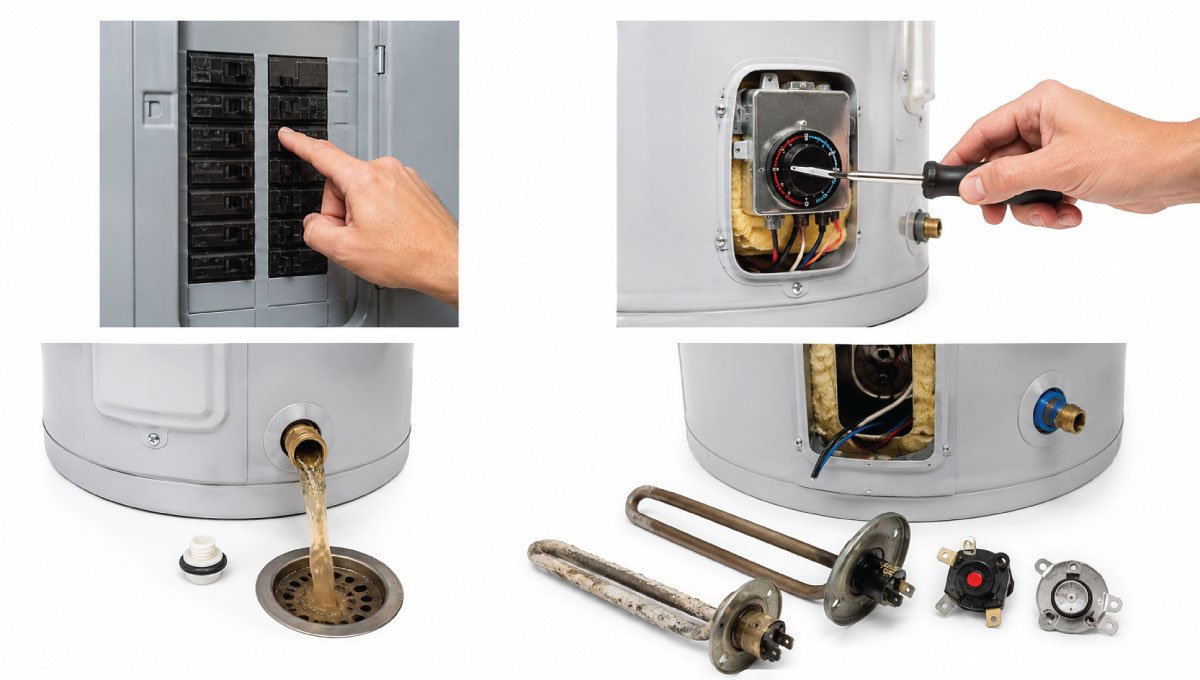
Many electric water heater problems are DIY-friendly:
- Resetting the breaker
- Adjusting thermostat temperature
- Flushing sediment from the tank
- Replacing heating elements or thermostats
If you’re comfortable with basic tools and follow safety steps, these repairs can save hundreds of dollars.
Preventing Future Heating Problems
Preventive maintenance plays a major role in keeping an electric water heater efficient and reliable. Regular inspections and simple upkeep tasks reduce strain on components, improve energy efficiency, and help avoid unexpected breakdowns or cold-water surprises.
Regular maintenance goes a long way:
- Flush the tank annually
- Test the pressure relief valve
- Check anode rod every 2–3 years
- Inspect wiring during routine checks
- Set thermostats correctly
These steps improve efficiency, extend lifespan, and reduce unexpected cold showers.
When to Call a Professional
Some electric water heater problems involve safety risks or complex diagnostics that require professional expertise. Knowing when to stop DIY troubleshooting helps prevent injury, code violations, and costly damage caused by improper repairs.
You should contact a licensed plumber or electrician if:
- Breaker keeps tripping
- You smell burning or see melted wires
- Tank is leaking
- Heater is over 10–15 years old
- You’re unsure about electrical testing
Sometimes, replacement is more cost-effective than repeated repairs—especially for older units.
Final Thoughts
An electric water heater not heating is inconvenient but rarely hopeless. In most cases, the issue comes down to power supply problems, faulty heating elements, or thermostat issues, all of which are relatively straightforward to diagnose and fix.
By understanding how your system works and following a structured troubleshooting process, you can often restore hot water the same day. And with regular maintenance, you can prevent many of these problems from happening again. If you are ever in doubt, don’t hesitate to call a professional your safety and comfort are worth it.
Also Read: