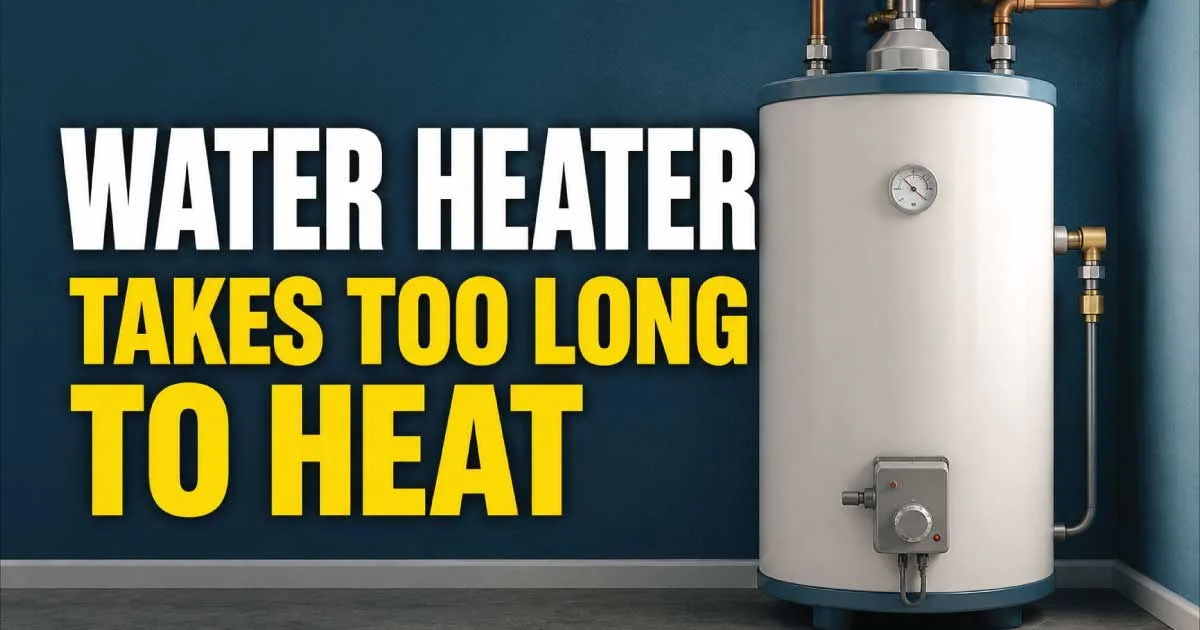
Few household frustrations are as universal as stepping into the shower, turning the handle, and waiting… and waiting… for hot water that seems to take forever to arrive. If your water heater takes too long to heat, it’s more than just an inconvenience—it could be a warning sign of inefficiency, wasted energy, or an impending breakdown.
In this in-depth guide, we’ll explore why water heaters take too long to heat, how different systems behave, what you can troubleshoot yourself, when to call a professional, and how to prevent the issue from happening again. Whether you have a traditional tank heater or a modern tankless unit, this article will help you understand what’s going on behind the scenes.
How Long Should a Water Heater Take to Heat?
Before assuming there is a fault or breakdown, it’s important to understand normal operating times for different types of water heaters. Heating speed varies based on fuel type, tank size, technology, and overall system condition, so comparing your unit to standard benchmarks can help you identify whether performance is actually abnormal.
Typical Heating Times by Water Heater Type
Gas tank water heater (40–50 gallons):
Usually heats water in 30–40 minutes.
Electric tank water heater (40–50 gallons):
Typically takes 60–90 minutes.
Tankless (on-demand) water heater:
Heats water almost instantly, but you may still experience 10–20 seconds of delay due to pipe distance.
Heat pump water heater:
Slower than conventional electric heaters, often 2–3 hours, but far more energy efficient.
If your system takes significantly longer than these averages, it’s time to investigate.
Common Reasons Your Water Heater Takes Too Long to Heat
Slow water heating is usually a sign that the system is working harder than it should due to internal buildup, worn components, or reduced efficiency. Identifying the exact cause helps determine whether a simple maintenance task or a component replacement is needed to restore normal performance.
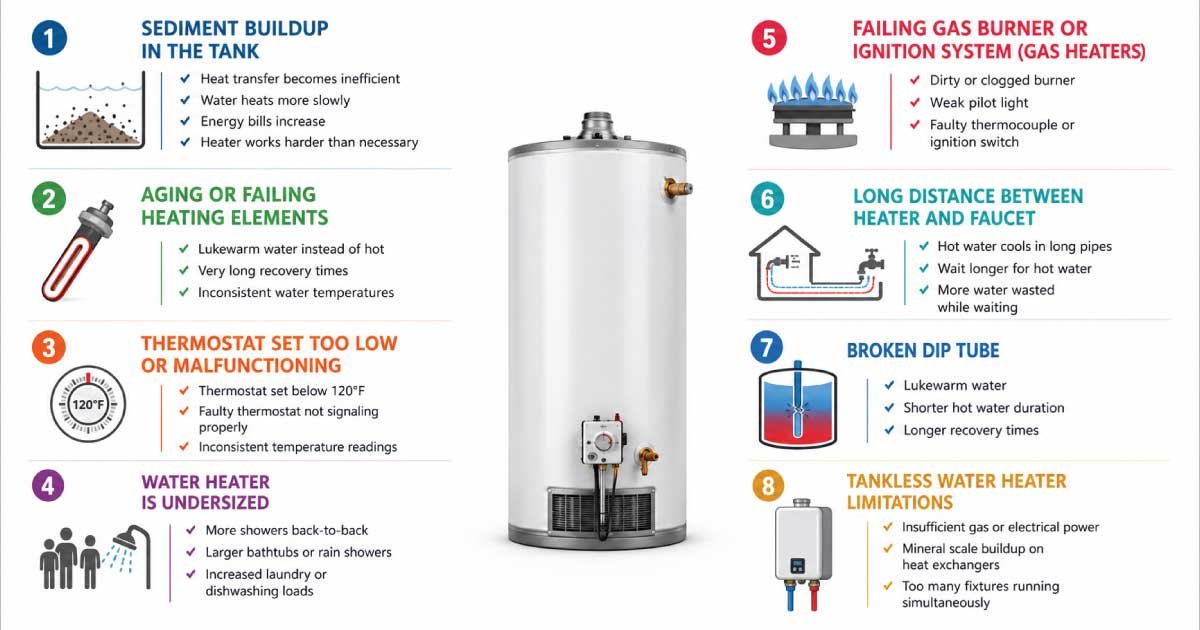
1. Sediment Buildup in the Tank
Over time, minerals in hard water settle at the bottom of the tank. This sediment layer acts as insulation between the heating element or burner and the water.
What happens:
- Heat transfer becomes inefficient
- Water heats more slowly
- Energy bills increase
- The heater works harder than necessary
Signs of sediment buildup:
- Rumbling or popping noises
- Cloudy or gritty hot water
- Reduced hot water capacity
Sediment buildup is one of the most common and overlooked reasons for slow heating.
2. Aging or Failing Heating Elements
Electric water heaters depend on heating elements to warm the water inside the tank. As these components age, they can weaken, burn out partially, or fail intermittently, resulting in reduced heating efficiency and longer recovery times between uses.
Symptoms include:
- Lukewarm water instead of hot
- Very long recovery times
- Inconsistent water temperatures
A heater may still “work,” but far less efficiently, making it seem like it takes forever to heat.
3. Thermostat Set Too Low or Malfunctioning
One of the simplest yet most overlooked causes of slow heating is incorrect thermostat settings or a failing thermostat component. If the temperature is set too low or the thermostat is not accurately sensing water temperature, the heater may not activate properly or may stop heating prematurely, leading to inconsistent hot water availability.
Potential issues:
- Thermostat set below 120°F
- Faulty thermostat not signaling the heater properly
- Inconsistent temperature readings
A malfunctioning thermostat can prevent the heater from reaching its target temperature, causing endless waiting for hot water.
4. Water Heater Is Undersized
A water heater that is too small for a household’s current needs will struggle to keep up with demand, especially during peak usage times. As family size or water consumption increases over time, the original unit may no longer be sufficient to deliver consistent hot water without delays or recovery periods.
Examples:
- More people taking showers back-to-back
- Larger bathtubs or rain showers
- Increased laundry or dishwashing loads
When demand exceeds capacity, the heater struggles to keep up, leading to slow reheating times.
5. Failing Gas Burner or Ignition System (Gas Heaters)
Gas water heaters rely on a properly functioning burner and ignition system to produce consistent heat. When these components become dirty, worn, or faulty, the unit may still operate but with reduced efficiency, resulting in slower heating and inconsistent hot water delivery over time.
Possible problems:
- Dirty or clogged burner
- Weak pilot light
- Faulty thermocouple or ignition switch
Gas units often show a gradual decline in performance rather than a sudden failure.
6. Long Distance Between Heater and Faucet
Even when a water heater is functioning correctly, the layout of the plumbing system can significantly affect how quickly hot water reaches the tap. In larger homes or buildings with extended pipe runs, heat loss occurs as water travels through long, uninsulated lines, creating noticeable delays before usable hot water arrives at fixtures.
What’s happening:
- Hot water cools as it travels through long pipes
- You wait longer for hot water to reach the tap
- More water is wasted while waiting
This issue is especially common in larger homes or older plumbing designs.
7. Broken Dip Tube
The dip tube is a crucial internal component that channels incoming cold water to the bottom of the tank so it can be heated efficiently. When this tube cracks, breaks, or deteriorates, cold water mixes prematurely with hot water at the top of the tank, reducing overall system performance.
Results:
- Lukewarm water
- Shorter hot water duration
- Longer recovery times
Dip tube failure is often mistaken for a dying water heater.
8. Tankless Water Heater Limitations
Tankless water heaters are designed to provide hot water on demand, but they still have operational limits that can affect performance. When demand exceeds capacity or maintenance is neglected, users may experience delays or inconsistent water temperatures despite the system’s “instant” heating design.
Common tankless issues:
- Insufficient gas supply or electrical power
- Mineral scale buildup on heat exchangers
- Too many fixtures running simultaneously
Even “instant” systems have limits when demand exceeds capacity.
DIY Troubleshooting Steps You Can Try
Before contacting a professional plumber or technician, there are a few safe and simple checks homeowners can perform to identify common water heater issues. These steps focus on basic maintenance and observation, helping you rule out minor problems before considering more complex repairs or replacements.
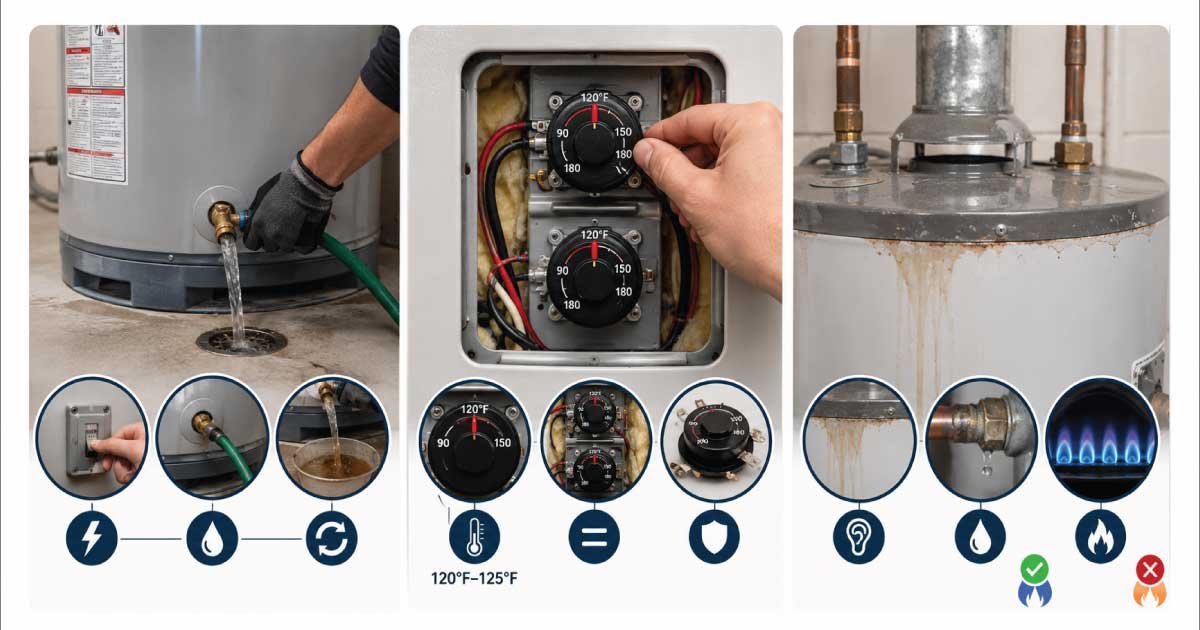
Flush the Water Heater Tank
Flushing the tank is one of the most effective ways to remove sediment buildup, which can reduce efficiency and cause uneven heating. Over time, minerals settle at the bottom of the tank and interfere with proper heat transfer, making the system work harder than necessary.
Basic steps include:
- Turning off power or gas
- Connecting a hose to the drain valve
- Draining and refilling the tank
If water comes out rusty or cloudy, sediment was likely affecting performance.
Check Thermostat Settings
Incorrect thermostat settings can lead to poor performance, overheating, or inconsistent water temperature. Ensuring proper calibration and alignment between upper and lower thermostats helps maintain stable heating and prevents unnecessary strain on the system.
- Confirm the temperature is set to 120°F–125°F
- Ensure both thermostats (on electric units) are aligned
- Look for signs of thermostat damage
Avoid turning it too high, which can cause scalding and increased energy use.
Inspect for Obvious Issues
A quick visual and auditory inspection can reveal early warning signs of mechanical or system failure. Strange sounds, visible corrosion, or irregular burner behavior often indicate underlying problems that require attention before they worsen.
- Listen for unusual noises
- Check for leaks or corrosion
- Observe burner flame (should be steady and blue for gas units)
If anything looks or sounds abnormal, it’s best to stop and call a professional.
When to Call a Professional Plumber
While some minor water heater maintenance tasks can be handled safely by homeowners, many issues require professional training, specialized tools, and strict safety procedures. Attempting complex repairs without experience can increase the risk of electrical shock, water damage, or further system failure, so knowing when to step back is important.
Call a professional if:
- Heating elements need replacement
- Gas components require servicing
- Electrical wiring is involved
- The tank shows signs of corrosion or leakage
- The heater is over 10–12 years old
Delaying professional help can turn a small repair into a full replacement.
Long-Term Solutions and Upgrades
When slow heating becomes a frequent or recurring problem, short-term maintenance may no longer be enough to restore proper performance. In such cases, upgrading or improving the overall hot water system can provide lasting efficiency gains, better comfort, and more consistent hot water availability throughout the home.
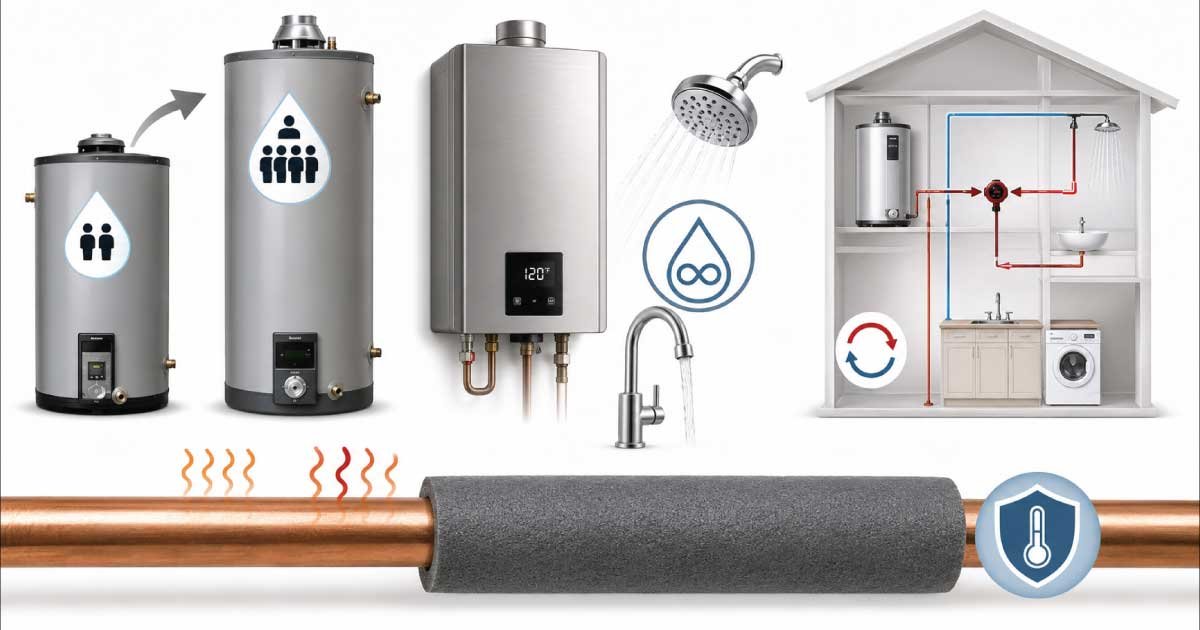
Upgrade to a Larger Tank
A higher-capacity water heater tank can better match household demand, especially in homes with multiple users or high simultaneous hot water usage. By storing more heated water at once, it reduces recovery delays and helps ensure a more stable supply during peak usage periods.
A higher-capacity tank can handle increased household demand without long recovery times.
Install a Tankless Water Heater
Tankless water heaters heat water only when needed, rather than storing it in a tank, which eliminates standby heat loss and reduces waiting time for reheated water. When correctly sized for the household, they can provide a continuous supply of hot water with improved energy efficiency.
Tankless systems provide hot water on demand and eliminate waiting for tank recovery—when properly sized.
Add a Hot Water Recirculation System
A hot water recirculation system keeps warm water moving through the plumbing lines so that hot water is available almost immediately at fixtures. This significantly reduces waiting time at taps and improves overall water usage efficiency in larger homes or long pipe runs.
These systems keep hot water circulating near fixtures, drastically reducing wait time at taps.
Improve Pipe Insulation
Insulating hot water pipes helps minimize heat loss as water travels from the heater to fixtures, maintaining a higher temperature for longer periods. This simple upgrade can noticeably reduce delays in receiving hot water and improve overall system efficiency.
Insulating hot water pipes reduces heat loss and shortens the wait for hot water to arrive.
Also Read:
Preventing Slow Heating in the Future
Maintaining consistent water heater performance depends heavily on regular upkeep and early attention to small issues before they develop into major faults. A proactive maintenance routine helps the system heat water efficiently, reduces strain on components, and extends the overall lifespan of the unit while keeping operating costs under control.
Best practices include:
- Flushing the tank annually
- Scheduling professional inspections every 1–2 years
- Monitoring energy bills for sudden increases
- Replacing sacrificial anode rods when needed
- Addressing minor issues early
A well-maintained water heater heats faster, lasts longer, and costs less to operate.
Is It Time to Replace Your Water Heater?
In some cases, slow heating is not just a maintenance issue but a clear indicator that the water heater is nearing the end of its functional life. As internal components wear out over time, efficiency drops significantly, and repair costs can begin to outweigh the benefits of keeping an aging system in service.
Typical lifespans:
- Tank water heaters: 8–12 years
- Tankless water heaters: 15–20 years
If your heater is old, inefficient, and constantly struggling, replacement may be more cost-effective than ongoing repairs.
Final Thoughts
When a water heater takes too long to heat, it’s rarely a mystery—it’s usually sediment buildup, aging components, improper sizing, or lack of maintenance. The good news is that many causes are preventable, and early action can save you money, energy, and daily frustration.
By understanding how your water heater works, recognizing the warning signs, and committing to routine care, you can enjoy reliable hot water without the long wait. And when in doubt, consulting a professional ensures your system stays safe, efficient, and ready to perform when you need it most.
👉 Every water heater problem has a cause—and most have a solution. This Complete Water Heater Problems Guide covers common failures, warning signs, maintenance tips, and repair methods to help you get your system working again. Read the full article for expert advice and practical fixes.