Few household problems are as frustrating as turning on the tap and discovering there’s no hot water. Whether it happens first thing in the morning or right before an important task, a water heater that isn’t producing hot water can disrupt your entire routine. The good news is that this problem is often caused by common, fixable issues and in many cases, you can narrow down the cause before calling a professional.
In this comprehensive guide, we will explore the most common reasons a water heater stops producing hot water, how to troubleshoot the problem safely, and when it’s time to repair or replace your unit.
Understanding How a Water Heater Works
Before troubleshooting a lack of hot water, it’s important to understand how a typical water heater operates. Knowing the basic components and heating process helps you recognize where problems may occur, making it easier to identify whether the issue is related to power, fuel, temperature control, or internal system failure.
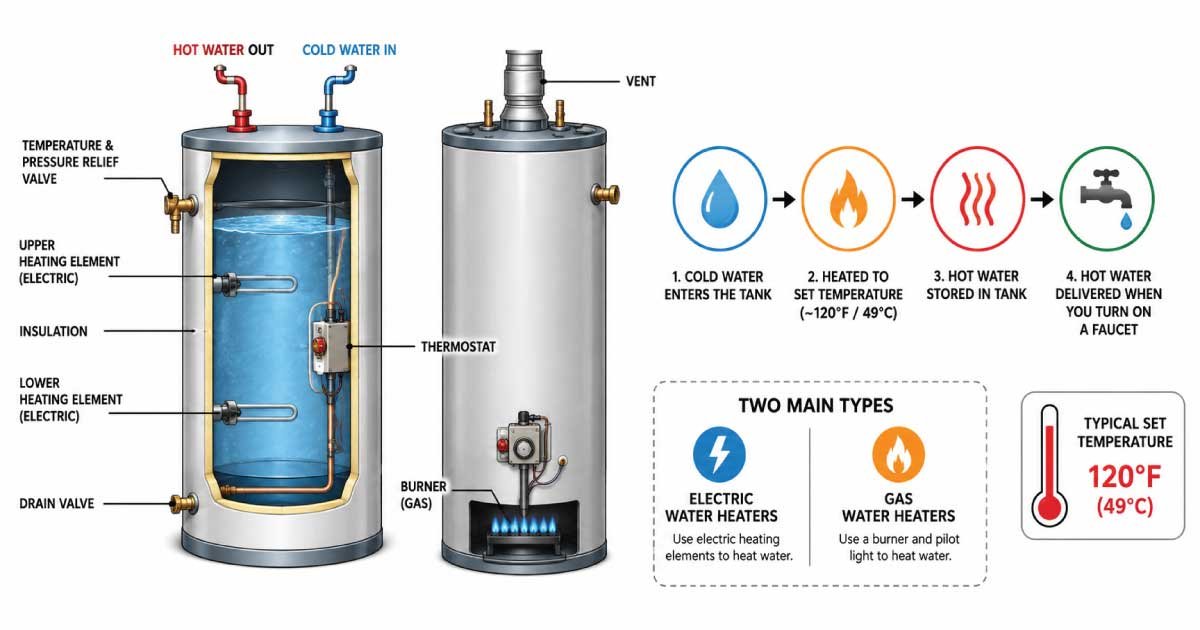
Most homes use either:
- Electric water heaters, which rely on heating elements powered by electricity
- Gas water heaters, which use a burner and pilot light to heat water
Cold water enters the tank, gets heated to a preset temperature (usually around 120°F / 49°C), and is stored until you turn on a hot water faucet. If any part of this process fails—power supply, heating mechanism, thermostat, or tank—you may end up with lukewarm or cold water.
Common Reasons Your Water Heater Is Not Producing Hot Water
When a water heater stops delivering hot water, the cause can range from minor electrical issues to fuel supply problems or mechanical failures. Understanding the most common reasons helps narrow down the source of the issue quickly, potentially saving time, money, and unnecessary repairs before calling a professional.
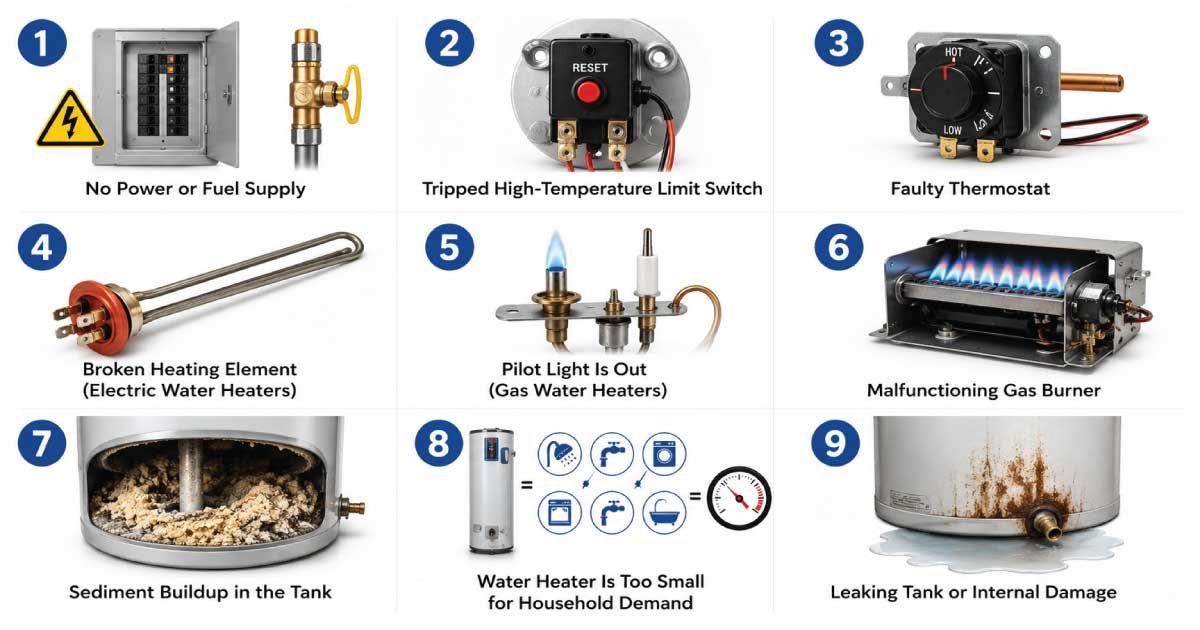
1. No Power or Fuel Supply
A missing power or fuel supply is often the first and easiest issue to check when a water heater fails. Without electricity or gas, the unit simply cannot heat water, regardless of its condition. These issues can happen suddenly due to outages, maintenance work, or safety shutoffs.
For electric water heaters:
- A tripped circuit breaker
- A blown fuse
- A faulty electrical connection
For gas water heaters:
- Gas supply turned off
- Issues with the gas valve
- Problems with the pilot light
What to check:
Look at your electrical panel to see if the breaker has tripped. For gas heaters, ensure the gas valve is open and other gas appliances in the home are working.
2. Tripped High-Temperature Limit Switch
Water heaters include a built-in safety mechanism designed to prevent dangerously high water temperatures. When the high-temperature limit switch is triggered, it automatically shuts down the heating system to protect the unit and your home. Once tripped, the heater may stop producing hot water entirely until the issue is addressed.
Why it happens:
- Faulty thermostat
- Overheating due to sediment buildup
- Electrical issues
What to do:
Some units allow you to manually reset the switch. If it keeps tripping, the underlying issue needs professional attention.
3. Faulty Thermostat
The thermostat plays a critical role in regulating your water heater’s temperature by signaling when to heat and when to stop. If it malfunctions, becomes inaccurate, or fails completely, the water heater may underheat, overheat, or stop heating altogether, leading to inconsistent or insufficient hot water.
Symptoms of a bad thermostat:
- Water never gets hot
- Water temperature fluctuates
- Heater runs longer than normal
Solution:
Thermostats are replaceable, but diagnosing them typically requires a multimeter and electrical knowledge.
4. Broken Heating Element (Electric Water Heaters)
Electric water heaters rely on internal heating elements to warm the water inside the tank. When one or both elements stop working, the heater struggles to maintain proper water temperature. This often results in limited hot water or water that never reaches the desired heat level.
Common signs:
- Lukewarm water
- Hot water runs out quickly
- No hot water at all
Why it happens:
- Normal wear and tear
- Sediment buildup causing overheating
- Electrical failure
Replacing a heating element is a common repair but should be handled carefully due to electrical risks.
5. Pilot Light Is Out (Gas Water Heaters)
Gas water heaters depend on a small but essential flame called the pilot light to ignite the burner. If this flame goes out, the burner cannot activate, preventing the water from heating. This issue can occur suddenly and often leaves homeowners without hot water.
Possible causes:
- Drafts or ventilation issues
- Faulty thermocouple
- Dirty pilot assembly
- Gas supply interruptions
What you can do:
Most water heaters include instructions for relighting the pilot light. If it won’t stay lit, the thermocouple or gas valve may need replacement.
6. Malfunctioning Gas Burner
A gas water heater may still fail to heat water properly even when the pilot light is functioning. If the burner itself is dirty, damaged, or malfunctioning, it won’t produce enough heat to warm the water efficiently. Burner-related issues often develop gradually and can significantly reduce performance over time.
Symptoms include:
- Inconsistent water temperature
- Strange noises
- Soot buildup near the burner
Burner problems often require cleaning or replacement by a qualified technician.
7. Sediment Buildup in the Tank
As water is heated repeatedly, minerals naturally settle at the bottom of the tank, especially in areas with hard water. Over time, this sediment layer interferes with heat transfer, forcing the water heater to work harder while producing less hot water and increasing wear on internal components.
Effects of sediment buildup:
- Little or no hot water
- Rumbling or popping noises
- Increased energy bills
- Shortened lifespan of the water heater
Prevention:
Flushing the tank annually can significantly reduce sediment-related problems.
8. Water Heater Is Too Small for Household Demand
Not all hot water problems are caused by mechanical failure. In some cases, the water heater simply lacks the capacity to meet your household’s needs. Increased occupants, added bathrooms, or higher daily usage can overwhelm a properly functioning but undersized unit.
Signs of an undersized water heater:
- Hot water runs out quickly
- Multiple fixtures can’t be used at once
- Recovery time is too slow
Upgrading to a larger tank or a tankless system may be the best long-term solution.
9. Leaking Tank or Internal Damage
A leaking or internally damaged water heater tank is a serious issue that affects both performance and safety. Corrosion, age, or structural failure can prevent the unit from holding or heating water properly. In these cases, continued operation may lead to water damage or complete system failure.
Warning signs:
- Water pooling around the base
- Rust-colored water
- Visible corrosion on the tank
In most cases, a leaking tank means replacement is necessary.
💡 Learn More: Discover helpful information. 👉
Troubleshooting Steps You Can Try Safely
Before contacting a professional, there are several basic checks homeowners can safely perform to rule out simple issues. These steps help identify obvious problems related to power, settings, or visible damage without specialized tools. Performing these quick checks may restore hot water or provide useful information for a technician.
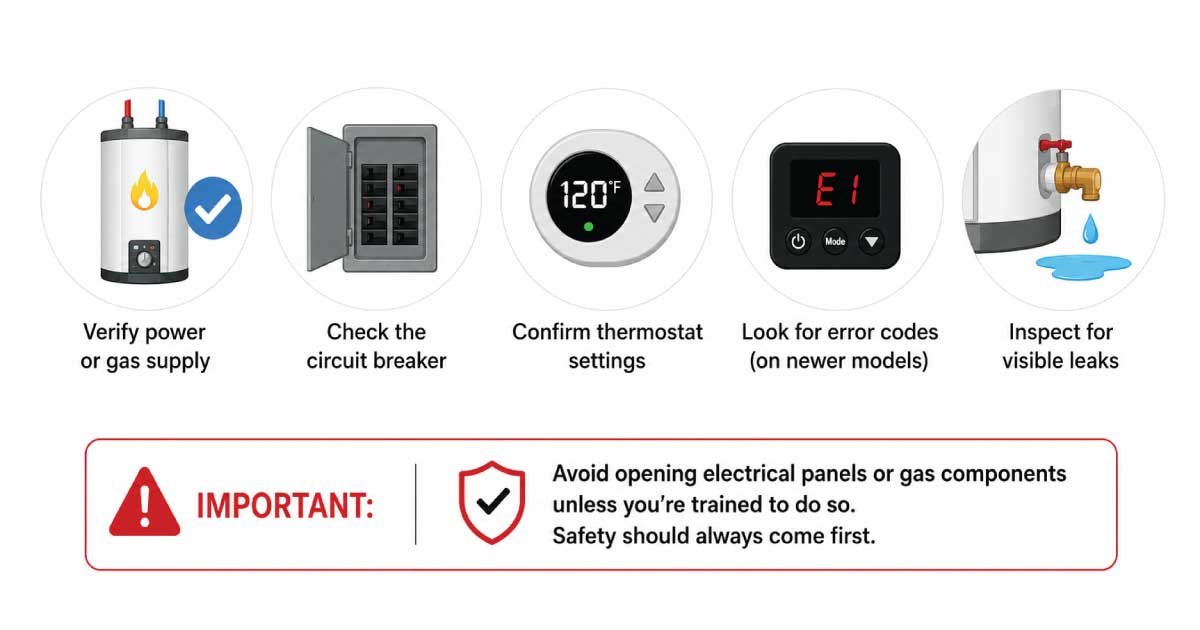
- Verify power or gas supply
- Check the circuit breaker
- Confirm thermostat settings
- Look for error codes (on newer models)
- Inspect for visible leaks
Important:
Avoid opening electrical panels or gas components unless you’re trained to do so. Safety should always come first.
When to Call a Professional
Some water heater problems go beyond basic troubleshooting and require professional expertise. Issues involving gas, electricity, or structural damage can pose serious safety risks if handled incorrectly. Knowing when to stop DIY efforts and call a licensed expert helps protect your home and prevents minor problems from becoming costly repairs.
You should contact a licensed plumber or HVAC technician if:
- You smell gas
- The pilot light won’t stay lit
- Electrical components are involved
- The tank is leaking
- The water heater is over 10–12 years old and failing frequently
Professional diagnosis can prevent further damage and ensure your system operates safely.
Repair vs. Replacement: Which Is Better?
Homeowners often struggle to decide whether fixing a water heater makes sense or if replacement is the smarter option. This decision depends on the unit’s age, condition, repair history, and efficiency. Evaluating these factors helps you avoid repeated repair costs while ensuring reliable hot water for your household.
A common question homeowners ask is whether to repair the water heater or replace it entirely.
Consider replacement if:
- The unit is more than 10 years old
- Repairs are frequent or expensive
- Energy efficiency is poor
- The tank is corroded or leaking
Repair may be sufficient if:
- The problem is isolated (thermostat, element, thermocouple)
- The unit is relatively new
- There’s no structural damage to the tank
Preventing Future Hot Water Problems
Preventive maintenance is one of the most effective ways to avoid unexpected hot water issues and costly repairs. By addressing minor concerns early and keeping key components in good condition, homeowners can extend the lifespan of their water heater, maintain consistent performance, and reduce the risk of sudden system failures. Regular maintenance can significantly extend the life of your water heater.
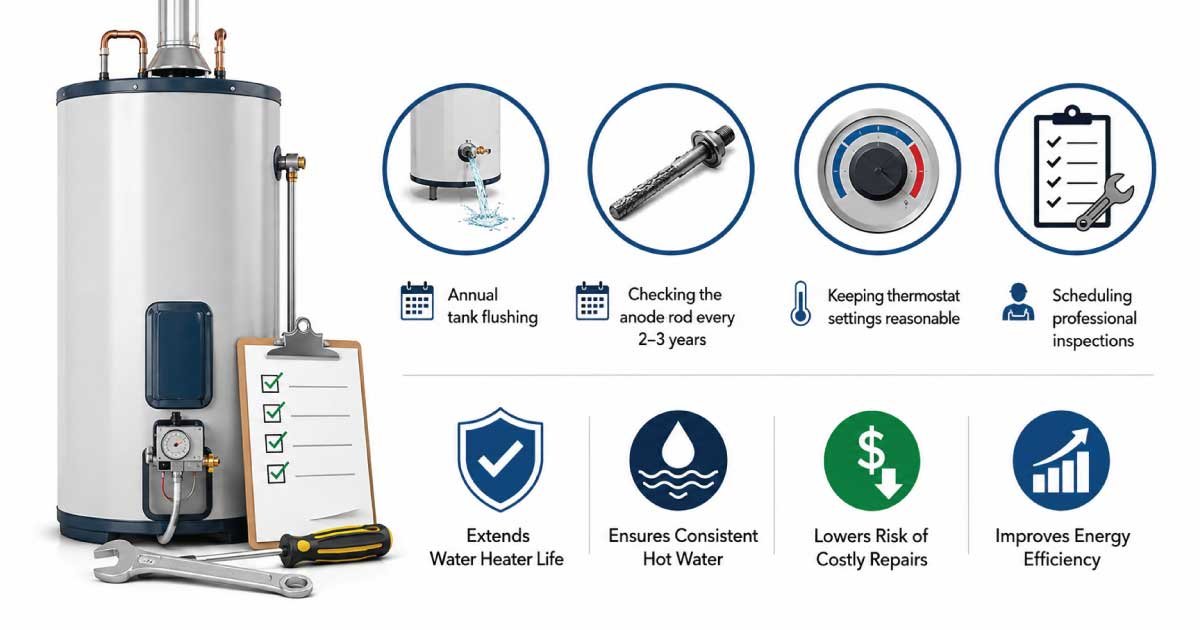
Best practices include:
- Annual tank flushing
- Checking the anode rod every 2–3 years
- Keeping thermostat settings reasonable
- Scheduling professional inspections
Preventive care not only avoids cold showers but also improves energy efficiency and lowers utility bills.
💡 Learn More: Discover helpful information. 👉
Final Thoughts
A water heater not producing hot water can stem from something as simple as a tripped breaker or as serious as a failing tank. By understanding how your system works and recognizing the warning signs early, you can take the right steps to restore your hot water quickly and safely.
If troubleshooting doesn’t resolve the issue, don’t hesitate to contact a professional. Addressing the problem early can save money, prevent damage, and ensure your home stays comfortable year-round.