Few household problems are as disruptive as a water heater not working. One moment you’re expecting a warm shower, and the next you’re hit with freezing cold water. Whether you rely on a traditional tank water heater or a modern tankless system, hot water is essential for comfort, hygiene, and daily routines.
The good news? Not all water heater problems require immediate replacement. Some issues are minor, easy to diagnose, and even simpler to fix. Others, however, can signal serious safety concerns or system failure. This guide will walk you through the most common reasons your water heater isn’t working, how to troubleshoot safely, and when it’s time to call a professional.
Understanding How a Water Heater Works
Before diving into troubleshooting, it’s important to understand how a water heater functions and what role it plays in your home. Knowing the basic operation helps you recognize what might be going wrong when hot water isn’t available and makes it easier to communicate issues clearly.
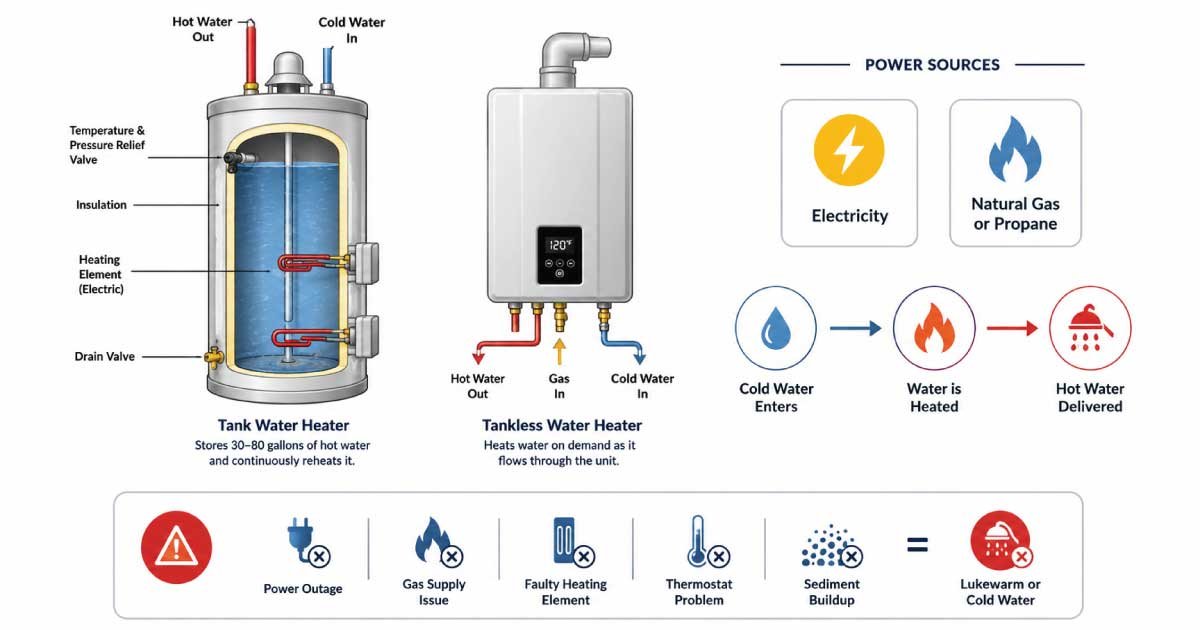
A water heater’s job is simple: heat water and store or deliver it when needed. The way it does this depends on the type of system you have:
- Tank water heaters store 30–80 gallons of hot water and continuously reheat it.
- Tankless water heaters heat water on demand as it flows through the unit.
Both types can be powered by:
- Electricity
- Natural gas or propane
When something interrupts the heating process, you’re left with lukewarm or cold water—or none at all.
Common Signs Your Water Heater Is Not Working
Water heater issues don’t always appear suddenly or completely shut down the system. In many cases, small changes in performance are early indicators of a developing problem. Paying attention to these warning signs can help you address issues before they turn into costly repairs or replacements.
Water heater problems don’t always show up as total failure. Watch for these warning signs:
- No hot water at all
- Hot water runs out too quickly
- Water is only lukewarm
- Rusty or discolored water
- Strange popping or rumbling noises
- Water leaking around the unit
- Unusually high energy bills
Catching these symptoms early can prevent more expensive damage later.
Most Common Reasons a Water Heater Stops Working
Several issues can cause a water heater to stop working properly, ranging from simple electrical interruptions to worn-out internal components. Understanding the most frequent causes helps narrow down the problem quickly and prevents unnecessary repairs, especially when the solution may be straightforward and inexpensive.
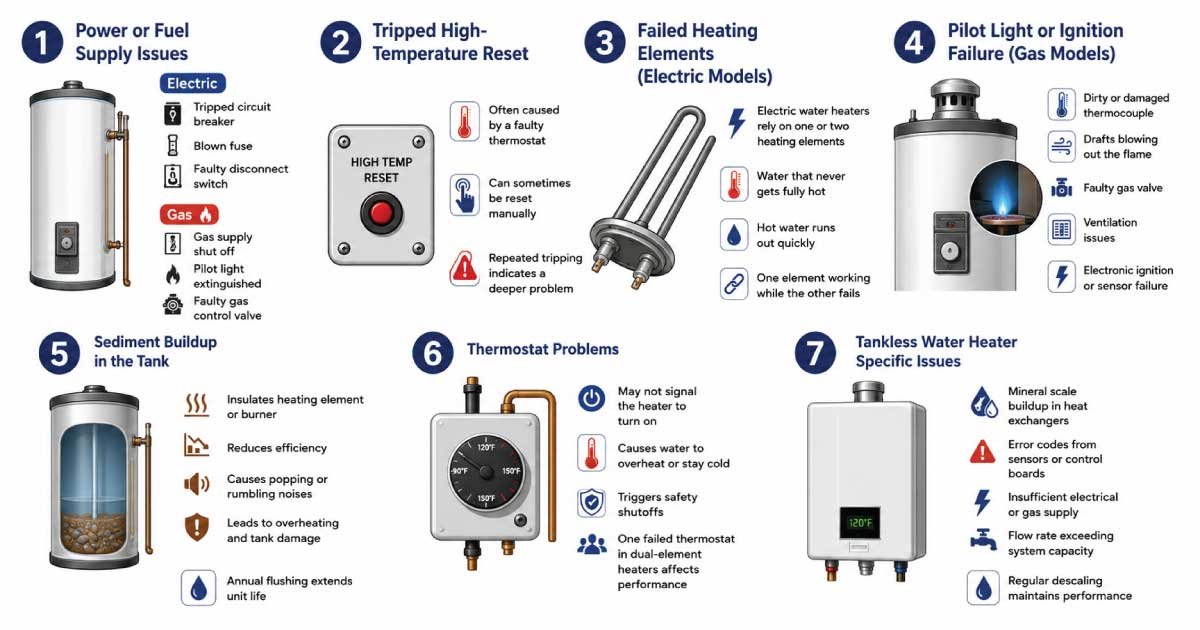
1. Power or Fuel Supply Issues
This is often the simplest and most overlooked reason a water heater stops working. When power or fuel is interrupted, the unit cannot heat water at all. Checking these basics first can save time and help rule out more serious mechanical or internal failures.
Electric water heaters
- Tripped circuit breaker
- Blown fuse
- Faulty disconnect switch
Gas water heaters
- Gas supply shut off
- Pilot light extinguished
- Faulty gas control valve
Before assuming the worst, always check power sources and fuel valves.
2. Tripped High-Temperature Reset Button
Electric water heaters include built-in safety features designed to prevent overheating and damage. One of the most important is the high-temperature reset button, which shuts the system down when unsafe temperatures are detected. While occasional tripping may happen, frequent resets usually indicate an underlying issue.
- Often caused by a faulty thermostat
- Can sometimes be reset manually
- Repeated tripping indicates a deeper problem
If the reset button trips frequently, stop using the heater and call a professional.
3. Failed Heating Elements (Electric Models)
Electric water heaters depend on heating elements to warm the water inside the tank. Over time, these elements can degrade or fail due to mineral buildup, age, or electrical issues. When one or both elements stop working, hot water performance drops noticeably.
Electric water heaters rely on one or two heating elements.
Signs of a bad heating element include:
- Water that never gets fully hot
- Hot water that runs out quickly
- One element working while the other fails
Heating elements wear out over time and are one of the most common repair needs.
4. Pilot Light or Ignition Failure (Gas Models)
Gas water heaters depend on a steady ignition source to heat water safely and consistently. When the pilot light fails or the ignition system malfunctions, the burner cannot stay lit, preventing the unit from producing hot water. These issues often stem from airflow, component wear, or control problems.
- A dirty or damaged thermocouple
- Drafts blowing out the flame
- Faulty gas valve
- Ventilation issues
Modern units may use electronic ignition systems, which can also fail due to sensors or control boards.
5. Sediment Buildup in the Tank
Sediment buildup is a gradual but serious issue, especially in areas with hard water. As minerals collect inside the tank, they interfere with heating efficiency and place extra stress on internal components. Left untreated, sediment can shorten the lifespan of the entire water heater.
This sediment can:
- Insulate the heating element or burner
- Reduce efficiency
- Cause popping or rumbling noises
- Lead to overheating and tank damage
Annual flushing can significantly extend the life of your unit.
6. Thermostat Problems
The thermostat plays a critical role in regulating water temperature and signaling the heater when to turn on or off. When it fails, the system may behave unpredictably, producing inconsistent temperatures or shutting down entirely. Thermostat issues are common in both electric and gas models.
A malfunctioning thermostat may:
- Not signal the heater to turn on
- Cause water to overheat or stay cold
- Trigger safety shutoffs
In dual-element electric heaters, one failed thermostat can affect overall performance.
7. Tankless Water Heater Specific Issues
Tankless water heaters operate differently from traditional storage tanks, so they can develop unique problems that directly affect performance and efficiency. Because they heat water instantly on demand, even small issues with flow, sensors, or scaling can interrupt operation and lead to inconsistent or no hot water.
Tankless systems have their own set of challenges:
- Mineral scale buildup in heat exchangers
- Error codes from sensors or control boards
- Insufficient electrical or gas supply
- Flow rate exceeding system capacity
Regular descaling is essential for tankless heater performance.
💡 Learn More: Discover helpful information. 👉
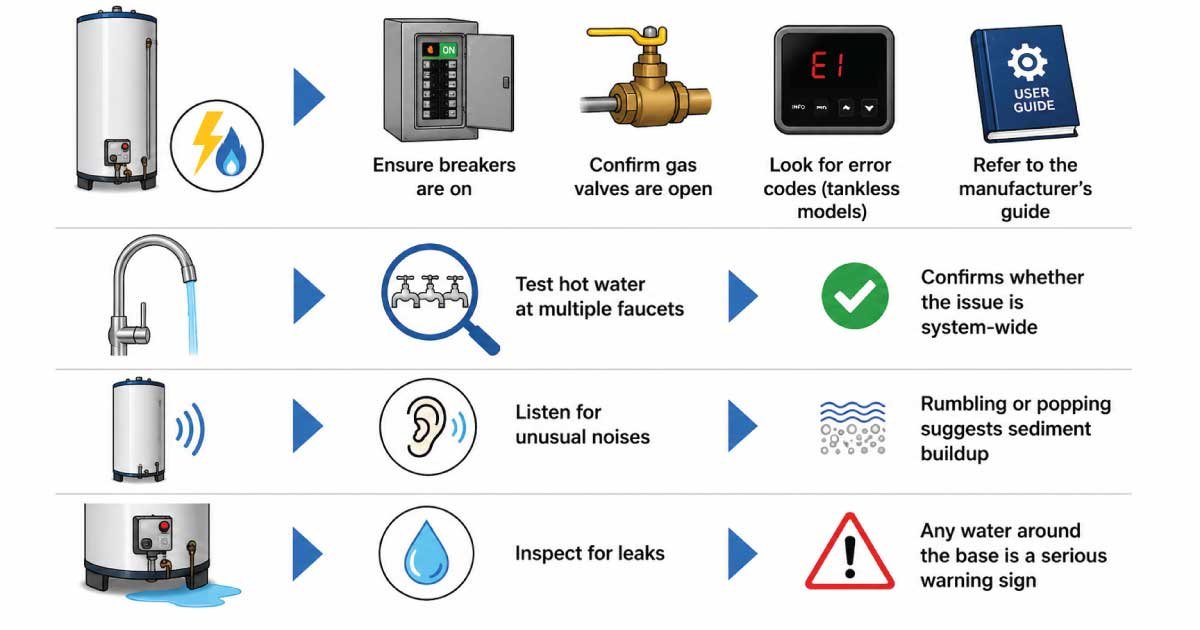
Step-by-Step Troubleshooting (Safe Checks Only)
Basic troubleshooting helps you quickly identify whether the issue is something simple or a deeper system fault. These steps are designed for homeowners to safely check common problem areas without opening the unit or handling internal components. Always proceed carefully and prioritize safety over quick fixes.
When to Call a Professional Plumber
Some water heater issues go beyond basic troubleshooting and require trained expertise to diagnose and repair safely. Attempting to fix complex problems involving gas, electricity, or internal tank damage can be risky, so knowing when to stop and call a professional helps prevent accidents and further damage.
- The unit leaks from the tank itself
- The pilot light won’t stay lit
- You smell gas
- Electrical components appear damaged
- Water temperature fluctuates unpredictably
- The system repeatedly shuts down
Water heaters involve electricity, gas, pressure, and heat—all of which can be dangerous without proper training.
💡 Learn More: Discover helpful information. 👉
Repair vs. Replacement: Which Makes Sense?
Deciding whether to repair or replace a water heater depends on its age, condition, and repair history. While minor issues can often be fixed affordably, older or frequently failing units may cost more to maintain over time, making replacement the more practical and energy-efficient choice in the long run.
A major question homeowners face is whether to repair or replace a failing water heater.
Repair May Be Best If:
- The unit is under 8 years old
- The issue is a thermostat or heating element
- There is no tank corrosion
Replacement Is Often Better If:
- The unit is over 10–12 years old
- The tank is leaking
- Repairs are frequent or costly
- Energy efficiency is poor
According to the U.S. Department of Energy, newer water heaters can be significantly more energy-efficient, reducing long-term utility costs.
How to Prevent Water Heater Problems
Regular preventive maintenance is one of the most effective ways to keep your water heater running reliably and to avoid unexpected breakdowns. By performing a few simple checks and cleaning tasks throughout the year, you can reduce wear and tear, improve efficiency, and extend the overall lifespan of the system.
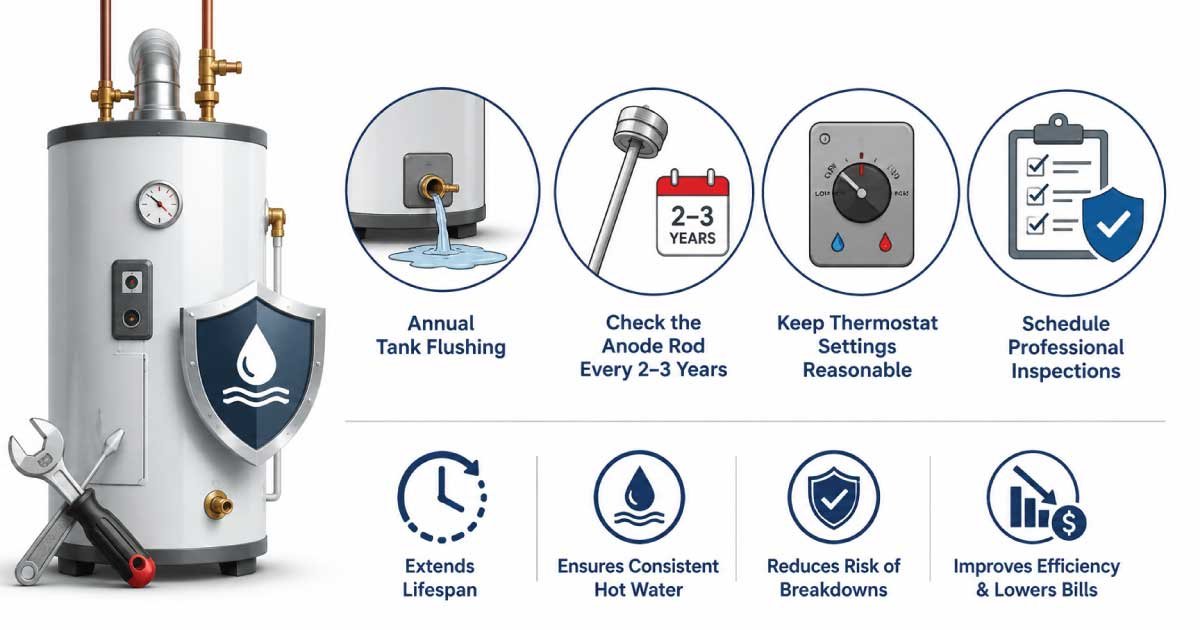
Recommended maintenance tips:
- Flush tank water heaters once per year
- Descale tankless units annually (or more with hard water)
- Test the temperature-pressure (T&P) relief valve
- Inspect the anode rod every 2–3 years
- Keep the area around the heater clear
Simple maintenance can add years to your system’s lifespan.
Energy Efficiency and Water Heater Performance
If your water heater “works” but performs poorly, efficiency may be the problem.
Signs of inefficiency:
- Rising energy bills
- Long wait times for hot water
- Heat loss from older tanks
Upgrading to:
- High-efficiency tank models
- Tankless systems
- Heat pump water heaters
can significantly reduce operating costs while improving reliability.
Final Thoughts: Don’t Ignore the Warning Signs
A water heater not working is more than an inconvenience—it can signal safety risks, wasted energy, or impending system failure. While some issues are simple fixes, others require immediate professional attention.
If your water heater is showing signs of trouble:
- Act early
- Avoid risky DIY repairs
- Invest in proper maintenance
Hot water is something we often take for granted—until it’s gone. With the right knowledge and timely action, you can restore comfort, protect your home, and extend the life of your water heating system.
💡 Learn More: Discover helpful information. 👉