A gas water heater that suddenly stops producing hot water can disrupt your entire household routine. From cold showers to ineffective dishwashing, the inconvenience is immediate—and often frustrating. Fortunately, a gas water heater not heating is a common problem, and in many cases, the cause is straightforward to diagnose.
In this detailed guide, we’ll walk through why a gas water heater may stop heating, how to troubleshoot the problem safely, and when it’s time to call a professional. Whether your water is lukewarm, completely cold, or runs out too quickly, this post will help you understand what’s going on inside your heater.
How a Gas Water Heater Works (Quick Overview)
A traditional gas water heater heats water using a gas burner located at the bottom of the tank. When hot water is used, cold water enters the tank. A thermostat senses the temperature drop and signals the gas control valve to ignite the burner.
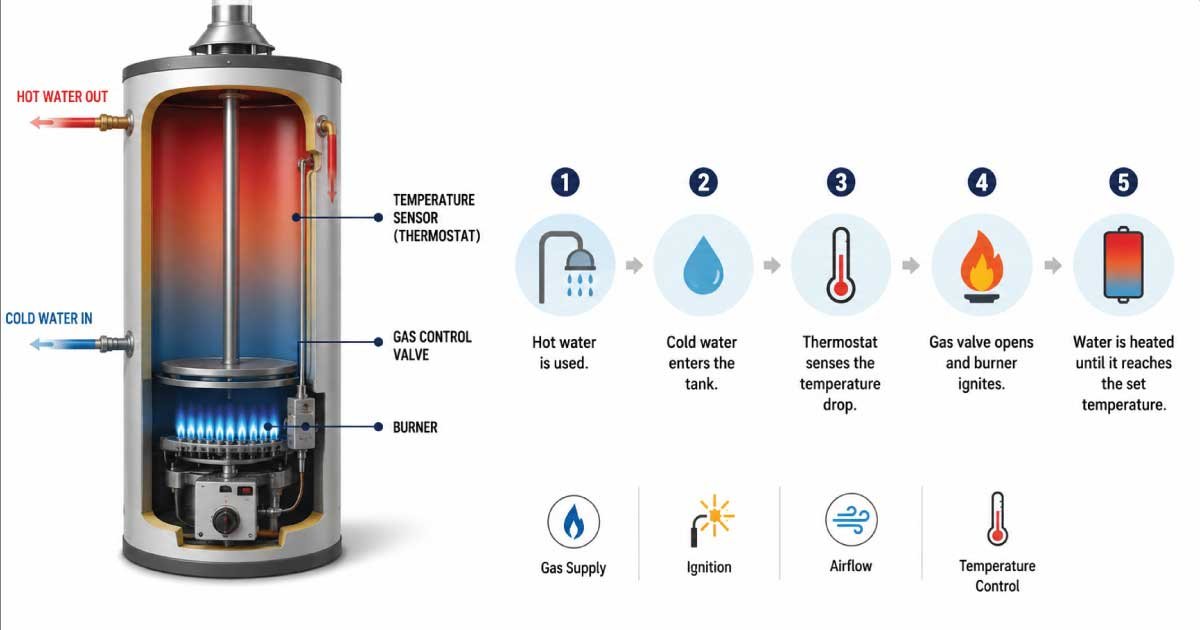
Heat rises through the tank, warming the stored water until it reaches the set temperature.If any part of this process fails gas supply, ignition, airflow, or temperature control the heater may stop producing hot water.
Common Signs Your Gas Water Heater Isn’t Heating Properly
If your gas water heater isn’t performing as expected, it often gives clear warning signs before completely failing. Paying attention to these early symptoms can help you identify problems sooner, avoid unexpected cold showers, and prevent more serious or costly damage to the unit over time.
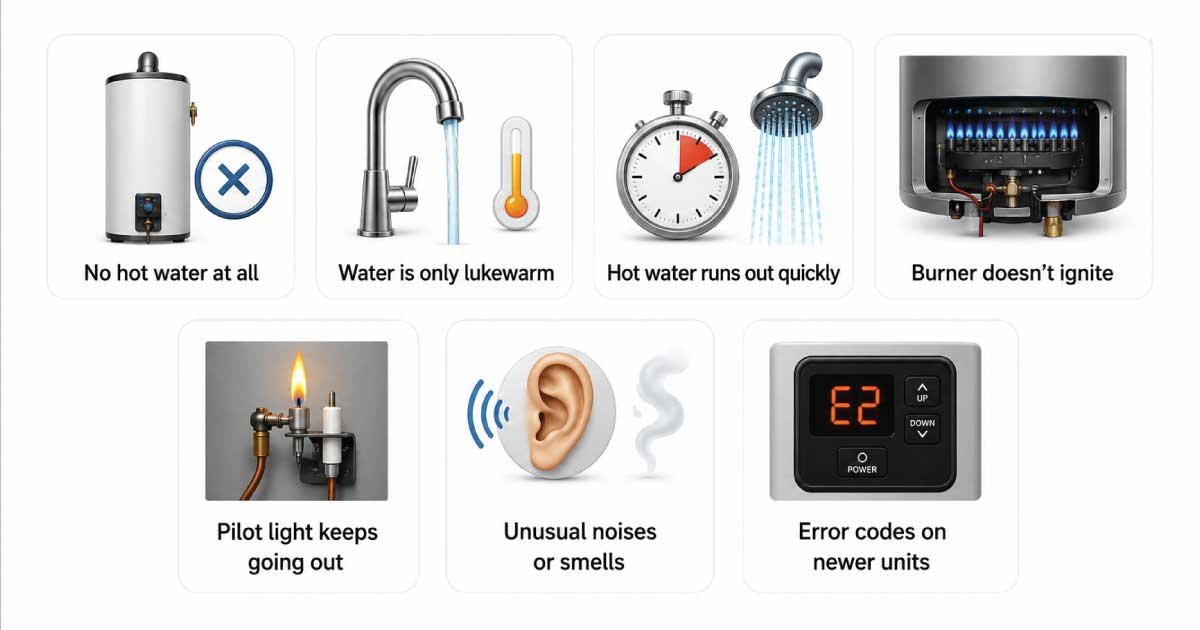
You may be dealing with a heating issue if you notice any of the following:
- No hot water at all
- Water is only lukewarm
- Hot water runs out quickly
- Burner doesn’t ignite
- Pilot light keeps going out
- Unusual noises or smells
- Error codes on newer units
Each symptom points to a different potential cause, which we’ll explore below.
Top Reasons a Gas Water Heater Is Not Heating
Below are the most common causes behind a gas water heater that isn’t producing hot water. Each issue affects a different component of the system, from ignition to gas flow control. Understanding these causes can help you diagnose problems early and decide whether a simple fix or professional service is needed.
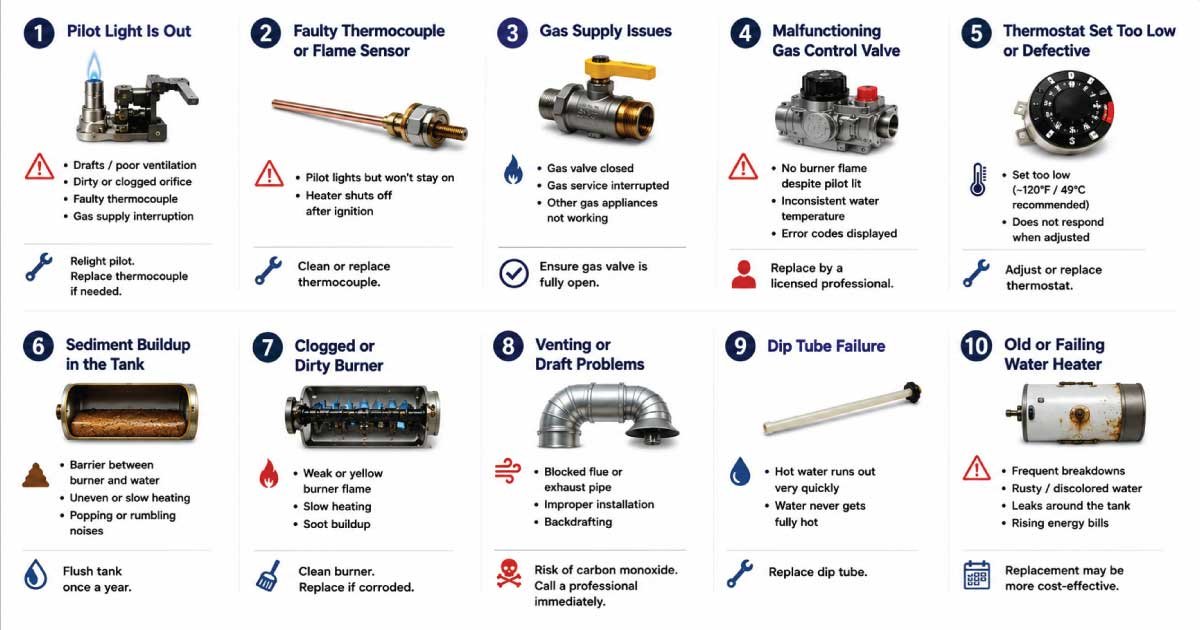
1. Pilot Light Is Out
The pilot light is a small but essential flame that ignites the main burner responsible for heating water. When it goes out, the burner cannot operate, leaving you without hot water. This issue is common and often related to airflow, dirt buildup, or safety components.
Common reasons the pilot light goes out:
- Drafts or poor ventilation
- Dirty or clogged pilot orifice
- Faulty thermocouple
- Gas supply interruption
What to do:
Check your heater’s instructions and attempt to relight the pilot. If it won’t stay lit, the thermocouple may need replacement.
2. Faulty Thermocouple or Flame Sensor
The thermocouple or flame sensor is a safety device that confirms the pilot light is burning. If it fails to detect heat, it shuts off the gas supply to prevent leaks. Over time, these components can wear out or become dirty, causing heating interruptions.
Symptoms include:
- Pilot light lights but won’t stay on
- Heater shuts off shortly after ignition
Solution:
A dirty thermocouple can sometimes be cleaned, but a failing one usually needs replacement—a relatively inexpensive repair.
3. Gas Supply Issues
A gas water heater depends on a steady gas supply to heat water efficiently. If gas flow is restricted or interrupted, the burner won’t ignite at all. Supply issues can stem from closed valves, utility disruptions, or broader problems affecting other gas-powered appliances.
Check for:
- Gas shutoff valve partially or fully closed
- Recently interrupted gas service
- Issues with other gas appliances in the home
What to do:
Ensure the gas valve near the heater is fully open. If other appliances also aren’t working, contact your gas utility provider.
4. Malfunctioning Gas Control Valve
The gas control valve manages both the flow of gas and the water temperature inside the tank. When it malfunctions, the burner may fail to ignite or shut off unexpectedly. Because this component is tied directly to safety, failures should never be ignored.
Signs of a bad gas valve:
- No burner flame despite pilot being lit
- Inconsistent water temperature
- Error codes on digital displays
Important:
Gas control valves are safety-critical components. Replacement should be handled by a licensed professional.
5. Thermostat Set Too Low or Defective
In some cases, a gas water heater isn’t heating properly simply because the thermostat is set incorrectly or has failed altogether. The thermostat controls when the burner turns on and off, so incorrect settings or internal faults can prevent the water from reaching the desired temperature.
Check:
- Thermostat temperature (recommended: ~120°F / 49°C)
- Whether the thermostat responds when adjusted
If the thermostat is defective, it may fail to signal the burner to heat the water.
6. Sediment Buildup in the Tank
Sediment buildup is a common issue, especially in areas with hard water. Minerals settle at the bottom of the tank over time, reducing heating efficiency and forcing the burner to work harder. This not only affects water temperature but can also shorten the heater’s lifespan.
How sediment affects heating:
- Creates a barrier between burner and water
- Causes uneven or slow heating
- Leads to popping or rumbling noises
Solution:
Flushing the tank once a year can remove sediment and restore efficiency. Severe buildup may require professional cleaning.
7. Clogged or Dirty Burner
The burner is responsible for producing the flame that heats the water, and it must remain clean to function properly. Dust, rust, or debris can restrict gas flow and weaken the flame, resulting in slow or inconsistent heating performance.
Symptoms:
- Weak or yellow burner flame
- Slow heating
- Soot buildup
Fix:
Turn off gas and power, then carefully clean the burner. If corrosion is severe, replacement may be necessary.
8. Venting or Draft Problems
Proper venting allows exhaust gases to exit safely and ensures the burner receives enough oxygen. When venting is blocked or airflow is poor, the heater may shut down as a safety measure, preventing it from heating water effectively.
Common venting issues:
- Blocked flue or exhaust pipe
- Improper installation
- Backdrafting
Warning:
Venting problems can lead to carbon monoxide buildup. If you suspect this issue, stop using the heater and call a professional immediately.
9. Dip Tube Failure
The dip tube plays a critical role by directing cold incoming water to the bottom of the tank for heating. When it breaks or deteriorates, cold water mixes with hot water near the top, drastically reducing usable hot water.
Result:
- Hot water runs out very quickly
- Water never gets fully hot
Good news:
Dip tube replacement is usually inexpensive and restores normal performance.
10. Old or Failing Water Heater
Gas water heaters are not designed to last forever, and age alone can be a major factor in heating problems. As internal components wear down, efficiency decreases and repairs become more frequent. At a certain point, continuing to fix an aging unit costs more than replacing it.
Signs replacement may be better than repair:
- Frequent breakdowns
- Rusty or discolored water
- Leaks around the tank
- Rising energy bills
If your heater is near the end of its lifespan, investing in a new unit may be more cost-effective.
💡 Learn More: Discover helpful information. 👉
Step-by-Step Troubleshooting Checklist
Before calling a technician, there are several basic checks you can perform safely to narrow down the cause of a gas water heater that isn’t heating. These steps help identify simple issues, potentially saving time and service costs while ensuring the system is operating under safe conditions.
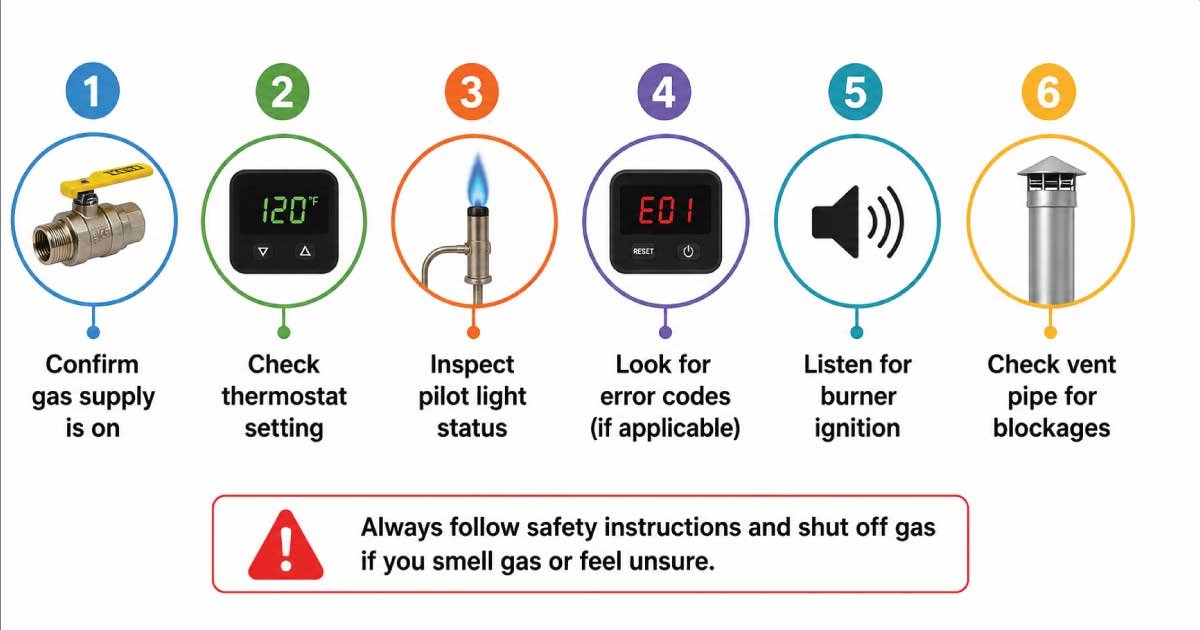
Before calling a technician, you can safely check the following:
- Confirm gas supply is on
- Check thermostat setting
- Inspect pilot light status
- Look for error codes (if applicable)
- Listen for burner ignition
- Check vent pipe for blockages
Always follow safety instructions and shut off gas if you smell gas or feel unsure.
When to Call a Professional
While some minor gas water heater issues can be handled with basic troubleshooting, certain problems require professional expertise. Gas systems involve safety risks, and improper repairs can lead to serious hazards. Knowing when to stop DIY efforts helps protect your home, your family, and the appliance itself.
- The gas control valve is faulty
- Pilot light won’t stay lit after multiple attempts
- You suspect venting or carbon monoxide issues
- The tank is leaking
- Repairs involve gas lines or major components
DIY fixes are fine for basic maintenance, but gas appliances require caution.
Preventing Future Heating Problems
Many gas water heater heating issues can be avoided with consistent maintenance and early attention to small warning signs. Preventive care keeps components working efficiently, reduces unexpected breakdowns, and helps maintain steady hot water while lowering long-term repair and energy costs.
Best practices include:
- Annual tank flushing
- Checking and cleaning the burner
- Inspecting the anode rod every 2–3 years
- Keeping the area around the heater clean
- Scheduling professional inspections
Preventive care not only improves performance but also extends the lifespan of your unit.
Final Thoughts
A gas water heater not heating doesn’t always mean a major failure. In many cases, the issue is related to the pilot light, thermostat, sediment buildup, or gas supply—all problems that can be identified quickly with the right knowledge.
By understanding how your system works and recognizing early warning signs, you can avoid cold showers, reduce repair costs, and keep your home running smoothly. And when in doubt, don’t hesitate to call a professional—especially when gas and safety are involved.
If you’re experiencing ongoing issues or your water heater is approaching the end of its life, upgrading to a newer, energy-efficient model may be the smartest long-term solution.
💡 Learn More: Discover helpful information. 👉