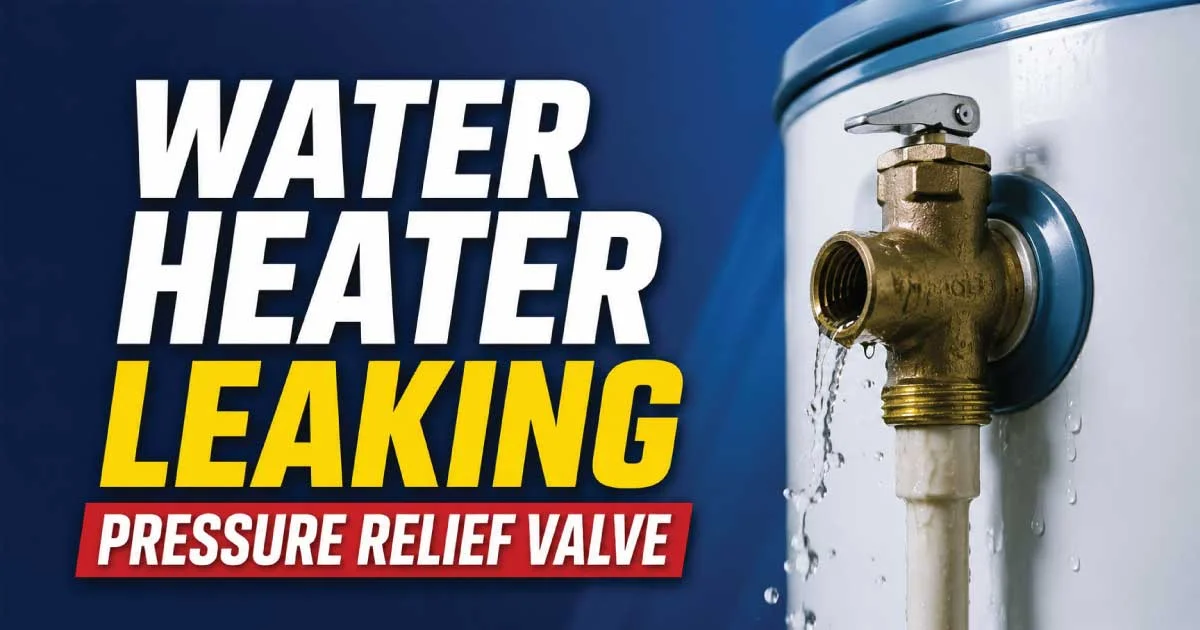
A leaking pressure relief valve on a water heater is a problem that should never be ignored. While a few drops of water may seem harmless at first, this issue can indicate excessive pressure, overheating, or a failing component that could lead to serious damage—or even a dangerous situation. Understanding why your water heater’s pressure relief valve is leaking, how to diagnose the problem, and what steps to take next can save you from costly repairs and safety risks.
This in-depth guide explains everything you need to know about a water heater leaking from the pressure relief valve, including common causes, troubleshooting steps, repair options, and long-term prevention strategies.
What Is a Pressure Relief Valve and Why Is It Important?
The pressure relief valve (also called the temperature and pressure relief valve or T&P valve) is a critical safety device installed on every standard tank-type water heater. Its main purpose is to protect the water heater from excessive pressure or dangerously high temperatures.
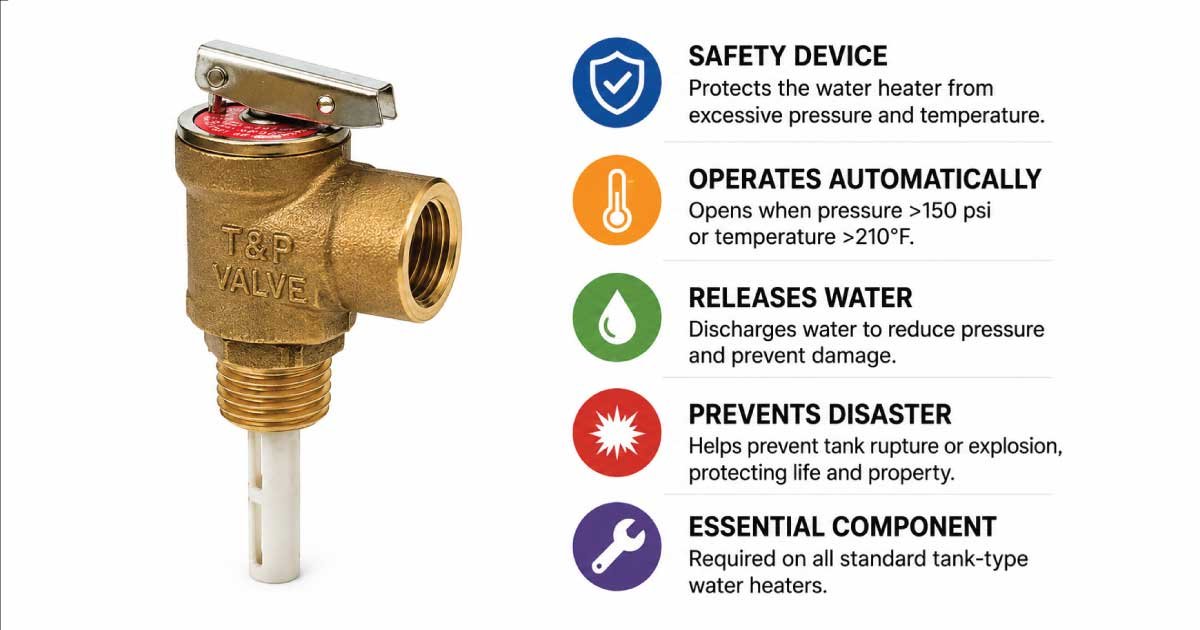
When water inside the tank heats up, it expands. If pressure builds beyond safe levels typically above 150 psi or temperatures over 210°F—the valve opens automatically to release water and reduce pressure. This prevents the tank from rupturing or exploding, which could cause severe injury or property damage.
In short, if the pressure relief valve is leaking, it’s doing its job—or warning you that something else is wrong.
Is It Normal for a Pressure Relief Valve to Leak?
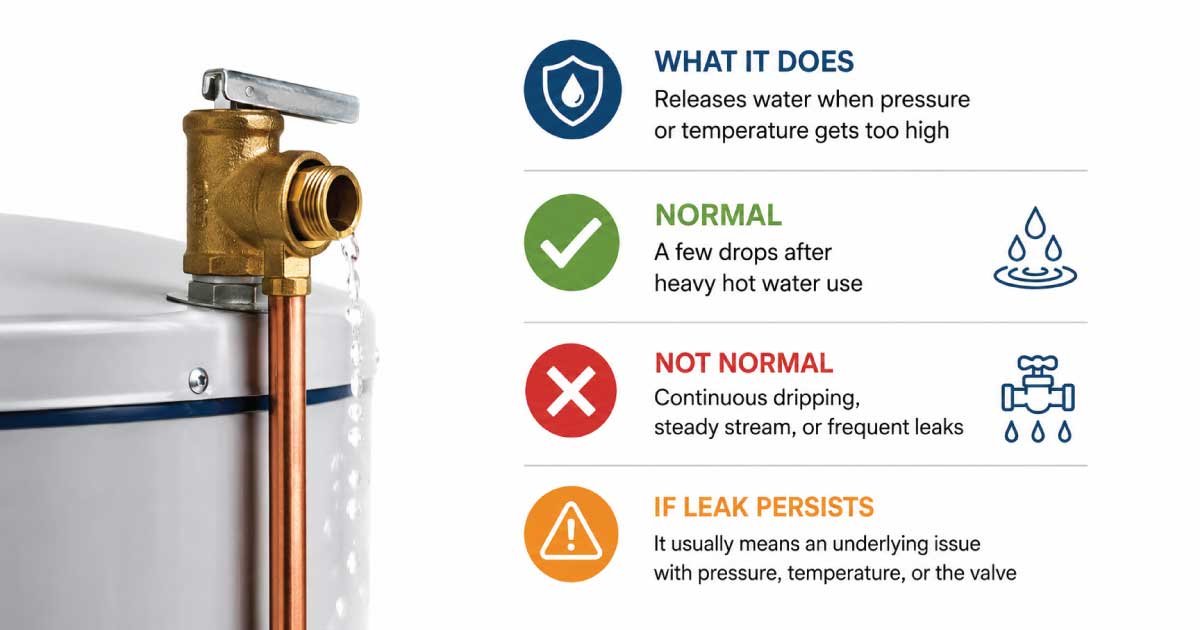
A pressure relief valve is designed to release small amounts of water when pressure or temperature inside the tank rises temporarily. Brief dripping during heating cycles can be normal, but ongoing leakage indicates a problem that requires prompt attention to avoid damage or unsafe operating conditions.
Here’s how to tell the difference:
- Normal: A few drops after heavy hot water use
- Not normal: Continuous dripping, steady stream, or frequent leaks
If the leak persists, it usually means there’s an underlying issue with pressure, temperature, or the valve itself.
Common Causes of a Water Heater Leaking Pressure Relief Valve
A leaking pressure relief valve usually indicates that your water heater is responding to excess pressure, heat, or component failure. Understanding the most common causes helps you determine whether the issue is a system imbalance or a failing safety device that needs immediate attention.
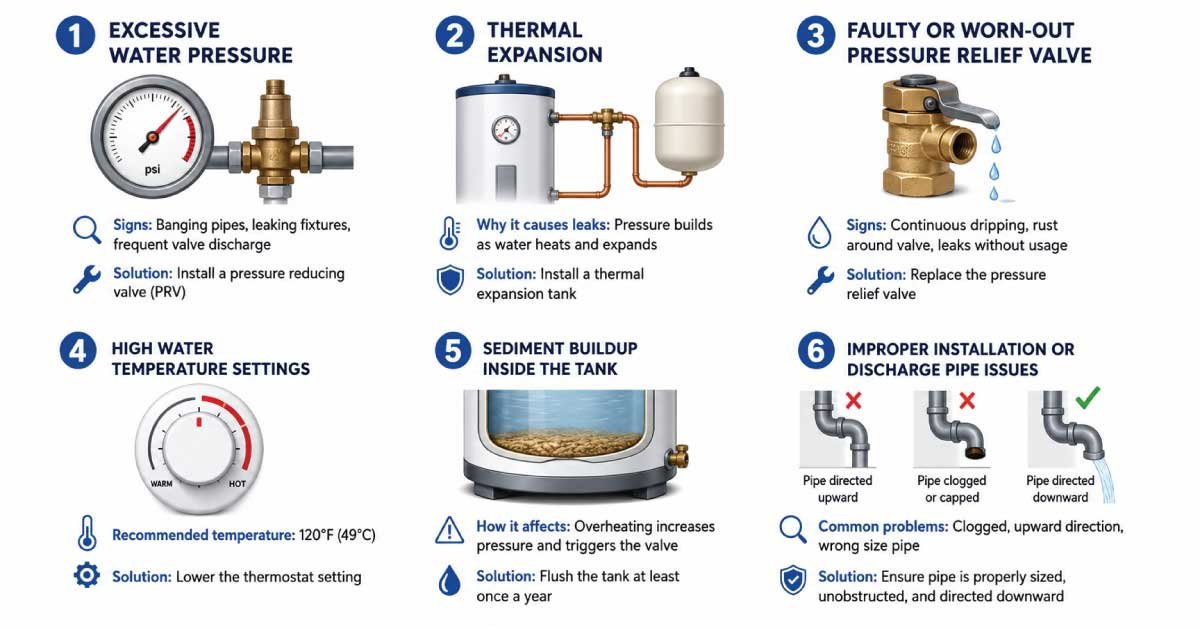
1. Excessive Water Pressure
Excessive household water pressure puts constant stress on your water heater and plumbing system. When pressure rises beyond safe operating limits, the pressure relief valve opens to protect the tank from damage, releasing water in the process and signaling a pressure-related issue.
Signs of high water pressure:
- Banging or knocking pipes (water hammer)
- Leaking faucets or fixtures
- Frequent valve discharge
Solution:
Install a pressure reducing valve (PRV) if household pressure is above 80 psi. A plumber can measure pressure accurately and recommend the right fix.
2. Thermal Expansion
Thermal expansion happens when water heats up and expands inside a closed plumbing system. Without a place for this extra volume to go, pressure builds rapidly inside the water heater, forcing the pressure relief valve to open and discharge water repeatedly.
Why this causes leaks:
As pressure increases, the relief valve opens to release water.
Solution:
Install a thermal expansion tank. This small tank absorbs excess pressure and protects your water heater and plumbing system.
3. Faulty or Worn-Out Pressure Relief Valve
Over time, pressure relief valves can degrade due to mineral deposits, corrosion, or repeated use. When the valve no longer seals properly, it may leak even under normal operating conditions, creating persistent dripping without an actual pressure problem.
Signs of a failing valve:
- Continuous dripping
- Rust or corrosion around the valve
- Water leaking without hot water usage
Solution:
Replace the pressure relief valve. This is a relatively inexpensive repair but should be done carefully to ensure proper installation.
4. High Water Temperature Settings
Water heaters set above recommended temperature levels can overheat water, increasing internal pressure and triggering the pressure relief valve. This safety response prevents dangerous conditions but indicates that temperature settings are too high for safe operation.
Recommended temperature:
120°F (49°C)
Solution:
Lower the thermostat setting on your water heater. This not only prevents valve leaks but also reduces scalding risk and energy costs.
5. Sediment Buildup Inside the Tank
Minerals naturally present in hard water gradually settle at the bottom of the water heater tank. As this sediment layer thickens, it interferes with heat transfer, causes overheating, and increases internal pressure, all of which place added stress on the pressure relief valve.
How it affects the valve:
Overheating caused by sediment may activate the relief valve more frequently.
Solution:
Flush the water heater tank at least once a year to remove sediment and improve performance.
6. Improper Installation or Discharge Pipe Issues
In some situations, the pressure relief valve may appear to be leaking when it is actually functioning correctly. Installation errors or problems with the discharge pipe can cause water to back up or drip, creating the impression of valve failure.
Common installation problems:
- Discharge pipe clogged or capped
- Pipe directed upward instead of downward
- Pipe too small in diameter
Solution:
Ensure the discharge pipe is properly sized, unobstructed, and directed downward to a safe drain location.
How to Diagnose a Leaking Pressure Relief Valve
Diagnosing a leaking pressure relief valve helps determine whether the issue is related to pressure, temperature, or a failing component. Performing a few simple checks can clarify the cause, prevent unnecessary repairs, and help you decide whether professional service or valve replacement is required.
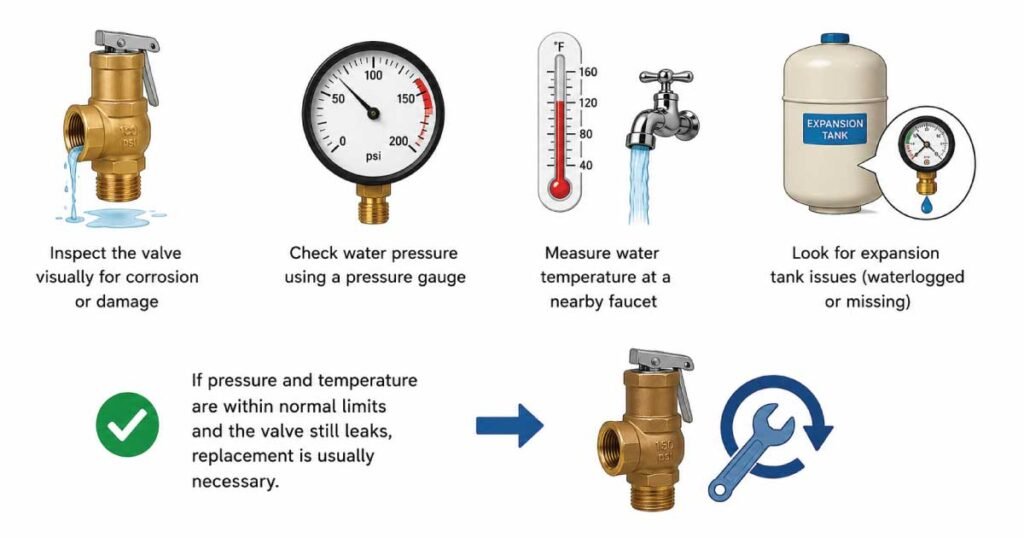
Before calling a professional, you can perform a few basic checks:
- Inspect the valve visually for corrosion or damage
- Check water pressure using a pressure gauge
- Measure water temperature at a nearby faucet
- Look for expansion tank issues (waterlogged or missing)
If pressure and temperature are within normal limits and the valve still leaks, replacement is usually necessary.
🚀 Complete Guide: Everything you need to know. 👉
Can You Fix a Leaking Pressure Relief Valve Yourself?
Some homeowners with plumbing experience can address minor pressure relief valve issues safely. However, because this component is a critical safety device, improper repairs can create serious hazards. Always proceed cautiously and stop if you’re unsure at any point.
DIY Fixes (If You’re Experienced):
- Lower thermostat temperature
- Flush sediment from the tank
- Replace a faulty pressure relief valve
When to Call a Professional:
- Continuous leaking with unknown cause
- High pressure problems
- No expansion tank in a closed system
- Gas water heater issues
A licensed plumber ensures repairs meet safety codes and prevents further damage.
Why You Should Never Plug or Cap a Leaking Relief Valve
Blocking a leaking pressure relief valve is extremely dangerous. This valve is designed to release excess pressure, and disabling it can allow pressure to build uncontrollably, potentially causing the tank to rupture or explode.
Never:
- Plug the valve outlet
- Cap the discharge pipe
- Tie the valve shut
If the valve leaks, fix the cause don’t disable the safety feature.
🚀 Complete Guide: Everything you need to know. 👉
Cost to Repair a Leaking Pressure Relief Valve
The cost to fix a leaking pressure relief valve depends on what’s causing the issue. Simple component replacements are relatively affordable, while pressure-related system upgrades can be more expensive if left unaddressed.
Repair costs vary depending on the underlying issue:
- Pressure relief valve replacement: $50–$150
- Expansion tank installation: $150–$400
- Pressure reducing valve: $250–$600
- Full water heater replacement: $800–$2,500+
Addressing the problem early can prevent expensive replacements later.
Preventing Future Pressure Relief Valve Leaks
Routine maintenance plays a key role in preventing pressure relief valve problems. Consistent care helps regulate pressure, reduce sediment buildup, and ensure all safety components function as designed.
Maintenance Tips:
- Test the pressure relief valve annually
- Flush the tank once per year
- Keep thermostat set to 120°F
- Monitor household water pressure
- Install an expansion tank if required
Regular inspections help identify problems before they become serious.
When a Leaking Valve Means It’s Time for a New Water Heater
Persistent pressure relief valve leaks in older water heaters often signal deeper issues within the tank. When repairs become frequent or ineffective, replacement may be the safest and most cost-effective solution.
Signs replacement is needed:
- Frequent repairs
- Rusty water
- Visible tank corrosion
- Reduced hot water supply
Newer models are more energy-efficient and come with improved safety features.
Final Thoughts
A water heater leaking from the pressure relief valve is not something to ignore. While it may be a simple fix like adjusting the temperature or replacing a worn valve, it can also signal serious pressure or overheating problems. The pressure relief valve is your water heater’s last line of defense against catastrophic failure, and any leak deserves immediate attention.
By understanding the causes, performing regular maintenance, and addressing issues early, you can protect your home, reduce repair costs, and ensure your water heater operates safely for years to come. If in doubt, always consult a qualified professional your safety is worth it.
🚀 Complete Guide: Everything you need to know. 👉