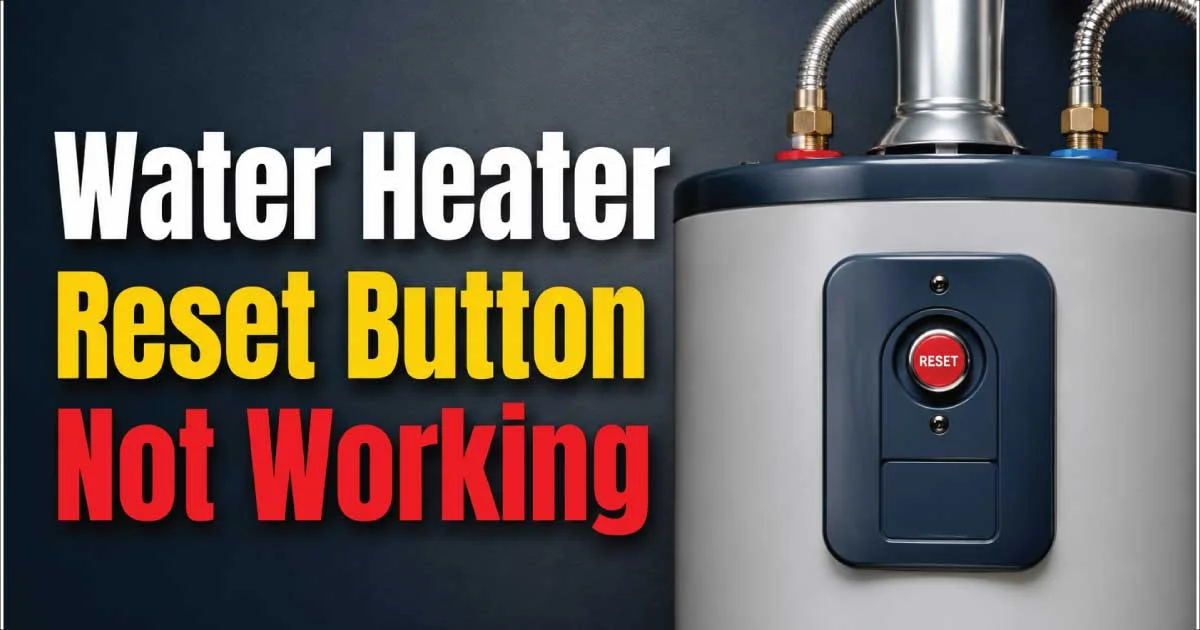
A water heater that suddenly stops delivering hot water can throw your entire routine off balance. One of the most common culprits is a reset button that won’t work—or keeps tripping. Whether you’re dealing with an electric water heater that refuses to reset or a button that pops again minutes after you press it, understanding what’s going on is the first step toward a safe, lasting fix.
This in-depth guide explains what the reset button does, why it stops working, how to troubleshoot step by step, and when to call a professional. By the end, you’ll know how to diagnose the problem confidently and avoid repeat failures.
What Is the Water Heater Reset Button?
The reset button—often called the high-limit switch—is a safety device found primarily on electric water heaters. Its job is simple but critical: shut off power if the water temperature exceeds a safe limit (typically around 170–180°F / 77–82°C).
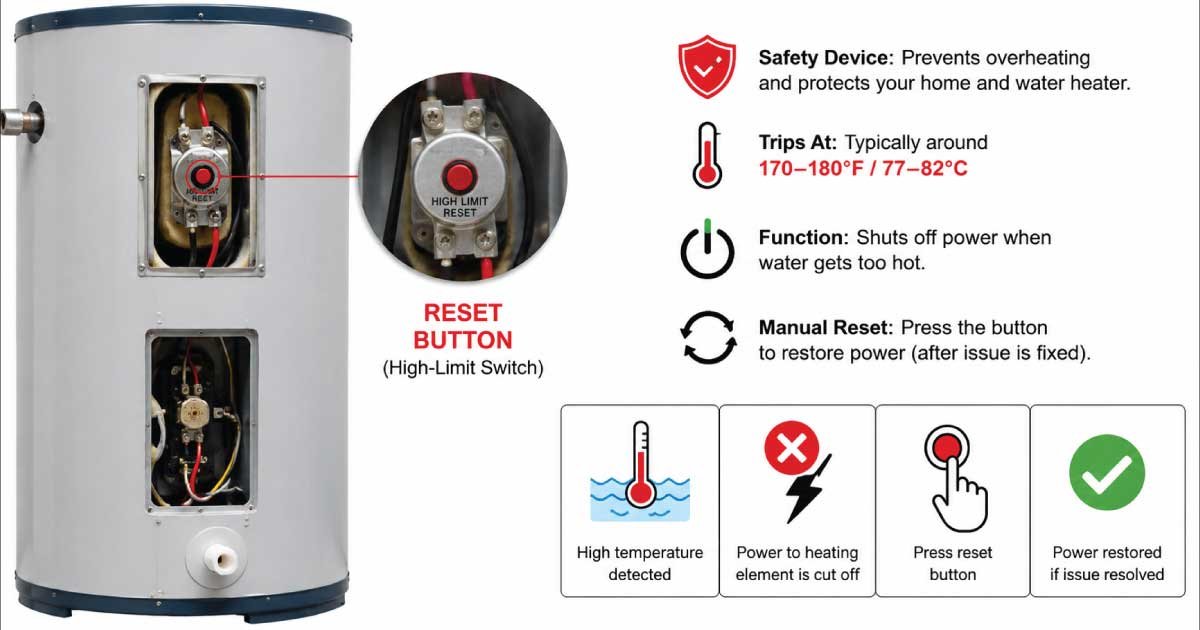
When the button trips, it prevents overheating that could damage the tank, wiring, or surrounding property. Pressing the button restores power—but only if the underlying issue has been resolved. If it won’t reset or trips repeatedly, that’s a warning sign, not an inconvenience.
Signs the Reset Button Isn’t Working
When the reset system is malfunctioning or repeatedly tripping, the water heater usually shows clear performance and safety warning signs. These symptoms often indicate deeper electrical, thermostat, or heating element problems that should not be ignored.
- No hot water at all
- Hot water that runs out very quickly
- The reset button won’t click or stay in
- The button trips again shortly after resetting
- A burning smell or visible heat damage near the access panel
- Breaker tripping along with the reset button
Any combination of these symptoms suggests a deeper electrical or temperature-control problem.
Common Reasons the Reset Button Won’t Work
The reset button on an electric water heater is designed as a safety cutoff, so when it keeps failing or refusing to stay engaged, it usually indicates an underlying electrical or thermal issue. Understanding the most common causes helps narrow down whether the problem is a simple repair or a sign of a larger system failure.
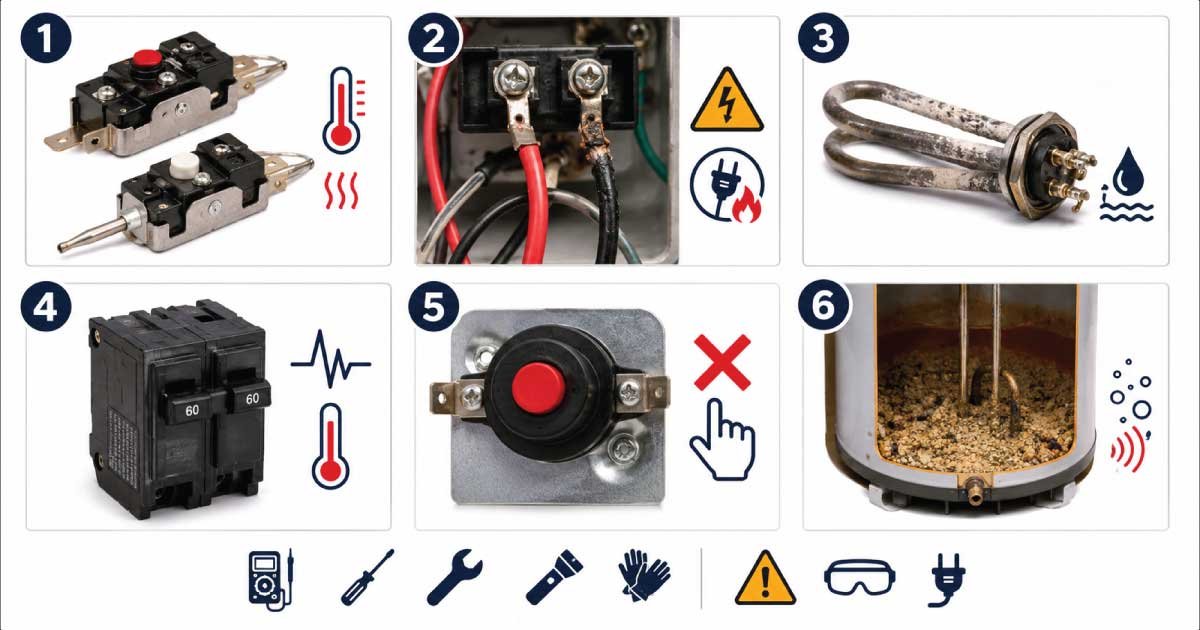
1. Faulty Thermostat
Electric water heaters rely on upper and lower thermostats to maintain safe and consistent water temperatures. If a thermostat malfunctions and sticks in the “on” position, it can cause continuous heating that overheats the tank and repeatedly trips the reset mechanism as a protective response.
Clue: Water is excessively hot right before the system shuts down.
2. Loose or Burned Wiring
Electrical connections inside the heater can degrade over time due to heat cycles, vibration, or aging components. Loose terminals increase resistance and heat buildup, while burned insulation indicates serious electrical stress that can directly trigger safety shutdowns.
Clue: Reset button won’t stay in, and you may smell burnt plastic.
3. Failed Heating Element
Heating elements can fail internally by shorting out or grounding against the tank, creating abnormal current flow and overheating conditions. This not only affects water temperature but can also repeatedly activate the reset switch or trip the breaker.
Clue: Lukewarm water or breaker trips along with the reset.
4. Power Supply Issues
Inconsistent voltage or a weakening circuit breaker can disrupt proper heater operation, sometimes mimicking internal faults. Even if internal components are fine, unstable electrical supply can prevent the reset system from functioning correctly or staying engaged.
Clue: Breaker won’t stay on or feels hot to the touch.
5. Defective Reset Button (High-Limit Switch)
The reset button itself, also known as the high-limit switch, can wear out over time. If it becomes mechanically weak, unresponsive, or fails to click into place, it may need direct replacement even when all other components are functioning normally.
Clue: Everything else checks out, but the button physically won’t reset.
6. Sediment Buildup Causing Overheating
Mineral sediment accumulating at the bottom of the tank can insulate heating elements, forcing them to overwork and generate excess heat. This trapped heat often leads to repeated overheating cycles that trigger the reset safety cutoff.
Clue: Popping or rumbling noises from the tank.
Safety First: Before You Troubleshoot
Working on an electric water heater requires strict attention to safety because these systems operate on high-voltage electricity and can cause serious injury if handled improperly. Before attempting any inspection or repair, it is essential to shut down power completely and ensure the unit is in a safe, stable condition.
- Turn off power at the circuit breaker.
- Use a non-contact voltage tester to confirm power is off.
- Allow the heater to cool down if it was recently operating.
- Wear insulated gloves and use proper tools.
If you’re uncomfortable with electrical work, stop here and call a licensed technician.
Step-by-Step Troubleshooting Guide
This guide walks through a structured approach to diagnosing a water heater that keeps tripping its reset button. Follow each step carefully and in order, since skipping ahead can lead to misdiagnosis or even electrical hazards. Always prioritize safety by shutting off power before internal inspection or wiring checks.
Step 1: Locate and Press the Reset Button
Begin by accessing the upper internal panel of the water heater, where the reset mechanism is typically positioned above the upper thermostat. Carefully remove the access cover and insulation to expose the red reset button and ensure you have clear visibility before attempting to reset it.
- Press firmly until you hear or feel a click.
- Replace insulation and the access panel.
- Restore power and wait 30–60 minutes.
If hot water returns and stays stable, monitor the heater over the next day.
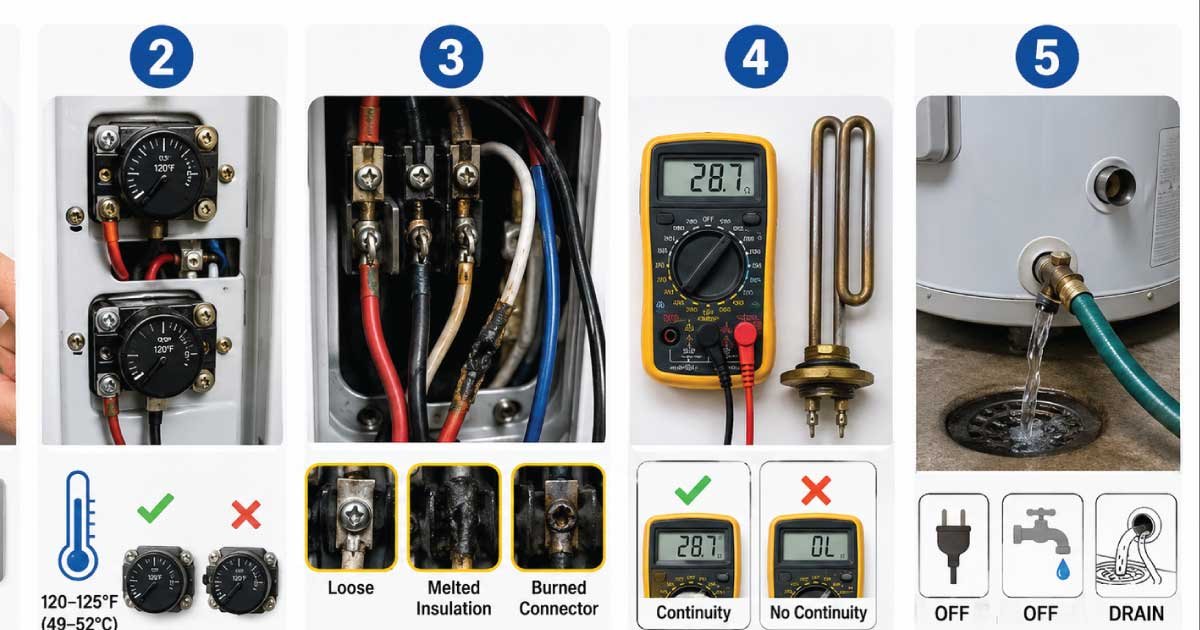
Step 2: Check Thermostat Settings
Before making any adjustments, ensure the power supply to the heater is completely turned off to avoid electrical shock. Thermostats that are incorrectly set or inconsistent between upper and lower units can easily trigger overheating and repeated reset button trips in normal usage conditions.
- Inspect both upper and lower thermostats.
- Ensure they’re set between 120–125°F (49–52°C).
- Mismatched or overly high settings can cause overheating.
If a thermostat looks damaged or won’t hold a setting, replacement is likely needed.
Step 3: Inspect Wiring
Carefully examine all visible electrical connections inside the panel for signs of wear, overheating, or looseness. Faulty wiring is a common cause of repeated reset trips and should never be ignored, as it can escalate into serious safety hazards or complete system failure.
Look for:
- Loose terminal screws
- Melted wire insulation
- Darkened or burned connectors
Tighten loose connections carefully. Do not reuse burned wires—they must be replaced.
Step 4: Test Heating Elements (Advanced)
Using a multimeter, you can check heating elements for continuity and grounding issues, which are often responsible for repeated overheating cycles. This step requires caution and basic electrical knowledge, as incorrect handling can damage components or create unsafe testing conditions.
- No continuity or signs of grounding = replace the element.
- If you’re unsure, this is a good point to call a professional.
Step 5: Flush the Tank
Sediment buildup inside the tank can trap heat and force the system to overwork, eventually triggering the reset function. Flushing removes mineral deposits and improves heating efficiency, making it an important preventive maintenance step for long-term water heater performance.
- Turn off power and water supply.
- Attach a hose to the drain valve.
- Drain until water runs clear.
Annual flushing can significantly reduce overheating issues.
Also Read:
When Resetting Is Not the Solution
Repeatedly pressing the reset button on a water heater without addressing the underlying issue can create serious long-term problems. It may temporarily restore heating, but the root cause continues to worsen, putting the system, safety, and efficiency at increasing risk over time.
- Damage internal components
- Shorten tank lifespan
- Increase fire risk
- Void warranties
If the reset button trips more than once, treat it as a diagnostic signal, not a fix.
When to Call a Professional
When a water heater reset button keeps tripping or refuses to stay engaged, it usually indicates a deeper electrical or mechanical fault. Ignoring these warning signs can lead to further damage, higher repair costs, and potentially unsafe operating conditions within the system.
- The reset button won’t stay in
- Wiring is burned or melted
- Breakers trip repeatedly
- You’re unsure how to test electrical components
- The heater is older and shows multiple signs of failure
Professional diagnosis can prevent costly damage—or worse, unsafe conditions.
Preventing Future Reset Button Problems
Preventing recurring reset button issues requires consistent maintenance and proper operating habits. Small preventive steps can significantly extend the life of the heater, improve energy efficiency, and reduce the likelihood of sudden shutdowns or costly emergency repairs in the future over time.
- Set thermostats correctly (120–125°F)
- Flush the tank annually
- Inspect wiring every year
- Replace aging components proactively
- Avoid repeated resets without investigation
If your water heater is more than 10–12 years old and experiencing frequent electrical issues, replacement may be more cost-effective than ongoing repairs.
Final Thoughts
A water heater reset button that’s not working is rarely the root problem—it’s a symptom of overheating or electrical trouble. While a single reset after a power surge may be harmless, repeated failures demand attention. By understanding the causes and following a careful troubleshooting process, you can restore hot water safely—or know when it’s time to bring in expert help.
Hot water is a daily necessity. Treat reset-button problems seriously, and your water heater will reward you with safer, more reliable performance for years to come.
👉 Looking for a reliable water heater repair guide? This comprehensive article explains the most common water heater issues, including thermostat failures, heating element problems, leaks, and reset button faults. Get clear, step-by-step solutions and prevention tips. Read the full post to fix problems before they become costly.