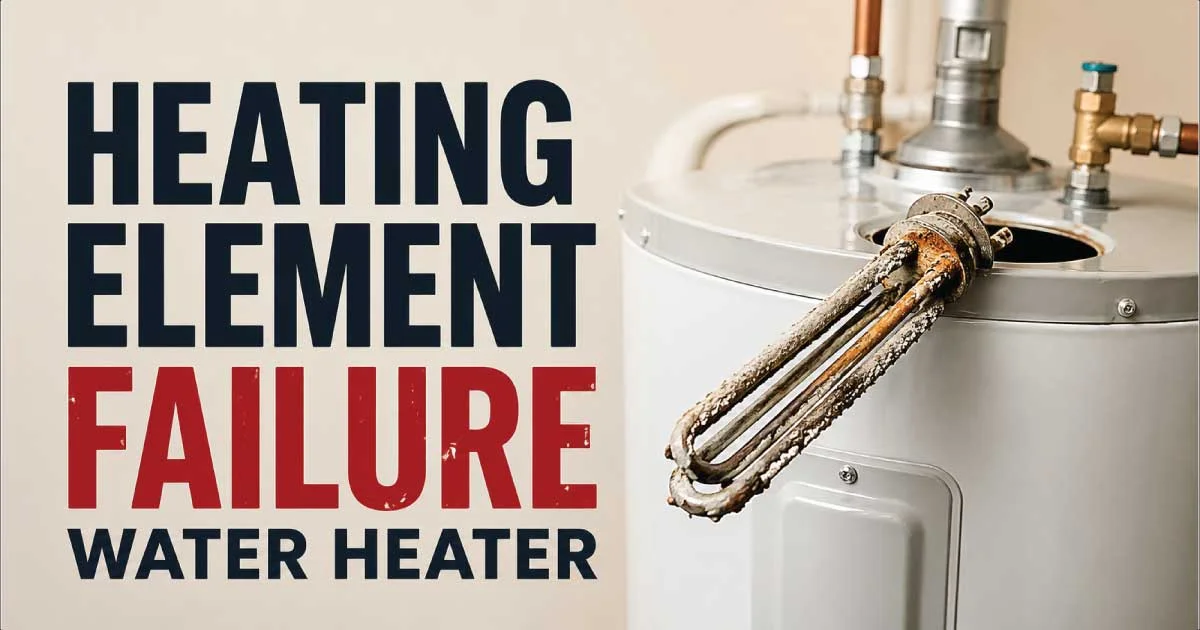
A water heater is one of the most essential appliances in any home, quietly providing hot water for showers, laundry, dishes, and daily cleaning. When it works properly, it’s easy to forget it even exists. But when hot water suddenly runs out—or never heats up at all—the inconvenience is immediate and frustrating. One of the most common reasons behind these problems is heating element failure.
Understanding how heating elements work, why they fail, and what you can do about it can save you time, money, and unnecessary stress. This guide explores everything homeowners need to know about heating element failure in water heaters, from early warning signs to repair and prevention strategies.
Understanding Heating Elements in Water Heaters
In electric water heaters, heating elements are the primary components that convert electrical energy into heat to warm the stored water. These elements operate in stages to ensure efficient heating, consistent temperature control, and reliable hot water supply for everyday household needs.
- Upper heating element – Heats the top portion of the tank first and plays a key role in initial heating.
- Lower heating element – Heats the bottom of the tank and maintains overall water temperature.
These elements are typically made of metal alloys and are submerged directly in the water. When electricity flows through them, they heat up and transfer that heat to the surrounding water.
When one or both heating elements fail, the water heater can no longer heat water effectively—or at all.
Common Causes of Heating Element Failure
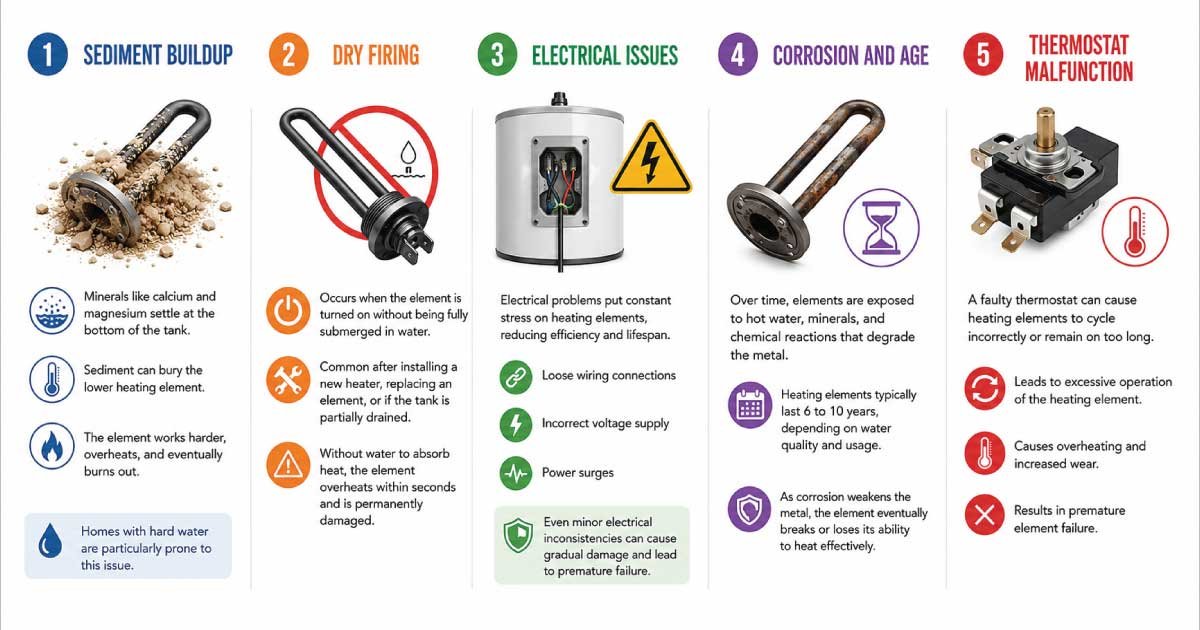
3. Electrical Issues
Electrical issues can place constant stress on heating elements, gradually reducing their efficiency and lifespan. Problems within the power supply or internal wiring often go unnoticed until the element fails. Over time, unstable electrical conditions cause overheating, metal fatigue, and eventual burnout of the heating element.
Common issues include:
- Loose wiring connections
- Incorrect voltage supply
- Power surges
Even minor electrical inconsistencies can cause gradual damage, leading to premature failure.
4. Corrosion and Age
Over years of operation, heating elements are continuously exposed to hot water, dissolved minerals, and chemical reactions that slowly degrade the metal. This natural aging process is unavoidable and varies based on water quality and usage patterns. As corrosion progresses, performance declines until failure occurs.
Heating elements typically last 6 to 10 years, depending on water quality and usage.As corrosion weakens the metal, the element eventually breaks or loses its ability to heat effectively.
5. Thermostat Malfunction
The thermostat controls when heating elements turn on and off, making proper operation critical to element longevity. When a thermostat fails, it can send incorrect signals that force the element to run excessively. Continuous or improper cycling causes overheating, accelerates wear, and shortens the element’s lifespan.
A faulty thermostat can cause heating elements to cycle incorrectly or remain on too long. This excessive operation leads to overheating, increased wear, and eventual failure.
Symptoms of a Failed Heating Element
Heating element issues rarely occur suddenly and often show warning signs long before complete failure. Identifying these symptoms early allows homeowners to address problems promptly, avoid unexpected loss of hot water, reduce energy waste, and prevent further damage to the electric water heater system.
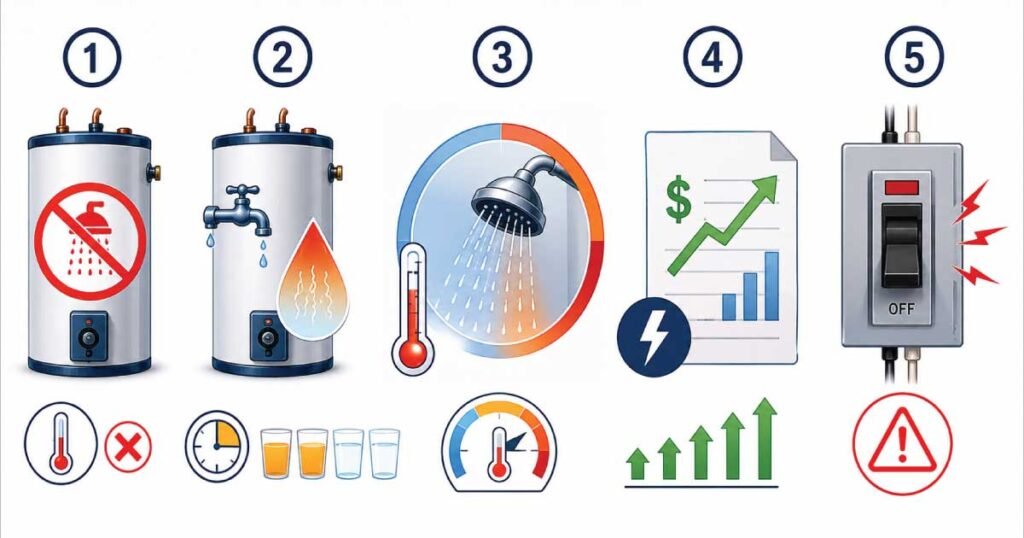
1. No Hot Water
If both heating elements fail or the upper element stops working, the water heater may produce no hot water at all.
2. Limited Hot Water Supply
When only one element (usually the lower one) fails, you may still get hot water—but it runs out quickly. This is a common sign of partial heating element failure.
3. Lukewarm or Inconsistent Water Temperature
Water that never gets fully hot or fluctuates in temperature often points to a failing heating element or thermostat issue.
4. Increased Energy Bills
A damaged heating element works harder to heat water, consuming more electricity. If your energy bills rise without a clear reason, your water heater could be the culprit.
5. Tripped Circuit Breaker
A shorted or damaged heating element may cause the circuit breaker to trip repeatedly. This is both a performance and safety concern.
Diagnosing Heating Element Failure
Diagnosing heating element failure involves a combination of visual checks and basic electrical testing to pinpoint the exact cause of water heater problems. Proper diagnosis helps avoid unnecessary replacements, reduces repair costs, and ensures that related components like thermostats are not mistakenly overlooked during troubleshooting.
Visual Inspection
Checking the heating element for visible damage is often the first diagnostic step. Burn marks, corrosion, warped metal, or heavy sediment buildup around the element are clear warning signs that the component is failing or has already stopped working properly.
Electrical Testing
Using a multimeter, a technician can accurately evaluate the heating element’s electrical condition by checking for:
- Continuity (whether electricity flows through the element)
- Proper resistance levels
A lack of continuity typically confirms that the heating element has failed and needs replacement.
Thermostat Evaluation
Because thermostat malfunctions can produce symptoms similar to heating element failure, both components should always be tested together to ensure an accurate diagnosis and avoid unnecessary part replacement.
Can You Repair or Replace a Heating Element?
In many situations, a failed heating element does not mean the entire water heater must be replaced. When the tank itself is structurally sound, replacing the heating element is often a practical, affordable solution that restores performance and extends the appliance’s usable life.
Heating Element Replacement
Heating element replacement involves:
- Turning off power to the heater
- Draining the tank partially or completely
- Removing the faulty element
- Installing a new, compatible element
- Refilling the tank before restoring power
While some homeowners attempt DIY replacement, improper installation can lead to dry firing, leaks, or electrical hazards.
Also Read:
Preventing Heating Element Failure
Preventive maintenance plays a critical role in keeping heating elements operating efficiently and reliably over time. By addressing common causes of wear before they lead to damage, homeowners can reduce repair costs, improve energy efficiency, and significantly extend the lifespan of their water heater system.
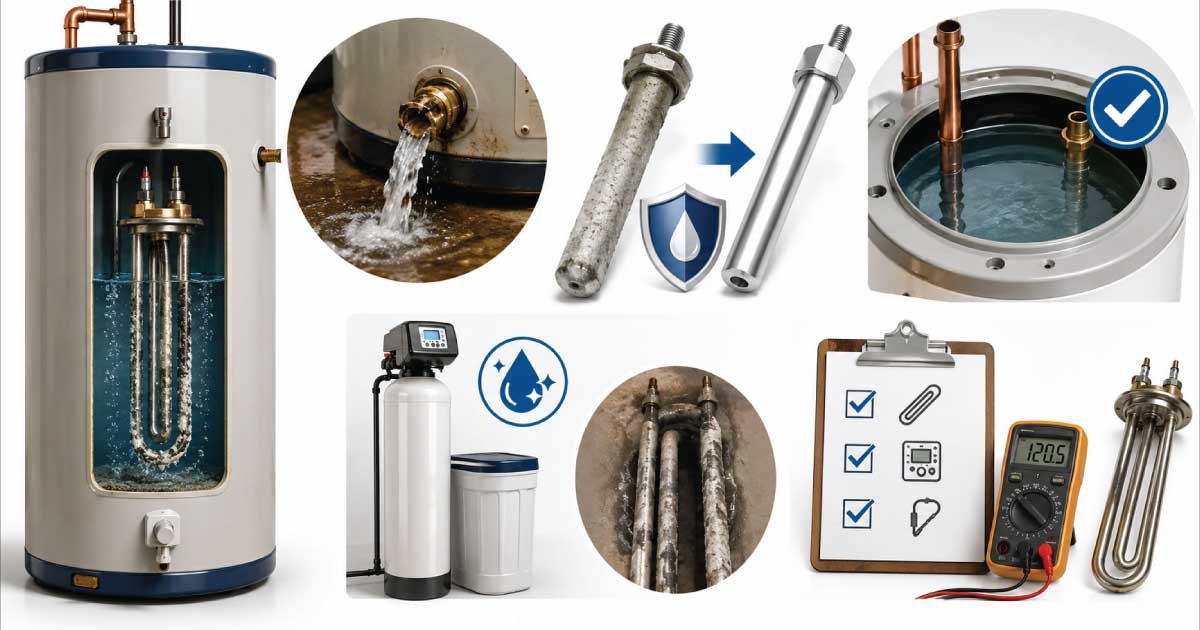
Flush the Tank Regularly
Flushing the water heater once a year removes sediment buildup from the tank, allowing heating elements to operate efficiently and reducing excess strain that can lead to overheating, energy waste, and premature element failure over time.
Check the Anode Rod
The anode rod attracts corrosive minerals that would otherwise damage internal components. Replacing it every 3–5 years helps slow corrosion, protect heating elements, and extend the overall lifespan of the water heater.
Ensure Proper Installation
Always confirm the tank is completely filled with water before restoring power after installation or maintenance. This prevents dry firing, which can instantly overheat and permanently damage new heating elements.
Monitor Water Quality
In hard water areas, minerals accumulate more quickly inside the tank. Installing a water softener helps reduce sediment buildup, improves efficiency, and minimizes long-term wear on heating elements.
Schedule Professional Inspections
Annual professional inspections allow technicians to detect early signs of heating element wear, electrical problems, or thermostat issues before they cause major damage or system failure.
Final Thoughts
Heating element failure is one of the most common—and most misunderstood—water heater problems. While it can cause sudden loss of hot water, it’s often preventable with proper maintenance and timely repairs.
By understanding the causes, recognizing the symptoms, and taking proactive steps, homeowners can extend the lifespan of their water heaters and avoid inconvenient breakdowns. Whether you choose professional service or careful DIY maintenance, addressing heating element issues early is the key to keeping hot water flowing reliably in your home.
If your water heater is struggling to keep up, don’t ignore the warning signs. A failing heating element may be a small component—but it plays a big role in your daily comfort.
👉 Stop guessing and start fixing your water heater problems with our complete troubleshooting guide. Learn what causes heating issues, leaks, strange noises, and electrical faults, along with simple solutions you can try yourself. Read the full post to save time, avoid expensive repairs, and restore reliable hot water.