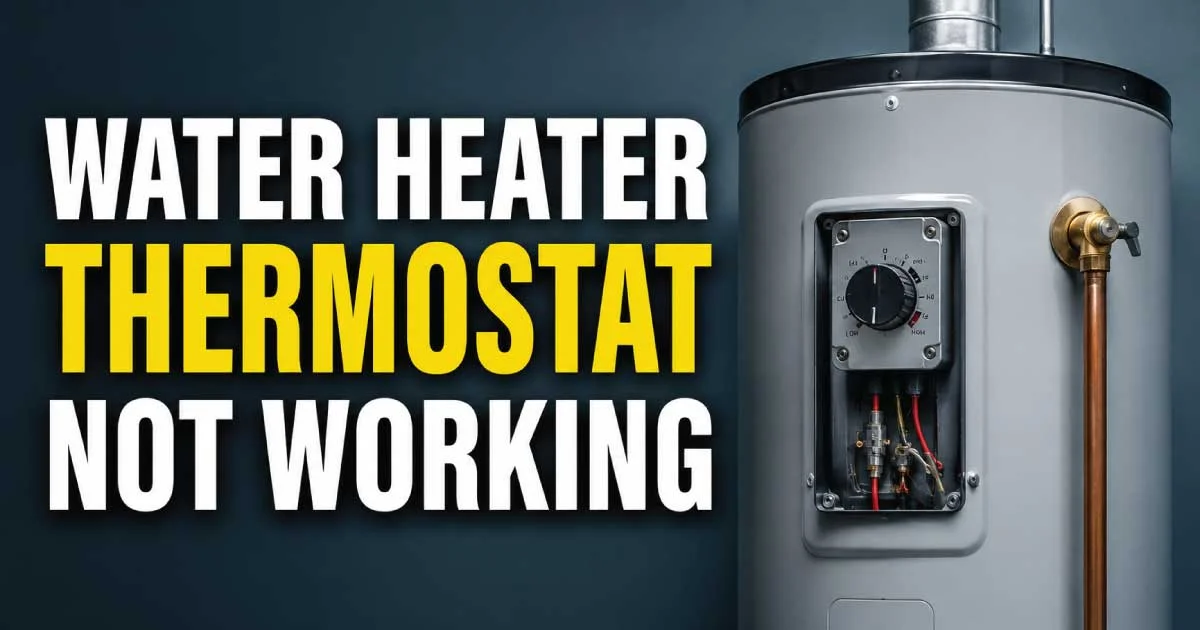
A water heater that fails to deliver hot water can disrupt your entire routine. One of the most common reasons behind this problem is a water heater thermostat not working properly. Since the thermostat controls the temperature of the water inside the tank, even a minor malfunction can lead to cold showers, inconsistent heating, or dangerously hot water.
In this in-depth guide, we will explore how water heater thermostats work, the warning signs of failure, common causes, troubleshooting steps, repair options, and when it’s best to call a professional. Whether you have an electric or gas water heater, this article will help you understand the problem and make informed decisions.
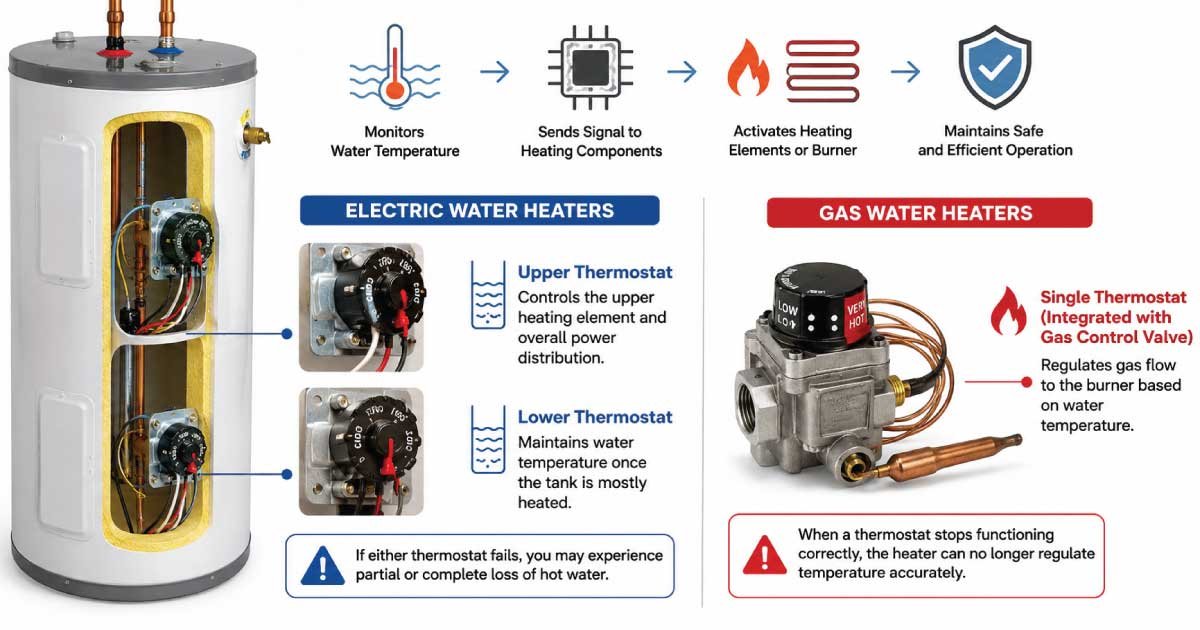
Understanding the Role of a Water Heater Thermostat
Why a Water Heater Thermostat Stops Working
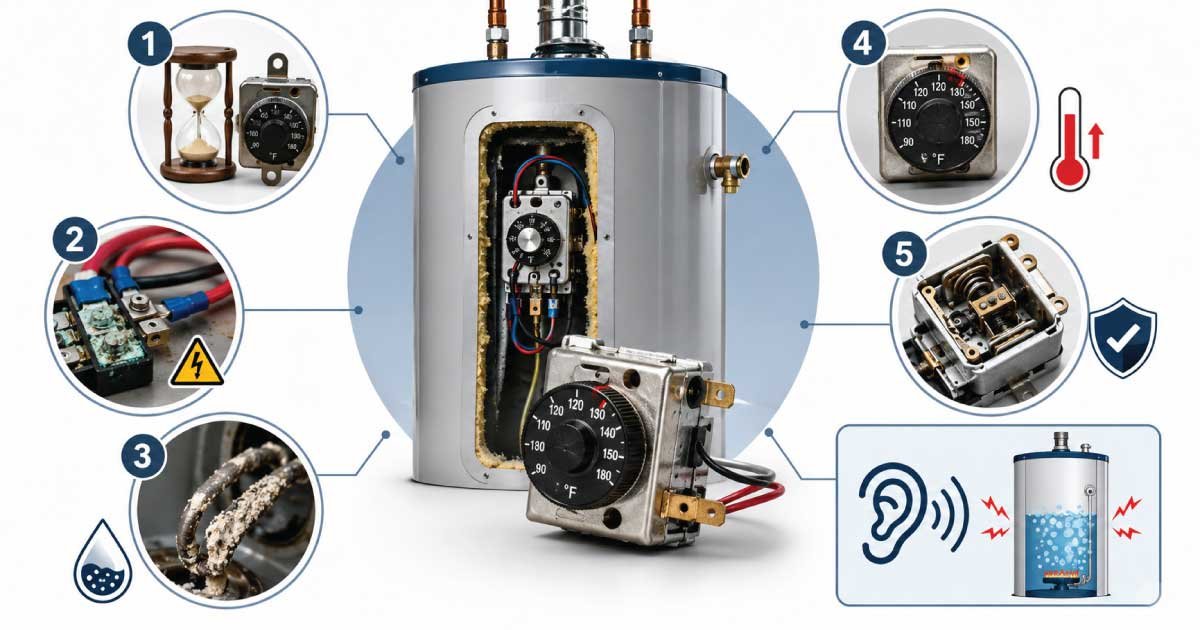
Knowing why a thermostat fails helps homeowners make informed decisions about maintenance, repair, or replacement. Thermostat problems often develop gradually due to environmental, electrical, or usage-related factors. Understanding these root causes can prevent repeat failures and extend the overall lifespan of the water heater.
1. Normal Wear and Tear
Like most mechanical and electrical components, thermostats naturally degrade over time. Constant heating cycles, temperature fluctuations, and long-term exposure to heat gradually weaken internal parts, making older thermostats more vulnerable to inaccurate readings, delayed responses, or complete failure.
Thermostats degrade over time due to constant heating cycles. Older units are especially prone to failure.
2. Electrical Issues
Electrical problems are a common cause of thermostat malfunction in electric water heaters. Loose connections, damaged wiring, corrosion, or sudden power surges can disrupt communication between the thermostat and heating elements, preventing proper temperature control and potentially creating safety concerns.
Loose wiring, corroded terminals, or power surges can interfere with thermostat operation in electric heaters.
3. Sediment Buildup
Sediment accumulation inside the tank can interfere with how the thermostat senses water temperature. Mineral deposits act as insulation, trapping heat and causing inaccurate readings, which forces the thermostat to work harder than intended and increases the risk of overheating or premature failure.
Mineral deposits inside the tank can cause inaccurate temperature readings, forcing the thermostat to work harder or fail prematurely.
4. Improper Temperature Settings
Incorrect thermostat settings place unnecessary stress on water heater components. When set too high, the system must work longer and harder, increasing internal temperatures beyond normal operating ranges and accelerating wear on the thermostat and heating elements.
Setting the thermostat too high can strain components and cause overheating, leading to early failure.
5. Manufacturing Defects
In rare cases, thermostat failure is not related to usage or maintenance. Internal manufacturing flaws, defective materials, or faulty calibration can cause a thermostat to stop working unexpectedly, even in newer water heaters that have otherwise been properly installed and maintained.
Though less common, some thermostats fail due to internal defects even in relatively new water heaters.
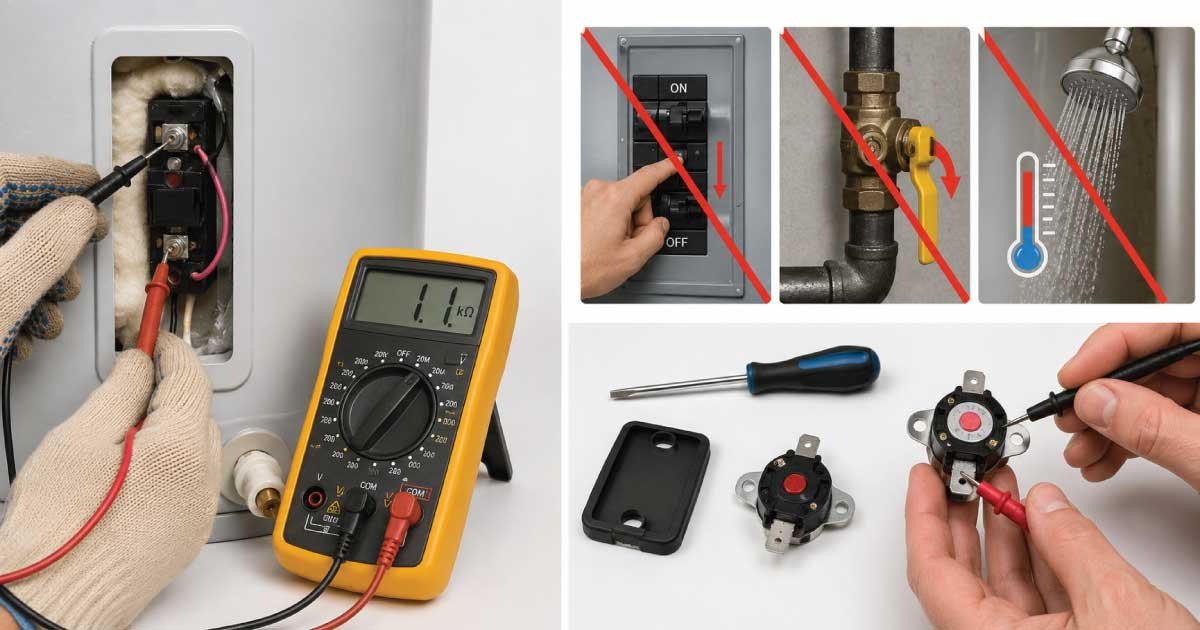
Can You Fix a Water Heater Thermostat Yourself?
Many homeowners can handle minor thermostat-related repairs, particularly on electric water heaters. The feasibility depends on the type of heater, the nature of the problem, and personal comfort with basic electrical tasks. Understanding when DIY is appropriate helps avoid safety hazards and unnecessary damage.
In many cases, yes, especially with electric water heaters.
DIY-Friendly Situations
Certain thermostat issues are simple and low-risk, making them suitable for do-it-yourself repairs. These tasks usually involve minimal disassembly and do not require advanced tools or specialized training, as long as power is fully shut off and safety precautions are followed carefully.
- Replacing an electric thermostat with an identical model
- Tightening loose wiring connections
- Resetting a tripped high-limit switch
When DIY Is Not Recommended
Some thermostat problems involve serious safety risks that outweigh the benefits of DIY repair. Gas components and complex electrical failures require professional expertise, proper diagnostic equipment, and compliance with safety codes to prevent fire, shock, or gas exposure.
- Gas water heater thermostat issues
- Signs of gas leaks
- Electrical wiring damage
- Repeated thermostat failures
Gas systems and complex electrical issues pose safety risks and should be handled by licensed professionals.
How to Replace an Electric Water Heater Thermostat
If testing confirms the thermostat is defective, replacement is usually straightforward.
Basic Steps
- Turn off power at the breaker.
- Remove access panels and insulation.
- Take note of wire placement or photograph it.
- Disconnect wires from the old thermostat.
- Remove the thermostat from its bracket.
- Install the new thermostat in the same position.
- Reconnect wires securely.
- Replace insulation and access panels.
- Restore power and test.
Always use a thermostat that matches your water heater’s voltage and rating.
Proper Temperature Settings for Safety and Efficiency
Correct thermostat temperature settings play a critical role in water heater performance, safety, and operating costs. Many common thermostat issues are caused not by mechanical failure, but by settings that place unnecessary stress on the system. Maintaining proper temperatures helps balance comfort, efficiency, and long-term reliability.
Recommended Temperature
- 120°F (49°C) is widely considered the safest and most energy-efficient setting.
Why This Matters
- Reduces risk of scalding
- Lowers energy consumption
- Minimizes mineral buildup
- Extends thermostat and heater lifespan
Avoid setting temperatures above 130°F unless absolutely necessary.
How Sediment Affects Thermostat Performance
Sediment buildup is one of the most overlooked causes of water heater problems, yet it significantly impacts thermostat accuracy and overall system efficiency. Over time, mineral deposits accumulate inside the tank and interfere with normal heating patterns, leading to poor performance, higher energy use, and inconsistent water temperatures.
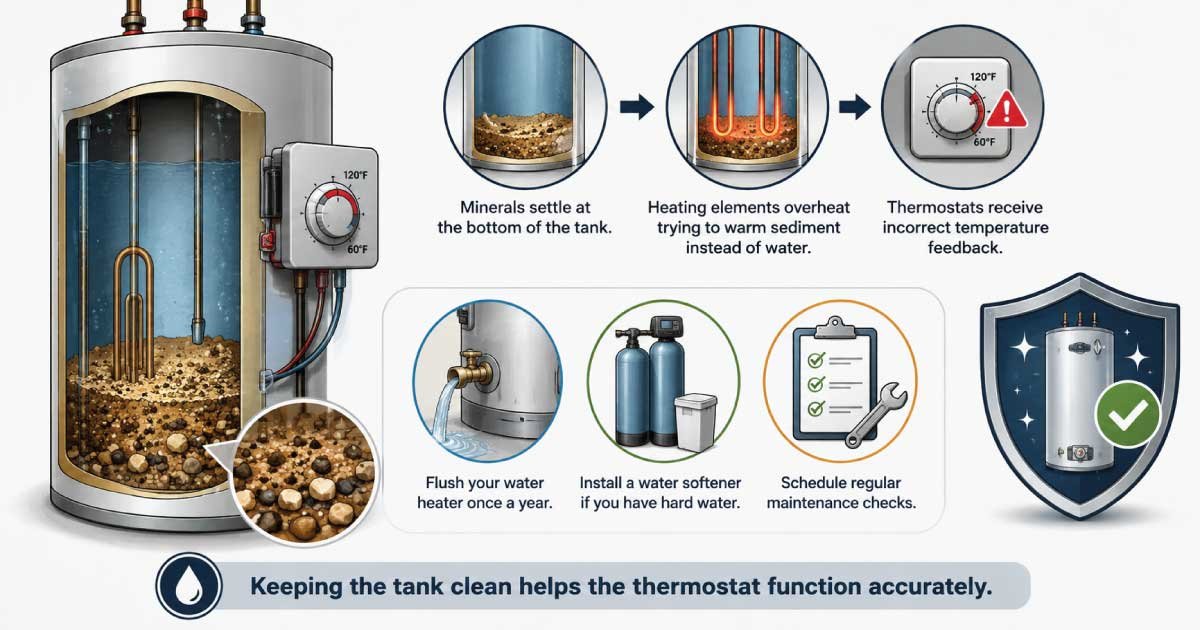
Sediment buildup is a silent killer of water heaters.
What Happens
When sediment collects at the bottom of the tank, it creates a barrier between the heating source and the water. This forces components to work harder, causes uneven heating, and confuses thermostat readings, which depend on accurate temperature feedback from the surrounding water.
- Minerals settle at the bottom of the tank.
- Heating elements overheat trying to warm sediment instead of water.
- Thermostats receive incorrect temperature feedback.
Prevention Tips
Preventing sediment buildup is essential for maintaining thermostat accuracy and extending the lifespan of the water heater. Regular maintenance helps ensure efficient heat transfer, reduces strain on components, and minimizes the chances of unexpected breakdowns or fluctuating water temperatures.
- Flush your water heater once a year.
- Install a water softener if you have hard water.
- Schedule regular maintenance checks.
Keeping the tank clean helps the thermostat function accurately.
Final Thoughts
A water heater thermostat not working is one of the most common yet fixable water heater problems. From inconsistent temperatures to complete loss of hot water, the thermostat plays a crucial role in daily comfort and safety. By understanding the symptoms, causes, and solutions, you can troubleshoot confidently and decide whether a simple fix or professional repair is needed.
Addressing thermostat issues promptly not only restores reliable hot water but also improves energy efficiency and protects your home from potential hazards. With proper maintenance and timely repairs, your water heater can continue serving you efficiently for years to come.
👉 Complete Water Heater Problems Guide (Fix All Issues) covers the most common water heater problems, their causes, and step-by-step solutions. Whether your heater won’t heat, leaks, makes strange noises, or keeps shutting off, this guide can help. Learn practical troubleshooting tips and prevent costly repairs. Read the full post to diagnose and fix your water heater with confidence.