Few household problems are more frustrating than waiting endlessly for hot water—especially when you’re standing in the shower or trying to finish daily chores. If your water heater takes too long to heat, it’s not just an inconvenience; it may be a warning sign of inefficiency, wear, or an underlying mechanical issue.
Whether you own a traditional tank water heater or a modern tankless system, slow heating can result from several factors. Some are simple and inexpensive to fix, while others may indicate that replacement is the smarter long-term solution. In this article, we will explore the most common reasons water heaters heat slowly, how to diagnose the issue, practical fixes, and tips to prevent the problem from returning.
How Long Should a Water Heater Take to Heat?
Understanding the typical heating time of your water heater helps you decide whether its performance is normal or a sign of trouble. Heating speed depends on the type of unit, energy source, and design efficiency. Knowing these benchmarks can prevent unnecessary worry and help you spot real issues early.
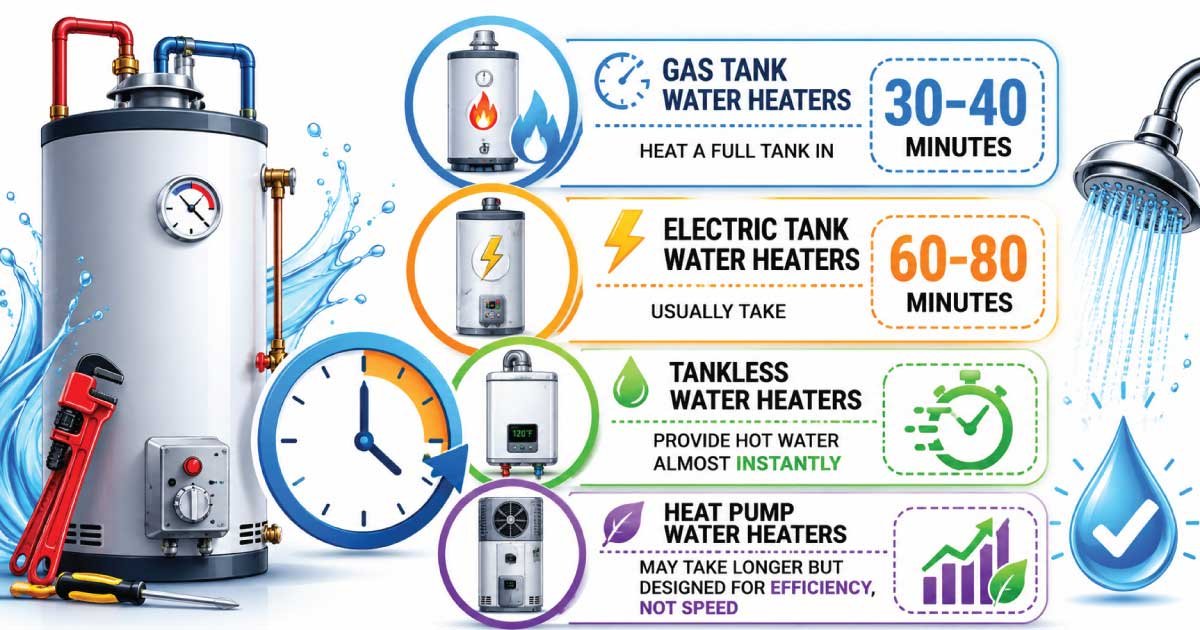
- Gas tank water heaters typically heat a full tank in 30–40 minutes
- Electric tank water heaters usually take 60–80 minutes
- Tankless water heaters provide hot water almost instantly, though there may be a short delay at the tap
- Heat pump water heaters may take longer but are designed for efficiency, not speed
If your system is taking significantly longer than these averages—or runs out of hot water unusually fast—it’s time to investigate.
Common Reasons a Water Heater Takes Too Long to Heat
When a water heater takes longer than usual to produce hot water, it’s often a sign of underlying efficiency or capacity issues. From internal wear to incorrect settings, several common problems can slow heating performance and disrupt daily household routines.
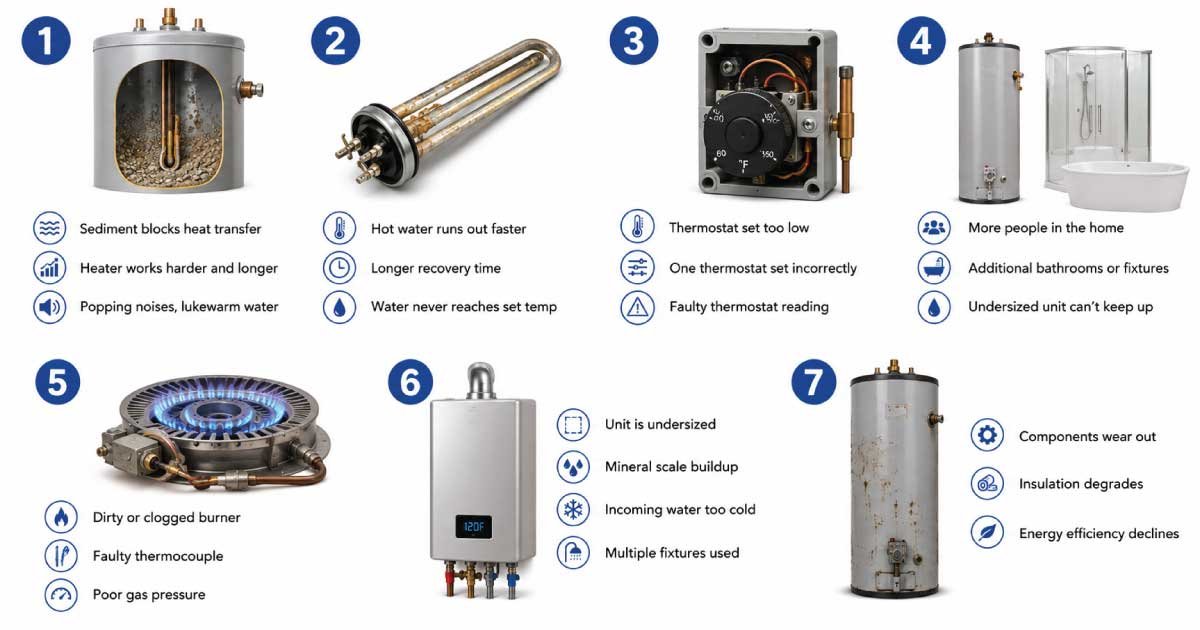
1. Sediment Buildup in the Tank
Sediment buildup is a gradual issue that develops as minerals in hard water settle inside the tank. This problem is especially common in older systems or units that haven’t been flushed regularly. Over time, the buildup interferes with heat transfer and slows overall performance.
Why it matters:
- Sediment forms a barrier between the heating element or burner and the water
- The heater must work harder and longer to reach the desired temperature
- Efficiency drops, energy bills rise, and heating time increases
Warning signs:
- Popping or rumbling noises
- Lukewarm water despite long wait times
- Reduced hot water capacity
2. Aging or Failing Heating Elements
Heating elements are critical components in electric water heaters, and they naturally degrade with use. As elements weaken or partially fail, the system may still function but struggle to heat water efficiently, leading to longer recovery times and inconsistent temperatures.
Common symptoms:
- Hot water runs out faster than usual
- Water never reaches the set temperature
- Long recovery time after usage
Heating elements naturally wear out over time, particularly in older units or systems exposed to mineral-rich water.
3. Incorrect Thermostat Settings
In some cases, slow heating isn’t caused by a failing part but by incorrect thermostat configuration. Even a perfectly functioning water heater can feel inefficient if temperature settings are too low or if thermostats are not properly calibrated.
Things to check:
- Thermostat set too low (below 120°F / 49°C)
- One thermostat set incorrectly in dual-element systems
- Faulty thermostat that doesn’t accurately read water temperature
A water heater working exactly as programmed may still feel “slow” if the temperature setting is too conservative.
4. Undersized Water Heater
A water heater that was once sufficient may no longer meet your household’s needs. Changes in family size, lifestyle, or plumbing fixtures can quietly increase hot water demand. When the unit’s capacity can’t keep up, longer wait times and shortages become unavoidable.
Examples:
- More family members
- Additional bathrooms
- New appliances like a soaking tub or rainfall shower
An undersized water heater will struggle to keep up, leading to frequent delays and insufficient hot water.
5. Failing Gas Burner or Ignition System
Gas water heaters depend on a properly functioning burner and ignition system to heat water efficiently. When these components weaken or malfunction, the heater may still run but at reduced output, causing noticeably slower heating and unreliable hot water availability.
Possible problems include:
- Dirty or clogged burner
- Faulty thermocouple
- Poor gas pressure
When the burner doesn’t operate at full capacity, heating times increase and performance becomes inconsistent.
6. Tankless Water Heater Limitations
While tankless water heaters are designed for on-demand performance, real-world conditions can affect their speed. High demand, cold climates, or internal buildup may reduce efficiency, creating delays that surprise homeowners expecting instant hot water at all times.
Common tankless issues:
- Unit is undersized for demand
- Mineral scale buildup on heat exchanger
- Incoming groundwater is extremely cold
- Multiple fixtures used simultaneously
In colder climates, tankless heaters must work harder, which can lead to noticeable lag.
7. Old or Inefficient Water Heater
The overall age and efficiency of a water heater play a major role in how quickly it can heat water. As systems approach the end of their expected lifespan, performance naturally declines, even if the unit hasn’t completely failed.
As units age:
- Internal components wear out
- Insulation degrades
- Energy efficiency declines
An aging water heater may still function—but not efficiently or quickly.
How to Fix a Slow-Heating Water Heater
A slow-heating water heater doesn’t always require full replacement. In many cases, targeted maintenance, component repairs, or capacity upgrades can restore efficient performance. Understanding the right corrective steps helps reduce wait times, improve energy efficiency, and extend the life of your water heating system.
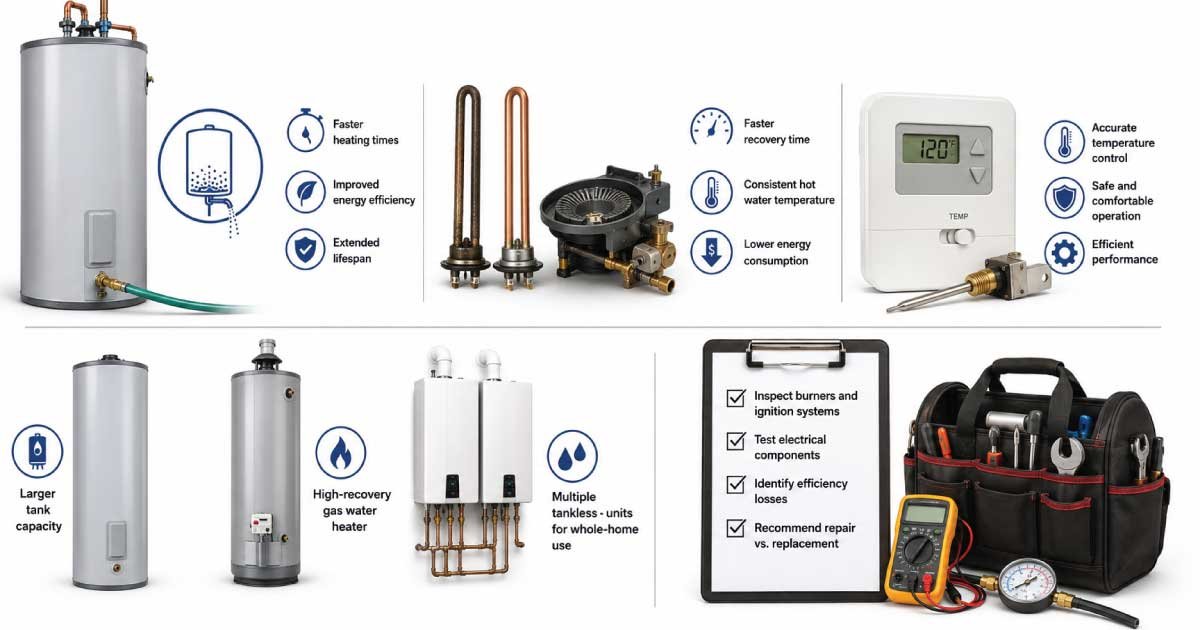
Flush the Tank Regularly
Over time, sediment buildup inside the tank reduces heat transfer and forces your water heater to work harder than necessary. Regular flushing is one of the simplest and most effective maintenance steps to restore performance and prevent long-term damage.
Benefits include:
- Faster heating times
- Improved energy efficiency
- Extended lifespan of the heater
If sediment buildup is severe, professional descaling may be necessary.
Replace Faulty Heating Elements or Burners
When internal heating components begin to fail, no amount of waiting will solve the problem. Replacing worn electric heating elements or weak gas burners can quickly restore proper heating performance without the expense of a full system replacement.
Typical results:
- Faster recovery time
- Consistent hot water temperature
- Lower energy consumption
This is especially worthwhile for units under 10 years old.
Adjust or Replace the Thermostat
Incorrect or failing thermostat settings can make a properly working water heater seem slow or ineffective. Ensuring accurate temperature control helps the system heat efficiently while maintaining safety and comfort throughout the home.
If adjustments don’t help, a faulty thermostat may need replacement.
Upgrade to the Right Size Water Heater
If your hot water needs regularly exceed your system’s capacity, no repair will fully solve the issue. Upgrading to a properly sized water heater ensures reliable performance during peak usage times and eliminates ongoing delays.
Options include:
- Larger tank capacity
- High-recovery gas water heater
- Multiple tankless units for whole-home use
Sizing should be based on peak hour demand, not just household size.
Schedule Professional Maintenance
Some water heater problems are difficult to diagnose without specialized tools and training. Professional maintenance ensures hidden issues are identified early, preventing inefficient operation, safety risks, and unexpected breakdowns.
A licensed technician can:
- Inspect burners and ignition systems
- Test electrical components
- Identify efficiency losses
- Recommend repair vs. replacement
💡 Learn More: Discover helpful information. 👉
When Replacement Makes More Sense Than Repair
Although many slow-heating problems can be fixed with maintenance or part replacement, there comes a point when repairs are no longer cost-effective. If performance continues to decline, replacing the unit can save money, improve reliability, and restore consistent hot water.
- The unit is near or past its expected lifespan
- Repairs are frequent or costly
- Energy bills keep rising
- Heating time continues to worsen despite maintenance
Modern water heaters offer better insulation, smarter controls, and significantly higher efficiency.
Preventing Slow Heating in the Future
Preventing slow water heating starts with proactive care, smart upgrades, and early problem detection. By maintaining your system properly and making informed decisions, you can extend your water heater’s lifespan, improve efficiency, and ensure consistent hot water when your household needs it most.
1. Perform Annual Maintenance
Routine maintenance is one of the most effective ways to prevent slow heating. Flushing the tank, inspecting key components, and fixing small issues early help maintain efficiency, reduce wear, and ensure your water heater continues to perform reliably year after year.
2. Install a Water Softener (If Needed)
In homes with hard water, mineral buildup is a leading cause of reduced performance. Installing a water softener minimizes calcium and magnesium deposits, helping your water heater heat faster, operate more efficiently, and avoid premature component failure.
3. Monitor Performance Changes
Paying attention to subtle changes in performance can prevent major problems. Longer heating times, inconsistent temperatures, or reduced capacity often signal developing issues that are easier and cheaper to fix when caught early.
4. Choose Quality Over Cost
While budget-friendly water heaters may seem appealing, lower-quality units often sacrifice efficiency and durability. Investing in a well-built, energy-efficient model typically results in fewer repairs, lower utility costs, and better long-term performance.
Final Thoughts
If your water heater takes too long to heat, the problem could range from a simple thermostat adjustment to a sign that your system is nearing the end of its life. Understanding the cause is key to choosing the right solution—whether that’s flushing the tank, replacing a component, or upgrading to a more efficient model.
Hot water isn’t a luxury—it’s a daily necessity. Addressing slow heating early not only restores comfort but also saves energy, lowers utility bills, and extends the life of your system. With proper care and timely action, your water heater can deliver reliable performance for years to come.
💡 Learn More: Discover helpful information. 👉