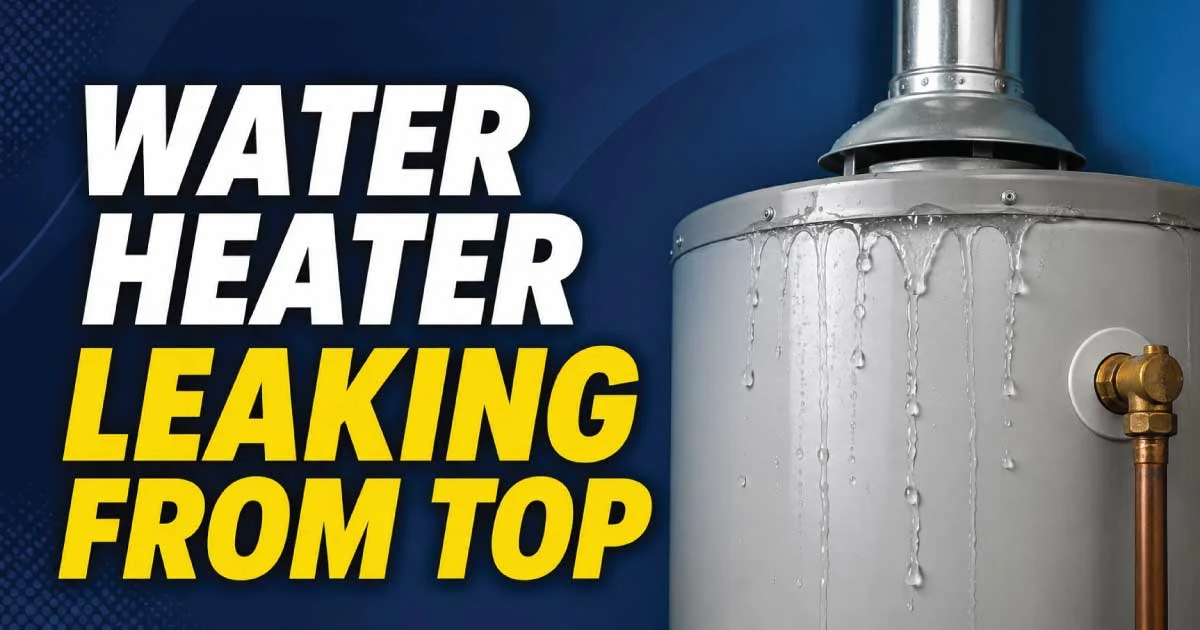
A water heater leaking from the top is a problem that should never be ignored. While some leaks may appear minor at first—perhaps just a few drops forming around the fittings—what’s happening at the top of your water heater can quickly escalate into serious water damage, loss of hot water, or even a complete system failure.
Homeowners often assume that a leak means the tank itself is failing. In reality, leaks from the top of the water heater are frequently caused by fittings, valves, or connections that can sometimes be repaired if addressed early. This guide will help you understand why your water heater is leaking from the top, how to identify the exact source, what immediate steps to take, and when replacement is the smarter option.
Why a Water Heater Leaking From the Top Is Serious
Water heaters are engineered to safely hold and heat water under constant pressure, with all components working together in a sealed system. When a leak develops at the top, water flows downward, often exaggerating the damage and masking the true source of the problem.
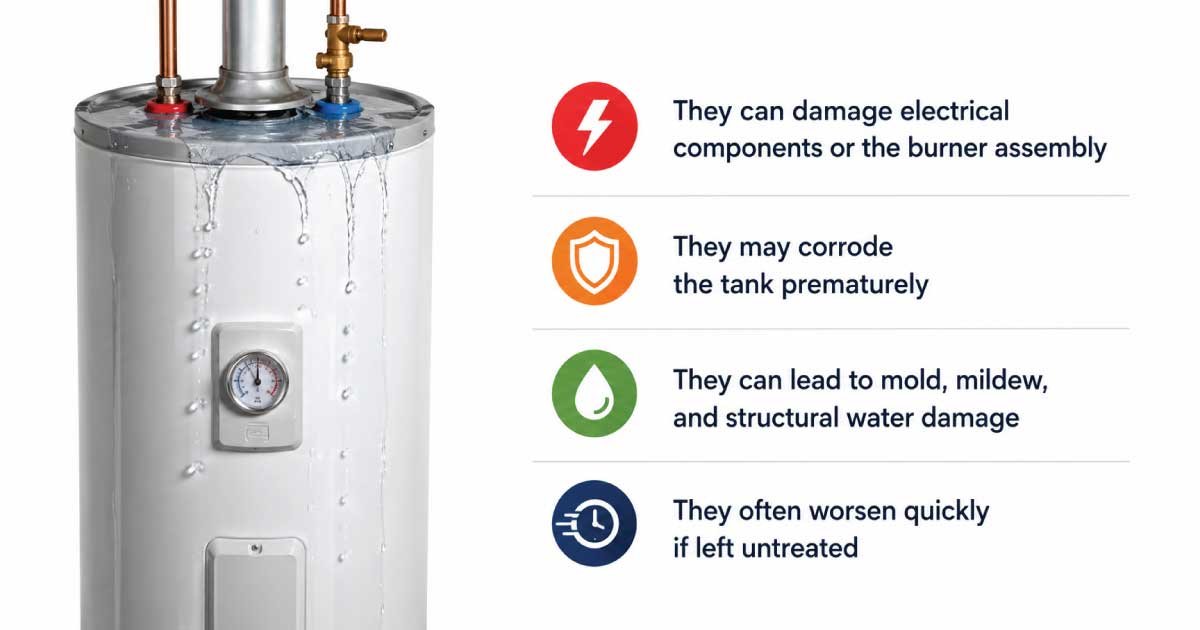
Top leaks are dangerous because:
- They can damage electrical components or the burner assembly
- They may corrode the tank prematurely
- They can lead to mold, mildew, and structural water damage
- They often worsen quickly if left untreated
The sooner you identify the cause, the better your chances of avoiding an expensive replacement.
Common Causes of a Water Heater Leaking From the Top
A water heater leaking from the top often points to connection issues, valve problems, or pressure-related failures rather than complete tank damage. Identifying the exact cause early can prevent water damage, reduce repair costs, and help determine whether a simple fix or professional service is required.
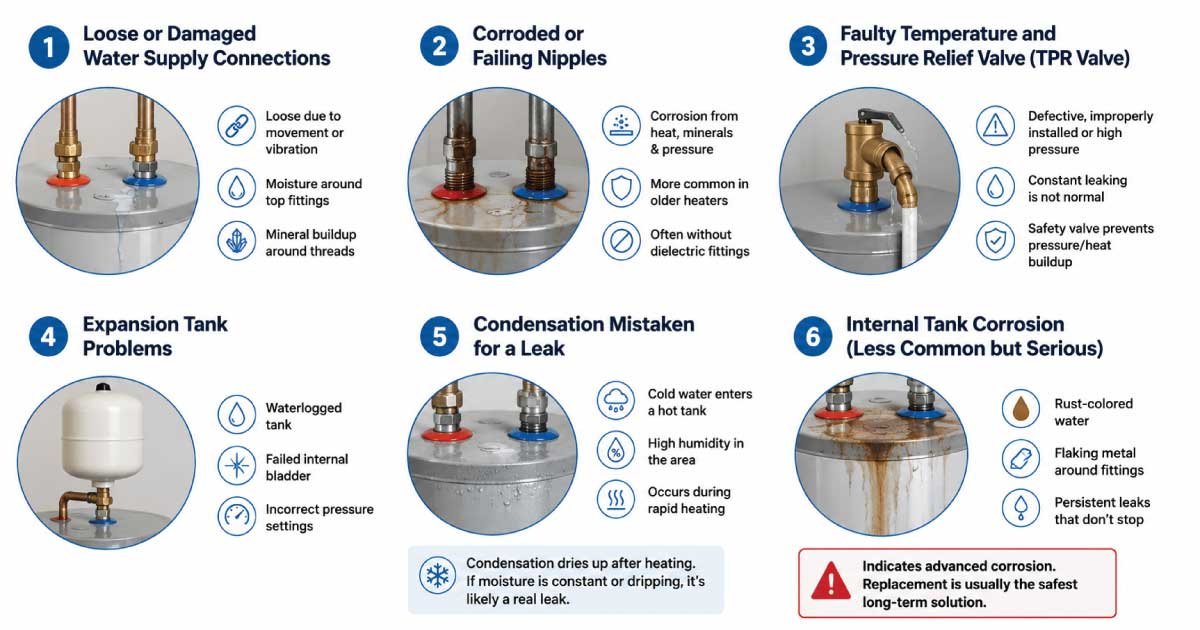
1. Loose or Damaged Water Supply Connections
One of the most frequent reasons a water heater leaks from the top is a problem with the water supply connections. These inlet and outlet pipes handle constant water flow, temperature changes, and pressure, making them especially prone to loosening or wear over time.
Over time, fittings can loosen due to:
- Thermal expansion and contraction
- Vibration
- Normal wear and tear
Even a slightly loose connection can allow water to seep out and run down the tank.
Signs to look for:
- Moisture around the top fittings
- Dripping water after hot water use
- Mineral buildup around pipe threads
2. Corroded or Failing Nipples
Water heater nipples are small but critical components that connect the home’s plumbing lines to the heater itself. Because they are constantly exposed to hot water, minerals, and pressure, they are especially vulnerable to corrosion as the unit ages.
If the nipples corrode, water can leak from the top of the tank and spread downward.
This is especially common in older water heaters, particularly those without dielectric fittings that reduce corrosion.
3. Faulty Temperature and Pressure Relief Valve (TPR Valve)
The temperature and pressure relief valve plays a vital safety role by preventing dangerous pressure or heat buildup inside the tank. When this valve malfunctions, it can release water unexpectedly, often creating the appearance of a top or side leak.
If the TPR valve is:
- Defective
- Improperly installed
- Experiencing excessive pressure
it may begin leaking from the top or side of the water heater.
While a small discharge can be normal during pressure release, constant leaking is not and should be addressed immediately.
4. Expansion Tank Problems
An expansion tank helps regulate pressure in closed plumbing systems, protecting the water heater from stress. When the expansion tank fails, pressure has nowhere to go, often forcing water out through fittings or valves located at the top of the heater.
Common expansion tank issues include:
- Waterlogged tanks
- Failed internal bladder
- Incorrect pressure settings
5. Condensation Mistaken for a Leak
Not all moisture around a water heater indicates an actual leak. In certain conditions, condensation can form on the exterior of the tank, especially near the top, creating the illusion of a plumbing failure when none exists.
In some cases, what looks like a leak is actually condensation. This usually happens when:
- Cold water enters a hot tank
- The surrounding air is humid
- The heater is heating water rapidly
Condensation typically appears as moisture on the top or sides of the tank and should dry up after the heater finishes heating.
If moisture is constant or dripping, it’s likely a real leak rather than condensation.
6. Internal Tank Corrosion (Less Common but Serious)
In some cases, a water heater leaking from the top is caused by internal corrosion within the tank itself. This typically indicates advanced deterioration of the unit. Once corrosion breaches the tank wall, repairs are rarely effective, and replacement is usually the safest long-term solution.
Signs of internal corrosion include:
- Rust-colored water
- Flaking metal around fittings
- Persistent leaks that don’t stop after tightening connections
⭐ Don’t Miss: Read this related post. 👉
How to Identify the Exact Source of the Leak
Before attempting any repair, it’s essential to accurately identify where the leak originates. Water can travel along pipes and tank surfaces, making the source misleading. A careful, methodical inspection helps prevent unnecessary repairs and ensures the real issue is addressed safely and effectively.
Step-by-step approach:
- Turn off the power or gas supply to the heater
- Shut off the cold water supply
- Dry the top of the tank completely
- Use a flashlight to inspect fittings, valves, and connections
- Turn the water back on and observe carefully
Water will usually reappear at the exact source of the problem.
What to Do Immediately If Your Water Heater Is Leaking From the Top
If your water heater is leaking from the top, acting fast is critical to prevent water damage, safety hazards, and costly repairs. Immediate steps can help stabilize the situation, protect your home, and reduce the risk of electrical, gas, or pressure-related dangers.
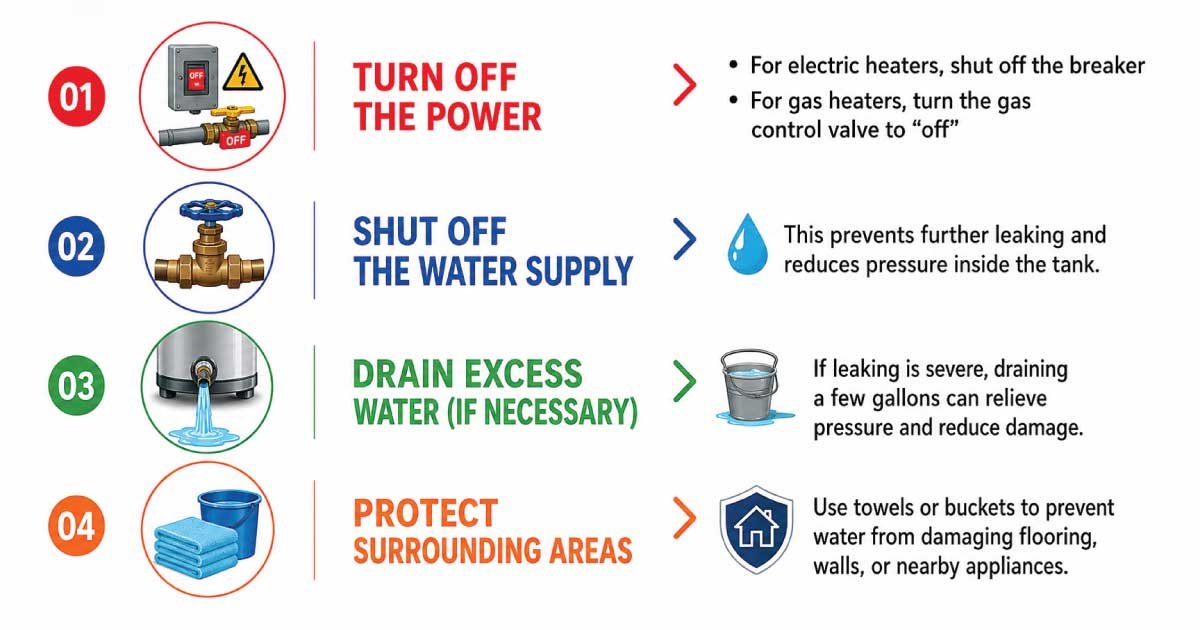
Turn Off the Power
When you notice water leaking from the top of your water heater, quick action is essential to minimize damage and reduce safety risks. Addressing the issue immediately can help prevent electrical hazards, water damage, and increased pressure that could worsen the leak.
- For electric heaters, shut off the breaker
- For gas heaters, turn the gas control valve to “off”
Shut Off the Water Supply
Stopping the water supply is a critical first step when dealing with a leak from the top of your water heater. Cutting off incoming water limits additional leakage, helps stabilize internal pressure, and prevents a small issue from escalating into significant water damage or system failure.
This prevents further leaking and reduces pressure inside the tank.
Drain Excess Water (If Necessary)
When a leak is heavy or actively dripping, relieving pressure inside the tank can reduce the flow of escaping water. Draining a small amount of water can help control the situation temporarily while you assess damage or wait for professional repairs.
If leaking is severe, draining a few gallons can relieve pressure and reduce damage.
Protect Surrounding Areas
Water from a leaking heater can quickly spread to floors, walls, and nearby appliances, causing costly damage. Taking simple protective measures right away helps contain the mess, reduces cleanup, and limits the risk of mold or structural issues developing.
Use towels or buckets to prevent water from damaging flooring, walls, or nearby appliances.
⭐ Don’t Miss: Read this related post. 👉
Can You Fix a Water Heater Leaking From the Top Yourself?
In some cases, yes—but only if the issue is minor and limited to external components. Simple fixes can often be handled safely by homeowners, while more complex or safety-related problems should always be left to trained professionals.
DIY-Friendly Repairs
- Tightening loose fittings
- Replacing pipe tape or sealant
- Replacing corroded nipples
- Fixing minor valve leaks
Repairs That Require a Professional
- TPR valve replacement
- Expansion tank issues
- Electrical component exposure
- Internal tank corrosion
If you’re unsure, it’s always safer to consult a professional rather than risk injury or further damage.
When Replacement Is the Better Option
Sometimes, repairing a leaking water heater simply isn’t worth the cost or risk. As units age, internal components weaken, and even successful short-term repairs may not prevent sudden, complete failure.
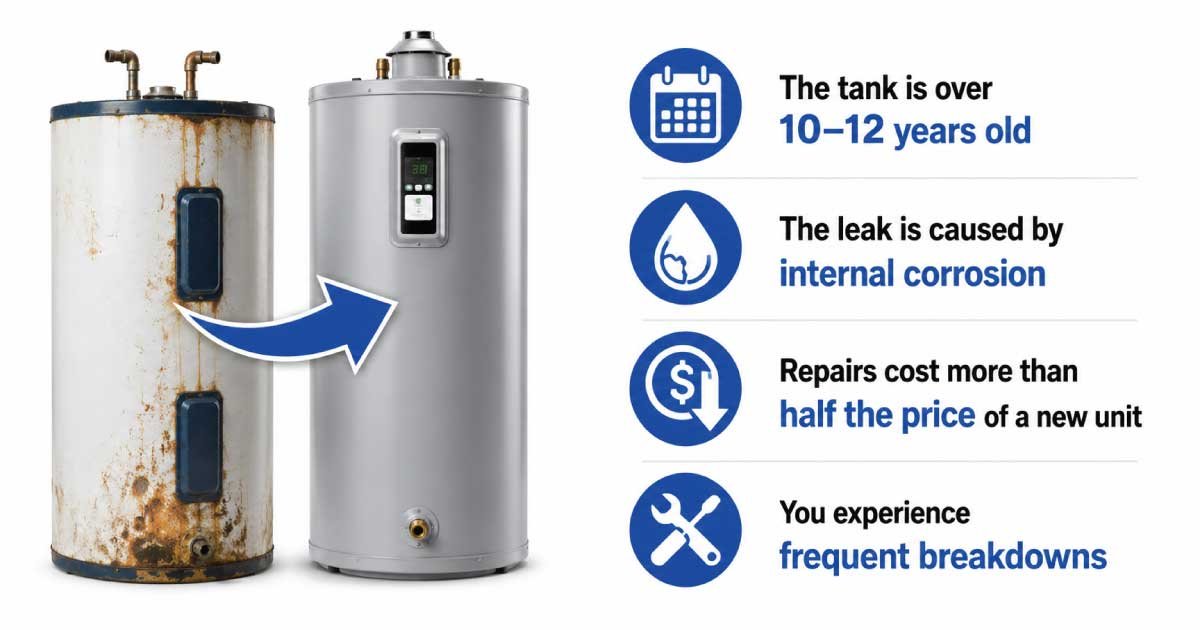
You should strongly consider replacement if:
- The tank is over 10–12 years old
- The leak is caused by internal corrosion
- Repairs cost more than half the price of a new unit
- You experience frequent breakdowns
A leaking tank near the end of its lifespan often fails completely without warning.
⭐ Don’t Miss: Read this related post. 👉
Preventing Future Water Heater Leaks
Preventing water heater leaks starts with routine maintenance and early detection of small issues before they escalate. Regular care reduces stress on components, minimizes corrosion, and extends the life of the unit. Simple preventive steps can significantly lower the risk of unexpected leaks and costly repairs.
Perform Annual Inspections
Regular inspections help catch small problems before they turn into major leaks. By examining your water heater at least once a year, you can identify early signs of corrosion, loose connections, or valve issues that often develop slowly and go unnoticed until water damage occurs.
Check fittings, valves, and pipes at least once a year for moisture or corrosion.
Flush the Tank Regularly
Flushing your water heater removes sediment that naturally settles at the bottom of the tank over time. Excess sediment reduces efficiency, increases internal pressure, and accelerates wear on critical components, all of which raise the risk of leaks forming at the top or fittings. Sediment buildup increases pressure and accelerates wear on internal components.
Install a Drip Pan
A drip pan provides an added layer of protection beneath your water heater by catching small leaks before they spread. It can also serve as an early warning system, alerting you to moisture problems before they cause significant structural or flooring damage. A drip pan can prevent water damage and alert you early to small leaks.
Maintain Proper Water Pressure
Keeping water pressure within a safe range is essential for protecting your water heater. Excessive pressure strains valves, fittings, and connections, increasing the likelihood of leaks and premature failure. Proper pressure regulation helps extend the life of the entire system. Excess pressure puts stress on fittings and valves, increasing the likelihood of leaks.
Replace the Anode Rod
The anode rod plays a key role in preventing internal tank corrosion by attracting corrosive elements in the water. Over time, it wears down and becomes ineffective. Replacing it periodically helps protect the tank lining and significantly extends the water heater’s lifespan. This inexpensive component helps prevent internal corrosion and extends the life of your water heater.
Gas vs Electric Water Heaters: Leak Risks
Although both gas and electric water heaters can develop leaks at the top, the risks involved are not the same. Each type uses different components and energy sources, which means water intrusion can create distinct safety concerns and damage risks depending on the system installed in your home.
Gas water heaters
- Leaks may affect the burner assembly
- Higher safety risk if water reaches gas components
Electric water heaters
- Leaks can damage heating elements and wiring
- Risk of electrical short circuits
In either case, power must be shut off immediately if water is present.
⭐ Don’t Miss: Read this related post. 👉
Is a Top Leak an Emergency?
A water heater leaking from the top should always be considered urgent, even when the leak appears minor. Small drips often indicate underlying pressure, corrosion, or connection problems that can escalate quickly, leading to sudden failure, extensive water damage, and safety hazards if ignored.
Delaying repairs can result in:
- Flooded utility rooms
- Mold growth
- Higher repair costs
- Sudden loss of hot water
Early action saves money and prevents damage.
Final Thoughts
A water heater leaking from the top is not something to ignore or postpone. While the cause may be as simple as a loose fitting, it can also signal pressure problems or internal corrosion that threaten the entire system.
By understanding the common causes, knowing how to identify the source, and taking immediate action, you can protect your home and extend the life of your water heater. Regular maintenance and early repairs are the key to avoiding major breakdowns—and the expensive consequences that come with them.
If your water heater is showing signs of persistent leaking or age-related failure, replacement may be the safest and most cost-effective solution in the long run.
⭐ Don’t Miss: Read this related post. 👉