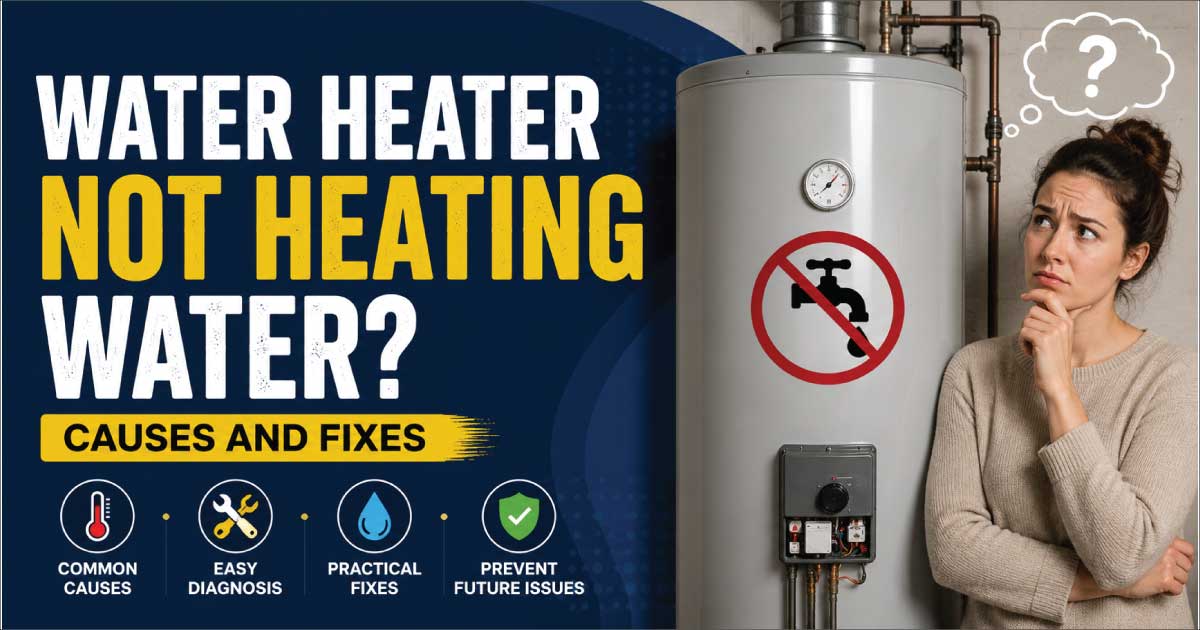
Few household problems are as frustrating as turning on the shower and discovering there’s no hot water. If your water heater is not heating water, you’re probably wondering what went wrong and whether you need an expensive repair or replacement.
The good news is that many water heater heating problems are caused by issues that can be diagnosed and sometimes fixed without replacing the entire unit. Whether you own an electric water heater or a gas water heater, understanding the most common causes can help you restore hot water quickly.
In this guide, we will explain why a water heater is not heating water, how to troubleshoot the problem, and when it’s time to call a professional.
Why Is My Water Heater Not Heating Water?
A water heater depends on several components working together to produce hot water. If any part fails, the system may stop heating properly. The exact cause varies between electric and gas models and usually requires basic troubleshooting.
Most Common Causes
These are the most frequent reasons a water heater stops producing hot water:
- Tripped circuit breaker
- Failed heating element
- Faulty thermostat
- Pilot light problems
- Gas supply issues
- Sediment buildup
- Electrical wiring faults
- Control board failure
- Aging water heater
Signs Your Water Heater Is Not Heating Properly
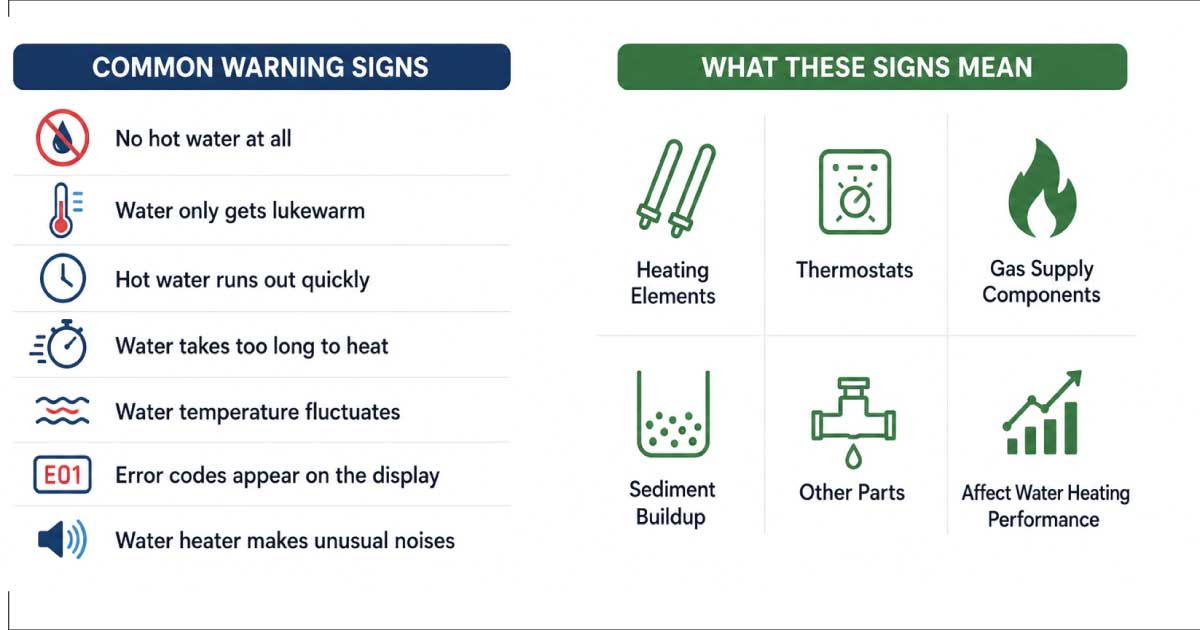
Before troubleshooting, pay attention to how your water heater behaves. Certain warning signs can help identify the problem and point to specific components that may be failing or operating inefficiently.
Common Warning Signs
These symptoms often indicate that your water heater is not heating water correctly:
- No hot water at all
- Water only gets lukewarm
- Hot water runs out quickly
- Water takes too long to heat
- Water temperature fluctuates
- Error codes appear on the display
- Water heater makes unusual noises
What These Signs Mean
These warning signs provide valuable clues about the source of the problem. Issues may involve heating elements, thermostats, gas supply components, sediment buildup, or other parts that affect water heating performance.
Electric Water Heater Not Heating Water
Electric water heaters depend on a steady power supply and functioning heating components. If your unit is not producing hot water, electrical issues are often the first place to investigate before moving on to more complex troubleshooting.
Tripped Circuit Breaker
A tripped breaker is one of the most common reasons an electric water heater stops working. Power surges, overloaded circuits, or electrical faults can interrupt power and prevent the heating elements from operating.
How to Check
Follow these simple steps to determine whether the breaker has tripped:
- Locate your home’s electrical panel.
- Find the breaker labeled “Water Heater.”
- Check if it is in the OFF or middle position.
- Reset the breaker.
If the Breaker Trips Again
If the breaker repeatedly trips after being reset, the problem may involve faulty wiring, a damaged heating element, or another electrical issue that requires further inspection and repair.
Faulty Heating Element
Most electric water heaters use two heating elements to warm the water inside the tank. If either the upper or lower element fails, the unit may struggle to produce enough hot water or stop heating completely.
Heating Elements in Electric Water Heaters
Electric models typically contain the following heating elements:
- Upper heating element
- Lower heating element
If one of these components stops working, water heating performance can be significantly reduced.
Symptoms
A failed heating element often causes noticeable hot water problems throughout the home.
- No hot water
- Limited hot water
- Water never reaches desired temperature
Solution
Testing the heating element with a multimeter can help determine whether it has failed. If the element is defective, replacement is usually required. Heating elements are among the most common and affordable electric water heater repairs.
Water Heater Thermostat Failure
The thermostat regulates water temperature by controlling when the heating elements operate. If the thermostat fails, the elements may not receive power, causing the water heater to produce little or no hot water.
Common Symptoms
A faulty thermostat can create several temperature-related problems.
- Cold water only
- Inconsistent temperatures
- Water too hot or too cold
Fix
Check the thermostat settings to ensure they are properly adjusted. If testing confirms the thermostat is defective, replacing it is usually the best solution to restore normal water heater operation.
Reset Button Problems
Electric water heaters include a high-limit reset switch that protects the unit from overheating. When water temperature becomes too high, the reset button trips and shuts off power to prevent damage and improve safety.
Causes
Several issues can cause the reset button to trip repeatedly and interrupt normal water heater operation.
- Faulty thermostat
- Shorted heating element
- Electrical issues
What to Do
Press the reset button once to restore power to the water heater. If the button trips again shortly afterward, a thermostat, heating element, or electrical problem may require further diagnosis and repair.
Gas Water Heater Not Heating Water
Gas water heaters use burners to heat water instead of electric elements. If the system stops producing hot water, several gas-related components may be responsible for preventing the burner from operating properly.
Pilot Light Went Out
The pilot light ignites the main burner. If it goes out, the burner cannot operate, and the water heater will stop producing hot water until the pilot is relit.
Common Causes
Several issues can cause the pilot light to go out unexpectedly.
- Drafts
- Thermocouple failure
- Dirty pilot assembly
- Gas interruption
How to Fix
Follow the manufacturer’s instructions to safely relight the pilot light. If the pilot will not stay lit, inspect the thermocouple, as a faulty thermocouple is a common cause of recurring pilot light problems.
Thermocouple Problems
The thermocouple is a safety device that detects whether the pilot light is burning. If it fails to sense the flame properly, the gas valve automatically shuts off fuel flow to prevent unsafe gas buildup.
Symptoms
A faulty thermocouple can prevent the water heater from operating normally and often causes ignition-related problems.
- Pilot light won’t stay lit
- Burner won’t ignite
Solution
Replacing a defective thermocouple is usually a simple and inexpensive repair. Once replaced, the pilot light should remain lit and allow the burner to operate normally.
Burner Failure
The burner is responsible for heating the water inside the tank. If it becomes dirty, clogged, or damaged, the water heater may struggle to produce hot water or stop heating altogether.
Warning Signs
A faulty burner often shows clear signs that heating performance is being affected.
- No flame
- Weak flame
- Delayed ignition
Recommended Action
Clean the burner assembly and inspect gas connections for dirt, corrosion, or damage. Regular maintenance can improve burner performance and help restore efficient water heating.
Gas Supply Issues
Sometimes the lack of hot water is caused by a gas supply problem rather than a fault within the water heater itself. Checking the gas supply can help identify the source of the issue.
What to Check
Inspect the following items before assuming the water heater is defective:
- Gas shutoff valve
- Utility gas service
- Other gas appliances
When to Call for Help
If multiple gas appliances in the home are not working, the issue may involve the gas supply. In this situation, contact your gas provider to report the problem and request assistance.
Sediment Buildup Can Reduce Heating Performance
Over time, minerals settle at the bottom of the water heater tank, especially in areas with hard water. This buildup reduces efficiency and forces the system to work harder to heat water.
Problems Caused by Sediment
Sediment accumulation can create several performance and efficiency issues within the water heater.
- Slow heating
- Reduced efficiency
- Rumbling noises
- Higher energy bills
- Reduced hot water capacity
Why Sediment Is a Problem
Sediment acts like an insulating barrier between the heating source and the water. As the layer becomes thicker, heat transfer becomes less effective, causing longer heating times and increased energy consumption.
How to Flush a Water Heater
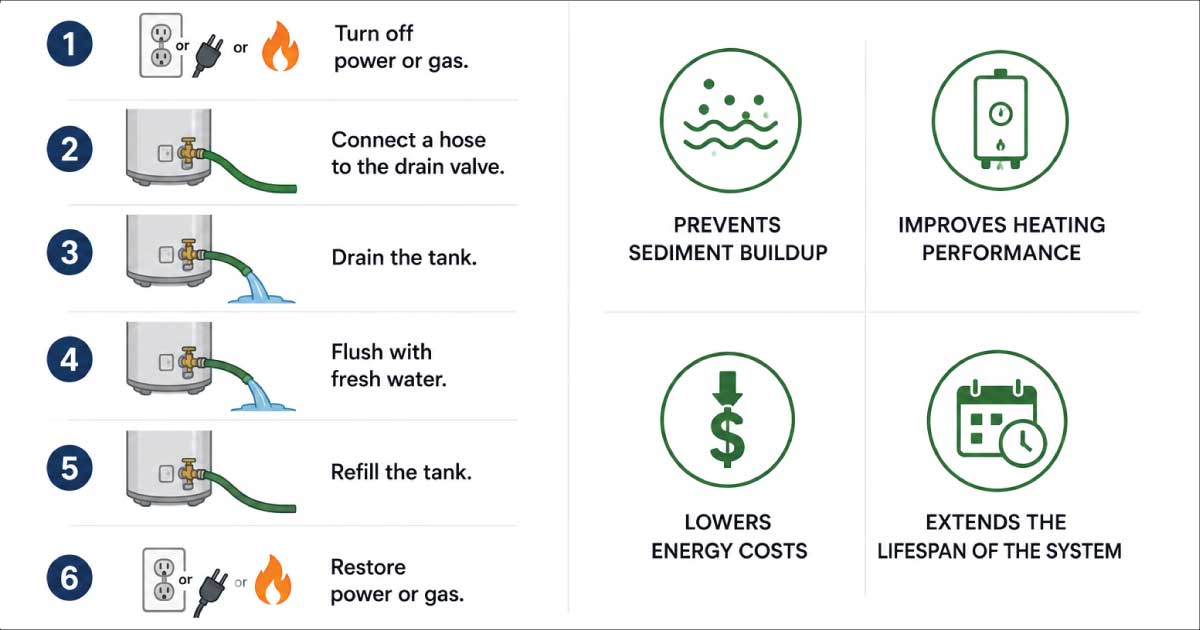
Flushing a water heater removes accumulated sediment and helps restore efficiency. Regular maintenance can improve performance, extend equipment life, and reduce the risk of future heating problems.
Basic Steps
Follow these basic steps to flush a water heater safely and effectively.
- Turn off power or gas.
- Connect a hose to the drain valve.
- Drain the tank.
- Flush with fresh water.
- Refill the tank.
- Restore power or gas.
Benefits of Annual Flushing
Annual flushing is one of the most effective maintenance tasks for a water heater. It helps prevent sediment buildup, improves heating performance, lowers energy costs, and extends the lifespan of the system.
Water Heater Takes Too Long to Heat
If hot water eventually arrives but takes longer than normal, the water heater may be operating inefficiently. Several mechanical or maintenance-related issues can slow the heating process and increase energy consumption.
Possible Causes
These issues commonly reduce heating speed and recovery time:
1. Sediment Accumulation
Mineral deposits at the bottom of the tank reduce heat transfer efficiency, forcing the water heater to work longer to reach the desired temperature.
2. Failing Heating Element
A partially failed heating element may still operate but struggle to heat the entire tank efficiently, resulting in longer heating cycles.
3. Thermostat Problems
A faulty thermostat may not regulate temperature correctly, causing delayed heating and inconsistent water temperatures.
4. Aging Water Heater
Older water heaters naturally lose efficiency over time due to wear, corrosion, and reduced component performance.
Water Heater Produces Lukewarm Water Only
Many homeowners experience water that feels warm but never reaches the desired hot temperature. This problem often points to heating system issues or excessive demand.
Common Reasons
Several factors can prevent a water heater from producing fully hot water.
- Thermostat set too low
- Partial heating element failure
- Burner performance issues
- Excessive hot water demand
Quick Fixes
Simple adjustments and inspections may help restore proper water temperature.
- Increase thermostat settings slightly.
- Inspect heating components.
- Reduce simultaneous hot water usage.
Water Heater Has Power but No Hot Water
When power is reaching the unit but the water remains cold, the issue is usually related to internal components rather than the electrical supply itself.
Likely Causes
The following problems are commonly responsible for this situation:
1. Failed Heating Element
The most common cause. A burned-out element cannot transfer heat to the water.
2. Defective Thermostat
A faulty thermostat may prevent the heating elements from receiving power when needed.
3. Loose Wiring
Electrical connections can loosen over time, interrupting power flow to critical components.
4. Internal Control Failure
Modern water heaters often use electronic control boards. If the board fails, heating functions may stop completely.
Water Heater Error Codes
Modern water heaters often display diagnostic error codes when a problem occurs. These codes help identify faults quickly and make troubleshooting easier for homeowners and service technicians.
Common Categories
Most error codes fall into one of the following categories:
- Ignition failure
- Sensor malfunction
- Overheating
- Electrical faults
- Communication errors
Important Note
Always refer to your owner’s manual for the exact meaning of an error code. Code definitions vary between manufacturers and water heater models.
Can a Bad Anode Rod Cause Heating Problems?
A worn anode rod does not directly stop a water heater from heating. However, it can contribute to corrosion and sediment buildup that gradually reduce heating efficiency and overall performance.
How It Affects Performance
As the anode rod deteriorates, rust and mineral deposits can accumulate inside the tank. This buildup interferes with heat transfer and may cause slower heating and reduced efficiency.
Solution
Replacing a worn anode rod is an inexpensive maintenance task that can extend the life of the water heater and help prevent internal tank corrosion.
When the Water Heater Is Too Small
Sometimes the water heater is working properly, but it simply cannot meet the household’s hot water demand. This is common in larger households or homes with increased water usage.
Signs
These symptoms often indicate that the water heater capacity is too small:
- Hot water runs out daily
- Multiple showers cause shortages
- Growing family demand
Solutions
Increasing hot water capacity can help eliminate frequent shortages and improve comfort.
- Upgrade tank size
- Install a larger capacity model
- Consider a tankless water heater
Water Heater Age Matters
Most traditional tank water heaters last between 8 and 12 years. As they age, efficiency decreases and major components become more likely to fail, resulting in higher energy costs and more frequent repair needs.
Signs of an Aging Water Heater
These warning signs often indicate that a water heater is nearing the end of its useful life:
- Frequent repairs
- Rusty water
- Reduced efficiency
- Slow heating
- Leaks
When to Replace
If your water heater is approaching the end of its lifespan and experiencing recurring problems, replacement is often more cost-effective than continuing to pay for repeated repairs.
DIY Troubleshooting Checklist for Water Heater Not Heating Water
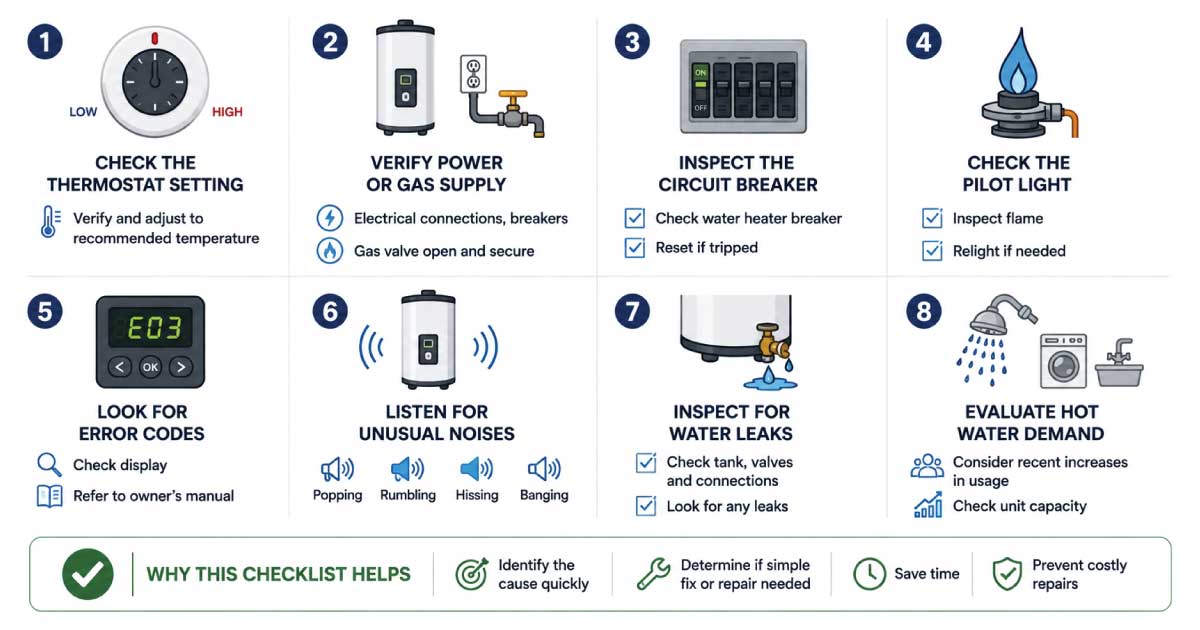
Before calling a plumber, perform a few basic checks. These simple troubleshooting steps can often identify the source of the problem and save time during the repair process.
1. Check the Thermostat Setting
The thermostat controls the water temperature inside the tank. If it is set too low or has been adjusted accidentally, the water heater may not provide sufficient hot water. Verify the setting and adjust it to the recommended temperature for optimal performance.
2. Verify Power or Gas Supply
A water heater cannot operate without a reliable power or gas source. Check that electrical connections are secure, breakers are on, and gas valves are open. Any interruption in the supply can prevent the unit from heating water effectively.
3. Inspect the Circuit Breaker
A tripped circuit breaker is a common reason for electric water heater problems. Locate the breaker panel and check whether the water heater breaker has switched off. Reset it if necessary and monitor the system for any recurring electrical issues.
4. Check the Pilot Light
Gas water heaters rely on a pilot light to ignite the burner. If the pilot light goes out, the heater cannot warm the water. Inspect the flame and carefully relight it according to the manufacturer’s instructions if needed.
5. Look for Error Codes
Many modern water heaters feature digital displays that show diagnostic error codes. These codes help identify specific problems such as sensor failures or ignition issues. Refer to the owner’s manual to understand the code and recommended solution.
6. Listen for Unusual Noises
Strange sounds coming from the water heater can indicate underlying issues. Popping, rumbling, hissing, or banging noises often result from sediment buildup, pressure problems, or worn components. Addressing these warning signs early can help prevent major repairs.
7. Inspect for Water Leaks
Carefully examine the tank, valves, and plumbing connections for signs of leaking water. Even small leaks can reduce efficiency and lead to property damage over time. Prompt leak detection helps maintain system reliability and prevent costly repairs.
8. Evaluate Hot Water Demand
Increased household hot water usage can make a functioning water heater seem inadequate. Multiple showers, appliances, or additional family members may exceed the unit’s capacity. Consider recent changes in demand before assuming the water heater has failed.
Why This Checklist Helps
Following these troubleshooting steps often reveals the cause of the problem quickly and helps determine whether a simple fix or professional repair is needed.
When to Call a Professional
While some water heater problems can be resolved through basic troubleshooting, certain issues require professional expertise. A licensed technician can safely diagnose complex problems and perform repairs that involve gas, electricity, or major system components.
Call a Licensed Technician If
The following situations typically require professional inspection and repair:
- You smell gas.
- Electrical wiring is damaged.
- The tank is leaking.
- The control board has failed.
- Heating elements require testing.
- Error codes persist after troubleshooting.
Safety Considerations
Attempting advanced water heater repairs without proper training can create serious safety risks. Professional service helps ensure repairs are completed correctly while protecting your home from electrical, gas, and water-related hazards.
How to Prevent Future Heating Problems
Preventive maintenance is the best way to avoid unexpected water heater breakdowns. Regular inspections and servicing help improve efficiency, reduce repair costs, and extend the lifespan of the equipment.
Annual Maintenance Tasks
Perform these maintenance tasks at least once a year to keep your water heater operating efficiently:
- Flush the tank
- Inspect the anode rod
- Test the pressure relief valve
- Check thermostat settings
- Inspect gas burners
- Examine electrical connections
Benefits of Regular Maintenance
Routine maintenance helps prevent common heating problems, improves energy efficiency, extends equipment life, and ensures a reliable supply of hot water throughout the year.
Repair vs Replacement
Many homeowners wonder whether repairing a faulty water heater makes sense or if replacement is the better investment. The answer depends on the unit’s age, condition, and repair costs.
Repair Is Usually Worth It If
Repairs are often the most economical option when the water heater is relatively new and the problem is limited to replaceable components.
- The unit is under 8 years old.
- Repairs are minor.
- The tank is in good condition.
Replacement May Be Better If
Replacing the unit is often the smarter long-term choice when major problems exist or repair expenses continue to increase.
- The tank leaks.
- Multiple components have failed.
- The unit is over 10–12 years old.
- Repair costs approach replacement costs.
Professional Evaluation
A professional inspection can help determine the most cost-effective solution. An experienced technician can assess the condition of the water heater and recommend whether repair or replacement offers the best value.
Final Thoughts
If your water heater is not heating water, don’t panic. Many heating problems are caused by common issues such as tripped breakers, failed heating elements, thermostat malfunctions, pilot light failures, or sediment buildup. By following a systematic troubleshooting process, homeowners can often identify the problem and restore hot water quickly.
Regular maintenance, annual tank flushing, and prompt repairs can prevent many of these issues from occurring in the first place. Whether you have an electric or gas water heater, understanding how the system works is the first step toward keeping it running efficiently.
When troubleshooting doesn’t solve the problem, professional assistance can help diagnose more complex failures and determine whether repair or replacement is the best long-term solution.
👉 Complete Water Heater Problems Guide (Fix All Issues) covers everything you need to know about diagnosing and fixing common water heater troubles. From no hot water and leaks to thermostat and heating element failures, this guide provides practical solutions. Read the full post to learn expert troubleshooting tips and keep your water heater running efficiently.