Few household issues are as frustrating as inconsistent hot water temperature. One minute the shower is perfectly warm, and the next it’s suddenly icy cold or scalding hot. Whether it happens in the shower, at the kitchen sink, or throughout the house, fluctuating water temperature is more than just an inconvenience—it can be a sign of underlying plumbing or water heater problems that shouldn’t be ignored.
In this comprehensive guide, we will explore what causes inconsistent hot water temperature, how to diagnose the problem, practical fixes you can try, and when it’s time to call a professional. Understanding the issue can help you restore comfort, improve energy efficiency, and extend the lifespan of your water heating system.
What Does Inconsistent Hot Water Mean?
Inconsistent hot water describes a situation where water temperature changes unpredictably during normal use, disrupting comfort and routine activities. These fluctuations may happen suddenly or repeatedly and can affect one fixture or the entire home. While sometimes minor, persistent inconsistency often signals underlying water heater or plumbing issues.
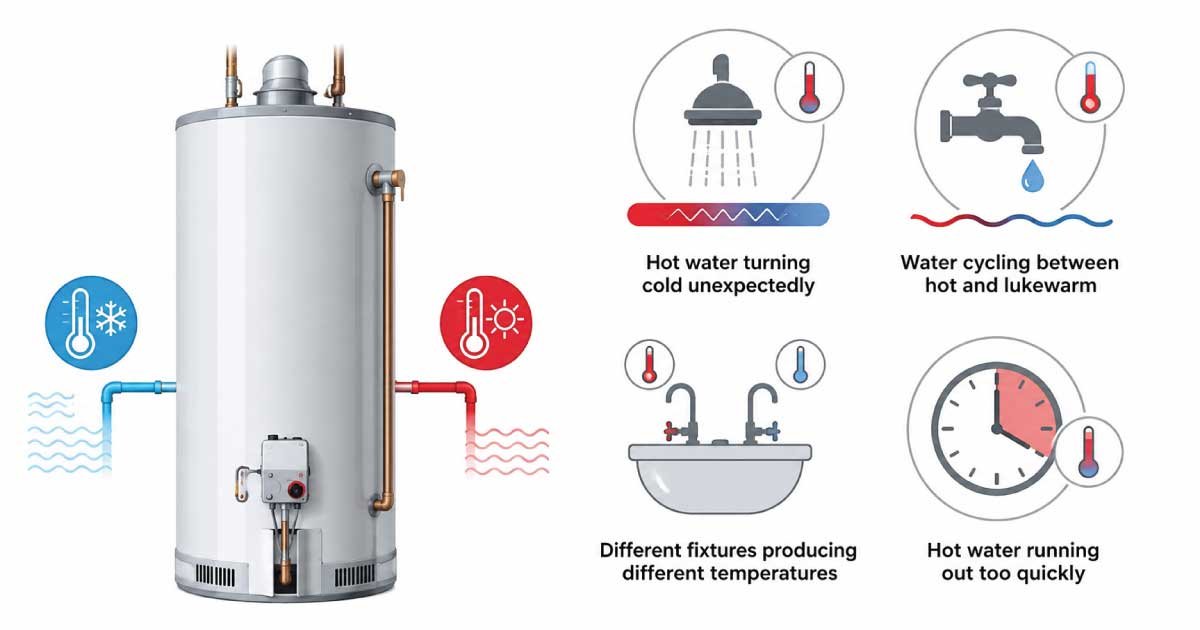
- Hot water turning cold unexpectedly
- Water cycling between hot and lukewarm
- Different fixtures producing different temperatures
- Hot water running out too quickly
These issues can occur occasionally or persist over time. While some causes are simple, others may indicate serious mechanical or plumbing problems.
Common Causes of Inconsistent Hot Water Temperature
Inconsistent hot water temperature is a common household issue that often develops gradually. It can stem from internal water heater problems, plumbing imbalances, or system limitations. Identifying the root cause is essential for restoring steady performance, improving comfort, and preventing further wear or unexpected repairs.
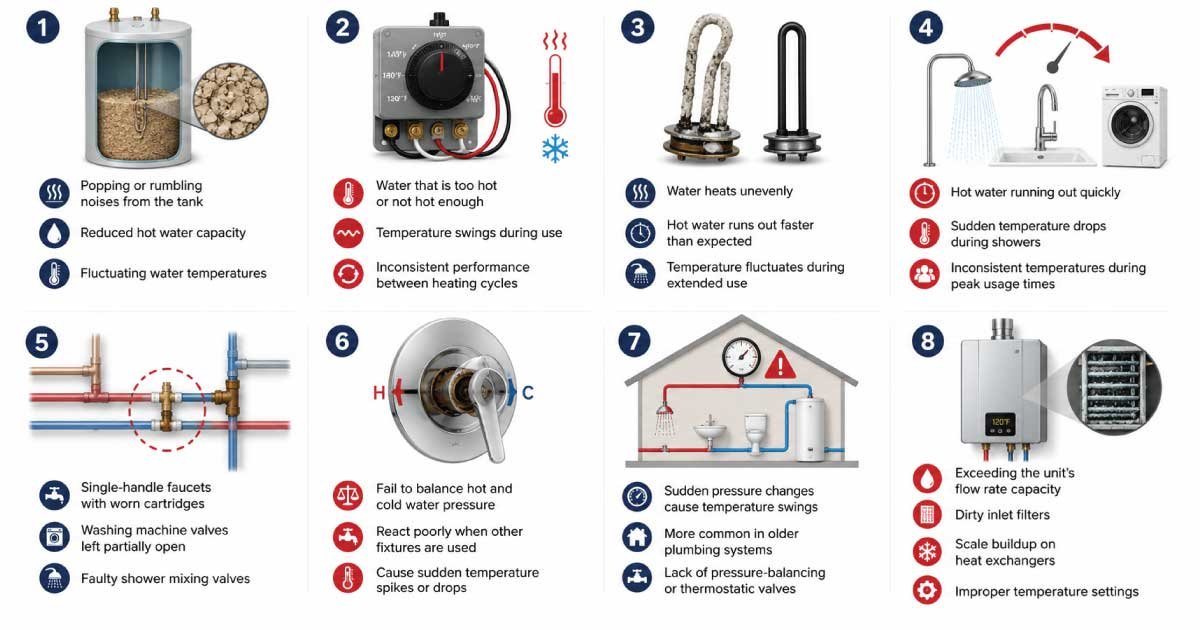
1. Sediment Buildup in the Water Heater
Over time, minerals present in hard water naturally separate and settle inside the water heater tank. As this sediment layer thickens, it interferes with heat transfer and causes uneven warming of the water. The result is fluctuating temperatures that worsen gradually, especially in older or poorly maintained systems.
Signs of sediment buildup include:
- Popping or rumbling noises from the tank
- Reduced hot water capacity
- Fluctuating water temperatures
Sediment buildup is one of the most common causes of inconsistent hot water, especially in older tank-style water heaters.
2. Faulty Thermostat
The thermostat is responsible for maintaining a steady water temperature, and even small calibration issues can cause noticeable fluctuations. When a thermostat begins to fail, it may send incorrect signals, causing the heater to overheat or shut off too soon. This leads to unpredictable temperature changes during normal use.
A failing thermostat can cause:
- Water that is too hot or not hot enough
- Temperature swings during use
- Inconsistent performance between heating cycles
Electric water heaters often have separate thermostats for upper and lower heating elements, meaning one faulty component can disrupt the entire system.
3. Aging or Failing Heating Elements
Heating elements gradually wear down due to constant exposure to heat and mineral-heavy water. As they age, efficiency drops or elements fail completely, preventing consistent heating. When one element underperforms, the water heater struggles to maintain stable temperatures, especially during prolonged or high-demand usage.
When one element isn’t working properly:
- Water heats unevenly
- Hot water runs out faster than expected
- Temperature fluctuates during extended use
This problem is especially noticeable during showers or when multiple fixtures are used simultaneously.
4. Undersized Water Heater
An undersized water heater often cannot keep up with modern household demands, especially during busy mornings or evenings. As hot water is used faster than it can be reheated, temperature consistency suffers. This results in noticeable drops in heat whenever multiple fixtures or appliances operate close together.
Indicators of an undersized water heater include:
- Hot water running out quickly
- Sudden temperature drops during showers
- Inconsistent temperatures during peak usage times
Household size, appliance use, and lifestyle changes can all affect hot water demand over time.
5. Cross-Connection Issues
Cross-connection problems occur when hot and cold water unintentionally mix within the plumbing system before reaching a fixture. Even with a properly working water heater, this mixing can cause unpredictable temperature changes. These issues often develop gradually and may affect only certain fixtures or rooms.
Common sources of cross-connections include:
- Single-handle faucets with worn cartridges
- Washing machine valves left partially open
- Faulty shower mixing valves
Cross-connections can be tricky to diagnose but are a frequent cause of temperature instability.
6. Broken or Worn Shower Valve
When temperature inconsistency is limited mainly to the shower, the water heater is often not the root cause. A worn or failing shower valve can no longer regulate pressure correctly, leading to sudden changes in temperature whenever water demand shifts elsewhere in the home.
A worn-out shower valve can:
- Fail to balance hot and cold water pressure
- React poorly when other fixtures are used
- Cause sudden temperature spikes or drops
This is especially common in older homes with aging plumbing fixtures.
7. Pressure Imbalances in the Plumbing System
Water temperature and water pressure are closely connected, and sudden pressure changes can quickly lead to uncomfortable temperature swings. When cold or hot water pressure drops elsewhere in the home, the balance shifts at the fixture in use. This problem is especially noticeable during showers in older plumbing systems.
Homes without pressure-balancing or thermostatic valves are more prone to this issue.
8. Tankless Water Heater Limitations
Tankless water heaters are designed to provide hot water on demand, but they still have performance limits. When usage exceeds what the system can handle, temperature stability suffers. Maintenance issues or incorrect settings can further contribute to fluctuating water temperatures during normal household use.
Common tankless-related causes include:
- Exceeding the unit’s flow rate capacity
- Dirty inlet filters
- Scale buildup on heat exchangers
- Improper temperature settings
When demand exceeds capacity, water temperature may fluctuate significantly.
How to Diagnose the Problem
Before attempting any repairs, it’s important to identify where the temperature inconsistency originates. Careful observation can often reveal whether the issue is limited to a single fixture or affects the entire plumbing system. Understanding these patterns helps prevent unnecessary repairs and guides the next steps.
Ask yourself:
- Does the problem occur at all fixtures or just one?
- Does temperature change when other water is used?
- Is the water heater old or making unusual noises?
- Has hot water demand increased recently?
Testing different faucets and observing patterns can help determine whether the issue is fixture-related or system-wide.
⭐ Don’t Miss: Read this related post. 👉
Practical Fixes You Can Try
Before assuming major repairs are needed, several practical solutions can help restore consistent hot water temperature. Many common issues stem from maintenance gaps, minor adjustments, or localized fixture problems. Trying these fixes can improve performance, reduce discomfort, and prevent unnecessary service calls or premature equipment replacement.
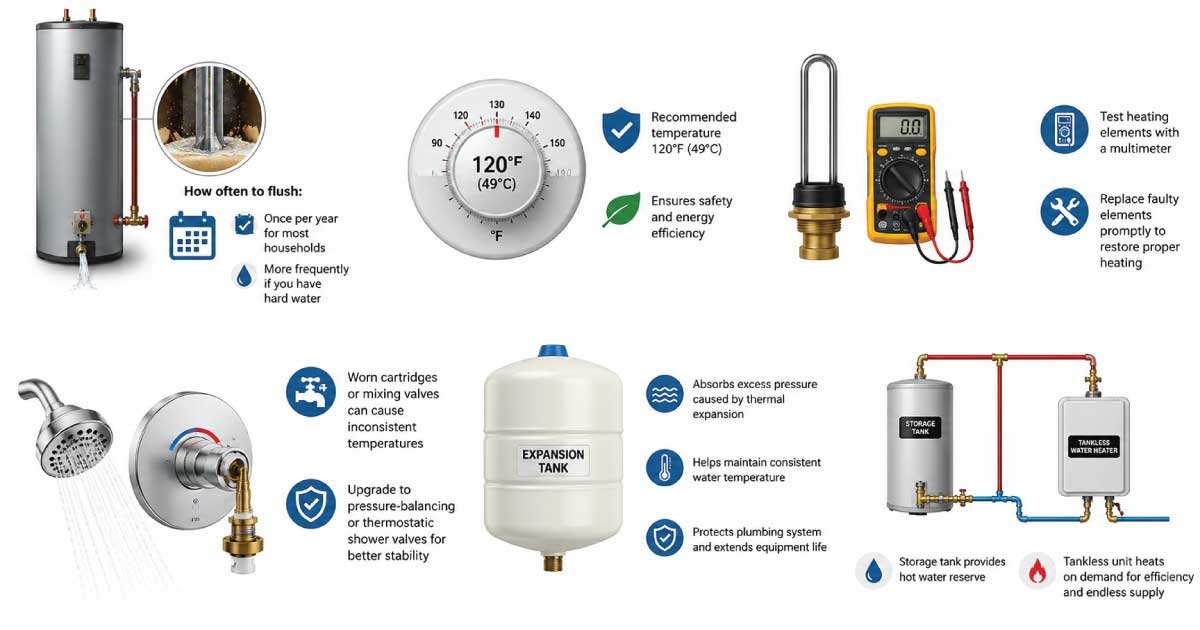
Flush the Water Heater Tank
Flushing the water heater tank helps remove accumulated sediment that interferes with proper heating. Clearing this buildup allows heat to transfer more efficiently, often restoring stable water temperatures and improving overall heater performance without requiring major repairs.
How often to flush:
- Once per year for most households
- More frequently if you have hard water
This is a relatively simple maintenance task but can make a big difference.
Adjust the Thermostat Settings
Checking and adjusting the water heater thermostat is one of the easiest ways to address inconsistent hot water. When the setting is too low or unevenly calibrated, temperature fluctuations are more likely. A stable, properly set thermostat helps maintain consistent heating throughout daily use.
The recommended temperature is usually around 120°F (49°C) for both safety and energy efficiency.
If temperatures remain inconsistent after adjustment, the thermostat may need replacement.
Inspect and Replace Heating Elements
Heating elements are critical for maintaining steady water temperatures in electric water heaters. When they weaken or fail, heating becomes uneven. Homeowners comfortable with basic electrical work can often identify problems early and prevent further performance decline.
- Test heating elements with a multimeter
- Replace faulty elements promptly to restore proper heating
Replace Faulty Fixtures or Valves
When inconsistent temperature occurs at only one faucet or shower, the issue is often localized. Worn cartridges or mixing valves allow improper blending of hot and cold water, leading to sudden temperature changes even when the water heater functions correctly.
Upgrading to pressure-balancing or thermostatic shower valves can greatly improve temperature stability.
Install a Water Heater Expansion Tank
In plumbing systems with closed loops, thermal expansion can create excess pressure that interferes with consistent water temperature. As heated water expands, pressure spikes may occur, leading to fluctuations at fixtures. Installing an expansion tank absorbs this excess pressure, helping stabilize temperature and protect plumbing components.
⭐ Don’t Miss: Read this related post. 👉
When to Call a Professional Plumber
Some inconsistent hot water problems go beyond basic maintenance and require professional expertise. Persistent temperature fluctuations, aging equipment, or complex plumbing issues can pose safety risks if handled incorrectly. A licensed plumber has the tools and experience to diagnose underlying problems and provide reliable, long-term solutions.
- Temperature fluctuations persist despite troubleshooting
- Electrical or gas components are involved
- You suspect cross-connections in the plumbing system
- The water heater is leaking or corroded
- The unit is more than 10–12 years old
A professional can safely diagnose complex issues and recommend long-term solutions.
Preventing Inconsistent Hot Water in the Future
Preventive maintenance plays a critical role in maintaining stable hot water temperatures and avoiding unexpected disruptions. Regular care helps catch small issues early, improves system efficiency, and extends the lifespan of your water heater and plumbing components.
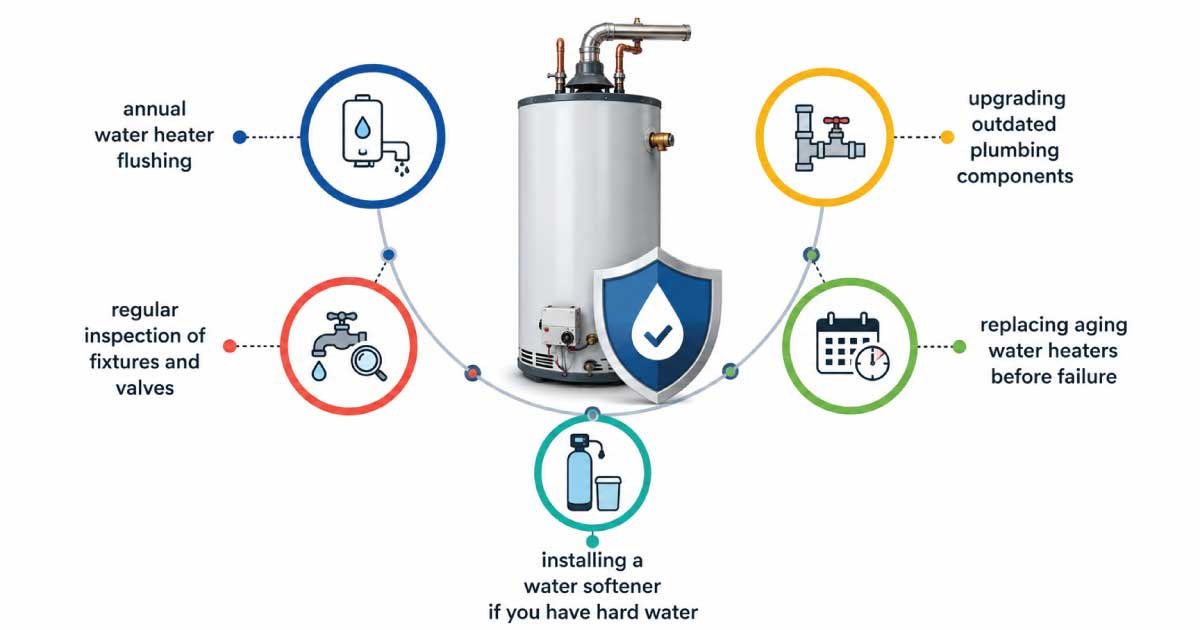
Best practices include:
- Annual water heater flushing
- Regular inspection of fixtures and valves
- Installing a water softener if you have hard water
- Upgrading outdated plumbing components
- Replacing aging water heaters before failure
Proactive care not only ensures consistent hot water but also improves energy efficiency and reduces repair costs.
Should You Replace Your Water Heater?
In some cases, ongoing hot water problems indicate that repairs are no longer the most practical solution. An aging or inefficient water heater may struggle to deliver consistent temperatures despite maintenance efforts. Evaluating replacement at the right time can prevent repeated breakdowns and provide more reliable hot water.
- Repairs are frequent and costly
- The unit is near the end of its lifespan
- Hot water demand has increased
- Efficiency has significantly declined
Modern water heaters offer better temperature control, improved efficiency, and advanced safety features.
Final Thoughts
Inconsistent hot water temperature is a common but solvable problem. Whether the cause is sediment buildup, faulty components, plumbing issues, or an undersized system, identifying the root issue is the first step toward a reliable solution.
With proper maintenance, timely repairs, and occasional upgrades, you can enjoy steady, comfortable hot water throughout your home. If problems persist, don’t hesitate to seek professional help—your comfort, safety, and peace of mind are worth it.
⭐ Don’t Miss: Read this related post. 👉