Few household problems are as frustrating as stepping into the shower expecting hot water and getting only lukewarm water instead. A water heater that no longer produces properly hot water can disrupt daily routines, increase energy bills, and signal underlying issues that shouldn’t be ignored. Whether your water heater suddenly changed performance or has been gradually losing efficiency, understanding the reasons behind lukewarm water is the first step toward fixing the problem.
This comprehensive guide explains the most common causes of lukewarm water from a water heater, how to troubleshoot them, when to attempt DIY fixes, and when it’s best to call a professional. We’ll also cover maintenance tips to help prevent the problem from happening again.
Understanding What “Lukewarm” Water Means
Before diagnosing the issue, it’s important to clarify what “lukewarm” means in practical terms. Lukewarm water is usually warm enough to notice but not hot enough for comfortable bathing, cleaning, or sanitizing. This often indicates that the water heater is heating water partially but not fully to the desired temperature.
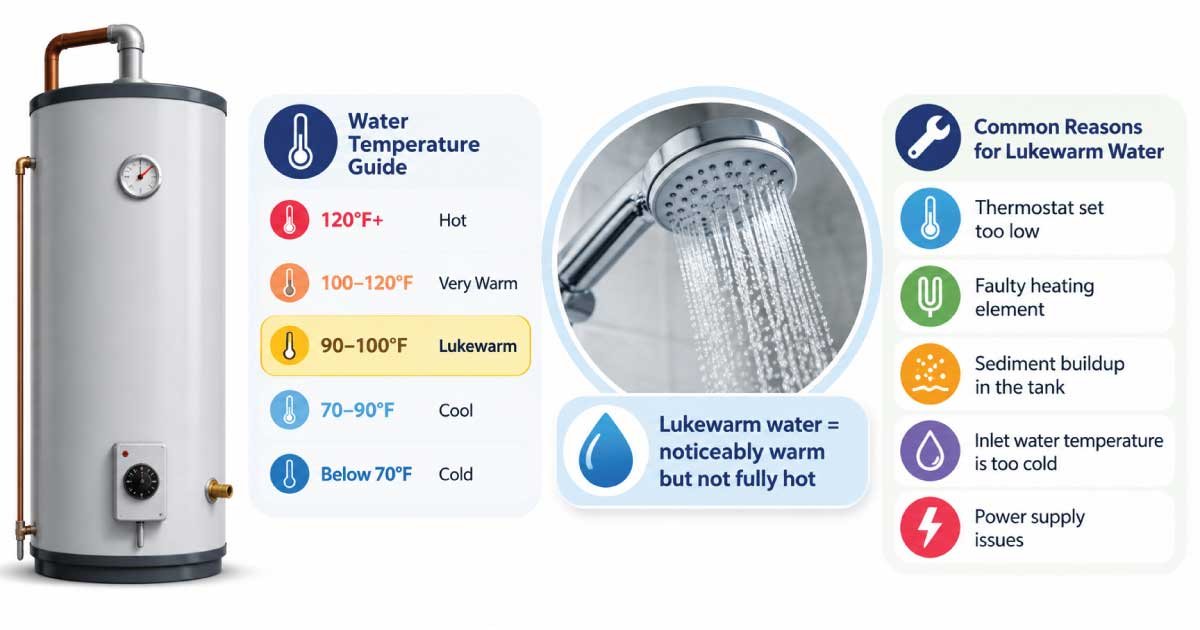
This distinction matters because it helps narrow down the potential causes. A complete lack of hot water points to power or fuel failure, while lukewarm water usually suggests component malfunction, incorrect settings, or efficiency loss.
Common Causes of Lukewarm Water from a Water Heater
Lukewarm water can be frustrating and often signals an underlying issue with your water heater or plumbing system. From simple thermostat adjustments to component failures or capacity limitations, several common problems can prevent your heater from delivering consistently hot water throughout the home.
1. Thermostat Set Too Low
One of the simplest and most common causes of lukewarm water is an incorrectly set thermostat, especially in homes where the heater is rarely checked. Even a small adjustment downward can significantly reduce output, leaving water warm instead of hot during daily use without obvious warning signs.
- Water heaters are often factory-set to around 120°F (49°C).
- If the thermostat has been accidentally lowered, the water may never reach a hot temperature.
- Children, cleaning, or vibration can sometimes cause the dial to move.
Solution:
Check the thermostat and adjust it gradually. Avoid setting it too high, as excessive temperatures can increase energy costs and pose a scalding risk.
2. Faulty Thermostat
When temperature adjustments fail to improve performance, the underlying issue is often a faulty thermostat inside the water heater. This component controls heating cycles, and when it malfunctions, it can interrupt heating too early or send incorrect signals, preventing the system from delivering consistently hot water.
- A broken thermostat may misread water temperature.
- It may shut off heating too early.
- In electric water heaters, one thermostat might work while the other fails.
Signs of a faulty thermostat:
- Inconsistent water temperature
- Water that never gets fully hot
- Sudden changes between warm and cool
Solution:
Thermostat replacement is relatively inexpensive but often requires electrical knowledge. If unsure, hire a licensed technician.
3. Heating Element Failure (Electric Water Heaters)
In electric water heaters, heating elements play a critical role in raising water temperature to usable levels. These elements operate at different stages, and when one begins to fail, the unit may still run but struggle to produce truly hot water for normal household demands.
- If one element fails, the heater may still produce warm water—but not hot.
- Upper and lower elements serve different functions, and failure of either can affect temperature.
Symptoms:
- Lukewarm water throughout the day
- Hot water runs out quickly
- Circuit breaker remains on, but performance is poor
Solution:
Test heating elements with a multimeter. Replace any defective elements to restore full heating capacity.
4. Sediment Buildup in the Tank
Over time, water heaters naturally collect mineral deposits, especially in homes with hard water. These deposits settle at the bottom of the tank and interfere with heat transfer. As buildup increases, the heater becomes less efficient, forcing it to work harder while delivering only lukewarm water.
- Sediment forms an insulating layer between the heating element and the water.
- This reduces heating efficiency.
- The heater works harder but produces less heat.
Consequences of sediment buildup:
- Lukewarm water
- Increased energy bills
- Shortened lifespan of the heater
Solution:
Flush the tank to remove sediment. Annual flushing is recommended, especially in areas with hard water.
5. Water Heater Is Too Small for Household Demand
A water heater that once worked well can struggle if household hot water needs increase over time. Changes in daily routines or home upgrades can easily exceed the heater’s capacity, causing it to run out of hot water faster than expected and deliver only lukewarm results.
- Adding family members
- Installing larger tubs or multiple showers
- Increased appliance use (dishwashers, washing machines)
All these factors can overwhelm a small water heater, resulting in lukewarm water.
Solution:
Consider upgrading to a larger tank or switching to a tankless water heater if demand consistently exceeds supply.
6. Dip Tube Problems
The dip tube is a simple but essential internal component that ensures incoming cold water is heated properly. When it becomes damaged or worn out, cold water enters the tank incorrectly, mixes too soon with hot water, and reduces the overall temperature delivered to faucets and fixtures.
- A broken or deteriorated dip tube allows cold water to mix at the top.
- This lowers overall water temperature.
Signs of dip tube failure:
- Water temperature drops quickly
- Plastic fragments in faucet aerators
- Lukewarm water even with low usage
Solution:
Replacing the dip tube is relatively affordable and can significantly improve water temperature.
7. Gas Burner or Pilot Light Issues (Gas Water Heaters)
Gas water heaters depend on a properly functioning burner and pilot light to generate sufficient heat. When these components become dirty, weak, or unstable, the heating process is disrupted. Even minor gas or airflow issues can prevent the unit from reaching full temperature, resulting in consistently lukewarm water.
- A weak or dirty burner produces insufficient heat.
- A malfunctioning thermocouple can cause inconsistent heating.
- Poor ventilation can also reduce efficiency.
Symptoms:
- Lukewarm water
- Soot buildup
- Pilot light frequently going out
Solution:
Clean the burner and check gas supply. For safety, gas-related repairs should be handled by professionals.
8. Cross-Connection Plumbing Issues
Sometimes lukewarm water is not caused by the water heater at all but by plumbing issues within the home. Cross-connections allow cold and hot water to mix unintentionally before reaching fixtures, making it seem like the heater is underperforming even when it is functioning correctly.
- Defective mixing valves
- Faulty single-handle faucets
- Shower valves stuck in a mixed position
Result:
The water heater works properly, but water arrives lukewarm at the tap.
Solution:
Check fixtures individually to identify the source. Repair or replace faulty valves as needed.
⭐ Don’t Miss: Read this related post. 👉
DIY Troubleshooting Checklist
Before calling a plumber, homeowners can safely perform a few basic checks to narrow down the cause of lukewarm water. These simple steps require no specialized tools and can help determine whether the issue is minor, user-adjustable, or something that requires professional repair.
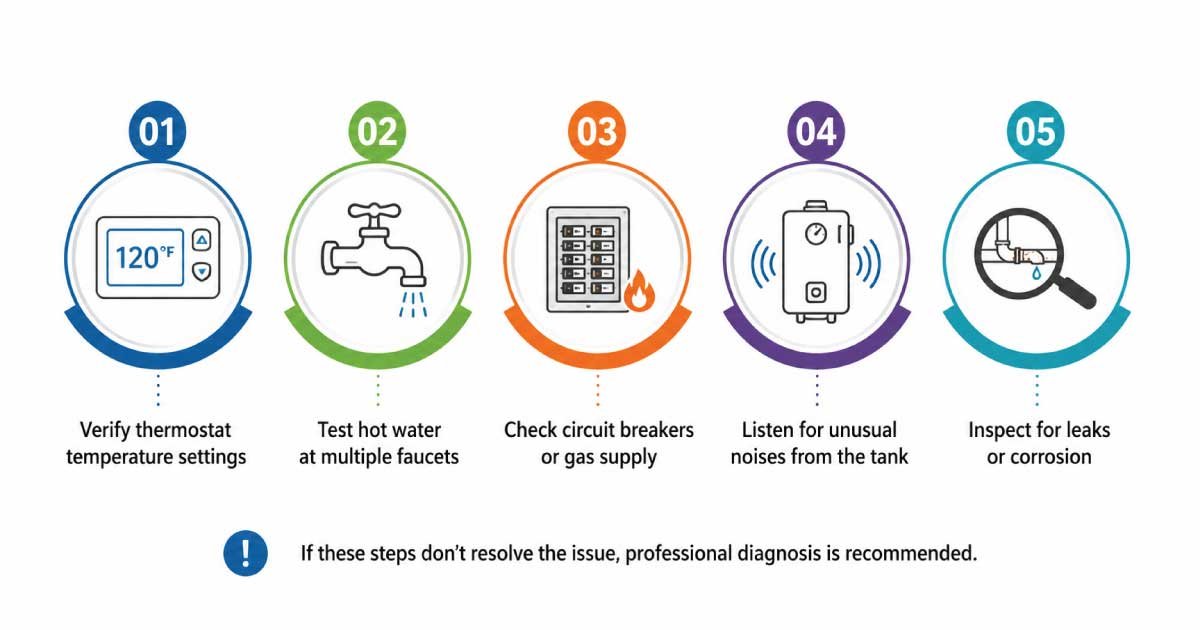
- Verify thermostat temperature settings
- Test hot water at multiple faucets
- Check circuit breakers or gas supply
- Listen for unusual noises from the tank
- Inspect for leaks or corrosion
If these steps don’t resolve the issue, professional diagnosis is recommended.
⭐ Don’t Miss: Read this related post. 👉
When to Call a Professional
While some water heater problems can be handled with basic DIY checks, many situations demand professional expertise. Complex electrical components, gas systems, or aging equipment introduce safety risks and potential code violations. Knowing when to stop troubleshooting protects both your home and your water heater investment.
- Electrical testing is required
- Gas components are involved
- The tank is leaking
- The unit is over 10–12 years old
- Repairs are frequent and costly
Attempting advanced repairs without proper training can be dangerous and may void warranties.
Preventing Lukewarm Water Problems in the Future
Preventive maintenance is the most effective way to avoid lukewarm water and unexpected breakdowns. By keeping your water heater in good condition, you improve performance, extend its lifespan, and reduce repair costs. Small, routine actions can prevent many common issues before they disrupt daily comfort.
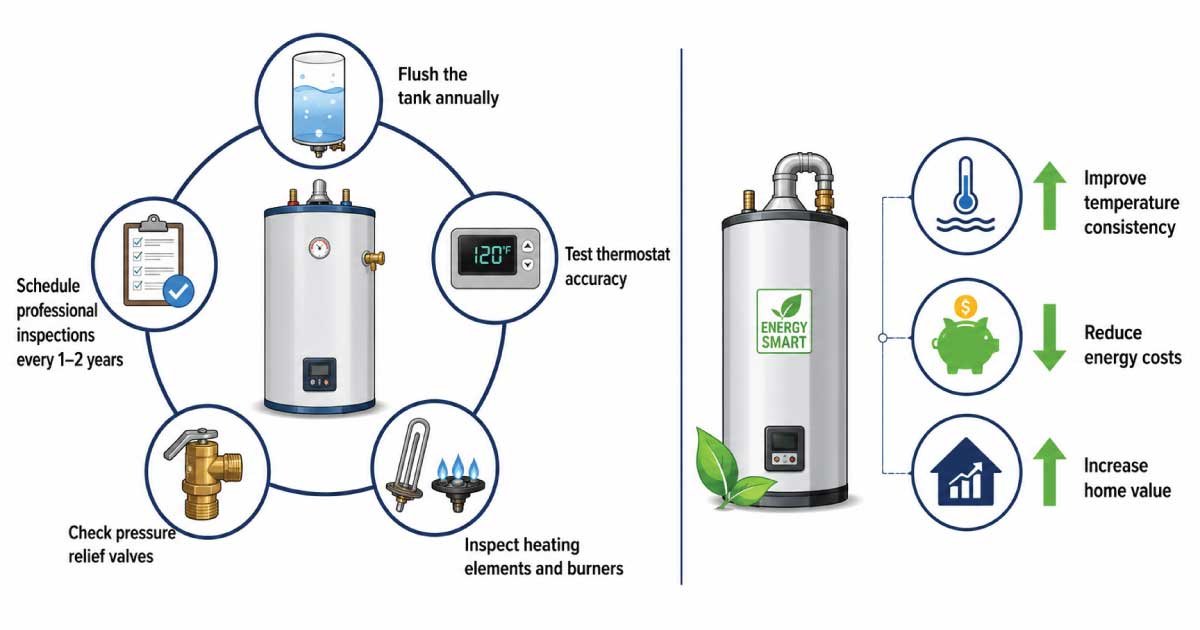
Regular Maintenance Tips
Consistent maintenance plays a key role in keeping your water heater operating efficiently and preventing slow heating issues. Simple routine checks and periodic professional inspections can reduce unexpected breakdowns, extend system lifespan, and ensure reliable hot water availability throughout the year.
- Flush the tank annually
- Test thermostat accuracy
- Inspect heating elements and burners
- Check pressure relief valves
- Schedule professional inspections every 1–2 years
Consider Energy-Efficient Upgrades
Modern water heaters are designed to deliver more reliable performance while using less energy. If your current unit is aging or inefficient, upgrading can provide noticeable long-term benefits for both comfort and operating costs.
- Improve temperature consistency
- Reduce energy costs
- Increase home value
Final Thoughts
A water heater that only produces lukewarm water is more than an inconvenience—it’s a sign that something isn’t working as it should. From simple thermostat adjustments to more complex component failures, the causes vary widely, but most issues are repairable when addressed early.
By understanding how your water heater works, performing routine maintenance, and knowing when to seek professional help, you can restore reliable hot water and extend the life of your system. Don’t ignore lukewarm water—it’s your water heater’s way of telling you it needs attention.
⭐ Don’t Miss: Read this related post. 👉