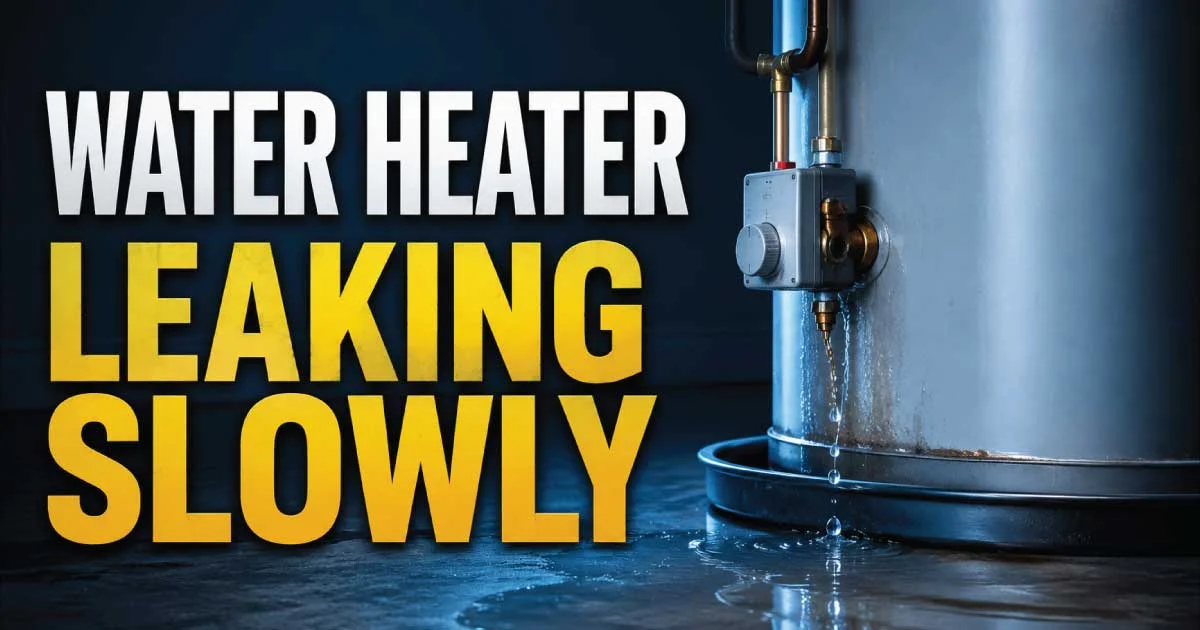
A slowly leaking water heater might not seem like an emergency at first. There’s no flooding, no loud noises, and everything still seems to work. However, that small, steady drip can be a warning sign of bigger problems ahead. Left unchecked, a slow leak can cause structural damage, increase energy bills, ruin appliances, and even lead to sudden tank failure.
In this blog post, we’ll explore why water heaters leak slowly, how to identify the source, the risks of ignoring it, and what steps you should take to fix or prevent further damage. Whether you’re a homeowner, landlord, or property manager, understanding these issues can save you time, money, and stress.
Why a Slow Water Heater Leak Should Never Be Ignored
A slow leak from a water heater is a serious warning sign that the system’s internal integrity has been compromised. Because these leaks develop gradually, they often escape notice, allowing hidden damage to accumulate until repairs become costly, extensive, or require full water heater replacement.
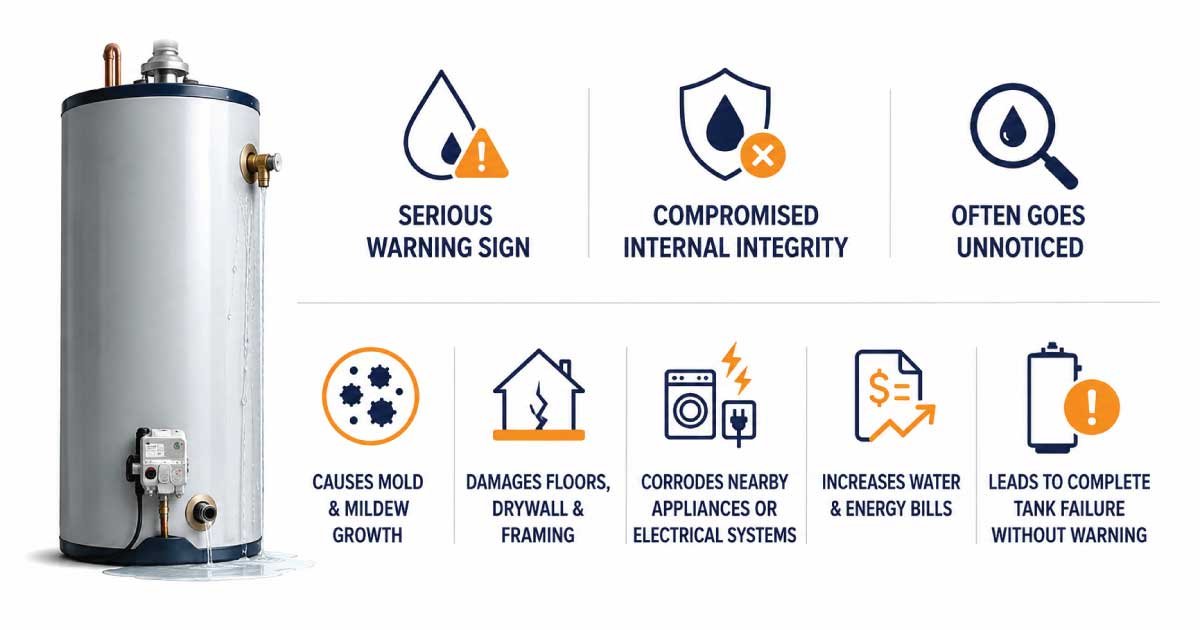
A water heater is designed to be a sealed system. If water is escaping—even slowly—it means something is no longer working as intended. Unlike a burst pipe, slow leaks are dangerous precisely because they often go unnoticed for weeks or months.
Over time, even a minor leak can:
- Cause mold and mildew growth
- Damage floors, drywall, and framing
- Corrode nearby appliances or electrical systems
- Increase water and energy bills
- Lead to complete tank failure without warning
In many cases, homeowners only discover the issue once visible damage has already occurred.
Common Causes of a Slowly Leaking Water Heater
A slow water heater leak can come from several different components, and identifying the exact source is essential for proper repair. Some causes are minor and fixable, while others signal serious internal damage. Understanding these common causes helps homeowners act quickly and avoid unnecessary water damage.
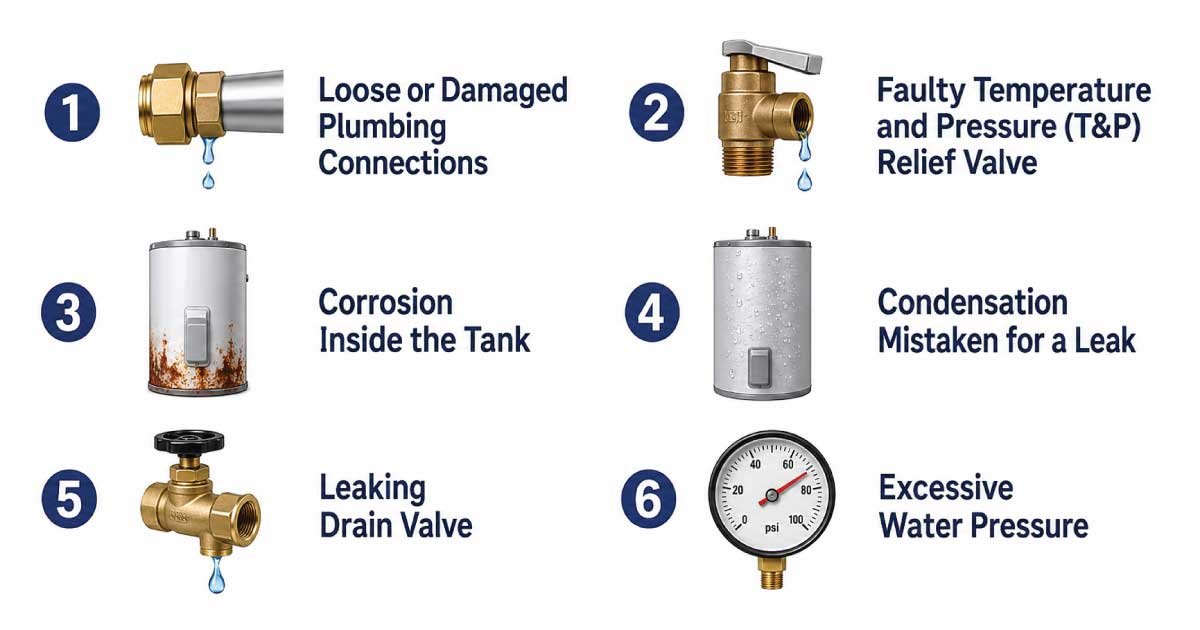
1. Loose or Damaged Plumbing Connections
Water heaters depend on multiple pipe connections that expand and contract with temperature changes. Over time, vibration, thermal stress, or aging materials can cause fittings to loosen or degrade, resulting in slow, intermittent leaks that may only appear during water use.
Water heaters rely on several connections to function correctly, including cold water inlet pipes, hot water outlet pipes, and various fittings. Over time, these connections can loosen due to temperature changes, vibration, or normal wear.
A slightly loose fitting may only leak a few drops at a time, especially when hot water is being used. While tightening the connection can sometimes solve the issue, worn threads or damaged fittings may require replacement.
2. Faulty Temperature and Pressure (T&P) Relief Valve
The temperature and pressure relief valve is a critical safety feature designed to prevent dangerous pressure buildup. When it begins to malfunction, it may release small amounts of water continuously, creating a slow leak that should always be taken seriously.
The temperature and pressure relief valve is a critical safety component. It releases water when pressure or temperature inside the tank becomes too high. If this valve begins to fail, it may drip continuously.
Common reasons for T&P valve leaks include:
- Excessive water pressure
- Overheating due to a faulty thermostat
- Mineral buildup preventing the valve from sealing
A leaking T&P valve should never be ignored, as it may indicate dangerous pressure levels inside the tank.
3. Corrosion Inside the Tank
Internal corrosion is one of the most serious causes of slow water heater leaks. As protective components wear out over time, rust can begin forming inside the tank, eventually creating tiny holes that allow water to escape gradually.
Water heaters are constantly exposed to water and heat, making corrosion a long-term concern. Most tanks are lined with protective coatings and include a sacrificial anode rod designed to attract corrosive elements. Once that anode rod is depleted, the tank itself begins to rust.
A slow leak caused by corrosion often starts as tiny pinholes near the bottom of the tank. Unfortunately, once the tank itself is corroded, repairs are rarely effective.
4. Condensation Mistaken for a Leak
Not all moisture around a water heater is caused by a leak. In certain conditions, condensation can form on the outside of the tank, mimicking a slow leak and causing unnecessary concern if not correctly identified.
Sometimes what appears to be a leak is actually condensation. This is especially common in humid climates or when cold water enters a hot tank, causing moisture to form on the exterior surface.
Condensation typically:
- Appears evenly across the tank
- Occurs more frequently in summer
- Does not leave mineral residue
If water only appears occasionally and dries quickly, condensation may be the culprit rather than a true leak.
5. Leaking Drain Valve
The drain valve at the bottom of the water heater is designed for maintenance, but it can wear out over time. Aging seals or loose fittings may cause a steady drip that worsens gradually if not addressed.
The drain valve at the bottom of the tank allows you to empty the water heater for maintenance or replacement. Over time, this valve can wear out or become loose.
A faulty drain valve may drip slowly and continuously. In some cases, tightening the valve helps, but often replacement is the best long-term solution.
6. Excessive Water Pressure
High water pressure places extra strain on your water heater and plumbing system. When pressure exceeds safe limits, valves and fittings may release water intermittently, leading to slow leaks that appear without obvious damage.
High water pressure puts extra stress on your water heater and plumbing system. When pressure is too high, valves and fittings may leak intermittently to relieve stress.
Signs of high water pressure include:
- Banging pipes
- Short appliance lifespan
- Frequent valve leaks
Installing a pressure-reducing valve can protect your water heater and entire plumbing system.
 Also Read
  What Causes a Gas Water Heater to Stop Heating?
How to Identify the Source of a Slow Leak
Finding the exact source of a slow water heater leak is essential for choosing the correct repair and avoiding unnecessary costs. Careful observation helps distinguish between simple connection issues and serious internal tank failure that may require full replacement.
Pinpointing the exact source of the leak can save you from unnecessary repairs or replacement.
Follow these steps:
- Turn off nearby appliances and wipe the tank dry
- Observe where water reappears over time
- Check all connections and valves using a flashlight
- Look for rust or corrosion marks
- Inspect the base of the tank for pooled water
If water seems to be coming from inside the tank itself, replacement is usually unavoidable.
Risks of Ignoring a Slowly Leaking Water Heater
A slow water heater leak may seem harmless at first, but delaying action often allows damage to build quietly over time. What starts as a minor drip can escalate into serious structural, health, and financial problems that are far more expensive to resolve.
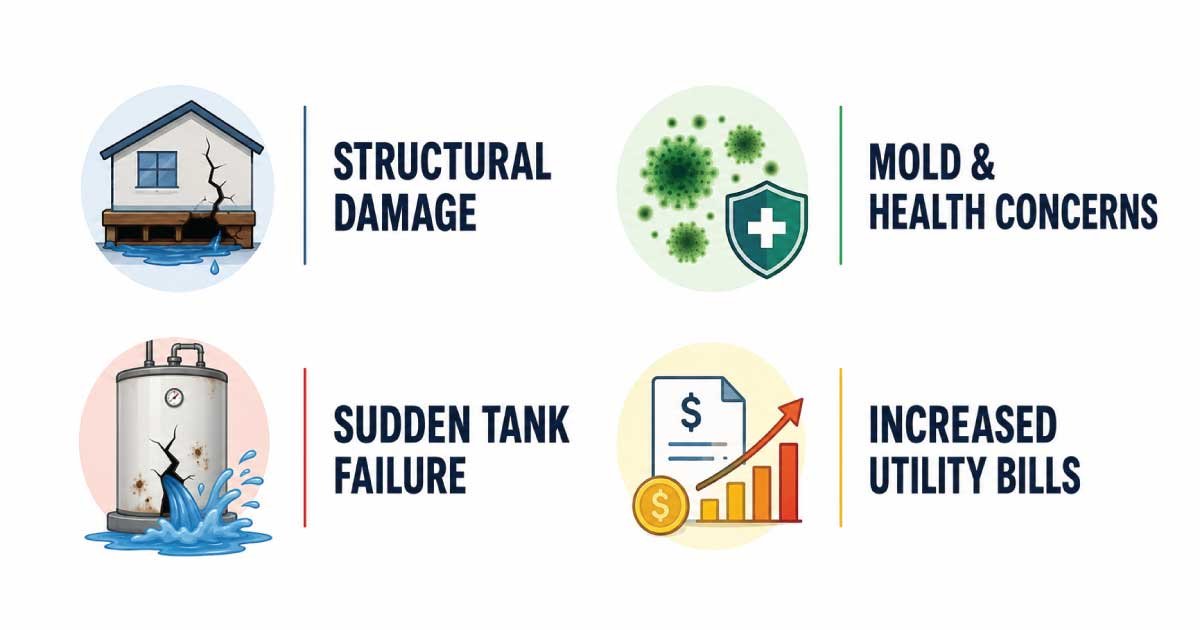
Structural Damage
Persistent moisture from a slow leak can penetrate flooring, walls, and insulation. Over time, this weakens structural materials and leads to costly repairs. Wooden subfloors and framing are especially vulnerable because they absorb water and deteriorate without obvious warning signs.
Mold and Health Concerns
Damp conditions create an ideal environment for mold growth. Mold spores can spread quickly, triggering allergies, asthma, and other respiratory problems. Once mold becomes established, professional remediation is often required and can be both disruptive and expensive.
Sudden Tank Failure
Corrosion caused by long-term leaks weakens the tank’s structure. Eventually, the tank may rupture without warning, releasing a large volume of water at once. This type of failure can flood rooms, damage belongings, and require emergency cleanup.
Increased Utility Bills
A leaking water heater must constantly reheat incoming cold water, forcing the system to work harder. This increases both water and energy usage, leading to steadily rising utility bills over time.
Also Read What Causes a Water Heater to Stop Heating Water?
Temporary Fixes vs. Permanent Solutions
While some slow leaks can be managed briefly, most require a proper repair or replacement to truly resolve the problem. Understanding the difference between temporary measures and permanent solutions helps prevent false confidence and future damage.
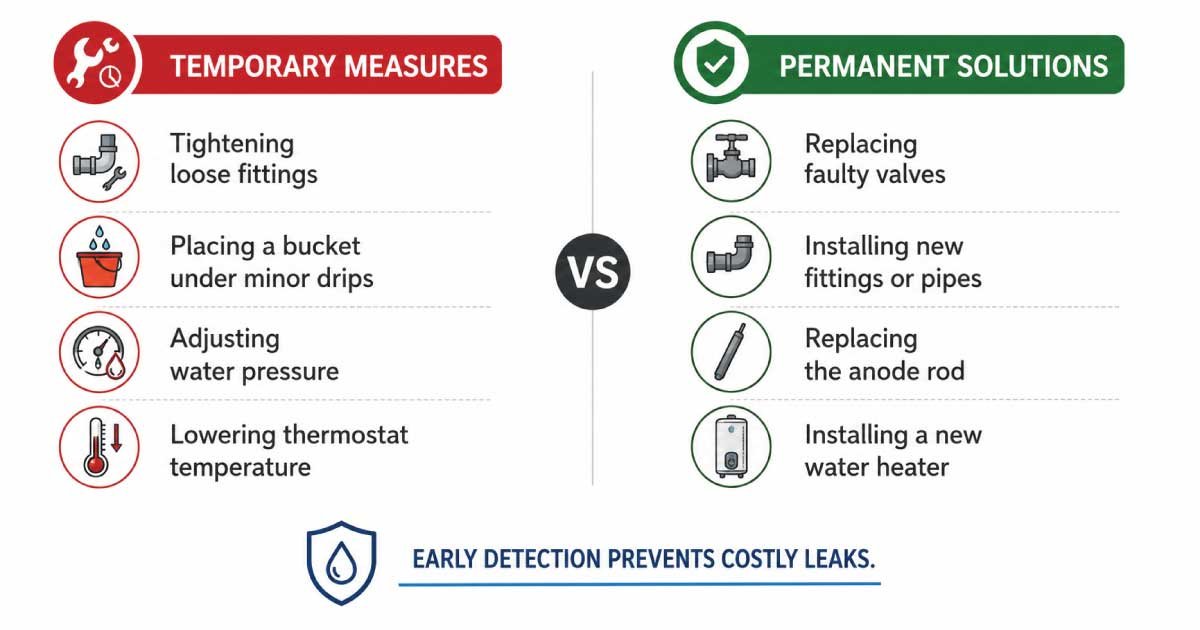
Temporary Measures
These actions may reduce visible leaking for a short period but do not correct underlying mechanical or structural issues.
- Tightening loose fittings
- Placing a bucket under minor drips
- Adjusting water pressure
- Lowering thermostat temperature
These measures may buy time, but they do not address underlying issues like corrosion or valve failure.
Permanent Solutions
Permanent fixes resolve the root cause of the leak and restore safe, reliable operation.
- Replacing faulty valves
- Installing new fittings or pipes
- Replacing the anode rod
- Installing a new water heater
A professional plumber can help determine which solution is safest and most cost-effective.
Also Read What Causes a Water Heater to Stop Working?
When Should You Replace Your Water Heater?
Knowing when to replace a water heater helps you avoid sudden failures, water damage, and rising repair costs. As units age, internal components weaken and efficiency declines, making replacement a safer and more cost-effective option than repeated repairs, especially when leaks or corrosion are present.
Most traditional tank water heaters last 8 to 12 years, depending on maintenance and water quality.
Replacement is usually recommended if:
- The tank itself is leaking
- There is visible corrosion
- Repairs cost more than half the price of a new unit
- The heater is near the end of its expected lifespan
Newer models are often more energy-efficient, quieter, and safer than older units.
Preventing Future Water Heater Leaks
Preventive maintenance is the best way to reduce the risk of water heater leaks and extend the system’s lifespan. Simple routine care helps protect internal components, manage pressure, and catch small issues early—before they turn into expensive repairs or unexpected water damage.
Prevention is always cheaper than repair. Here are some best practices to extend the life of your water heater:
- Flush the tank annually to remove sediment
- Inspect the anode rod every 2–3 years
- Monitor water pressure regularly
- Install a drip pan and leak detector
- Schedule professional inspections
Routine maintenance can add years to your water heater’s lifespan and reduce the risk of unexpected leaks.
Final Thoughts
A slowly leaking water heater is never “just a small problem.” It’s a signal that something within the system needs attention. Whether the cause is a loose fitting, failing valve, or internal corrosion, early action can prevent expensive repairs and major disruptions.
If you notice moisture around your water heater, don’t ignore it. Take the time to investigate, consult a professional if needed, and make informed decisions about repair or replacement. Your home—and your wallet—will thank you in the long run.